


Ideas and directions for using TodaysMeet, Wallwisher, and Socrative in the classroom.
Via John Evans, Julie Lindsay, NikolaosKourakos

 Your new post is loading...
 Scoop.it! Ideas and directions for using TodaysMeet, Wallwisher, and Socrative in the classroom. Via John Evans, Julie Lindsay, NikolaosKourakos 
Scoop.it!

By The Learning Network
Every Monday morning, we publish a New York Times photo without a caption, headline or other information about its origins. Join the conversation by posting about what you see and why in our comments section.
"Students: After looking closely at the image above (or at the full-size image here), think about the following three questions: What’s going on in this picture?What do you see that makes you say that?What more can you find?Then, join the conversation by posting comments below. (But please remember not to post your last name.)
Scoop.it!

The most dreaded word in school reading for students: book reports. Teachers assign them, viewing them as a necessary component of assessing reading comprehension. Book reports can be a contributing factor to 'readicide'. Check out these techie alternatives to boring book reports! Via Pippa Davies @PippaDavies
Scoop.it!

An in-depth conversation on lesson planning for a High School ELA class. Using a popular text, watch as Mr. Hanify discusses his lesson planning for reading and writing, identifying main ideas and developing arguments. Via Pippa Davies @PippaDavies
Scoop.it!

This was originally published on the Limelight Networks Blog as part of my day-to-day responsibilities as the Sr. Director of Marketing Strategy.
Storytelling is the future of digital marketing, plain and simple. If you aren’t on board yet, you are living in the past and each day you are “advertising” your products instead of “storytelling” about your business is another day your competitors are getting ahead of you. But before we jump into some ideas about what makes a good story, let’s look at the evolving digital marketer. Via Sarah McElrath
Scoop.it!

As more schools begin allowing students to bring their own devices and actually use them in class, the debate around the value of “digital writing” — texting, taking notes on mobile devices, tweeting, etc. — is heating up. Some educators (and even a linguistic expert) believe kids who text are exercising a different, additional muscle when texting, writing, and note-taking — and that skill is actually adding to a student’s growing and changing repertoire. Mindshft. Via Pippa Davies @PippaDavies , Sarah McElrath
Scoop.it!

At the heart of every sequel is the narrating character’s reaction to the preceding scene’s disaster. This is where the author gets the opportunity to dig around inside his character’s emotional and mental processes and find out what he’s really made of. The scene is about external action; the sequel is about internal reaction. The sequel will sometimes be entirely confined to the POV character’s mind; other times, it will be dramatized through action or dialogue.
Via mooderino, Sarah McElrath
Jim Lerman's insight:
This is a very informative post from a wonderful blog about writing. If you are looking for assistance in how to improve, especially one's fiction writing, this is a very good resource.

Katie Frank's curator insight,
January 28, 2013 2:19 PM
Take on having fun with words anytime you can!
Scoop.it!

A List of The Best Free Digital Storytelling Tools for Teachers ~ Educational Technology and Mobile Learning http://t.co/xrDuDaJm Via Pippa Davies @PippaDavies

Jeeyoung Min's curator insight,
September 23, 2013 2:02 AM
Powerful digital multimedia tools make a classroom much more dynamic.
Scoop.it!
100 images that can inspire you when you are brainstorming about new products or services. Via Paula Barroca, Ken Morrison, Sandra Mason, Louise Robinson-Lay
Scoop.it!

Grammar & Spelling Check; Free Online Proofreading; No Downloads...Allows you to find those pesky mistakes and correct them before your teacher does... Via Laura Spencer
Scoop.it!

Article discussing ideas from the book Brain Rules on the impact of our visual perception on sales presentations (Presentation Rules using Visual Storytelling to sell Big Ideas http://t.co/Pn8Vpw7g)... Via Heiko Idensen

Julie Spokus's curator insight,
January 4, 2013 9:24 AM
In a nutshell: 10 minute chunks that have a hook in the first 30 seconds.

Louise Robinson-Lay's curator insight,
January 27, 2013 4:50 PM
Some interesting ideas on how to tell a visual story and make your presentations more memorable.
Scoop.it!

Andrei is a passionate collector & broadcaster of old and new tales - sharing them for the purpose... Via Ken Morrison

Ken Morrison's curator insight,
January 14, 2013 7:02 PM
This guy does a great job of using Facebook to share powerful stories. He is worth liking so that you can get some good stories in your newsfeed. I don't read them all, but I like the ones that I have read over the past few months. Ken
Scoop.it!
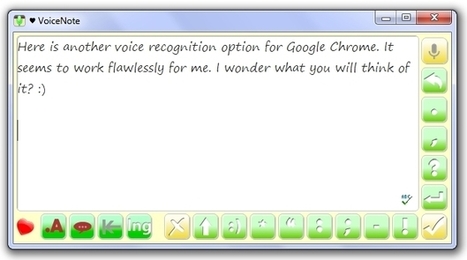
Once again Paul Hamilton brings us another great tool to use with Chrome, VoiceNote. He states that it "offers excellent voice-to-text...VoiceNote opens as a dictation window." Therefore it may "sit on top of a document being written" (or occupy your entire screen). A few of the features he mentions are: * dictating directly into a text box facilitates creating paragraphs or longer selections of text * on-screen buttons for adding punctuation * suport for multiple languages For more information click through to the post. Via Beth Dichter, Jim Lerman
|
Scoop.it!

By Ashley Prophet
"Organized debates are an engaging way to help students discover, explore and organize ideas during the writing process. However, neither my teacher colleagues nor students share my enthusiasm. To find out why, I asked how they felt about using debate in the classroom. Here were their responses: Teachers' answers: Students are too aggressive and rowdy to debate.There is no time for preparation.I don’t know how to incorporate debates into the curriculum.Students' answers: Debates are tedious and repetitive.My opinions are never appreciated.Debates are pointless."Rethinking classroom debating might help both the aforementioned groups view this strategy as valuable.
"Debate activities do not have to mirror the traditional debate protocol, where students stand on opposite sides of the classroom and formally argue about a particular point -- an exercise that students and teachers may find to be tedious. A more casual format can be far more engaging, like the ones below that are specifically tailored to support students during each stage of the writing process. The procedures are simple to explain and allow for students' opinions to be valued."
Scoop.it!
On Thursday, 24 January, 2013 at 12:30 (GMT+1) in Davos (Switzerland) at the Morosani Schweizerhof Hotel the Victor Pinchuk Foundation held its 6th Davos Philanthropic Roundtable "RevolutiOnline.edu - Online Education Changing the World" on the occasion of the Annual Meeting of the World Economic Forum.
Scoop.it!

By Darren Walker
"The tools on this page make use of traditional book elements (text and photos) to create electronic books. In many cases the books can also be printed if desired but having them published online gives them an immediate audience." Via Pippa Davies @PippaDavies
Jim Lerman's insight:
This is a wonderful collection of writing tools (and multimedia tools for writing) as well as for publishing. Don't be deceived by the seeming elementary-level look of these tools. Many of them are quite sophisticated and can by used by and for writers/readers of all ages. Do spend time going through Walker's entire wiki; this is clearly a labor of love from an accomplished educator.
Scoop.it!

By Jamie Forshey
"Yearbooks, storybooks, calendars, cards and stationary… Mixbook, a powerful suite of completely customizable digital storytelling tools, has got all of this and more! Believe it or not, this “cool tool” was originally designed as a scrapbooking site, but as it turns out, Mixbookis a great way to engage students in the classroom as well! So, forget about those traditional written reports and handmade books! Instead inspire students to write interesting and colorful e-books that can be created individually or collaboratively with a real-world tool that will keep them coming back for more!
Mixbooks can be shared with others via an online link or by embedding the finished product on a web site, wiki and/or blog. Want to see what your photo book looks like in real life? No problem! Mixbooks can also be printed and purchased so you can show off your keepsake forever! But the educational benefits don’t stop here. That’s right! Apply for an educator’s account and receive a discount on every order!
Scoop.it!

Growing excitement around technology’s potential to transform the classroom has the education community chattering about laptops, tablets and smartphones. Continue reading → Via Pippa Davies @PippaDavies , Sarah McElrath
Scoop.it!
If you long for the days of a handwritten letter, then perhaps this app is for you. Send simple handwritten emails. It also acts as a good handwriting practi... Via Dr. Tom D'Amico (@TDOttawa) , Pippa Davies @PippaDavies , Sarah McElrath
Scoop.it!

Building a Culture of Innovation Sir Ken Robinson delivers a brand new, insightful and entertaining talk to educators at the 9th Annual AERO Conference, “Finding the Catalyst for the Education Revolution"
Scoop.it!
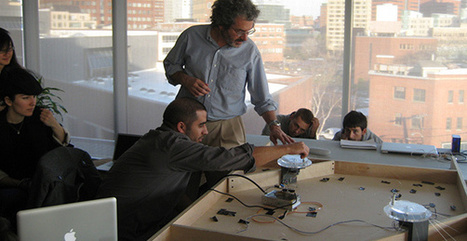
A few innovative universities in particular can be counted on as continuous sources of headline-grabbing material, from new cures to new companies.
Scoop.it!

From the website
"It's easy & it's free. The teacher selects or produces his or her own story start, and the students let their imagination and writing skills take over.One chapter at a time, the students write, read, and then vote on the submissions they like the most. The winning chapter is then added to the story and the process continues.The teacher determines the total number of chapters to be completed, and when the competition is over a new book is ready to be published." Via Laura Spencer
Scoop.it!
Creative Writing Prompts collection of writing prompts and story starters for writers. Come up with creative content for blogs and blog stories with the help of these creative writing ideas. Via Laura Spencer, Ken Peterson

Laura Spencer's curator insight,
January 16, 2013 1:40 PM
This was recommended to me by one of our 8th grade ELA teachers.
Scoop.it!
Walk into an English teacher’s classroom, and you might be able to guess how long they’ve been there. Take a look at the classroom library. It takes time to collect hundreds of books for your kids to read, and veteran teachers have worked for years to amass those giant collections. Luckily, modern technology gives us an alternative: extend your classroom library with free eBooks. There are literally thousands of free eBooks available for your students to read, and with free apps your students can turn their smartphones or tablets into eReaders. The biggest logistical problem is turning that vast digital catalog into something more personal. You need to use a tool to collect a small number of books that you think your students will be interested in, and then put those books in front of them. Today, we’ll look at three methods for creating and sharing a digital classroom library with your students. In all three cases, I’m going to assume that you have a source of free eBooks (Amazon’s Free Popular Classics, Google’s Play Store Top Free Books, or Project Gutenberg) and an app to read those books (Amazon’s Kindle app, Google’s Play Books app, Aldiko for Android, or iBooks for iOS). Via Heiko Idensen
Jim Lerman's insight:
Maiers is almost always right on the money!
Scoop.it!
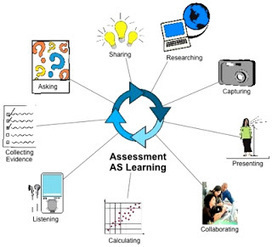
What will Personalized Learning look like in 2013? The main change that will happen in teaching and learning in 2013 will be about empowerment. Teachers and learners will be more empowered to take charge of their learning. We will see this through the evidence they share as they learn. Via Kathleen McClaskey, Barbara Bray, THE OFFICIAL ANDREASCY, Jimun Gimm

Thomas Salmon's curator insight,
May 6, 2013 1:34 PM
Interesting, in other ways this could also be seen as framing learning as a constant performance of assessment. Where do you draw the line ? |







Love this for collaborative options in our 1:1 environment.
Back channels in the face to face class? how's that possible?...
Three great teaching tools