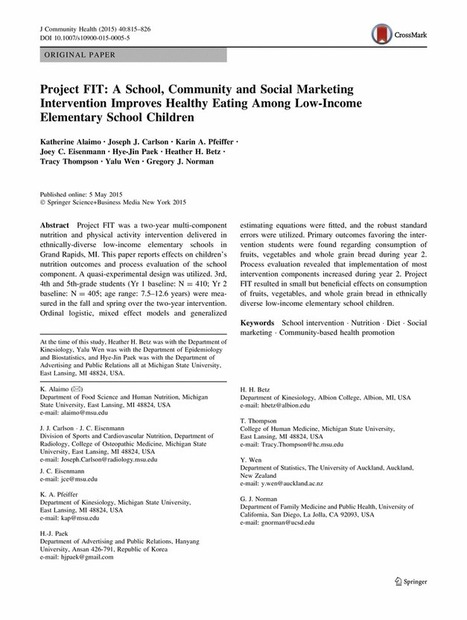
Project FIT was a two-year multi-component nutrition and physical activity intervention delivered in ethnically-diverse low-income elementary schools in Grand Rapids, MI. This paper reports effects on children’s nutrition outcomes and process evaluation of the school component. A quasi-experimental design was utilized. 3rd, 4th and 5th-grade students (Yr 1 baseline: N = 410; Yr 2 baseline: N = 405; age range: 7.5–12.6 years) were measured in the fall and spring over the two-year intervention. Ordinal logistic, mixed effect models and generalized estimating equations were fitted, and the robust standard errors were utilized. Primary outcomes favoring the intervention students were found regarding consumption of fruits, vegetables and whole grain bread during year 2. Process evaluation revealed that implementation of most intervention components increased during year 2. Project FIT resulted in small but beneficial effects on consumption of fruits, vegetables, and whole grain bread in ethnically diverse low-income elementary school children.
The relationship between patient and physician is in flux with the advent of electronic media that are advancing and enhancing communication. We perform a retrospective, current, and forward-looking examination of the technologies by which information is exchanged within the healthcare community. The evolution from e-mail and listservs to blogs and the modern social networks is described, with emphasis on the advantages and pitfalls of each medium, especially in regard to maintaining the standards of privacy and professionalism to which doctors are held accountable. We support the use of contemporary platforms like Twitter and Facebook for physicians to establish themselves as trustworthy online sources of medical knowledge, and anticipate ongoing collaboration between researchers, patients, and their advocates in trial design and accrual.
Intel and Oregon Health & Science University have joined the digital health race by launching a cloud-based platform for cancer research.
”these professionals were miracle workers, but they’re working in a flawed, expensive system set up the wrong way. Dependent on hospitals and clinics for our every care need. Dependent on specialists who just look at parts of us. Dependent on guesswork of diagnoses and drug cocktails. Something either works or you die. A model that is unsustainable globally. Unaffordable globally…” – Eric Dishman
The annual GDP of every country in the world is usually calculated, every year, by four major agencies: IMF, World Bank, CIA World Factbook and of course the United Nations.
Conform to their calculations, U.S. expenditure on healthcare last year was above the GDP (gross domestic product) of Germany. To give you a better understanding on the scale of the spending, on the GDP ranking of the world for 2015, Germany is top 5. Top 5 on the planet, close to 7% of the world economy.
Social media are pervasive, powerful communications tools. What are the risks and benefits of using them in cancer care? I discuss it in this talk at Yale Apr…
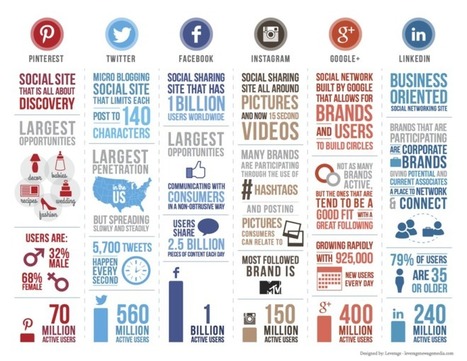
In this presentation we discuss social media definition, social media landscape, social media facts and statistics in 2013, professional use of social media, u…
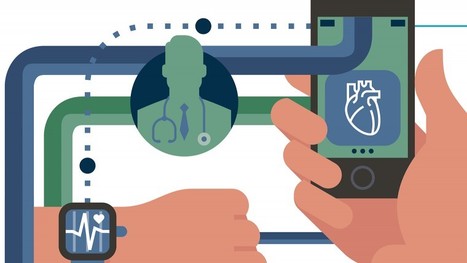
As the mobile health industry continues to invest in new devices and apps to improve consumer health across the medical care spectrum, stakeholders and analysts look further to understand whether mobile health applications can actually reduce key risks of disease and medical conditions. For example, could mobile health applications actually decrease one’s risk of a heart attack?
According to some findings via the Hello Heart App, it is possible for mobile health applications to help lower the blood pressure among users. Out of a sampling of 2000 random consumers who downloaded this particular app, one out of four reduced their blood pressure by 22 points and therefore cut their risk of heart attacks by 50 percent.
Social media can be a minefield, but platforms such as Facebook, LinkedIn, Instagram and Twitter can also provide physicians and other healthcare professionals with an array of previously unheard-of advantages and the ability to confer with other professionals--no matter where they are in the world.
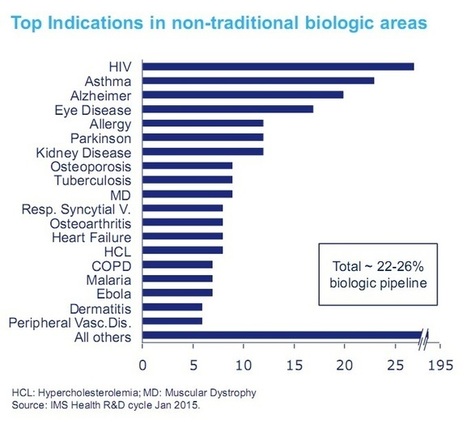
I farmaci biologici hanno raggiunto i 200 milioni di dollari a livello globale a fine 2014. La crescita di questo mercato è molto superiore all’andamento dei farmaci tradizionali (il trend dell’ultimo anno si attesta ad un +12%). A partire dal 2102, il 50% dei 10 farmaci top a valori di vendita è costituito da biologici, e queste specialità hanno scalato le classifiche di vendita occupando tutti i primi posti nel 2014.
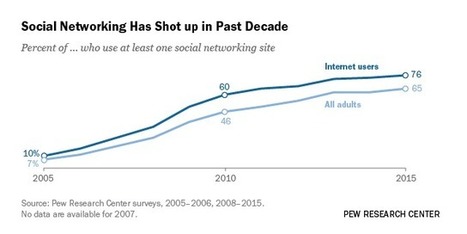
The advent of social media has led to the ability for individuals all over the world to communicate with each other, in real time, about mutual topics of interest in an unprecedented manner. Recently, the use of social media has increased among people interested in healthcare and medical research, particularly in the field of hematology and oncology, a field which frequently experiences rapid shifts of information and novel, practice-changing discoveries. Among the many social media platforms available to cancer patients and providers, one platform in particular, Twitter, has become the focus for the creation of disease-specific communities, especially for those interested in, affected by, or those who perform research in the fields of rare cancers, which historically have had a dearth of reliable information available. This article will focus on the initiation and progress of one such Twitter hematology/oncology community, #mpnsm, which was originally created for the purpose of serving as a venue for improving the interaction among patients, providers, researchers, and organizations with interest in the myeloproliferative neoplasms (MPNs) and to further the availability of reliable up-to-date analysis; relevant expert commentary; and readily usable information for patients, providers, and other groups interested in this field.
There are tens of thousands of health and fitness apps (applications) for smart phones and tablets. Given that 58% of adults in the US have smart phones, these ...
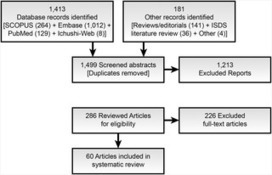
Objective Research studies show that social media may be valuable tools in the disease surveillance toolkit used for improving public health professionals’ ability to detect disease outbreaks faster than traditional methods and to enhance outbreak response. A social media work group, consisting of surveillance practitioners, academic researchers, and other subject matter experts convened by the International Society for Disease Surveillance, conducted a systematic primary literature review using the PRISMA framework to identify research, published through February 2013, answering either of the following questions: Can social media be integrated into disease surveillance practice and outbreak management to support and improve public health? Can social media be used to effectively target populations, specifically vulnerable populations, to test an intervention and interact with a community to improve health outcomes? Examples of social media included are Facebook, MySpace, microblogs (e.g., Twitter), blogs, and discussion forums. For Question 1, 33 manuscripts were identified, starting in 2009 with topics on Influenza-like Illnesses (n = 15), Infectious Diseases (n = 6), Non-infectious Diseases (n = 4), Medication and Vaccines (n = 3), and Other (n = 5). For Question 2, 32 manuscripts were identified, the first in 2000 with topics on Health Risk Behaviors (n = 10), Infectious Diseases (n = 3), Non-infectious Diseases (n = 9), and Other (n = 10). Conclusions The literature on the use of social media to support public health practice has identified many gaps and biases in current knowledge. Despite the potential for success identified in exploratory studies, there are limited studies on interventions and little use of social media in practice. However, information gleaned from the articles demonstrates the effectiveness of social media in supporting and improving public health and in identifying target populations for intervention. A primary recommendation resulting from the review is to identify opportunities that enable public health professionals to integrate social media analytics into disease surveillance and outbreak management practice.
The role of the academic humanist has always been a public one – however mediated through teaching and publication, argues Tim Hitchcock. As central means to participate in public conversations, Twitter and blogging just make good academic sense. Hitchcock looks at how these new platforms are facilitating academic collaboration, teaching and public engagement. What starts as a blog, ends as an academic output, and an output with a ready-made audience, eager to cite it.
Impact is an awkward thing in British Higher Education. Most of the time it feels like just one more bludgeon used to batter hapless academics into submission. It is frequently shorthand for an agenda handed down from on high, privileging near-market research and the agendas of government. And yet no one spends a lifetime researching, teaching and writing about something if they don’t believe it is important – if they don’t believe that what they do contributes to a better world. We all want to have ‘impact’. The question is how can we do so in a way that reflects our own values, rather than those of whatever government happens to be in power this week?
The popularity of social media sites and the ease at which its data is available means these platforms are increasingly becoming primary sources for social research. Wasim Ahmedpresents a quick look at some of the tools available to social scientists for analysing social media data and also reflects on the limitations of the platforms and the methods used for this type of research.
I have a social media research blog where I find and write about tools that can be used to capture and analyse data from social media platforms. My PhD looks at Twitter data for health, such as the Ebola outbreak in West Africa. I am increasingly asked why I am looking at Twitter, and what tools and methods there are of capturing and analysing data from other platforms such as Facebook, or even less traditional platforms such as Amazon book reviews.
Patients are increasingly using the Internet in their search for health care providers. According to a study by Local Consumer Review, the number of people who searched for physicians online has increased by 15% in just the last three years. This trend will only accelerate as access to the Internet increases and more health care services become digitized.
Your online reputation is quickly becoming a critical factor in your practice’s success.
One-third of consumers in the United States who consulted physician website ratings reported selecting and/or avoiding physicians because of these ratings.1 However, little is known about the validity of these ratings. Available studies have focused mostly on hospital website ratings or non-US website ratings.2,3 We partially address this gap by measuring the association between US physician website ratings and traditional quality measures (QMs) of clinical and patient experience.
John Stankovic wants to make smartphone health applications talk to each other to keep people safe and healthy.
Stankovic, BP America Professor in the University of Virginia’s Department of Computer Science, has received a National Science Foundation grant as part of a program to envision “smart and connected cities and communities.” His research aims to make home health care safer, working to eliminate conflicts among medical applications and personal medical devices on which people are increasingly depending.
“The U.S. Food and Drug Administration expects that there will be 500 million smartphone users downloading health care-related apps by the end of 2015,” Stankovic said. “Many of these apps will perform interventions to control human physiological parameters, such as blood pressure and heart rate.”
He cited, as an example, a person who uses one application that recommends a medication for an ailment and another application that recommends exercise for the same or a different condition – exercise that should not be undertaken if the patient is using the previously recommended medication.
The social media revolution, which has been sweeping the world since the middle of the last decade has slowly been transforming the way businesses and customers interact. Combined, the number of user…
Launching a social media campaign, whether organic (interacting with people online, creating and sharing interesting content) or through advertising, without a clear strategy is a common mistake that can lead to poor ROI.
Looking for some social media stats to use for your strategy or in your next presentation? You will find what you need in the list below -- updated to September 2015.
Objectives. We examined the use of low-cost social media platforms in communicating public health messages and outline the laugh model, a framework through which public health organizations can reach and engage communities.
Methods. In August 2014, we developed an online campaign (Web site and social media) to help promote healthy family meals in Utah in conjunction with the state and local health departments.
Results. By the end of September 2014, a total of 3641 individuals had visited the Utahfamilymeals.org Web site. Facebook ads reached a total of 29 078 people, and 56 900 people were reached through Twitter ads. The per-person price of the campaign was 0.2 cents, and the total estimated target population reach was between 10% and 12%.
Conclusions. There are 3 key takeaways from our campaign: use of empowering and engaging techniques may be more effective than use of educational techniques; use of social media Web sites and online marketing tactics can enhance collaboration, interdisciplinary strategies, and campaign effectiveness; and use of social media as a communication platform is often preferable to use of mass media in terms of cost-effectiveness, more precise evaluations of campaign success, and increased sustainability. (Am J Public Health. Published online ahead of print September 17, 2015: e1–e7. doi:10.2105/AJPH.2015.302669)
To get content containing either thought or leadership enter:
To get content containing both thought and leadership enter:
To get content containing the expression thought leadership enter:
You can enter several keywords and you can refine them whenever you want. Our suggestion engine uses more signals but entering a few keywords here will rapidly give you great content to curate.


 Your new post is loading...