Web 2.0 for juandoming
282.9K views |
+24 today

 Your new post is loading...
 Scoop.it! 
En el documento Biblioteca escolar 2.0. elaborado por el Programa biblioteca escolar "Puntedu"que aborda las cuestiones relacionadas con la construcción de una biblioteca 2.0 podemos encontrar en el último capítulo una selección de herramientas 2.0 acompañadas por ejemplos y buenas prácticas específicas para la biblioteca escolar. Via Gumersindo Fernández, Marco Remón, Ramon Aragon 

Gumersindo Fernández's curator insight,
June 9, 2013 5:57 AM
1. Gestionar y organizar
Scoop.it!

Es importante que los padres presten atención a lo que hacen sus hijos en el mundo online. Nuestro estudio demuestra que, regularmente, los niños están expuestos a contenido inapropiado para ellos... Via Lino

Lino's curator insight,
June 9, 2013 9:28 AM
(Datos según producto Kaspersky)
Búsquedas más Populares: redes sociales, erotismo, pornografía y tiendas online. Temas más preocupantes: armas y drogas ocupan sólo el 1-2% de los casos.
Scoop.it!

As bibliotecas digitais patrimoniais e a relação que estabelecem com os utilizadores da área de humanidades. Via A Petapouca
Scoop.it!
From
issuu

Curso abierto, masivo, gratuito, en red, de enseñanza y aprendizaje entre pares.
Scoop.it!

This article discusses the benefits of gamification in healthcare and highlights how networked integration is required for successful healthcare gamification... Via Dhaval
Scoop.it!

What is the Moodle Course Creator Certificate?
The MCCC is a way for you to demonstrate your skills in using Moodle as a teacher. The assessment contains a course project, a short narrative document, and an online exam. You will be assigned an MCCC-certified mentor-assessor to help guide you through this process. When you pass the certification you are given a code that lets you (or anyone else you give it to) download your personalised certificate as a PDF from this site.
The MCCC is not a training course, it assumes that you already know what you need to know and just want to be assessed and certified. However, Moodle Partners may provide training courses that allow you to fulfill the project and narrative elements of the MCCC - please talk to your Moodle Partner about this. Via Miloš Bajčetić, Mark E. Deschaine, PhD, Rui Guimarães Lima
Scoop.it!
Lino's curator insight,
June 9, 2013 9:47 AM
Sobreviviendo a la educación, según Dante Shepherd | Mikel Agirregabiria
Surviving the World, es un "PhotoComic Education" creado por Dante Shepherd, @danteshepherd, que lo consigue. ¡Ah, y todavía usa pizarras minerales!
Su metáfora de la enseñanza: "Ser docente es como ser el protagonista de una serie de horror, excepto que en lugar de un arma sólo dispones de un libro de texto,..."
Scoop.it!

Atención. Vivimos en la era de la distracción. Por Alejandro de Pourtales. Pijama Surf. Diagnósticos, consejos y posibles cura Via Mariano Fernandez S.
Scoop.it!

From
learni
Learn how to transform your class through the use of student produced video to increase motivation and learning. By producing videos students practice writing, speaking, and creativity skills at the upper end of Bloom's Taxonomy.
Scoop.it!

Ana Cristina Pratas's curator insight,
June 7, 2013 1:15 AM
"To MOOCers and shakers in the world of higher education, the question about MOOCs now is not merely “to MOOC or not to MOOC”, but “how to MOOC strategically” when more and more universities are jumping onto the bandwagon of MOOCs. This month, the two major MOOC providers Coursera and edX both announced that they have successfully attracted many more institutions to partner with them. Coursera, in addition, has partnered with several major publishers, such as Macmillan Higher Education, SAGE and Oxford University Press, to provide teaching and learning materials to the students at no cost. MOOC stands for Massive Open Online Courses. The massive coverage of discussions about MOOCs in the media, both pros and cons (see ACA Newsletter - Education Europe, February 2013), have convinced both enthusiasts and sceptics in the world of higher education that MOOCs, like global university rankings, are “here to stay”. More and more universities, including Yale University, which have been hesitant to join the MOOC race, are compelled to MOOC along with their peers. Believe it or not, MOOCs are all over the place, in the newspapers, in conferences, and even in university board meetings. According to a Gallup survey and some follow-up enquiries conducted by Inside Higher Ed, US university presidents are under increasing pressure to look into the impact of MOOCs on their “business model”. However, most of the presidents are sceptical about the potential of MOOCs in improving the learning of all students or solving colleges’ financial challenges, as opposed to the trustees from the business world who are keen to rush into the MOOC race."
Scoop.it!
|
Scoop.it!

It's been a very long year. Time to recharge and tackle some learning outside this Summer. Here's a few useful tips on how to get started.
Scoop.it!

Best free downloadable and web-based video conferencing tools for holding multi-party video calls Via Edumorfosis
Scoop.it!
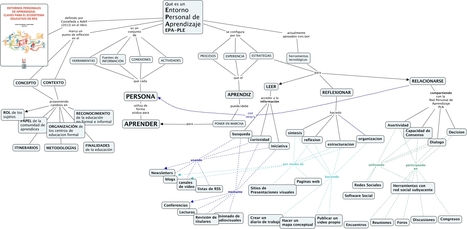
#PLE ¿Qué es un Entorno Personal de Aprendizaje EPA o PLE definido por Castañeda y Adell (2013) en su reciente libro, sobre PLE's Via Josi Sierra

Josi Sierra's curator insight,
June 9, 2013 8:57 AM
Ayuda este mapa a entender esta novedosa idea pedagógica de como aprenden las personas con tecnología? 
Pablo Barrios's curator insight,
June 11, 2013 3:08 PM
Mapa conceptual de la publicación del libro de Adell (2013)
Scoop.it!
Resumen de formas de aprendizaje según Test Modelo Felder y Silverman - created using PowToon - http://www.powtoon.com/ Via Lino
Scoop.it!
Inspirational writing advice from Gary Zukav, Richard Bach, Ken Robinson, Yann Martel, and more. For more advice and inspiration, go to: http://www.authormag... Via Ana Cristina Pratas, Rabbi David Etengoff

Debra Evans's curator insight,
June 10, 2013 4:21 AM
Will watch later, but I know it will be worthwhile. 
Scott Langston's curator insight,
June 10, 2013 6:22 AM
I read a comment on one of Ken Robinson's talks from TED the other day - 'When I grow up I want to be Ken Robinson, or Batman, I haven't decided yet.' I thought it was a great comment!
Scoop.it!
Pierre Lévy, filósofo da informação, explica o que é o virtual. O conceito popularmente ligado aos computadores, de acordo com Lévy, passa longe desta conexã...
Scoop.it!

Accès aux diaporamas en pdf et aux vidéos des présentations du workshop : Via benoit tostain, Pascal STIEVENARD, CECI Jean-François
Scoop.it!

¿Debe ser permanente la educación del siglo XXI?
Scoop.it!

Vous avez certainement déjà entendu l’expression « Web 2.0 », mais savez-vous ce que cela signifie ? Non ? ça tombe bien, vous allez apprendre le Web 2.0 Via Hamza Chahid
Scoop.it!

Una web sobre competencias para educadores, con recursos, textos y ejemplos sencillos. Y al amparo de esa entrañable filosofía de la web 2.0 por la que los docentes Creamos, Colaboramos y Compartimos.

Alberto del Mazo's curator insight,
May 5, 2013 7:00 AM
Nueva web de Martín Pinos. De momento, incluye el Proyecto Alegría para trabajar por competencias en 4º de Ed. Primaria.
Scoop.it!
Ana Cristina Pratas's curator insight,
June 7, 2013 1:15 AM
"To MOOCers and shakers in the world of higher education, the question about MOOCs now is not merely “to MOOC or not to MOOC”, but “how to MOOC strategically” when more and more universities are jumping onto the bandwagon of MOOCs. This month, the two major MOOC providers Coursera and edX both announced that they have successfully attracted many more institutions to partner with them. Coursera, in addition, has partnered with several major publishers, such as Macmillan Higher Education, SAGE and Oxford University Press, to provide teaching and learning materials to the students at no cost. MOOC stands for Massive Open Online Courses. The massive coverage of discussions about MOOCs in the media, both pros and cons (see ACA Newsletter - Education Europe, February 2013), have convinced both enthusiasts and sceptics in the world of higher education that MOOCs, like global university rankings, are “here to stay”. More and more universities, including Yale University, which have been hesitant to join the MOOC race, are compelled to MOOC along with their peers. Believe it or not, MOOCs are all over the place, in the newspapers, in conferences, and even in university board meetings. According to a Gallup survey and some follow-up enquiries conducted by Inside Higher Ed, US university presidents are under increasing pressure to look into the impact of MOOCs on their “business model”. However, most of the presidents are sceptical about the potential of MOOCs in improving the learning of all students or solving colleges’ financial challenges, as opposed to the trustees from the business world who are keen to rush into the MOOC race." |