 Your new post is loading...

|
Rescooped by
Beth Kanter
from Content and Curation for Nonprofits
December 11, 2012 10:59 AM
|
This article and infographic was posted by Jeff Bullas. We all know visual content attracts attention - here are some highlights on just how powerful it really is in social media.
Excerpt:
"Visual content has been on a rapid upward trajectory over the last 12 months. Social media platforms such as Pinterest and Instagram have taken the social media world by storm. Instagram announced in July that it had acquired 80 million users"
** Pinterest and Instagram have taken the social media world by storm.Instagram announced in July that it had acquired 80 million users. To put some further perspective on its adoption and growth, the visual social media network is now being used by 40% of the worlds top 100 brands.
Simply Measured looked at Facebook’s top 10 brand pages to find out the real numbers and facts and figures on the engagement and sharing levels of photos and vides in comparison to text and discovered:
Videos are Shared Photos are liked 200% more than text updates
To put some perspective on the power of visual content other studies show that Photo and video posts on Pinterest are referring more traffic than Twitter, Stumbleupon, LinkedIn and Google+.
Selected by Jan Gordon covering "Curation, Social Business and Beyond"
See full article and infographic here: [http://bit.ly/Oj0yKP
Via janlgordon, Beth Kanter
|
|
Rescooped by
Beth Kanter
from visual data
December 11, 2012 10:56 AM
|
Beth Kanter http://www.bethkanter.org
Another way to articulate the importance of sense-making.
Think about it this way: Tools are not always actual objects designed to help us with physical activities. A notebook, whether it is a Moleskine or an Evernote digital document, is a tool that expands our memory. A digital calculator, whether it is an inexpensive machine bought in the nearest Dollar Tree or an app downloaded to your iPhone, frees you from the burden of having to retain and execute many complex mathematical algorithms. Non-physical tools (or sets of tools and practices), such as statistics and the scientific method, evolved to let us gaze beyond what we would normally see, and to overcome our deepest biases and lazy habits of mind. The same is true for great visual displays of information...
Via Lauren Moss
|
|
Scooped by
Beth Kanter
December 3, 2012 11:48 AM
|
building capacity to creatively present data...
There is much talk right now about how we live in a time of data and visualization. There are lots of pretty pictures generated everyday by amazing coders, statistics gurus, and so on. Then there are normal people. Normal people aren't statisticians, software developers, or graphic design experts. Normal people don't have a big budget to pay lots of data consultants. Normal people in regular jobs have data that they know can help them, and they want to use it. Normal people need Data Therapy.
http://datatherapy.org/
|
|
Scooped by
Beth Kanter
December 3, 2012 11:33 AM
|
This is a basic 101 and introduction to data visualization for nonprofits based on a NTEN session in 2012 - I created a wiki. Then I decided I needed to curate on this topic and doing that here.
|
|
Scooped by
Beth Kanter
December 3, 2012 11:20 AM
|
Curated by Beth Kanter http://www.bethkanter.org
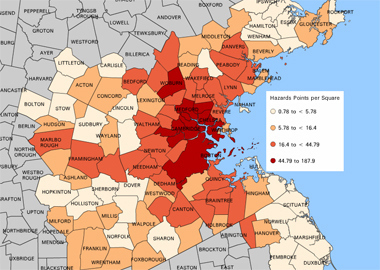
This post is to promote the new Boston Indicators web site, a site that offers "big data" for nonprofits to use to promote civic participation.
The Boston Foundation launched a new resource for community organizations and media on November 27 – the Boston Indicators Project website. (http://www.bostonindicators.org/)
The site now contains data visualization tools, thanks to a collaboration with the Institute for Visualization and Perception Research at UMass Lowell. http://oicweave.org/ and http://www.uml.edu/centers/ivpr/
Two bit that caught my eye:
- “Data is the new sexy,” said John Davidow, Executive Editor at WBUR. Davidow participated in a panel of journalists who described the ways they wanted to use community data to tell stories about poverty, unemployment and crime.
- There are many ways to present the data you want – once you have found them. Rahul Bhargava, a research specialist from the MIT Center for Civic Media, spoke about visualization techniques during one of the PechaKucha talks at the launch. He described using evocative images, annotated graphs, physical models, and community-created art. He also mentioned software such as Wordle, Taxego, Prezi and Omnigraphsketcher..
Need to track down his presentation
|
|
Rescooped by
Beth Kanter
from visual data
December 2, 2012 12:17 PM
|
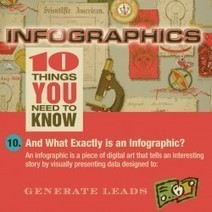
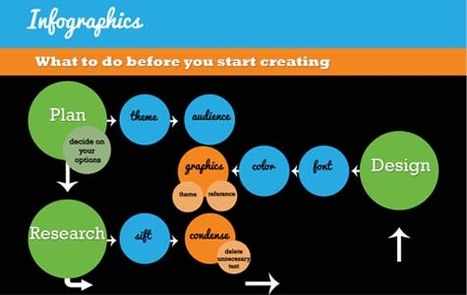
Kevin Akers design + imagery has just designed an infographic about infographics.
The list of top ten things everyone should know about the new marketing phenomenon clarifies how to create interesting,noteworthy infographics...
Via Lauren Moss
|
|
Rescooped by
Beth Kanter
from visual data
December 2, 2012 12:16 PM
|
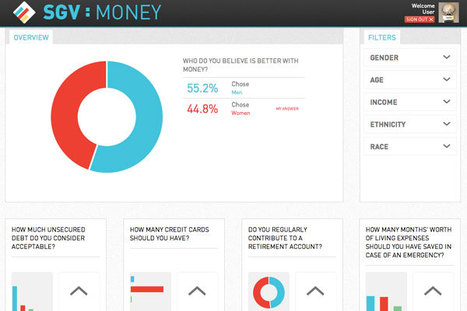
The idea of a Socially Generative Visualization originated out of a section of the design handbook INFOGRAPHICS.
An SGV, as described by the authors, is a new direction for data visualization– one which marketers and content consumers alike should take note of– especially as content distribution continues to be affected by socially relevant data.
What’s the next step when you’re looking to give your viewers a deeper interaction with your content? Apparently, we should be looking at “socially generative visualizations,” a novel approach that combines the best aspects of traditional static Infographics and classic interactive interfaces with a new purpose: “to allow the viewer to interact with the content in a more meaningful way by contributing to and actually being a part of the measured data that is displayed.”
Via Lauren Moss
|
|
Rescooped by
Beth Kanter
from visual data
November 25, 2012 3:55 PM
|
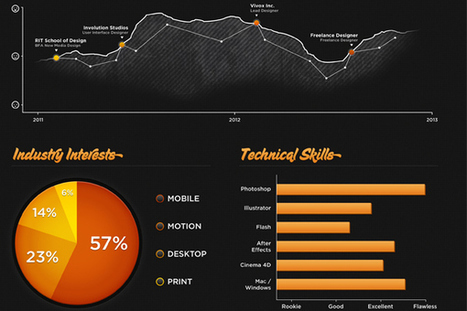
A free resource from Tripwire Magazine: a useful portfolio infographics design kit you can use for your personal or business portfolio or CV.
For those looking for a simple and easy to tweak portfolio, take a look at this Infographics design kit- a tool for anyone updating a portfolio or CV to make it stand out. The elements come in PDS and Ai files...
Via Lauren Moss
|
|
Scooped by
Beth Kanter
November 15, 2012 11:27 AM
|
Download @HubSpot's Guide to Pinterest's New Business Accounts and discover how you can effectively optimize your Pinterest presence.
|
|
Rescooped by
Beth Kanter
from visual data
October 22, 2012 1:02 PM
|
Generally, people don’t have the time or energy to sit and plow through pages or screens of text; they want to be able to ingest information as quickly and easily as possible. With the recent rise of infographics (information graphics), what used to require an avalanche of stats or analyses to dissect, can now be interpreted and relayed into an easy-to-read, fun, and visually appealing schematic – and an excellent content marketing concept. Infographics, when designed well, can be applied to different online sites and social networks. Summarized at the article are 5 free tools (with links) that allow you to start creating simple infographics or explore the potential of data visualization...
Via Lauren Moss
|
|
Rescooped by
Beth Kanter
from Content curation trends
October 7, 2012 12:27 PM
|
While this deck is about content curation and the algorithms that lie beneath, the point is also important in the data for social change world.
From GC:
This is what is it was about: "We engineers love data and algorithms. They help create amazing things. But if and when we forget that people create data and that data can be improved by people, we will miss the promise of Big Data. It's time we all thought of this not as social vs algorithm but as Humanrithm."
Via Guillaume Decugis
|
|
Rescooped by
Beth Kanter
from visual data
September 30, 2012 12:29 PM
|
From simple charts to complex maps and infographics, Brian Suda's round-up of the best – and mostly free – tools has everything you need to bring your data to life... A common question is how to get started with data visualisations. Beyond following blogs, you need to practice – and to practice, you need to understand the tools available. In this article, get introduced to 20 different tools for creating visualisations: from simple charts to complex graphs, maps and infographics. Almost everything here is available for free, and \you may have installed already...
Via Lauren Moss
|
|
Rescooped by
Beth Kanter
from visual data
September 28, 2012 11:45 AM
|
On September 27th, the world's best examples of visually stunning information was recognized at the inaugural Information is Beautiful awards. The event, held at London's Institute of Contemporary Arts, awarded designers from all over the world in a variety of categories, including data visualisation, infographics and data journalism. When David McCandless, author, data journalist and founder of the IIB data-visualisation studio, announced in early 2012 that IIB was looking for award applicants, he was inundated with over 1,000 entries. "I've just been amazed by the sheer quality of the creative work submitted to the awards from around the world," McCandless told Wired.co.uk. "There are a number of criteria we look for when judging these awards. Not only do they have to have the right visual quality and be easily understood, they have to have that invisible element of story telling as well."
Read the complete article for a closer look at all the winners, selected by a panel of judges including musician and visual artist Brian Eno, senior curator of the Museum of Modern Art Paola Antonelli, BrainPickings.org editor Maria Popova and Guardian Datablog editor Simon Rogers.
Via Lauren Moss
|
|
|
Rescooped by
Beth Kanter
from visual data
December 11, 2012 10:57 AM
|
Let’s be honest, we don’t like to read big pieces of text. Text-heavy graphs are rather difficult for understanding, especially when dealing with numbers and statistics. That is why illustrations and flowcharts are often used for such kind of information. An infographic, or a visual representation of study or data, like anything else, can be done right or wrong. How to create a successful infographic? A good idea and a good design.
Stop by the link for more on what defines an infographic, what contributes to its popularity, as well as the various types of infographics and references for tutorials and best practices.
Additional topics covered include: - The major parts of an infographic
- How to create an infographic
- Developing ideas & organizing data
- Research & sources
- Typography, graphics & color
- Facts & conclusions
- Designing & Editing
Via Lauren Moss
|
|
Rescooped by
Beth Kanter
from visual data
December 9, 2012 11:08 PM
|
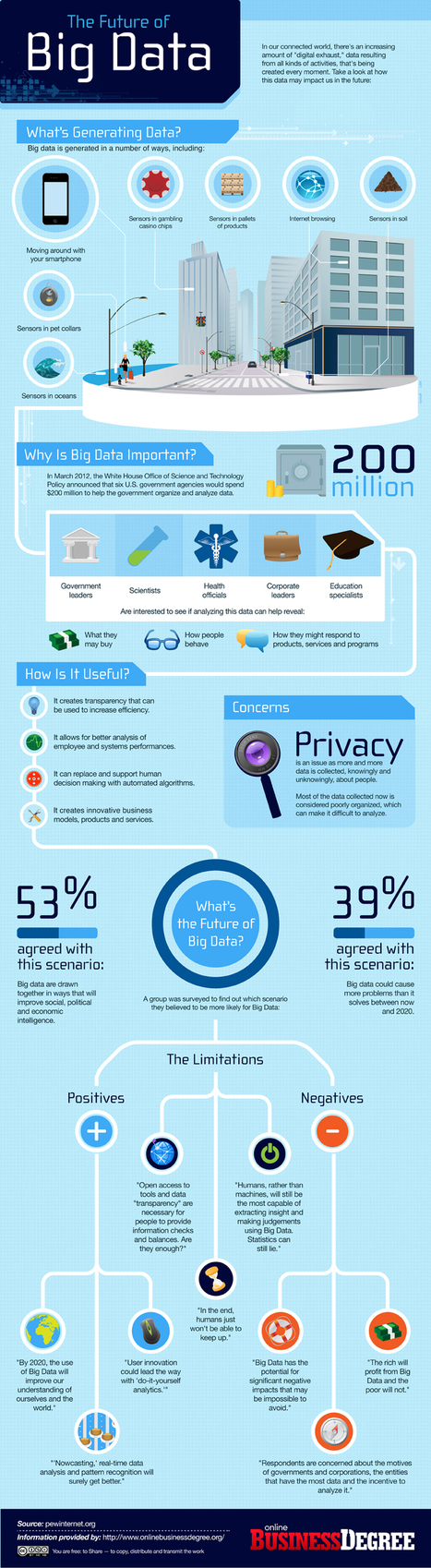
Big data is not new. It has existed for ages and can be attributed even to the initial years of computing. However, one might do well to consider why is there an increased buzz around this now. The answer is quite simple: Significant advances that have been brought about by x86 hardware have actually helped in bringing computing power to the masses. However, with new technologies, cloud computing has extended this power. Now, users have extended perimeters, while still being able to control costs effectively...
Via Lauren Moss
|
|
Scooped by
Beth Kanter
December 3, 2012 11:40 AM
|
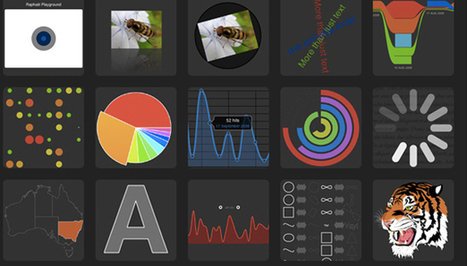
Slides by https://twitter.com/rahulbot Rahul Bhargava from a Pecha Kucha session he did during a launch of the Boston Indicators project. He is a researcher and data nerd at MIT.
Slide 2: Brilliant 2x2 of the tools Easy to Use ---- Hard To Use
Does One Thing -- Does Many
Even though all visuals, very useful.
|
|
Scooped by
Beth Kanter
December 3, 2012 11:28 AM
|
Curated by Beth Kanter http://www.bethkanter.org
This article is by Rahul Bhargava, Research Specialist, MIT Center for Civic Media. He runs the "Data Therapy" project, that helps people present and share their data in creative ways.
This article he shares three techniques for journalists to use data to tell stories.
- Let your audience explore
- Explain with pictures
- Create strking images
The site, DataDrivenJournalism.net, is dedicated to providing anyone interested in getting started with data driven journalism with a collection of learning resources, including relevant events, tools, tutorials, interviews and case studies.
Other links: http://datadrivenjournalism.net/news_and_analysis/www.datatherapy.org
|
|
Rescooped by
Beth Kanter
from visual data
December 2, 2012 12:17 PM
|
As the old saying goes about pictures being "worth a thousand words," so goes the story about infographics.
Infographics are a compelling way to represent complex information quickly and clearly. In an infographic, visual symbols and numbers are used with colors, fonts, and labels to make the data more useful. With the flood of information and exponential data points, it is imperative to focus people's attention on not just the valuable data, but the implications as well. Storytelling is using a linear narrative to guide people- as the creative and performance marketing communities work together to make sense of data, we must not squander the opportunity that this format provides. We need to create meaningful infographics that minimize information anxiety by conveying the perspective in the most effective manner. Agencies are tasked with providing creative expressions that connect target audiences with meaningful content -- and infographics are by no means any different. Visit the complete article to learn more about the fundamental factors that contribute to successful infographics:..
Via Lauren Moss
|
|
Rescooped by
Beth Kanter
from visual data
December 2, 2012 12:17 PM
|
At the Visualized conference on November 9th, Neil Halloran posed an interesting question: Can DataViz lead to a data savvy society in the same way that the printing press lead to a literate one? One that is prepared to make tough decisions on complex issues? Neil Halloran thinks so. That’s why he created VisualBudget.org to cut through hyperbole surrounding the what may be the most frequently misunderstood and pressing issue facing Americans today, our massive $16 trillion dollar deficit. But how is a modern citizen supposed to make an informed decision on issues of tremendous scope and complexity, such as the fiscal cliff or the growing budget deficit without falling back on sound bites and punditry? Neil Halloran’s solution is to tell a story. Rather than simply presenting a static infographic or a set of tabular data on federal receipts and expenditures, VisualBudget.org takes you on a interactive tour...
Via Lauren Moss
|
|
Rescooped by
Beth Kanter
from visual data
November 27, 2012 11:07 AM
|
The human brain processes visual information much faster and digests this type of content concurrently, whereas it takes more time to break text down. So, for many, it makes more than just sense to have your complex information delivered to your target audience in the most legible format...
Infographics make good use of brain’s ability to assimilate knowledge and information through the visual medium, making tough-to-crack-data appealing. Simply put, an infographic is a carefully composed collage of images, content, charts, stats, diagrams, animations & video to graphically represent information. Infographics are used by various quarters such as educational institutions, acadamecians, businesses, newspapers, and just anybody who are serious about putting across their point in the most simplest manner. Infographics take different forms- venn diagrams, charts, timelines, maps and more. They are not merely a design or an image or random data; their purpose should be seen from every angle.
Visit the link to learn more about the process of creating infographics, how to implement online tools and resources, and best practices...
Via Lauren Moss
|
|
Rescooped by
Beth Kanter
from Pinterest
November 15, 2012 2:06 PM
|
If you are like me, you have become hopelessly addicted to Pinterest. The uses, both personal and for business, are endless.
Via Kelly Lieberman
|
|
Rescooped by
Beth Kanter
from visual data
November 2, 2012 2:41 PM
|
Want to create an attractive infographic but don’t have the budget to hire a professional designer? Then you should try using an infographic-creation tool. If your small business is looking for an eye-catching and easy to comprehend way to teach, inform, and inspire others about its products and services, infographics might be a good solution. Infographics can be more effective and memorable than other ways to present data, making them particularly effective for online audiences. To create an infographic, you should make a list of possible ideas that you want to get across, create the initial draft or skeleton, color scheme it, and research your content from authoritative sites. Then it’s time to select your design platform.
Read about three online tools that can help you create stunning infographics...
Via Lauren Moss
|
|
Scooped by
Beth Kanter
October 9, 2012 2:27 PM
|
The first course in visualization and infographics.
|
|
Rescooped by
Beth Kanter
from visual data
October 7, 2012 12:20 PM
|
“Open data” — the philosophy and practice of making the data collected by government agencies freely available to the public — is critical to increasing citizens’ engagement with their governments. Since 2010, hundreds of nations, regions, and cities across the world have launched their own open data initiatives. For example, datacatalogs.org maintains centralized lists of local, regional, and national data catalogs. Europe is heavily represented: nearly every country publishes open data, geospatial files and maps and statistics. Within each nation, local councils, regional governments, and autonomous regions are publishing their own locally-relevant open data. Spain, Italy, and France each boast over a dozen internal data catalogs created by local agencies... Whether or not open data portals eventually lead to open, transparent, and accountable democratic governments is still up for debate, but they remain indispensable to the citizens, researchers, and journalists using data from these sites.
Read the complete post for a better understanding of open data in a concise, yet informative article with numerous links and specific initiatives referenced for further research...
Via Lauren Moss
|
|
Scooped by
Beth Kanter
September 28, 2012 11:58 AM
|
Having worked in academia, government and industry, I've had a unique opportunity to build products in each sector. Much of this product development has been around building data products.
|


![How Powerful is Visual Content - here are the Facts & Figures [Infographic] | Visualization Techniques and Practice | Scoop.it](https://img.scoop.it/EvnvZIauXFaI2wXDhBwyJTl72eJkfbmt4t8yenImKBVvK0kTmF0xjctABnaLJIm9)






















Visual imagery + story telling. You can't get a better combo.
A picture paints a thousand words!