


Nipah virus is listed as one of the World Health Organization's priority pathogens, meaning urgent action is needed against it.

 Your new post is loading...
 Scoop.it! Nipah virus is listed as one of the World Health Organization's priority pathogens, meaning urgent action is needed against it. 
No comment yet.
Sign up to comment
Scoop.it!

Mothers' breast milk can provide protection against infection that lasts for life, finds new research in mice by an international team of scientists including experts at the University of Birmingham.
Scoop.it!

Even premature babies carry anti-viral antibodies transferred from the mother, researchers report in a paper on maternal antibodies in newborns. The results should change our approach to infection sensitivity in newborns, they say.
Scoop.it!

Bladder infections, like many others, are increasingly becoming resistant to antibiotics."We are getting to the point where there are organisms that are...
Scoop.it!

KINSHASA – Although the Ebola response in the Democratic Republic of the Congo (DRC) continues to make headway thanks to the determination of health workers on the ground, insecurity is still hampering the response, the World Health Organization (WHO) said on Tuesday.
Scoop.it!

New global survey increases the number of known marine viruses 12-fold. Nearly 200,000 different kinds of viruses swirl in the world’s oceans, according to a new study, Quanta Magazine reports. The new count is 12 times higher than what the previous census of marine viruses recorded in 2016. The reasons for the jump, researchers says, include extensive expeditions to collect samples and improved tools for genetic analysis.
Metagenomic assembly of 145 marine viromes uncovered 195,728 viral populations. Read mapping revealed discrete sequence boundaries among >99% viral populations. Viral communities separated into five distinct ecological zones in the global ocean. Viral macro- and microdiversity did not follow the latitudinal diversity gradient
Via Dr. Stefan Gruenwald
Scoop.it!

From
qz

Cruise ships currently have no vaccination requirements, despite being prime places to spread contractable diseases.
Scoop.it!

Two former clients of a New Mexico spa that offered "vampire facials" have been diagnosed with HIV, state health officials said Monday.
Scoop.it!

The agriculture minister has said the outbreak is “the most dangerous and costly of its kind in the husbandry industry of Vietnam.”...
Scoop.it!

The conveniences of modern life have contributed to the potentially more widespread transmission of infectious diseases. In 2009, for example, the world awoke to a global outbreak of swine flu, a respiratory disease that is a subtype of the H1N1 virus.
Scoop.it!
From
labiotech
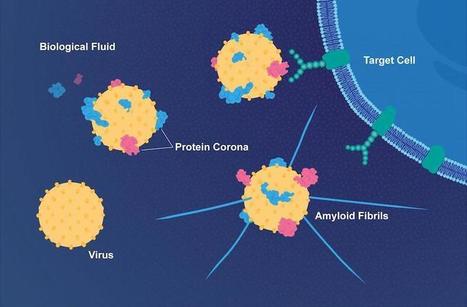
Scientists in Sweden have found that some viruses can increase the buildup of protein ‘plaques’ linked to Alzheimer’s disease, a discovery that could lead to new vaccines treating the condition.
Scoop.it!

From
gizmodo
The current outbreak of Ebola in the Democratic Republic of Congo (DRC) has infected 1,720 and killed 1,136, giving the viral disease a whopping 66 percent fatality rate. And the situation is making public health experts on the ground increasingly nervous.
Scoop.it!
Last week we heard exciting news about a new blood test that can detect every virus that has infected you. From a drop of blood researchers can now determine the presence of antibodies against hundreds of viruses known to infect humans. For the first time medical researchers will have access to the history of virtually all your past and current viral infections with an unprecedented level of detail. The potential uses of this technology promise great opportunities in diagnostics in the field and beyond.
Until now, doctors have used a number of techniques to determine the presence of viral infections. Some tests detect the physical presence of the virus itself, in the form of viral proteins or viral genomes (RNA or DNA). In contrast, serological techniques measure the presence of specific antibodies against viral proteins. In serological assays the presence of an antibody response against a virus means that you are, or have previously been infected with such virus. The limitation of these tests has been that they could measure the presence of only a few viruses at a time. Early this month, researchers at Brigham and Women’s Hospital in Boston and Harvard Medical School have used a combination of antibody detection techniques, immuno-precipitation, and massive parallel DNA sequencing, to engineer a viral test that can simultaneously detect hundreds of viruses at the same time. The tests can be run with as little as one microliter of blood, and at a cost ($25) below a typical doctor visit co-payment. The technologies used in this research work published in Science have been available for years. However, the Boston researchers applied them with a much higher level of complexity that I’ll try to explain in a moment, bear with me !
Investigators used a database of all viruses known to infect humans (a list of 206 virus species, what’s called “human virome”), to generate thousands of small pieces of proteins in bits of 56 amino acids (56mer). This collection of 56mers (near 100,000 of them) contains partially overlapping sequences that cover all the proteins of the complete human virome. All these small pieces of viral proteins were displayed on the outside of a virus called “T7 bacteriophage” to create a library in which each individual bacteriophage unit expresses multiple copies of one single 56mer. In other words, each bacteriophage carries a fragment of a viral protein that could be recognized by a single human antibody. Upon addition of a drop of blood to the collection of bacteriophages, antibodies present in the sample bind to some bacteriophage particles carrying specific 56mer, which can be later recovered using a technique called “immuno-precipitation.” To identify which bits of proteins were recovered, researchers sequenced the DNA of the bacteriophages pulled by the human antibodies. Samples that pull multiple bits of proteins known to exist in a given virus are identified as having antibodies against such virus, and therefore reveal the presence of a past or present infection. A further twist of the technology allows researchers to sequence multiple sequences in parallel and identify at the same time thousands of antibodies present in the blood sample.....
Published in Science (June 5, 2015) https://doi.org/10.1126/science.aaa0698
|
Scoop.it!

The just-ended 2018-2019 flu season was relatively mild compared to the last season, during which nearly 80,000 people in the U.S. died of flu-related illness, according to estimates by the U.S. Centers for Disease Control ...
Scoop.it!

From
sfist
A bill just approved by the California State Senate would make Truvada, the HIV drug that's been found to be effective at preventing new HIV infections, available for over-the-counter use for 30 days.
Scoop.it!

A study using human biological samples and mouse models has found what can make viruses more dangerous and how some could facilitate Alzheimer's.
Scoop.it!

African green monkeys survived infection with the Nipah virus after they received remdesivir. The virus, a pandemic threat carried by bats, has killed dozens of people in Asia.
Scoop.it!

From
phys
Viruses, the most abundant biological entities on earth, are a scourge on humanity, causing both chronic infections and global pandemics that can kill millions. Yet, the true extent of viruses that infect humans remains completely ... Via Emilio Mordini
Scoop.it!

Health officials have attributed the cause to the use of unsanitary equipment, unsafe blood transfusion and rampant malpractice often at the hands of quacks.
Scoop.it!

Hostility toward health workers continued to hamper efforts to contain the second-deadliest outbreak of the virus.
Scoop.it!

Germany and New York recently introduced bills to fine people who fail to vaccinate. But policies that let people forgo vaccinations may be on the rise.
Scoop.it!
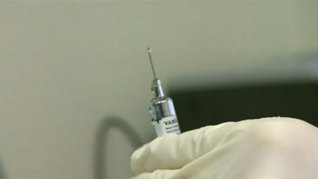
Australian pharmacies are running out of the flu vaccine amid unprecedented numbers of people getting immunised against the infection.
Scoop.it!

By NewsDesk @bactiman63 The Ugandan Ministry of Health declared a yellow fever outbreak earlier this month after laboratory confirmed cases were reported from Koboko and Masaka districts. The patients are an 80-year-old woman and a 10-year-old girl.
Scoop.it!

Scientists at Fred Hutchinson Cancer Research Center took a step toward making gene therapy more practical by simplifying the way gene-editing instructions are delivered to cells.
Scoop.it!

From
www
Abstract Background Allogeneic hematopoietic stem-cell transplantation for X-linked severe combined immunodeficiency (SCID-X1) often fails to reconstitute immunity associated with T cells.
Eight infants with SCID-X1 were followed for a median of 16.4 months. Bone marrow harvest, busulfan conditioning, and cell infusion had no unexpected side effects. In seven infants, the numbers of CD3+, CD4+, and naive CD4+ T cells and NK cells normalized by 3 to 4 months after infusion and were accompanied by vector marking in T cells, B cells, NK cells, myeloid cells, and bone marrow progenitors. The eighth infant had an insufficient T-cell count initially, but T cells developed in this infant after a boost of gene-corrected cells without busulfan conditioning. Previous infections cleared in all infants, and all continued to grow normally.
Juan Lama's insight:
Major achievement in the Gene Therapy field.
|




