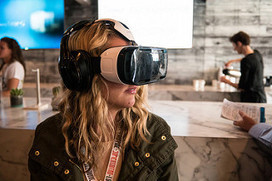
Looking for Augmented Reality vs Virtual Reality (AR vs VR)? Here You Will Find The Realistic Comparison of These Two Future Technologies.

 Your new post is loading... Your new post is loading...
 Scoop.it!
Looking for Augmented Reality vs Virtual Reality (AR vs VR)? Here You Will Find The Realistic Comparison of These Two Future Technologies. 
No comment yet.
Sign up to comment
Scoop.it!

the best way to train soft skills is to use immediate feedback training. This is the foundation of interactive VR. The idea is to learn by doing. One must be immersed in realistic settings in which verbal and non-verbal cues are present and conversation and interpersonal interaction follows. The training occurs by placing individuals in situations in which their ability to show empathy, to embrace diversity and to avoid bias can be evaluated in real-time. From a brain-based perspective, immediate feedback training targets the basal ganglia learning system. This system learns through “physical repetition”.
Scoop.it!
The good news is there is an abundance of multimedia resources available that support the creation and sharing of student storytelling products. This short list of tools and teaching suggestions can help educators integrate a variety of writing activities into their instructional designs. All are what I call Push / Pull tools, which teachers use to push content out to students and which students can also use to create content that teachers pull back in.
Scoop.it!

This past July, members of the eLearning community gathered at 2017 Realities360 Conference to learn from the experiences of pioneers in the creation of AR, VR, and other alternative realities. The tone of the conference and high expectations were set during the opening general session, “How VR Is Changing the Future of Content.” Keynote speaker Maxwell Planck described his own journey that began with animated feature-length films during his 10 years at Pixar. Then, believing that VR was the next great medium for telling stories, he moved on to VR as the technical co-founder of Oculus Story Studio, where they created Lost, Henry, and Dear Angelica, short (10-minute) immersive VR experiences for the Oculus Rift. Via Edumorfosis
Scoop.it!
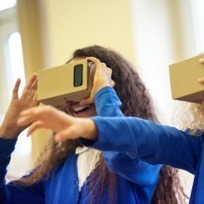
Are you curious about using augmented or virtual reality in your classroom? If you've already tried it out, are you looking for more app and lesson plan ideas? Either way, we've got you covered. Start with the Google Cardboard headset (it's only $15), and whether you're using iOS, Android, Chromebooks, or iPads, we've curated an assortment of apps and lesson plans to try out with your students.
Scoop.it!
Along with the developer toolkit, Google's launching an experimental browser to let anyone make AR-capable websites.
Scoop.it!
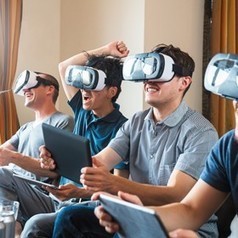
The benefits of virtual reality (VR) and augmented reality (AR) include increased engagement, appeal to visual learners and shared experience among students. Via Linda Foote
Scoop.it!
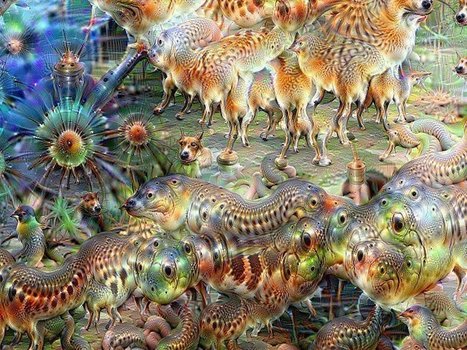
Project Magenta, a team at Google, is crossbreeding sounds from different instruments based on neural networks and building networks that can draw. Via Yashy Tohsaku, Jim Lerman
Scoop.it!
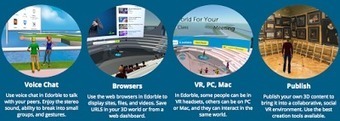
Edorble is a fantastic tool for creating your own 3D virtual classroom. Just download the software and claim your room code. You can then share the code with your students and they can join you for virtual tutorials, social events or film and video viewings. Via Nik Peachey, Jim Lerman
Scoop.it!

Sansar empowers individuals, communities, schools, studios, corporations, brands and others to easily create, share and ultimately sell immersive 3D social experiences for consumers to enjoy on HTC Vive, Oculus Rift and Windows PCs, according to the company Linden Labs, which also created Second Life. Via Nik Peachey, Jim Lerman

Nik Peachey's curator insight,
August 9, 2017 6:55 AM
This could be a really exciting step forward for VR in education. Love that these enviroments are shared.
Scoop.it!
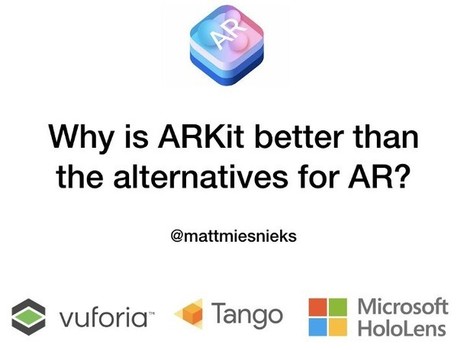
From
medium

Apple’s announcement of ARKit at the recent WWDC has had a huge impact on the Augmented Reality eco-system. Developers are finding that for the first time a robust and (with IOS11) widely available AR SDK “just works” for their apps. There’s no need to fiddle around with markers or initialization or depth cameras or proprietary creation tools. Unsurprisingly this has led to a boom in demos (follow @madewitharkit on twitter for the latest). However most developers don’t know how ARKit works, or why it works better than other SDKs. Looking “under the hood” of ARKit will help us understand the limits of ARKit today, what is still needed & why, and help predict when similar capabilities will be available on Android and Head Mount Displays (either VR or AR).
Scoop.it!

Here are some of my thoughts about the use of VR, for what they are worth.
1. VR is not just a fad that will disappear. There are already a large number of commercial applications, mainly in entertainment and public relations, but also increasingly for specific areas of training (more on that below). There is already a lot of excellent, off-the-shelf software for creating VR environments, and the cost of hardware is dropping rapidly (although good quality headsets and other equipment are still probably too expensive for required use by large numbers of students). 2. What killed earlier two-dimensional VR developments such as Second Life for widespread educational use was the high cost and difficulty of creating the sets and contexts for learning. Thus even if the hardware and software costs for VR are low enough for individual student use, it is the production costs of creating educational contexts and scenarios that are likely to inhibit its use. 3. Thus most suitable educational applications are likely to be where the cost of alternative or traditional ways of learning are too expensive or too dangerous. In particular, VR would be good for individual, self-learning in contexts where real environments are not easily accessible, or where learners need to cope with strong emotions when making decisions or operating under pressure in real time. Examples might be emergency management, such as shutting down an out-of-control nuclear reactor, or defusing a bomb, or managing a fire on an oil tanker. However, not only will the VR environment have to be realistic, as much attention will need to be paid to creating the specific learning context. The procedure for defusing the bomb and the interaction between learner and the virtual bomb must also be built in to the production. Thus VR may often need to be combined with simulation design and quality media production to be educationally effective, again pushing up the cost. For these reasons, medicine is a likely area for experiment, where traditional training costs are really high or where training is difficult to provide with real patients. 4. Having said that, we need more experimentation. This is still a relatively new technology, and there may be very simple ways to use it in education that are not costly and meet needs that cannot be easily met in traditional teaching or with other existing technology. For this to happen, though, educators, software developers, and media producers need to come together to play and experiment. Via Miloš Bajčetić, Jim Lerman
Scoop.it!
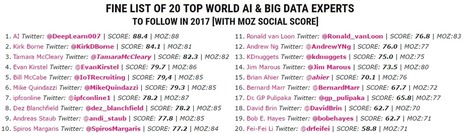
"… when AI meets BIG DATA… a Fine List of 20 Top World Artificial Intelligence & Big Data Experts to Follow on Twitter in 2017" Via EDTECH@UTRGV, Jim Lerman
|
Scoop.it!

At Digital Promise Global, our global engagement programs support educators to empower young people as creators and changemakers, harnessing emerging technology to make a difference in the world. Via Jim Lerman
Scoop.it!

DISCOVERY COMMUNICATIONS AND GOOGLE ANNOUNCE THE LAUNCH OF GROUNDBREAKING VR SERIES “DISCOVERY TRVLR” “The Seven-Part, 38-Episode Epic is the First VR Series to Take Viewers to All Seven Continents” Discovery Communications and Google announced today the launch of “Discovery TRVLR,” a groundbreaking new immersive series from Discovery VR and Google’s VR team. The first chapter …
Scoop.it!

Pretty soon you'll never have to take off your VR headset again as Chrome adds support for viewing any site in virtual reality.
Scoop.it!
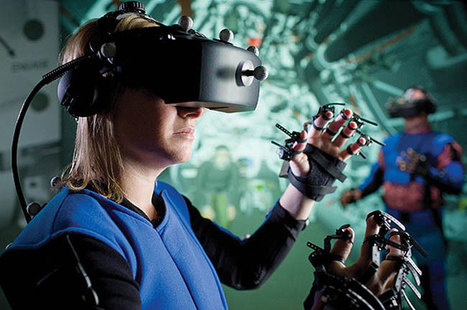
This paper introduces the concept of online ‘ Innovations-Labs ’ (i -Labs) as location-independent collaborative ideation spaces. We highlight the challenges and opportunities that disruptive innovations present to companies and society, and discuss how Science Fiction Prototyping and Diegetic Innova-tion Templating can provide a means to explore that space by acting as ideation process and a language for capturing and communicating innovations. Via THE OFFICIAL ANDREASCY

Andreas Christodoulou's curator insight,
March 4, 2017 12:57 AM
Changing the way we interact with the world.

THE OFFICIAL ANDREASCY's curator insight,
March 4, 2017 1:59 AM
You may have heard of Fab Labs. Similar to this concept, this paper introduces online ‘Innovations-Labs’ (i-Labs) as location-independent collaborative ideation spaces. The intention is to discuss the challenges and opportunities that come by combining Virtual Reality, Science Fiction Prototyping, Diegetic Innovation Templating and Innovation Labs to form an online immersive reality innovation-lab.
Exciting and fruitful for connected learning.
Scoop.it!
|

|
Scooped by
Jim Lerman
September 10, 2017 2:05 PM
|
Scoop.it!

Share TweetThis new Samsung tool is using VR to bring sight to the near-blind. VR has the opportunity to improve so much of daily life by altering and improving reality. For those with vision impairment, seeing and reading are the ultimate improvements to reality—and VR may be the solution. Relúmĭno is an app that pairs …
|
|
Rescooped by
Jim Lerman
from Into the Driver's Seat
September 7, 2017 10:21 PM
|
Scoop.it!

The Internet of Things (IoT) demystified: what you should know about the Internet of Things - from technologies and cases to trends per industry.
|
|
Rescooped by
Jim Lerman
from Into the Driver's Seat
August 21, 2017 9:24 PM
|
Scoop.it!

The world is changing very rapidly with emerging technology almost every day. The future of mobile technology closely revolves around two words: “augmented reality” (AR). AR in simple terms means an advanced and unseen version of what we can see with our naked eyes.
A regular sight when perceived through our smartphone infused with the AR technology will be enhanced through the use of computer-generated sensory input such as sound, video, graphics and GPS data.
|
|
Rescooped by
Jim Lerman
from Cultivating Creativity
August 10, 2017 7:54 PM
|
Scoop.it!

As part of a new project to humanize AI, the company created a guide to what it calls “human-centered machine learning.”
|
|
Rescooped by
Jim Lerman
from Into the Driver's Seat
August 2, 2017 5:16 PM
|
Scoop.it!

Augmented reality has the potential to revolutionize learning in primary and secondary schools more than any other technology has done in the recent past.

Augmented reality has the potential to revolutionize learning in primary and secondary schools more than any other technology has done in the recent past.
Learn more / En savoir plus / Mehr erfahren:
https://gustmees.wordpress.com/2016/09/19/some-practice-examples-that-will-influence-education/
http://www.scoop.it/t/la-realite-augmentee-augmented-reality-ar
|
|
Rescooped by
Jim Lerman
from Top Social Media Tools
July 31, 2017 8:23 AM
|
Scoop.it!
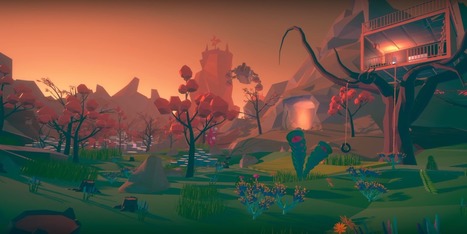
Google's Blocks app was designed so anyone can create a world in VR. The results are absolutely mesmerizing, and easier than you think.

Does virtual reality make sense in your world of marketing, content or education? Check out Google Blocks which lets you create your own VR world.
|
|
Rescooped by
Jim Lerman
from Education and Tech Tools
July 23, 2017 12:03 AM
|
Scoop.it!

Closing one’s eyes and seeing something that doesn’t exist in one’s current reality is a skill that many people throughout time have had to develop in their learning paths. Now, virtual reality is taking imagination a step further and allowing people to experience augmented situations in a very practical way.

What 5 fields are already embracing virtual reality? Medical and Astronomy are two of the five!