Your new post is loading...

|
Scooped by
Ed Rybicki
February 25, 1:53 AM
|
One of the largest known stars in the universe underwent a dramatic transformation in 2014, new research shows, and may be preparing to explode. A study led by Gonzalo Muñoz-Sanchez at the National Observatory of Athens, published in Nature Astronomy today, argues that the enormous star WOH G64 has transitioned from a red supergiant to a rare yellow hypergiant—in what may be evidence of an impending supernova.
|
|
Scooped by
Ed Rybicki
February 25, 1:49 AM
|
Even a mild case of COVID-19 or the flu can impact the body long after the fever and cough fade, according to new Tulane University research that may help explain why some people struggle to feel fully recovered weeks or months later. Tulane researchers found that while both viruses can leave lasting lung damage, only SARS-CoV-2 infection caused persistent brain inflammation and small blood vessel injury, even after the virus was no longer detectable.
|
|
Scooped by
Ed Rybicki
February 21, 3:23 AM
|
The tiny shell protecting the HIV virus resembles a slightly rounded ice cream cone, but there is nothing sweet about it. More than 40 million people worldwide live with AIDS because of this virus, and treatments must continually evolve as HIV mutates. During the acute stage of infection, a single human cell can produce as many as 10,000 new HIV particles.
|
|
Scooped by
Ed Rybicki
February 21, 3:22 AM
|
A new multinational study from the INTERCOVID Consortium, including Ann & Robert H. Lurie Children's Hospital of Chicago, has found that COVID-19 vaccination during pregnancy, particularly when combined with a booster dose, significantly reduces the risk of preeclampsia, a serious and potentially...
|
|
Scooped by
Ed Rybicki
February 21, 3:21 AM
|
DNA is the blueprint of life. Genes encode proteins and serve as the body's basic components. However, building a functioning organism also requires precise instructions about when, where, and how much those components should be produced.
|
|
Scooped by
Ed Rybicki
February 21, 3:19 AM
|
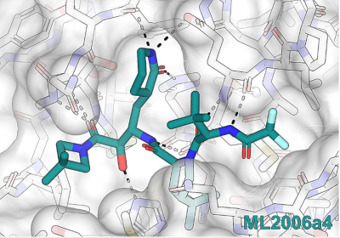
Researchers have redesigned the hepatitis C drug boceprevir to creat e a more effective treatment for COVID-19. The researchers used the Stanford Synchrotron Radiation Lightsource (a DOE Office of Science User Facility) to analyze the crystal structure.
|
|
Scooped by
Ed Rybicki
February 21, 3:18 AM
|
To capture higher-definition and sharper images of cosmological objects, astronomers sometimes combine the data collected by several telescopes. This approach, known as long-baseline interferometry, entails comparing the light signals originating from distant objects and picked up by different telescopes that are at different locations, then reconstructing images using computational techniques.
|
|
Scooped by
Ed Rybicki
February 21, 3:16 AM
|
Ribosomes, the cell's protein-making factories, consume large amounts of energy as they build the proteins that keep cells alive and functioning. When cells experience stress—such as lack of nutrients or sudden drops in temperature—they quickly switch into survival mode. New research from the Schuman Lab at the Max Planck Institute for Brain Research in Frankfurt now reveals an unexpected way cells manage this transition: by pairing up inactive ribosomes using a ribosomal RNA link. This RNA-based mechanism reveals a previously unknown role for ribosomal RNA in the cellular stress response. The new study is published in Science.
|
|
Scooped by
Ed Rybicki
February 21, 3:16 AM
|
Inspired by the simple mechanism of a seesaw—when one side goes up, the other side goes down—researchers asked an intriguing question: Could a single molecule switch between two different roles like a seesaw? This idea led to the creation of a new type of artificial protein called the "seesaw protein."
|
|
Scooped by
Ed Rybicki
February 11, 8:59 AM
|
By Patience Dabula, LabVoice Issue 02 Across Africa, laboratories are central to disease detection, surveillance, and patient care. Yet for years, access to external quality assessment (EQA) has been constrained by high costs, logistical challenges, and reliance on donor-driven programs.
|
|
Scooped by
Ed Rybicki
February 11, 6:22 AM
|
From vaccines and diagnostics to emerging gene-based therapies, RNA molecules are now central to modern medicine. But as their use continues to grow, so does a fundamental challenge: producing RNA quickly, accurately and with the flexibility needed for next-generation biomedical applications.
|
|
Scooped by
Ed Rybicki
February 11, 6:21 AM
|
Researchers at Oregon State University have developed and tested in a mouse model a new type of nanoparticle that enables the removal of melanoma tumors with a low-power laser. After the systemically administered nanoparticles accumulate in cancerous tissue, exposure to near-infrared light causes them to heat up and destroy the melanoma cells, leaving healthy tissue unharmed.
|
|
Scooped by
Ed Rybicki
February 11, 6:19 AM
|
Long Covid isn't one condition. Discover why identifying immune endotypes (Hypo vs Hyper-immune) is critical for successful clinical trials and treatment.
|
|
|
Scooped by
Ed Rybicki
February 25, 1:50 AM
|
For the first time, researchers have observed and measured weak electrical discharges, known as coronae, on trees during thunderstorms. A new study describes the near-invisible sparkles appearing similarly on branches of several tree species up and down the U.S. East Coast during the summer of 2024, implying that thunderstorms may paint entire canopies with a scintillating blue glow, albeit too faintly for human eyes to see.
|
|
Scooped by
Ed Rybicki
February 25, 1:49 AM
|
Asteroid mining companies are finally getting off the ground, and that is raising some concerns about the impact those activities will have on the space environment. A new paper published in Acta Astronautica by Anna Marie Brenna of the University of Waikato in New Zealand discusses a framework that she thinks might work to solve the legal challenges facing those who want to protect the space environment and those who want to exploit it.
|
|
Scooped by
Ed Rybicki
February 21, 3:23 AM
|
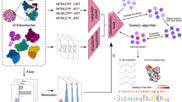
Here, the authors report that the protein language model ESM-2 is broadly useful for variant effect prediction, including unobserved changes, and can be applied to understand novel viral pathogens with the potential to be applied to any protein sequence, pathogen or otherwise.
|
|
Scooped by
Ed Rybicki
February 21, 3:22 AM
|
In a 2023 paper on hypoxia and glucose metabolism, our lab showed how organisms rewire their metabolism to adapt to low oxygen levels—such as those found at high altitudes. One of the most striking observations from that work was a dramatic drop in circulating blood sugar.
|
|
Scooped by
Ed Rybicki
February 21, 3:21 AM
|
Astronomers have long debated why so many icy objects in the outer solar system look like snowmen. Michigan State University researchers now have evidence of the surprisingly simple process that could be responsible for their creation.
|
|
Scooped by
Ed Rybicki
February 21, 3:19 AM
|
The climate crisis is warming Antarctica fast, with potentially disastrous consequences. Now scientists have modeled the best- and worst-case scenarios for climate change in Antarctica, demonstrating just how high the stakes are—but also how much harm can still be prevented.
|
|
Scooped by
Ed Rybicki
February 21, 3:17 AM
|
Many insects rely on heritable bacterial endosymbionts for essential nutrients that they cannot get through their diet. A new study, published in Nature Communications, indicates that the genomes of these symbiotic bacteria often shrink over time. Some of these bacteria, which live inside certain insect cells, have lost so many genes that they have broken the record for the tiniest genome ever found—almost blurring the lines between organelle and bacteria.
|
|
Scooped by
Ed Rybicki
February 21, 3:16 AM
|
In an early animal test, a new nasal-spray vaccine has shown promise against a variety of germs and a common allergen, scientists report.
|
|
Scooped by
Ed Rybicki
February 11, 9:01 AM
|
The authors demonstrate that targeted protein degradation of the dengue virus capsid suppresses infection through capsid-dependent pathways rather than classical inhibition, revealing a new antiviral strategy effective against resistant viral variants.
|
|
Scooped by
Ed Rybicki
February 11, 8:20 AM
|
In a new study, researchers say that nonbiological sources they considered could not fully account for the abundance of organic compounds in a sample collected on Mars by NASA's Curiosity rover. The paper is published in the journal Astrobiology.
|
|
Scooped by
Ed Rybicki
February 11, 6:22 AM
|
Researchers at the Jacobs School of Medicine and Biomedical Sciences at the University at Buffalo have developed a new inhalable form of tuberculosis (TB) treatment that could significantly reduce the burden of current therapy. Jessica L. Reynolds, Ph.D., associate professor of medicine in the Jacobs School, is senior author on the paper, titled "Repeated Pulmonary Dosing of β-Glucan-Chitosan-PLGA Nanoparticles Controls Mycobacterium Tuberculosis in Mice," published in Antimicrobial Agents and Chemotherapy.
|
|
Scooped by
Ed Rybicki
February 11, 6:21 AM
|
As population immunity continues to grow, understanding how immune responses influence both disease outcomes and viral evolution has become increasingly important.
|