Your new post is loading...

|
Scooped by
Ed Rybicki
January 19, 2023 6:04 AM
|
Cann's Principles of Molecular Virology, - 7th Edition, revised by EP Rybicki. Print Book. ISBN 9780128227848. Now published!!
"Cann's Principles of Molecular Virology, Seventh Edition provides an easily accessible introduction to modern virology, presenting principles in a clear and concise manner. The new edition provides the history of virology and the fundamentals of the molecular basis of how viruses work.
Instructor review copies: click on this link. https://protect-za.mimecast.com/s/qU2qCNxKq0i0ZNRQxcmeDdo
|
|
Scooped by
Ed Rybicki
July 20, 9:26 AM
|
Malawi - Patrick Chakwana, 50, has lived with HIV since 1999, when there was no effective treatment and the message to those diagnosed was blunt: "AIDS Kills". Today, as Malawi becomes one of the latest African countries to launch Lenacapavir, a twice-yearly injectable drug that prevents HIV...
|
|
Scooped by
Ed Rybicki
July 20, 9:24 AM
|
Researchers at EMBL Hamburg and collaborators at the Leibniz Research Institute for Molecular Pharmacology (FMP) have mapped how the influenza A virus rewires infected human cells in unprecedented detail.
|
|
Scooped by
Ed Rybicki
July 20, 9:23 AM
|
How life started on our own planet may not seem as interesting as finding evidence of life on Mars or the icy moons Europa or Enceladus. But the search for the first eukaryotes on Earth remains as important to astrobiology as finding life on a far-flung planet. That's in part because, for 90% of Earth's history, life was microbial.
|
|
Scooped by
Ed Rybicki
July 20, 9:23 AM
|
Are we alone in the universe? For scientists working on NASA's proposed Habitable Worlds Observatory, that question is no longer purely philosophical. It is increasingly becoming an engineering problem.
|
|
Scooped by
Ed Rybicki
July 20, 9:22 AM
|
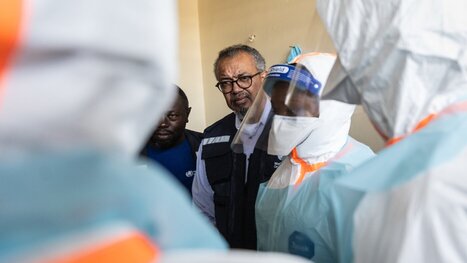
Vor einer Woche kam ein mit Ebola infizierter Patient auf die Sonderisolierstation des Frankfurter Uniklinikums. Die Behandlung hilft ihm.
|
|
Scooped by
Ed Rybicki
June 1, 10:00 AM
|
Opened in 2023 at Westmead, Sydney’s biocontainment quarantine centre was designed after the 2014 Ebola outbreak for “high consequence infectious diseases.”...
|
|
Scooped by
Ed Rybicki
June 1, 9:59 AM
|
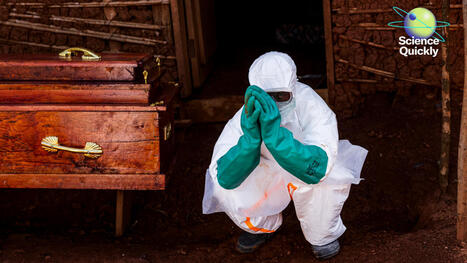
The outbreak remains focused in Congo's eastern Ituri province. Congo has reported over 1,000 suspected cases with the Bundibugyo virus, which has no approved treatment or vaccine.
|
|
Scooped by
Ed Rybicki
June 1, 9:58 AM
|
The Coalition for Epidemic Preparedness Innovations (CEPI) has announced today that it will urgently accelerate the development of three investigational vaccines targeting the Bundibugyo ebolavirus that has caused a rapidly spreading epidemic in the Democratic Republic of the Congo (DRC) and...
|
|
Scooped by
Ed Rybicki
June 1, 9:57 AM
|
The WHO has declared the Ebola spread in the DRC and Uganda a public health emergency of international concern, and experts warn that the U.S.decisio...
|
|
Scooped by
Ed Rybicki
June 1, 9:52 AM
|
When viruses invade a plant, you might expect an all-out immune war. But new research published in Science shows that, much like in humans, too strong an immune response can actually do more harm than good.
|
|
Scooped by
Ed Rybicki
March 24, 8:34 AM
|
Severe acute respiratory syndrome coronaviruses use the ACE2 receptor for viral entry while downregulating its activity, potentially leading to hypertension and major organ injuries.Dual-action technologies based on soluble ACE2 aimed to neutralize the virus while restoring ACE2's normal enzymatic...
|
|
Scooped by
Ed Rybicki
March 24, 8:33 AM
|
Rice is a vital crop that feeds more than half of the world's population. In the wild, many rice species are perennials that live for several years, but the varieties we eat today are typically annuals that must be replanted every season. That is an expensive process for farmers requiring continual labor, seeds and field preparation to keep up with demand. But a cheaper solution may be on the way one day.
|
|
|
Scooped by
Ed Rybicki
July 20, 9:26 AM
|
Woolworths is urging customers to shop normally as egg and poultry supply chains remain stable. It comes as New Zealand’s largest egg supplier Mainland...
|
|
Scooped by
Ed Rybicki
July 20, 9:24 AM
|
New Test Strip Improves Mosquito Virus Detection...
|
|
Scooped by
Ed Rybicki
July 20, 9:24 AM
|
Congo's health ministry said the deaths were recorded out of the 2,344 cases confirmed as of Saturday. Thirty-seven new deaths were recorded in the previous 24 hours in one of the highest totals.
|
|
Scooped by
Ed Rybicki
July 20, 9:23 AM
|
Environmental science and conservation news...
|
|
Scooped by
Ed Rybicki
July 20, 9:23 AM
|
"QDENGA has been approved in 43 countries, with more than 32 million doses distributed globally," a Takeda official stated.| OpIndia News...
|
|
Scooped by
Ed Rybicki
June 1, 10:00 AM
|
Millions of supporters are expected to travel to the US, Mexico and Canada for the World Cup, but for travellers coming from some parts of Africa, the journey has suddenly become far more complicated.
|
|
Scooped by
Ed Rybicki
June 1, 9:59 AM
|
HIV treatment has been improved and simplified significantly over the years yet a small fraction of people living with HIV still take complex multi-pill regimens. Spotlight reports on a new combination pill that could make life easier for some in this group.
|
|
Scooped by
Ed Rybicki
June 1, 9:59 AM
|
Eli Lilly has announced the simultaneous acquisition of three companies — Curevo (US), LimmaTech Biologics (Switzerland), and Vaccine Company (US).
|
|
Scooped by
Ed Rybicki
June 1, 9:58 AM
|
Hundreds of youths in Kenya’s central town of Nanyuki on Monday demonstrated against the establishment at the Laikipia Air Base of an Ebola quarantine center for American citizens exposed to the virus.
|
|
Scooped by
Ed Rybicki
June 1, 9:57 AM
|
Italy and Brazil are probing suspected Ebola cases linked to travel from affected regions as the outbreak in the Democratic Republic of Congo continues to grow despite five recent recoveries.
|
|
Scooped by
Ed Rybicki
June 1, 9:52 AM
|
Concerns about Ebola or hantavirus being a new pandemic are rising, but for the millions with Long COVID, we’re still in this one.
|
|
Scooped by
Ed Rybicki
March 24, 8:33 AM
|
The findings of a new study by a Charles Sturt University researcher and colleagues challenge a long-standing assumption used by scientists studying ancient disease. The study is published in the International Journal of Osteoarchaeology.
|
|
Scooped by
Ed Rybicki
March 24, 8:32 AM
|
Scientists have proven that a wildflower steeped in folklore for its medicinal powers has genuine healing qualities—and the potential to help combat antibiotic resistance. Tormentil, a yellow wildflower found in heath and boglands in the UK, Ireland and across Europe, can inhibit the growth of one of the world's most deadly pathogens.
|