


Sierra Leone confirmed a new case of Ebola on Wednesday, its second in less than a week, marking a further setback in efforts to end a two-year West African epidemic that has killed more than 11,300 people.

 Your new post is loading...
 Scoop.it! Sierra Leone confirmed a new case of Ebola on Wednesday, its second in less than a week, marking a further setback in efforts to end a two-year West African epidemic that has killed more than 11,300 people. 
No comment yet.
Sign up to comment
Scoop.it!
Named after the forest in Uganda from which it was first isolated in 1947, Zika virus (ZIKV) is a flavivirus transmitted by Aedes spp. mosquitos. Although the widespread distribution of the vector may make many regions vulnerable to ZIKV, the virus was confined to Africa and Asia until 2007, when it arrived in Oceania. However, in the past year, ZIKV has been circulating in the Americas, where concerns have now been raised over possible links with microcephaly (a congenital growth impairment of the head).
Scoop.it!

Transmission of the virus has been stopped in West Africa – but what has the world learned?
Scoop.it!

RNAs are functionally diverse macromolecules whose proper functions rely strictly upon their correct tertiary structures. However, because of their high structural flexibility, correct folding of RNAs is challenging and slow. Therefore, cells and viruses encode a variety of RNA remodeling proteins, including helicases and RNA chaperones. In RNA viruses, these proteins are believed to play pivotal roles in all the processes involving viral RNAs during the life cycle. RNA helicases have been studied extensively for decades, whereas RNA chaperones, particularly virus-encoded RNA chaperones, are often overlooked. This review describes the activities of RNA chaperones encoded by RNA viruses, particularly the ones identified and characterized in recent years, and the functions of these proteins in different steps of viral life cycles, and presents an overview of this unique group of proteins.
Scoop.it!
Coronaviruses: emerging and re-emerging pathogens in humans and animals
Scoop.it!
Zombies—also known as walkers, Zed, Zs, biters, geeks, stiffs, roamers, Zeke, ghouls, rotters, Zoms, and runners—have become a dominant part of the medical landscape. Zombie expert Matt Mogk defines a zombie with three criteria: it is a reanimated human corpse; it is relentlessly aggressive; and it is biologically infected and infectious.1 But Mogk notes that this definition has been altered by the recognition of “rage” zombies, which are infected but still alive. They are more closely related to vampires infected with the contagious bacterium Bacillus vampiris.2 Here, I review zombie biology and epidemiology.
Ed Rybicki's insight:
Some holiday fun
Scoop.it!
How best to use antiretroviral therapy (ART) has been a topic of debate for almost three decades. The landmark START trial1 settled one question that should have been resolved long ago—when to initiate ART in people with HIV. Findings of START showed a 57% reduction in AIDS, severe non-AIDS events, or deaths in people with a CD4 count higher than 500 cells/μL who were randomly assigned to immediate versus deferred treatment.2 This finding supports conclusions from observational studies and the recently completed west African TEMPRANO trial3 (which also favoured early treatment), and has profound implications for public health.
Scoop.it!
Although human Middle-East respiratory syndrome coronavirus (MERS-CoV) infection seems to be associated with exposure to animals, including camels, identification of the animal reservoir remains challenging.1–3 We believe that this gap results from the fact that surveillance systems for diseases in both human beings and animals remain fragmented and fail to take into account the social and ecological contexts within which diseases emerge. Additionally, there is a paucity of data for emerging infectious diseases in animals, especially camels in east Africa.
Ed Rybicki's insight:
NOT Open Access...B-(
Scoop.it!

Most of South Africa – and the world for that matter – has thus far relied on a short statement from the Presidency to try understand President Jacob Zuma’s ir-rationale for firing respected Finance Minister Nhlanhla Nene. But as globally respected author and journalist Rian Malan explains in this brilliant contribution, most have thus far missed what was surely Zuma’s version of PW Botha’s Rubicon Speech. Like Botha did 30 years ago, Zuma deviated completely from the original script. Instead, he produced almost an hour of ad-libbing, providing a window into the mind of a man we can all now see is massively out of his depth. Now that he has been given his head it’s quite obvious that Zuma possesses none of the basics required to drive a complex modern economy, least of all the critical requirement of an open mind. A year ago, almost to the day, we published Rian Malan’s take on EFF leader Julius Malema. It quickly became one of our best read stories of 2014. There’s no doubt the army of Rian Malan fans will appreciate this superb piece just as much. It is republished with the permission of Politicsweb where it first appeared. – Alec Hogg
Ed Rybicki's insight:
...and it frightens the shit out of me...
Scoop.it!

If I had gotten the flu shot the year I was pregnant I would have…
Scoop.it!

2015 marks the 50th anniversary of the discovery of the Australia antigen, which in 1967 was identified to be the hepatitis B virus surface antigen. Although much has been accomplished over the past five decades, current antiviral therapies for chronic hepatitis B only achieve the sustained clearance of infection in a minority of patients. Recent success in using combinations of drugs to cure almost all cases of chronic hepatitis C has stimulated interest in a similar approach to chronic hepatitis B. We are proud to present you the Hepatitis B Symposium. This joint project of Antiviral Research with the Hepatitis B Foundation offers you the latest research on the history, pathophysiology and current management of hepatitis B. It also describes a wave of newly identified drug targets, investigational compounds and experimental strategies that are now under clinical evaluation or in preclinical development. The Hepatitis B Foundation is a non-profit organization that has been dedicated to the global problem of hepatitis B for almost 25 years. Its commitments include funding focused research, promoting disease awareness, supporting immunization and treatment initiatives, and serving as the primary source of information for patients and their families, the medical and the scientific community, and the general public.

good health's curator insight,
January 16, 2024 9:56 AM
https://farmaciadimagrante.com/ https://farmaciadimagrante.com/Prodotto/acquista-cristallo-mdma-online/ https://farmaciadimagrante.com/Prodotto/acquista-ativan-online/ https://farmaciadimagrante.com/Prodotto/acquista-botox-online/ https://farmaciadimagrante.com/Prodotto/acquista-cerotti-al-fentanil/ https://farmaciadimagrante.com/Prodotto/acquista-codeina-linctus-online/ https://farmaciadimagrante.com/Prodotto/acquista-codeina-online/ https://farmaciadimagrante.com/Prodotto/acquista-demerol-online/ https://farmaciadimagrante.com/Prodotto/acquista-depalgo-online/ https://farmaciadimagrante.com/Prodotto/acquista-diazepam-online/ https://farmaciadimagrante.com/Prodotto/acquistare-idromorfone-online/ https://farmaciadimagrante.com/Prodotto/acquista-endocet-online/ https://farmaciadimagrante.com/Prodotto/acquista-green-xanax/ https://farmaciadimagrante.com/Prodotto/acquista-hydrocodone-online/ https://farmaciadimagrante.com/Prodotto/acquista-instanyl-online/ https://farmaciadimagrante.com/Prodotto/acquista-l-ritalin-online/ https://farmaciadimagrante.com/Prodotto/acquista-metadone/ https://farmaciadimagrante.com/Prodotto/acquista-morfina-solfato/ https://farmaciadimagrante.com/Prodotto/acquista-opana-online/ https://farmaciadimagrante.com/Prodotto/acquista-roxicodone-30mg/ https://farmaciadimagrante.com/Prodotto/acquista-stilnox-online/ https://farmaciadimagrante.com/Prodotto/acquista-suboxone-8mg/ https://farmaciadimagrante.com/Prodotto/acquista-subutex-online/ https://farmaciadimagrante.com/Prodotto/acquista-vicodin-online/ https://farmaciadimagrante.com/Prodotto/acquista-vyvanse-online/ https://farmaciadimagrante.com/Prodotto/acquista-xanax-2mg/ https://farmaciadimagrante.com/Prodotto/acquistare-dapoxetina-online/ https://farmaciadimagrante.com/Prodotto/acquistare-rohypnol-2mg/ https://farmaciadimagrante.com/Prodotto/acquistare-sibutramina-online/ https://farmaciadimagrante.com/Prodotto/efedrina-hcl-in-polvere/ https://farmaciadimagrante.com/Prodotto/ephedrine-hcl-30mg/ https://farmaciadimagrante.com/Prodotto/sciroppo-di-metadone/ https://farmaciadimagrante.com/Prodotto/tramadolo-hcl-200mg/ acquista-ativan-online acquista-botox-online acquista-cerotti-al-fentanil acquista-codeina-linctus-online acquista-codeina-online acquista-demerol-online acquista-depalgo-online acquista-diazepam-online acquistare-idromorfone-online acquista-endocet-online acquista-green-xanax acquista-hydrocodone-online acquista-instanyl-online acquista-l-ritalin-online acquista-metadone acquista-morfina-solfato acquista-opana-online acquista-roxicodone-30mg acquista-stilnox-online acquista-suboxone-8mg acquista-subutex-online acquista-vicodin-online acquista-vyvanse-online acquista-xanax-2mg acquistare-dapoxetina-online acquistare-rohypnol-2mg acquistare-sibutramina-online efedrina-hcl-in-polvere ephedrine-hcl-30mg sciroppo-di-metadone tramadolo-hcl-200mg acquista-adderall-30mg-online acquistare-sibutramina-online-2omg acquista-efedrina-hcl-30mg acquista-adipex-online-75mg acquista-phentermine-online-senza-prescrizione-medica acquistare-vyvanse-online-70mg https://www.google.it/url?q=https://farmaciadimagrante.com/Prodotto/acquista-ativan-online/ https://www.google.it/url?q=https://farmaciadimagrante.com/Prodotto/acquista-botox-online/ https://www.google.it/url?q=https://farmaciadimagrante.com/Prodotto/acquista-cerotti-al-fentanil/ https://www.google.it/url?q=https://farmaciadimagrante.com/Prodotto/acquista-codeina-linctus-online/ https://www.google.it/url?q=https://farmaciadimagrante.com/Prodotto/acquista-codeina-online/ https://www.google.it/url?q=https://farmaciadimagrante.com/Prodotto/acquista-demerol-online/ https://www.google.it/url?q=https://farmaciadimagrante.com/Prodotto/acquista-depalgo-online/ https://www.google.it/url?q=https://farmaciadimagrante.com/Prodotto/acquista-diazepam-online/ https://www.google.it/url?q=https://farmaciadimagrante.com/Prodotto/acquistare-idromorfone-online/ https://www.google.it/url?q=https://farmaciadimagrante.com/Prodotto/acquista-endocet-online/ https://www.google.it/url?q=https://farmaciadimagrante.com/Prodotto/acquista-green-xanax/ https://www.google.it/url?q=https://farmaciadimagrante.com/Prodotto/acquista-hydrocodone-online/ https://www.google.it/url?q=https://farmaciadimagrante.com/Prodotto/acquista-instanyl-online/ https://www.google.it/url?q=https://farmaciadimagrante.com/Prodotto/acquista-l-ritalin-online/ https://www.google.it/url?q=https://farmaciadimagrante.com/Prodotto/acquista-metadone/ https://www.google.it/url?q=https://farmaciadimagrante.com/Prodotto/acquista-morfina-solfato/ https://www.google.it/url?q=https://farmaciadimagrante.com/Prodotto/acquista-opana-online/ https://www.google.it/url?q=https://farmaciadimagrante.com/Prodotto/acquista-roxicodone-30mg/ https://www.google.it/url?q=https://farmaciadimagrante.com/Prodotto/acquista-stilnox-online/ https://www.google.it/url?q=https://farmaciadimagrante.com/Prodotto/acquista-suboxone-8mg/ https://www.google.it/url?q=https://farmaciadimagrante.com/Prodotto/acquista-subutex-online/ https://www.google.it/url?q=https://farmaciadimagrante.com/Prodotto/acquista-vicodin-online/ https://www.google.it/url?q=https://farmaciadimagrante.com/Prodotto/acquista-vyvanse-online/ https://www.google.it/url?q=https://farmaciadimagrante.com/Prodotto/acquista-xanax-2mg/ https://www.google.it/url?q=https://farmaciadimagrante.com/Prodotto/acquistare-dapoxetina-online/ https://www.google.it/url?q=https://farmaciadimagrante.com/Prodotto/acquistare-rohypnol-2mg/ https://www.google.it/url?q=https://farmaciadimagrante.com/Prodotto/acquistare-sibutramina-online/ https://www.google.it/url?q=https://farmaciadimagrante.com/Prodotto/efedrina-hcl-in-polvere/ https://www.google.it/url?q=https://farmaciadimagrante.com/Prodotto/ephedrine-hcl-30mg/ https://www.google.it/url?q=https://farmaciadimagrante.com/Prodotto/sciroppo-di-metadone/ https://www.google.it/url?q=https://farmaciadimagrante.com/Prodotto/tramadolo-hcl-200mg/ acquista-ativan-online acquista-botox-online acquista-cerotti-al-fentanil acquista-codeina-linctus-online acquista-codeina-online acquista-demerol-online acquista-depalgo-online acquista-diazepam-online acquistare-idromorfone-online acquista-endocet-online acquista-green-xanax acquista-hydrocodone-online acquista-instanyl-online acquista-l-ritalin-online acquista-metadone acquista-morfina-solfato acquista-opana-online acquista-roxicodone-30mg acquista-stilnox-online acquista-suboxone-8mg acquista-subutex-online acquista-vicodin-online acquista-vyvanse-online acquista-xanax-2mg acquistare-dapoxetina-online acquistare-rohypnol-2mg acquistare-sibutramina-online efedrina-hcl-in-polvere ephedrine-hcl-30mg sciroppo-di-metadone tramadolo-hcl-200mg
Scoop.it!

Thirty young men spent months burning the bodies of the infected. A year later, many relatives and fellow countrymen still can’t forgive them. Via Ian M Mackay, PhD
|
Scoop.it!

Herpes simplex virus establishes latent infection in peripheral neurons, and neuronal stress is known to reactivate virus production, but the molecular mechanisms underlying reactivation are unclear. Cliffe et al. now show that a neuron-specific Jun N-terminal kinase (JNK) stress pathway activates the expression of latent herpes simplex virus.
Herpesvirus graphic courtesy of Russell Kightley Media
Scoop.it!

It is widely accepted that effective human immunodeficiency virus (HIV) vaccines need to elicit a range of responses, including neutralising antibodies and T-cells. In natural HIV infections, immune responses to Gag are associated with lower viral load in infected individuals, and these responses can be measured against infected cells before the replication of HIV. Priming immune responses to Gag with DNA or recombinant Bacillus Calmette-Guérin (BCG) vaccines, and boosting with Gag virus-like particles as subunit vaccines or Gag produced in vivo by other vaccine vectors, elicits high-magnitude, broad polyfunctional responses, with memory T-cell responses appropriate for virus control. This review provides justification for the inclusion of HIV Gag in vaccine regimens, either as a transgene expressing protein that may assemble to form budded particles, or as purified virus-like particles. Possible benefits would include early control via CD8(+) T-cells at the site of infection, control of spread from the entry portal, and control of viraemia if infection is established.
Scoop.it!
Scoop.it!

Researchers aim to prevent recurrences by finding the virus’s natural host.
Scoop.it!
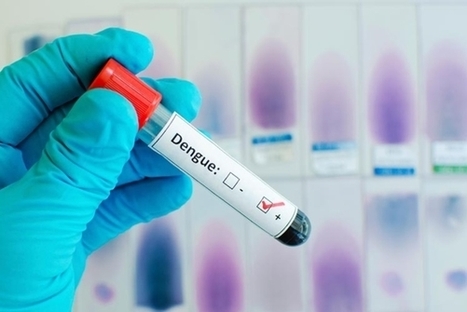
Mosquito-borne disease affecting millions has had no approved vaccine until now
Scoop.it!

Very funny tongue-in-cheek responses to the zombie article
Ed Rybicki's insight:
Because. Zombies!
Scoop.it!

Added value of this study
Scoop.it!

Since the beginning of the century, the number of measles-related deaths has fallen substantially; between 2000 and 2014 mass immunisation efforts prevented an estimated 17·1 million deaths worldwide, and the number of cases decreased from 146 to 40 per million. Unfortunately, after this decrease the situation has stagnated and many countries are falling far behind the 2015 elimination targets according to a report by WHO and the US Centers for Disease Control and Prevention (CDC) released in November, 2015. The elimination target was to reduce rates of measles virus infection to fewer than five cases per million people, as well as to reduce worldwide mortality rates by 95% from the 2000 estimate. By contrast, the report points out that although in all countries immunisation schedules include at least one dose of measles-containing vaccine, by 2014 only 122 countries—compared with 131 in 2012—met the target of at least 90% of children receiving the first dose. Moreover, only half the world is receiving the recommended second dose of the vaccine.
Scoop.it!

In The Lancet Infectious Diseases, Milagritos Tapia and colleagues1 address two important facets of Ebola virus immunity: longevity of vaccine-induced immune responses and correlates of immunity. Early attempts at Ebola virus vaccines on the basis of traditional methods, such as inactivated preparations and subunit vaccines, were not effective in animal studies2 (although later publications on these platforms are more promising3). Subsequent studies used a wide diversity of vaccine platforms that had not been used in approved human vaccines, such as non-pathogenic viral vectors engineered to express Ebola virus surface glycoprotein.4
Ed Rybicki's insight:
Open Access!!
Scoop.it!
The U.S. Food and Drug Administration has given the thumbs up to a genetically modified chicken that produces a drug in its eggs. It’s the latest addition to a growing area in medicine known as “farmaceuticals.” The drug is called Kanuma, or sebelipase alfa, and it’s used to treat a rare and devastating disease known as lysomal acid lipase deficiency (or LAL deficiency). This heritable condition prevents the body from breaking down fatty molecules in cells, including those in the liver, spleen, and vasculature. Kanuma, a recombinant human enzyme marketed by Alexion Pharmaceuticals, replaces the faulty enzyme responsible for the disorder, which is often fatal in infants. A second form of the disorder also exists in adults, causing liver enlargement, fibrosis, cirrhosis, and cardiovascular disease.
Scoop.it!

The means of engineering potentially deadly avian influenza is freely available on the internet. Despite continuing global efforts to contain avian influenza, or bird flu, the means of engineering this potentially deadly H5N1 virus to render it transmissible to humans is freely available on the internet. So too are similar instructions for engineering a virus like the "Spanish flu", which killed some 50 million people in the pandemic of 1918-19. The digital floodgates opened in 2011 when a peak US regulatory watchdog came down in favour of scientists seeking to publishing their work engineering the H5N1 virus. The decision to uphold such "scientific freedom" was and remains, highly contentious among the global scientific community. Its implications, however, are readily available as online "recipes" for potentially dangerous viruses, which add a new risk to the already considerable challenges of maintaining global biosecurity in the 21st century. For all the recent advances in biomedical science, drugs, vaccines and technology, this is a challenge we remain ill-equipped to meet.
Ed Rybicki's insight:
OFFS: seriously! Again?! Someone else has just discovered that entire virus genomes are freely available via PubMed, along with papers on gain-of-function experiments, and immediately leaps to the conclusion that this means "...the means of engineering this potentially deadly H5N1 virus to render it transmissible to humans is freely available on the internet". I'm sorry, this is being simple-minded to the point of parody. I have written elsewhere - in ViroBlogy, and in Nature Biotech's Bioentrepreneur blog section - on how it is MOST unlikely that bearded fellows in caves in Afghanistan or remote farms in Montana are going to whip up weaponised batches of H5N1 flu or Ebola. Yes, the papers are available; yes, the sequences necessary to make a potentially (and I say potentially advisedly) deadly virus are available online. But could anyone outside of a sophisticated lab environment use these to make anything nasty? No. Seriously, no. Just think about what you would need to make weaponised flu, for example. There are two ways to go here, these being the totally synthetic route ("mail order" DNA - HATE that term!), with some serious molecular biology and cell culture at the end of it, and the "natural" route - which would involve getting a natural and nasty isolate of H5N1 / H7N9 / H9N2, and being able to culture it and engineer it as well. Both routes require a minimum of a serious 4-yr-degree-level training in microbiology / mol biol, as well as laboratory resources that would include incubators, biohazard cabinets, and disposables and reagents that are not on your normal terrorist's priority purchase list. In fact, the kinds of resources you'd find at a University or Institute Infectious Disease unit - or state-sponsored biowarfare lab. Seriously, now: in order to use the information that is "freely available", you'd have to do what amounts to an entire postgrad degree's worth of work just to set up the kinds of reverse genetics necessary to WORK with recombinant flu, presuming you already had an isolate, and even more than that if you were to start with synthesised DNA and try to recreate infectious virus. Again, this is the kind of work they do in biowarfare / biodefence labs (funny how they're the same thing, isn't it?) - because it's finicky, expensive, laborious - and potentially dangerous to the researcher. And it's interesting that the only rumoured escapes of biowarfare agents have been of flu in 1977 in the old Soviet Union, and of anthrax in Sverdlovsk in the USSR in 1979. And in the US in 2001, and again in 2014. ALL of them from official facilities, I will discreetly point out. Oh, there have been rumours that Saddam's Iraq weaponised camelpox; that the USSR/Russia cloned Ebola into a poxvirus; that Al-Qaeda tested anthrax - but the first two took state resources, and if the third happened at all, it's nothing that the UK and USA and friends hadn't already done in the 1940s. IT IS NOT THAT EASY TO MAKE RECOMBINANT VIRUSES. Seriously.
Scoop.it!

The movie Contagion showed the havoc a virus could spread. This virus was based on a real virus - which does not spread as easily as in the movie, but is as deadly.
|







Ah, the perils of declaring a country Ebola-free...inadvisable!