


With fears about the Zika virus outbreak in South America spreading, experts are turning toward developing a vaccine that could prevent the spread of the virus.

 Your new post is loading...
 Scoop.it! With fears about the Zika virus outbreak in South America spreading, experts are turning toward developing a vaccine that could prevent the spread of the virus. 
No comment yet.
Sign up to comment
Scoop.it!

From
-
January 26, 2016 10:18 AM

To answer questions about the risks of Zika virus infection, researchers need better diagnostics.
Ed Rybicki's insight:
OK, I'll make some proteins then B-)
Scoop.it!

Animal health officials share what dog owners should know about the virus and what to do if their pets come down with it.
Scoop.it!

Flu virus hijacking tactics revealed by scientists
Scoop.it!

Inovio Pharma (INO), GeneOne Life Science Enter Collaboration for Zika Virus Vaccine GeneOne Life Science announced the initiation of a collaborative research program with Inovio Pharmaceuticals (Nasdaq: INO) to test and advance a DNA-based vaccine for preventing and treating the emerging and virulent Zika virus infection. Inovio and its collaborators are leveraging their past experience in designing and testing novel DNA-based vaccines for related viruses including the West Nile, dengue, and chikungunya viruses. Moreover, Inovio and GeneOne are currently collaborating on two phase I stage vaccine candidates for severe infectious diseases: INO-4212, a vaccine for Ebola infection and GLS-5300, a vaccine for MERS infection. The Zika virus vaccine candidate is currently undergoing preclinical animal studies to evaluate its immunogenicity.
Scoop.it!
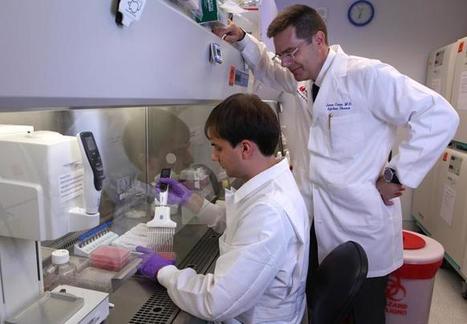
Researchers at Vanderbilt University Medical Center and the University of Texas Medical Branch in Galveston (UTMB) reported today in the journal Cell that they have isolated human monoclonal antibodies from Ebola survivors which can neutralize multiple species of the virus.
Scoop.it!

The guidance emphasizes integrated care for diverse needs of survivors.
Ed Rybicki's insight:
There is really no end in sight....
Scoop.it!

The CDC added eight tropical destinations to a travel alert about an mosquito-borne illness linked with a severe birth defect.
Scoop.it!

Brazil's authorities announce plans to prevent the spread of the mosquito-borne Zika virus in Rio de Janeiro during the Olympic Games later this year.
Scoop.it!

New research has - once again - appeared to prove the existence of the much-contested 'man flu'. The study, published by researchers at Johns Hopkins University, suggests that the female sex hormone oestrogen could help women combat the virus, leaving lesser-protected men out in the cold. Oestrogen, which is found at considerably higher levels in women than in men, was found to reduce the replication of the 'influenza A' virus in nasal cells, thereby initiating antiviral effects against the disease.
Ed Rybicki's insight:
Well, of course?!
Scoop.it!

Researchers have figured out a way to leverage rabies to not kill the brain, but instead map it.
Scoop.it!

Focus on the apparent association between Zika infection in pregnant women and the birth of babies with small brains is still largely circumstantial, but if true, is alarming.
Scoop.it!

As vaccine manufacturers tackle increasingly intractable pathogens, vaccines will be developed that show efficacy, but that are less efficacious than established vaccines. Consequently, regulatory and public health authorities will be faced with difficult decisions about whether such vaccines should be recommended for implementation and, if so, under what circumstances. The RTS,S/AS01 malaria candidate vaccine provides an important example of such a challenge.
|
Scoop.it!
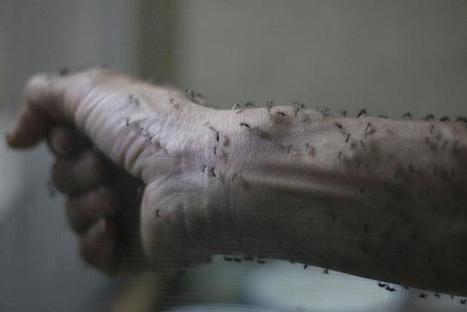
President Barack Obama on Tuesday called for the rapid development of tests, vaccines and treatments to fight the mosquito-transmitted Zika virus, which has been linked to birth defects and could spread to the United States in warmer months.
Ed Rybicki's insight:
Hee-eee-ey: over here!!! I'd love some money to work on making Zika antigens!?
Scoop.it!

One Russian politician says he expects the vaccine to earn Moscow "billions of dollars."
Ed Rybicki's insight:
Sounds like it's antibodies, but they don't say! And yet again - a country that researched Ebola in the Cold War years now has a therapy. Interesting, that...
Scoop.it!

It's been known that the HCV α-helical (AH) peptide has broad antiviral properties—the same property that allows the peptide to hijack host cell structures for HCV replication also produces ruptures in viral membranes, exposing the viral genome to host enzymes that destroy the pathogens. However, the development of therapies inspired by the actions of the AH peptide has been limited by the lack of knowledge about why it selectively attacks the viral envelope but not host cell membranes.
Scoop.it!

Researchers in the US have developed a virus-like biomaterial that catalyses the formation of hydrogen inexpensively and cleanly, which could lead to new environmentally friendly ways of producing biofuel.
Ed Rybicki's insight:
Phages: what can I say. Nature's nanotech enablers B-)
Scoop.it!

The European Patent Office on 20 January revoked a patent held by Monsanto on virus-resistant melons for technical reasons, much to the glee of opponents of patents on conventional plants. [updated…
Ed Rybicki's insight:
Now this is NOT a victory for anti-GMO activists, but more for folk who are against the patenting of natural genomes - which this is, in fact, as "Monsanto was claiming melons with a natural resistance to plant viruses." Which is not a good thing, in my mind, because it would mean companies could mine germ plasm collections for useful traits and then patent them.
Scoop.it!

The U.S. Department of Agriculture (USDA) is taking heat from Congress’s nonpartisan watchdog agency over the way it has responded to outbreaks of so-called emerging diseases in livestock. A U.S. Government Accountability Office (GAO) report faults USDA for not doing enough to respond to and investigate viral outbreaks in pigs in 2013 and 2014, as well as not doing nearly enough afterward to prevent and reduce the impact of future outbreaks.
Ed Rybicki's insight:
Good incubators for flu viruses, pigs - and who knows what is mixing in them??

wrightjohnson81@gmail.com's curator insight,
February 18, 2021 8:35 AM
https://marialivestockfarm.com/en/ https://marialivestockfarm.com/en/product/alpine-goats-for-sale/ https://marialivestockfarm.com/en/product/angus-cattle-for-sale/ https://marialivestockfarm.com/en/product/awassi-sheep-for-sale/ https://marialivestockfarm.com/en/product/beefmaster-cattle-for-sale/ https://marialivestockfarm.com/en/product/black-spanish-goats-for-sale/ https://marialivestockfarm.com/en/product/boer-goats-for-sale/ https://marialivestockfarm.com/en/product/boiler-chickens-and-eggs-for-sale/ https://marialivestockfarm.com/en/product/charolais-cattle-for-sale/ https://marialivestockfarm.com/en/product/dorset-sheep-for-sale/ https://marialivestockfarm.com/en/product/dropper-sheep-for-sale/ https://marialivestockfarm.com/en/product/fleckvieh-cattle-for-sale/ https://marialivestockfarm.com/en/product/girolando-cattle-for-sale/ https://marialivestockfarm.com/en/product/hereford-cattle-for-sale/ https://marialivestockfarm.com/en/product/holstein-heifer-cattle-for-sale/ https://marialivestockfarm.com/en/product/kalahari-red-goat-for-sale/ https://marialivestockfarm.com/en/product/leicester-longwool-sheep-for-sale/
Scoop.it!

From
qz
In South Korea last year, a single person spread the virus causing Middle East Respiratory Syndrome (MERS) to 186 others, 36 of whom died as a result. Now Thailand, having identified the virus in a visitor from Oman on Friday (Jan. 22), has since placed dozens of people in quarantine. It's the second MERS case that Thailand...
Scoop.it!

Sierra Leone’s army has been requested to assist to better protect the country against the ebola epidemic, following the World Health
Scoop.it!

A new drug has shown promise against both Marburg virus and Ebola. This may not be as surprising as it first seems, given the genetic similarities between the two viruses.
Scoop.it!

Scientists have discovered they can use the drug rapamycin to freeze the advance of cancer-causing Epstein-Barr virus in cells by putting the cells into a dormant state.
Scoop.it!

Experts said that it is just a matter of time before the mosquito-borne Zika virus arrives in the U.S. Here's what could happen once an outbreak occurs.
Scoop.it!

A newly emerging disease is threatening the Americas
|





One would hope so...of course, the time to act would have been before it got to S America, let alone N America!