 Your new post is loading...

|
Scooped by
Ed Rybicki
January 19, 2023 6:04 AM
|
Cann's Principles of Molecular Virology, - 7th Edition, revised by EP Rybicki. Print Book. ISBN 9780128227848. Now published!!
"Cann's Principles of Molecular Virology, Seventh Edition provides an easily accessible introduction to modern virology, presenting principles in a clear and concise manner. The new edition provides the history of virology and the fundamentals of the molecular basis of how viruses work.
Instructor review copies: click on this link. https://protect-za.mimecast.com/s/qU2qCNxKq0i0ZNRQxcmeDdo
|
|
Scooped by
Ed Rybicki
February 11, 8:59 AM
|
By Patience Dabula, LabVoice Issue 02 Across Africa, laboratories are central to disease detection, surveillance, and patient care. Yet for years, access to external quality assessment (EQA) has been constrained by high costs, logistical challenges, and reliance on donor-driven programs.
|
|
Scooped by
Ed Rybicki
February 11, 6:22 AM
|
From vaccines and diagnostics to emerging gene-based therapies, RNA molecules are now central to modern medicine. But as their use continues to grow, so does a fundamental challenge: producing RNA quickly, accurately and with the flexibility needed for next-generation biomedical applications.
|
|
Scooped by
Ed Rybicki
February 11, 6:21 AM
|
Researchers at Oregon State University have developed and tested in a mouse model a new type of nanoparticle that enables the removal of melanoma tumors with a low-power laser. After the systemically administered nanoparticles accumulate in cancerous tissue, exposure to near-infrared light causes them to heat up and destroy the melanoma cells, leaving healthy tissue unharmed.
|
|
Scooped by
Ed Rybicki
February 11, 6:19 AM
|
Long Covid isn't one condition. Discover why identifying immune endotypes (Hypo vs Hyper-immune) is critical for successful clinical trials and treatment.
|
|
Scooped by
Ed Rybicki
January 28, 4:22 AM
|
Clues about extreme cases and omicron’s effects come from a cross-disciplinary international research team.
|
|
Scooped by
Ed Rybicki
January 28, 4:20 AM
|
Chromosomes are masters of organization. These long strings of DNA fold down into an ensemble of compact structures that keep needed parts of the genome accessible while tucking away those that aren't used as often. Understanding the complexity of these structures has been challenging; chromosomes are large systems, and deciphering the structure and dynamics requires a combination of experimental data and theoretical approaches.
|
|
Scooped by
Ed Rybicki
January 27, 5:45 AM
|
In Europe, Maedi-Visna disease has high prevalence rates at the individual and flock levels, respectively, and is regarded as one of the most significant infectious disease in sheep. The lack of treatment or a commercial vaccine underscores the need for accurate and reliable diagnostic tools to...
|
|
Scooped by
Ed Rybicki
January 27, 5:43 AM
|
Newly emerging SARS-CoV-2 variants underscore the need for broad-spectrum antiviral solutions. This study shows a macrocyclic peptide inhibitor that locks the SARS-CoV-2 spike trimer into a “closed” conformation by engaging a conserved region, and demonstrates that intranasal administration of the...
|
|
Scooped by
Ed Rybicki
January 27, 5:42 AM
|
A new study pinpoints which DNA variants are likely responsible for the length of your pup's ears.
|
|
Scooped by
Ed Rybicki
January 27, 5:40 AM
|
Iron (Fe) is a vital micronutrient for plants, which is required for processes such as photosynthesis and enzyme activity. Plants must carefully manage iron levels to maintain health and productivity. They activate iron uptake genes when deficient and suppress them when iron is excessive to prevent toxicity. This careful balance is known as iron homeostasis.
|
|
Scooped by
Ed Rybicki
January 27, 5:39 AM
|
This chapter surveys recent advances in the use of protein language models, machine learning, and multimodal integration for immune receptor modeling. We highlight emerging strategies to leverage single-cell and repertoire-scale datasets, and optimize immune receptor candidates for therapeutic design. These developments point toward a new generation of data-efficient, generalizable, and clinically relevant models that better capture the diversity and complexity of adaptive immunity.
|
|
Scooped by
Ed Rybicki
January 21, 6:06 AM
|
MicroRNAs, whose discovery was recognized with the 2025 Nobel Prize in Physiology or Medicine, are central regulators of gene expression, yet a fundamental question has remained unanswered: how cells choose between the two strands produced from each microRNA precursor.
|
|
|
Scooped by
Ed Rybicki
February 11, 9:01 AM
|
The authors demonstrate that targeted protein degradation of the dengue virus capsid suppresses infection through capsid-dependent pathways rather than classical inhibition, revealing a new antiviral strategy effective against resistant viral variants.
|
|
Scooped by
Ed Rybicki
February 11, 8:20 AM
|
In a new study, researchers say that nonbiological sources they considered could not fully account for the abundance of organic compounds in a sample collected on Mars by NASA's Curiosity rover. The paper is published in the journal Astrobiology.
|
|
Scooped by
Ed Rybicki
February 11, 6:22 AM
|
Researchers at the Jacobs School of Medicine and Biomedical Sciences at the University at Buffalo have developed a new inhalable form of tuberculosis (TB) treatment that could significantly reduce the burden of current therapy. Jessica L. Reynolds, Ph.D., associate professor of medicine in the Jacobs School, is senior author on the paper, titled "Repeated Pulmonary Dosing of β-Glucan-Chitosan-PLGA Nanoparticles Controls Mycobacterium Tuberculosis in Mice," published in Antimicrobial Agents and Chemotherapy.
|
|
Scooped by
Ed Rybicki
February 11, 6:21 AM
|
As population immunity continues to grow, understanding how immune responses influence both disease outcomes and viral evolution has become increasingly important.
|
|
Scooped by
Ed Rybicki
January 28, 4:23 AM
|
New findings from NASA's Perseverance rover have revealed evidence of wave-formed beaches and rocks altered by subsurface water in a Martian crater that once held a vast lake—considerably expanding the timeline for potential habitability at this ancient site. In an international study led by Imperial College London, researchers uncovered that the so-called "Margin unit" in Mars's Jezero crater preserves evidence of extensive underground interactions between rock and water, as well as the first definitive traces of an ancient shoreline.
|
|
Scooped by
Ed Rybicki
January 28, 4:21 AM
|
A team of researchers from the Ministry of Health in Kuwait has successfully demonstrated the destruction of SARS-CoV-2 virus particles through exposure to high-frequency sound waves, marking a promising advance in non-pharmacological antiviral strategies. The findings were published in the journal Viruses in a study titled "Destruction/Inactivation of SARS-CoV-2 Virus Using Ultrasound Excitation: A Preliminary Study."
|
|
Scooped by
Ed Rybicki
January 27, 5:46 AM
|
In a groundbreaking study published in “Genome Medicine,” researchers have unveiled significant insights into the mechanisms by which CD4+ T cells respond to SARS-CoV-2, particularly focusing on the immunodominance of specific epitopes derived from the spike (S) and nucleocapsid (N) proteins.
|
|
Scooped by
Ed Rybicki
January 27, 5:44 AM
|
In a study published in Telestes, Dr. Joshua Kumbani and Dr. Margarita Díaz-Andreu categorized the various dance scenes depicted in South African rock art, drawing on ethnographic sources, published studies, and the comprehensive SARADA database to identify dance scenes, thus capturing this invaluable archive for the understanding of the San's various cultural practices.
|
|
Scooped by
Ed Rybicki
January 27, 5:43 AM
|
UCSF’s rapid shift to uncover the virus’s hidden effects and seemingly unconnected symptoms put it at the forefront of the field.
|
|
Scooped by
Ed Rybicki
January 27, 5:40 AM
|
Conventional treatments of Alzheimer's disease, one of the most common forms of dementia, have been largely focused on targeting individual pathological features. However, Alzheimer's disease is a multifactorial disorder driven by multiple, tightly interconnected processes, rendering single-target therapeutic approaches inherently limited. Addressing this challenge, KAIST researchers propose a new strategy that enables the simultaneous regulation of multiple disease-inducing factors simply by rearranging the structural positions of drug candidate molecules without altering their chemical substituents.
|
|
Scooped by
Ed Rybicki
January 27, 5:39 AM
|
A few thousand years ago, sugar was unknown in the western world. Sugarcane, a tall grass first domesticated in New Guinea around 6000BC, was initially chewed for its sweet juice rather than crystallized. By around 500BC, methods to boil sugarcane juice into crystals were first developed in India.
|
|
Scooped by
Ed Rybicki
January 27, 5:38 AM
|
Studies offer insights into the health risks and burdens faced by people who have had COVID infections. Meanwhile, the Trump administration has narrowed COVID vaccine recommendations and cut research.
|
|
Scooped by
Ed Rybicki
January 21, 6:05 AM
|
Through new experiments, researchers in Japan and Germany have recreated the chemical conditions found in the subsurface ocean of Saturn's moon, Enceladus. Published in Icarus, the results show that these conditions can readily produce many of the organic compounds observed by the Cassini mission, strengthening evidence that the distant world could harbor the molecular building blocks of life.
|


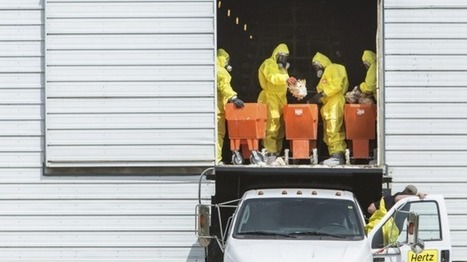












OFFS: seriously! Again?! Someone else has just discovered that entire virus genomes are freely available via PubMed, along with papers on gain-of-function experiments, and immediately leaps to the conclusion that this means "...the means of engineering this potentially deadly H5N1 virus to render it transmissible to humans is freely available on the internet".
I'm sorry, this is being simple-minded to the point of parody. I have written elsewhere - in ViroBlogy, and in Nature Biotech's Bioentrepreneur blog section - on how it is MOST unlikely that bearded fellows in caves in Afghanistan or remote farms in Montana are going to whip up weaponised batches of H5N1 flu or Ebola.
Yes, the papers are available; yes, the sequences necessary to make a potentially (and I say potentially advisedly) deadly virus are available online.
But could anyone outside of a sophisticated lab environment use these to make anything nasty?
No.
Seriously, no.
Just think about what you would need to make weaponised flu, for example. There are two ways to go here, these being the totally synthetic route ("mail order" DNA - HATE that term!), with some serious molecular biology and cell culture at the end of it, and the "natural" route - which would involve getting a natural and nasty isolate of H5N1 / H7N9 / H9N2, and being able to culture it and engineer it as well.
Both routes require a minimum of a serious 4-yr-degree-level training in microbiology / mol biol, as well as laboratory resources that would include incubators, biohazard cabinets, and disposables and reagents that are not on your normal terrorist's priority purchase list.
In fact, the kinds of resources you'd find at a University or Institute Infectious Disease unit - or state-sponsored biowarfare lab.
Seriously, now: in order to use the information that is "freely available", you'd have to do what amounts to an entire postgrad degree's worth of work just to set up the kinds of reverse genetics necessary to WORK with recombinant flu, presuming you already had an isolate, and even more than that if you were to start with synthesised DNA and try to recreate infectious virus.
Again, this is the kind of work they do in biowarfare / biodefence labs (funny how they're the same thing, isn't it?) - because it's finicky, expensive, laborious - and potentially dangerous to the researcher.
And it's interesting that the only rumoured escapes of biowarfare agents have been of flu in 1977 in the old Soviet Union, and of anthrax in Sverdlovsk in the USSR in 1979. And in the US in 2001, and again in 2014. ALL of them from official facilities, I will discreetly point out.
Oh, there have been rumours that Saddam's Iraq weaponised camelpox; that the USSR/Russia cloned Ebola into a poxvirus; that Al-Qaeda tested anthrax - but the first two took state resources, and if the third happened at all, it's nothing that the UK and USA and friends hadn't already done in the 1940s.
IT IS NOT THAT EASY TO MAKE RECOMBINANT VIRUSES.
Seriously.