


J Virol. 2016 Oct 26. pii: JVI.01879-16. [Epub ahead of print]

Virology News
207.7K views |
+9 today
Topical news snippets about viruses that affect people. And other things. Like Led Zeppelin. And zombies B-)
Curated by
Ed Rybicki
 Your new post is loading...
 Scoop.it! 
Some of our resident viruses may be beneficial.
Ed Rybicki's insight:
EXCELLENT article.

Scoop.it!

Scientists working in the field who need to diagnose Ebola face challenging conditions. They have to send samples to labs far away, hope they get there safely, and then wait days for results.
Scoop.it!

Paleovirology studies how viruses and their hosts have evolved together for millions of years, which could provide clues to fighting them.
Scoop.it!
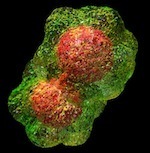
Grapevine red blotch-associated virus (GRBaV) is a single-stranded DNA virus, proposed to be a member of the family Geminiviridae, and is associated with grapevines showing red blotch symptoms in North America. The existence of the virus was reported in 2012, and subsequently detected in grapevines in major grape production regions. We investigated if a vector exists that can transmit GRBaV in vineyards. Phylogenetic analysis of the predicted amino acid sequence of coat protein (CP) of GRBaV with the CP of 23 geminiviruses representing all seven genera of the family Geminiviridae revealed that GRBaV-CP was most similar to that of Tomato pseudo-curly top virus, a geminivirus known to be transmitted by a treehopper (Membracidae), a family that is closely related to leafhoppers (Cicadellidae). To identify vectors of GRBaV, hemipteran species within and nearby wine grape vineyards where virus spread was suspected were collected and transmission assays were conducted. Among the species tested, the three-cornered alfalfa hopper Spissistilus festinus (Hemiptera: Membracidae) was able to both acquire the virus from a grapevine infected with GRBaV and transmit the virus to healthy grapevines in the laboratory. In commercial vineyards, lateral shoots of grapevines girdled due to feeding injury by the adult three-cornered alfalfa hopper also tested positive for the virus using digital PCR. These findings represent an important step in understanding the biology of GRBaV and develop management guidelines. Geminivirus graphic by Russell Kightley Media
Ed Rybicki's insight:
Really good use of technology I am SOOOO familiar with - having started doing PCR on geminiviruses back in 1989 or so. Smart integration of information! Thanks to Gary Foster for pointing this out.
Scoop.it!

At Cornell University’s Baker Institute for Animal Health, groundbreaking horse health research is not surprising but standard. Such is the tone with which Prof. Doug Antczak ’69, animal science, refers to various scientific feats that have emerged from the 66-year-old facility, although the professor mentions the endeavors of his predecessors before his own work. Regardless, […]
Ed Rybicki's insight:
Hah! I remember Cornell fondly. Mainly for the climbing and the beer - but also the virology B-)
Scoop.it!

How did part of a black-widow venom gene end up in a virus that infects one of the world's most successful bacteria?
Ed Rybicki's insight:
What can I say: viruses - the original genetic engineers B-)
Scoop.it!

Diabetes and its concurrent complications impact a significant proportion of the population of the US and create a large financial burden on the American health care system. FDA-approved maggot debridement therapy (MDT), the application of sterile laboratory-reared Lucilia sericata (green bottle fly) larvae to wounds, is a cost-effective and successful treatment for diabetic foot ulcers and other medical conditions. Human platelet derived growth factor-BB (PDGF-BB) is a secreted dimeric peptide growth factor that binds the PDGF receptor. PDGF-BB stimulates cell proliferation and survival, promotes wound healing, and has been investigated as a possible topical treatment for non-healing wounds. Genetic engineering has allowed for expression and secretion of human growth factors and other proteins in transgenic insects. Here, we present a novel concept in MDT technology that combines the established benefits of MDT with the power of genetic engineering to promote healing. The focus of this study is to create and characterize strains of transgenic L. sericata that express and secrete PDGF-BB at detectable levels in adult hemolymph, whole larval lysate, and maggot excretions/ secretions (ES), with potential for clinical utility in wound healing. We have engineered and confirmed transgene insertion in several strains of L. sericata that express human PDGF-BB. Using a heat-inducible promoter to control the pdgf-b gene, pdgf-b mRNA was detected via semi-quantitative PCR upon heat shock. PDGF-BB protein was also detectable in larval lysates and adult hemolymph but not larval ES. An alternative, tetracycline-repressible pdgf-b system mediated expression of pdgf-b mRNA when maggots were raised on diet that lacked tetracycline. Further, PDGF-BB protein was readily detected in whole larval lysate as well as larval ES. Here we show robust, inducible expression and production of human PDGF-BB protein from two conditional expression systems in transgenic L. sericata larvae. The tetracycline-repressible system appears to be the most promising as PDGF-BB protein was detectable in larval ES following induction. Our system could potentially be used to deliver a variety of growth factors and anti-microbial peptides to the wound environment with the aim of enhancing wound healing, thereby improving patient outcome in a cost-effective manner.
Ed Rybicki's insight:
Now THAT'S cool! Using a VERY old technique, modernised with maggots that make a HGF!
Scoop.it!

A new study has found that people find simple, fact-based vaccination messages most convincing. | Vaccines Today
Ed Rybicki's insight:
Amen.
Scoop.it!
CDC Study: Flu Vaccine Saved 40,000 Lives During 9 Year Period - CDC
Scoop.it!
The world is taking unprecedented steps to address the rise in antibiotic resistant infections during a summit at the United Nations General Assembly on Tuesday.
Ed Rybicki's insight:
THEN viruses.
Scoop.it!

Army researchers from Fort Detrick are developing relationships with Ebola survivors in Uganda.
Scoop.it!

Influenza kills between 250,000 and 500,000 people worldwide every year. The virus travels efficiently via large airborne droplets, when infected people sneeze, cough or talk.
Ed Rybicki's insight:
I thought 400K, but hey, I could be wrong...?
|
Scoop.it!

The collaboration builds on one launched over the summer by Sanofi Pasteur and the Walter Reed Army Institute of Research
Scoop.it!

Researchers have been trying for decades to develop a vaccine against the globally endemic hepatitis C virus (HCV).
Scoop.it!

From
phys

To infect its victims, influenza A heads for the lungs, where it latches onto sialic acid on the surface of cells.
Scoop.it!

Human adenoviruses (HAdVs) contain seven species (HAdV-A to -G), each associated with specific disease conditions. Among these, HAdV-D includes those viruses associated with epidemic keratoconjunctivitis (EKC), a severe ocular surface infection. The reasons for corneal tropism for some but not all HAdV-Ds are not known. The fiber protein is a major capsid protein; its C-terminal “knob” mediates binding with host cell receptors to facilitate subsequent viral entry. In a comprehensive phylogenetic analysis of HAdV-D capsid genes, fiber knob gene sequences of HAdV-D types associated with EKC formed a unique clade. By proteotyping analysis, EKC virus-associated fiber knobs were uniquely shared. Comparative structural modeling showed no distinct variations in fiber knobs of EKC types but did show variation among HAdV-Ds in a region overlapping with the known CD46 binding site in HAdV-B. We also found signature amino acid positions that distinguish EKC from non-EKC types, and by in vitro studies we showed that corneal epithelial cell tropism can be predicted by the presence of a lysine or alanine at residue 240. This same amino acid residue in EKC viruses shows evidence for positive selection, suggesting that evolutionary pressure enhances fitness in corneal infection, and may be a molecular determinant in EKC pathogenesis.
Ed Rybicki's insight:
Couldn't resist B-)
Scoop.it!

Cities and towns across the state have recorded at least 427 recent cases. Most of the patients are children, with more than 30 schools reporting numerous infections.
Ed Rybicki's insight:
Hey, seeing as I'm in the US...
Scoop.it!

Therapeutic gene transfer holds the promise of providing lasting therapies and even cures for diseases that were previously untreatable or for which only temporary or suboptimal treatments were available. For some time, clinical gene therapy was characterized by some impressive but rare examples of successes and also several setbacks. However, effective and long-lasting treatments are now being reported from gene therapy trials at an increasing pace. Positive outcomes have been documented for a wide range of genetic diseases (including hematological, immunological, ocular, and neurodegenerative and metabolic disorders) and several types of cancer. Examples include restoration of vision in blind patients, eradication of blood cancers for which all other treatments had failed, correction of hemoglobinopathies and coagulation factor deficiencies, and restoration of the immune system in children born with primary immune deficiency. To date, about 2,000 clinical trials for various diseases have occurred or are in progress, and many more are in the pipeline. Multiple clinical studies reported successful treatments of pediatric patients. Design of gene therapy vectors and their clinical development are advancing rapidly. This article reviews some of the major successes in clinical gene therapy of recent years.
Scoop.it!

Scientists have discovered a highly accurate way to find and reactivate dormant HIV hiding in rare cells in patients on antiretroviral therapy.
Scoop.it!

In 2000, measles was declared eliminated in the US. But last year saw a record number of measles cases since - 644 over 27 US states. This year is unlikely to be any better, with 102 cases reported so far.
Scoop.it!

Pneumonia, gonorrhoea and urinary tract infections that no longer respond to antibiotics are fast becoming a reality worldwide. Last week, global leaders pledged to unite to protect the medicines that protect us.
Scoop.it!
Gene therapy is a kind of experimental treatment that is designed to fix faulty genetic material and help a patient fight off or recover from a disease. Now scientists have engineered the smallest-reported virus-like shell that can self-assemble. It could someday carry potentially therapeutic DNA or RNA and transfer it to human cells.
Scoop.it!

LAHORE: Two more Congo patients died in Lahore and Peshawar on Saturday as the deadly virus cases intensified and remained uncontrolled across the country.
|






