Your new post is loading...

|
Scooped by
Ed Rybicki
January 27, 2017 3:47 AM
|
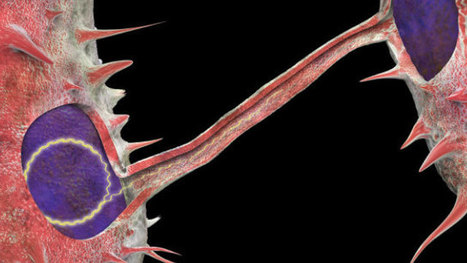
This DNA-sharing process, known as horizontal or lateral gene transfer (LGT), is now understood to occur by the direct movement of DNA between two organisms. Almost all bacterial genomes show evidence of past LGT events, and the phenomenon is known to have profound effects on microbial biology, from spreading antibiotic resistance genes to creating new pathways for degrading chemicals. But LGT is not limited to bacteria. Scientists now recognize that microbes transfer DNA to the plants, fungi, and animals they infect or reside in, and conversely, human long interspersed elements (LINEs) have been found in bacterial genomes. Moreover, researchers have documented LGT from fungi to insects and from algae to sea slugs. There is reason to believe that any two major groups of organisms—including humans—can share their genetic codes.
|
|
Scooped by
Ed Rybicki
January 19, 2017 5:31 AM
|
Scientists identify three little-known diseases which could cause the next global health emergency.
|
|
Scooped by
Ed Rybicki
January 17, 2017 8:36 AM
|
New research from the University of Southampton has found that copper can effectively help to prevent the spread of respiratory viruses, which are linked to severe acute respiratory syndrome (SARS) and Middle East respiratory syndrome (MERS).
|
|
Scooped by
Ed Rybicki
December 7, 2016 3:47 AM
|
The number of mumps cases has nearly tripled in 2016, making it the worst year for outbreaks in a decade. Despite widespread vaccination requirements, college campuses are bearing the brunt of the attack.
|
|
Scooped by
Ed Rybicki
November 17, 2016 5:18 AM
|
Scientists have a developed a new vaccine that can provide long-lasting immunity against Ebola virus and could potentially be used to reduce infection from the virus among wild African ape populations.
|
|
Scooped by
Ed Rybicki
November 17, 2016 5:09 AM
|
One of the greatest global health threats lies in emerging diseases, which have never been seen before in humans or — as with Ebola — appear sporadically in new locations. Most emerging diseases are zoonoses, meaning they are caused by pathogens that can jump from animals into people. Out of more than 300 emerging infections identified since 1940, over 60% are zoonotic, and of these, 72% originate in wildlife. Whereas some zoonotic infections, such as rabies, cannot be transmitted between human patients, others can spread across populations and borders: in 2003, SARS, a coronavirus linked to bats, spread to several continents within a few weeks before it was eliminated, while HIV has become, over several decades, a persistent pandemic. The unpredictable nature and novelty of zoonotic pathogens make them incredibly difficult to defend against and respond to. But that does not mean we are helpless in the face of emerging ones. Because we know that the majority of zoonoses pass from wildlife, we can start to identify high-risk points for transmission by determining which wildlife species may pose the greatest risk.
|
|
Scooped by
Ed Rybicki
November 16, 2016 6:54 AM
|
A promising new immunotherapy to treat liver cancer has been discovered.
Reovirus, a common virus that causes mild cases of respiratory infection, mainly in children, could be harnessed as an immunotherapy to fight primary liver cancer and hepatitis C. Viruses cause around 20% of all human cancer. While only a handful are known to be tumour-promoting, this is a particular problem for liver cancer, where around three-quarters of cases are caused by either hepatitis C virus (HCV) or hepatitis B virus (HBV). These cause long-lived infections within the liver that in some people eventually give rise to tumours. But in our latest study, we show that our immune systems can be coerced into targeting both the tumour and the underlying HCV infection that is driving it to grow. We persuaded the immune system to target both the tumour and the underlying HCV infection by administering a benign virus – reovirus – as an immunotherapy. Mice with liver cancer caused by hepatitis C responded well to this therapy. The therapy could also be extended to other virus-driven malignancies, including Epstein Barr virus blood cancers.
|
|
Scooped by
Ed Rybicki
November 16, 2016 5:32 AM
|
A detailed new report surveys a broad cross-section of biotechnology work across developing countries, revealing steady growth in fields tied to human well-being worldwide.
|
|
Scooped by
Ed Rybicki
November 15, 2016 7:25 AM
|
New technology is changing the way vaccines get made, and HIV researchers are leading the way.
AN HIV DIAGNOSIS is a nightmare, but it is no longer a death sentence. Someday, vaccines might bat the virus out of your system without you ever knowing you’d been exposed. If successful, such a vaccine would effectively cure AIDS. Someday, maybe. So scientists are working on it. Like yesterday: Researchers published results to a promising study on primates infected with SIV, a monkey version of HIV. The study, published in Nature, used a special drug to awaken the virus, which made it easier for their novel vaccine to detect and snuff it out. This study is part of a new wave of HIV-focused vaccinology powered by troves of genetic data and atomic-scale engineering.
|
|
Scooped by
Ed Rybicki
November 7, 2016 4:22 AM
|
An early-stage study of the effectiveness of a lung-cancer vaccine developed by scientists in Cuba could start as early as next month.
|
|
Scooped by
Ed Rybicki
November 4, 2016 8:28 AM
|
true 340 340 float_right 340 float_right speach
|
|
Scooped by
Ed Rybicki
November 4, 2016 8:26 AM
|
FAO Report Promotes Biotechnology as Key Tool in Facing Climate Change: The Food and Agriculture Organization of the United Nations (FAO) released its annual report on The State of Food and Agriculture focusing on impact...
|
|
Scooped by
Ed Rybicki
November 3, 2016 11:43 AM
|
Peter Piot spoke at WIRED2016 to explain how we can prepare for the next big virus outbreak
|
|
|
Scooped by
Ed Rybicki
January 19, 2017 6:49 AM
|
Nipah will be among the first diseases to be targeted by a new initiative aiming to prevent epidemics. But what is it, and why is it so dangerous?
|
|
Scooped by
Ed Rybicki
January 18, 2017 7:39 AM
|
A yellow fever outbreak in Minas Gerais State in southeastern Brazil infected about 110 people and killed 30. Officials fear it might turn to an epidemic.
|
|
Scooped by
Ed Rybicki
December 15, 2016 5:03 AM
|
For the development of a human West Nile (WN) infectious DNA (iDNA) vaccine, we created highly attenuated chimeric virus W1806 with the serological identity of highly virulent WN-NY99. Earlier, we attempted to utilize mutations found in the E protein of the SA14-14-2 vaccine to bring safety of W1806 to the level acceptable for human use (Yamshchikov et al., 2016). Here, we analyzed effects of the SA14-14-2 changes on growth properties and neurovirulence of W1806. A set including the E138K, K279M, K439R and G447D changes was identified as the perspective subset for satisfying the target safety profile without compromising immunogenicity of the vaccine candidate. The genetic stability of the attenuated phenotype was found to be unsatisfactory being dependent on a subset of attenuating changes incorporated in W1806. Elucidation of underlying mechanisms influencing selection of pathways for restoration of the envelope protein functionality will facilitate resolution of the emerged genetic stability issue.
|
|
Scooped by
Ed Rybicki
November 17, 2016 5:20 AM
|
It's a virus that is responsible for almost all cases of cervical cancer but a new study by University of Texas Medical Branch at Galveston researchers indicates that only about half of the girls receive the vaccine at the recommended age to best...
|
|
Scooped by
Ed Rybicki
November 17, 2016 5:10 AM
|
Bushmeat trade is a regular feature in many parts of Africa. People rely on it for livelihoods and, more importantly, for food. Trade in bushmeat is particularly common in west and central Africa where people regularly eat antelope, wild pigs and boars, large rodents, fruit bats and monkeys. But bushmeat presents a problem for public health. Research has linked the consumption of bushmeat to the Ebola outbreak that spread across west African countries in 2014 and 2015, and led to over 11 000 deaths. According to most authorities fruit bats were involved in the contagion. Since the Ebola outbreak has been brought under control a number of governments in countries affected by Ebola have launched massive media and propaganda campaigns to curb the consumption of bushmeat. These include Liberia, Sierra Leone, Ivory Coast, Ghana, Togo, Benin and Nigeria. The campaigns have included distributing information door-to-door as well as promotions on radio, newspapers and television. The campaign in Nigeria was particularly well planned. It involved broadcasting messages about the dangers of bushmeat on television and radio. Newspapers were also used to spread the message. I was involved in a research project to assess the impact of the campaign. We found that it had a dramatic effect on the trade in bushmeat. This could provide useful lessons for other countries.
|
|
Scooped by
Ed Rybicki
November 17, 2016 5:06 AM
|
Africa's cities are melting pots of activity and interaction. There are fears that the continent's next major modern disease crisis will emerge from them.
|
|
Scooped by
Ed Rybicki
November 16, 2016 5:33 AM
|
Vaccines are powerful, but they are not perfect. In some cases, communities struggle to vaccinate enough individuals to stop the spread of a pathogen.
But suppose that instead of vaccinating most of a population, it were possible to vaccinate just a few individuals. In theory, a benign yet infectious vaccine could effortlessly and silently pass protection from one individual to another.
In a new mathematical model, researchers demonstrate that a weakly transmissible vaccine significantly lowers the incidence of infectious disease and paves the way toward eradication. The work was published October 26th in the journal Proceedings of the Royal Society B.
Researchers have long been interested in the idea of transmissible vaccines, and the idea has becoming increasingly viable over the last five years, says Leor Weinberger, a virologist at the University of California, San Francisco, and the Gladstone Institutes, who was not involved in the research. For example, several recombinant, transmissible vaccines are in development for wild animal populations, including one to protect wild rabbits against a fatal viral infection and another to prevent deer mice from carrying a virus responsible for a deadly human pulmonary disease.
But any discussion about a transmissible vaccine ultimately comes down to risk—in particular, the risk of the vaccine reverting to a pathogenic virus. This occurred accidentally with the oral polio vaccine in the early 1960s and again in the 2000s: On a few, rare occasions, the vaccine—a live, attenuated strain of poliovirus—reverted to virulent, neuron-attacking strains of the virus and caused polio infections.
|
|
Scooped by
Ed Rybicki
November 16, 2016 5:14 AM
|
Texas study estimates mortality rate from the mosquito-borne disease at 13 percent
|
|
Scooped by
Ed Rybicki
November 9, 2016 8:14 AM
|
Sub-Saharan project could one day help ecosystems to resist climate change and improve agriculture.
|
|
Scooped by
Ed Rybicki
November 7, 2016 4:19 AM
|
Although doctors maintain that flu shots are life-savers that everyone should receive, some researchers are uncovering hints that 'serial vaccination' -- that is, consistently receiving annual flu shots -- may in fact limit one's ability to fight...
|
|
Scooped by
Ed Rybicki
November 4, 2016 8:26 AM
|
In a move that could boost HPV vaccination rates, the U.S. Centers for Disease Control and Prevention on Wednesday said younger adolescents need only two doses of the vaccine, rather than three as previously recommended.
|
|
Scooped by
Ed Rybicki
November 4, 2016 4:50 AM
|
Two new studies raise the possibility that an adaptation to humans speeded up transmission
|