Your new post is loading...

|
Scooped by
Ed Rybicki
February 15, 2017 1:50 AM
|
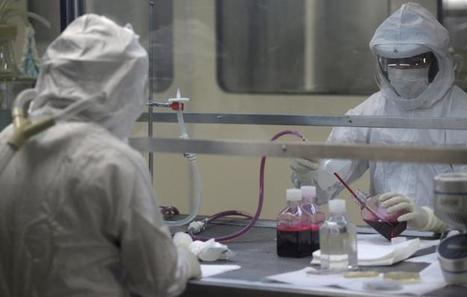
Brazzaville, 14 February 2017 – The Democratic Republic of Congo (DRC) declared the end of the yellow fever outbreak in that country today following a similar announcement in Angola on 23 December 2016, bringing an end to the outbreak in both countries after no new confirmed cases were reported from both countries for the past six months.
“We are able to declare the end of one of the largest and most challenging yellow fever outbreak in recent years through the strong and coordinated response by national authorities, local health workers and partners,” said Dr Matshidiso Moeti, the World Health Organization (WHO) Regional Director for Africa, commending the unprecedented and immense response to the outbreak.
The outbreak, which was first detected in Angola in December 2015, had caused 965 confirmed cases of yellow fever across the two countries, with thousands more cases suspected. The last case detected in Angola was on 23 June 2016 and DRC’s last case was on 12 July the same year.
More than 30 million people were vaccinated in the two countries in emergency vaccination campaigns. This key part of the response included mop up and preventative campaigns in hard to reach areas up until the end of the year to ensure vaccine protection for as many people in all areas of risk as possible. This unprecedented response exhausted the global stockpile of yellow fever vaccines several times.
More than 41 000 volunteers and 8000 vaccination teams with more than 56 NGO partners were involved in the mass immunization campaigns. The vaccines used came from a global stockpile co-managed by Médecins Sans Frontières (MSF), International Federation of the Red Cross and Red Crescent Societies (IFRC), UNICEF and WHO. In the first 6 months of 2016 alone, the partners delivered more than 19 million doses of the vaccine – three times the 6 million doses usually put aside for an outbreak. Gavi, the Vaccine Alliance financed a significant proportion of the vaccines.
|
|
Scooped by
Ed Rybicki
February 14, 2017 7:33 AM
|
Special Issue on Adeno-Associated Viral (AAV) Vectors
Production, Purification, and Beyond: Part 1
|
|
Rescooped by
Ed Rybicki
from Amazing Science
February 13, 2017 5:08 AM
|
Oral administration of a cocktail of three viruses, all of which specifically kill cholera bacteria, prevents infection and cholera-like symptoms in animal model experiments, report scientists from Tufts University School of Medicine (TUSM) and the Sackler School of Graduate Biomedical Sciences at Tufts inNature Communications on Feb. 1. The findings are the first to demonstrate the potential efficacy of bacteria-killing viruses—known as bacteriophages, or phages—as an orally administered preventive therapy against an acute gastrointestinal bacterial disease. “While phage therapy has existed for decades, our study is proof-of-principle that it can be used to protect against infection and intervene in the transmission of disease,” said senior study author Andrew Camilli, Ph.D., Howard Hughes Medical Institute Investigator and professor of molecular biology and microbiology at TUSM. “We are hopeful that phages can someday be a tool in the public health arsenal that helps decrease the global burden of cholera, which affects up to four million people around the world each year.” In previous work, Camilli and colleagues searched for phages that are specific for Vibrio cholerae, the bacterium that causes cholera—a potentially lethal infectious disease marked by severe diarrhea and dehydration. While phages that kill V. cholerae are abundant in nature, the team identified three strains that uniquely retained the ability to kill V. cholerae within the small intestine, the site of infection in humans. These phages function by targeting bacterial surface receptors normally involved in infectiousness, making them ideal therapeutic candidates—to develop resistance, cholera bacteria must acquire mutations in these receptors, which cause the bacteria to become less infectious.
Via Dr. Stefan Gruenwald
|
|
Scooped by
Ed Rybicki
February 9, 2017 7:53 AM
|
An outbreak of yellow fever has claimed the lives of more than 600 monkeys and dozens of humans in Brazil's Atlantic rainforest region, threatening the survival of rare South American primates, a zoologist said on Wednesday.
|
|
Scooped by
Ed Rybicki
February 6, 2017 4:06 AM
|
For the 5th time since 2013, Taiwan has reported an imported human H7N9 avian influenza case. According to the Taiwan Centers for Disease Control (computer translated), the case has been identified as a 69-year-old man with a history of travel to Yangjiang, Guangdong Province, China. The Commissioner for Disease Control (DSCD) said that the case presented …
|
|
Scooped by
Ed Rybicki
February 6, 2017 3:52 AM
|
Now more than ever!
For the past 11 years, hundreds of religious congregations, congregations from a wide array of religious persuasions and from all corners of the world, have come together to celebrate the interface between religion and science. From Baptists to Buddhists, United Methodists to Unitarians, Jews to Muslims and so many more, almost a million people have celebrated the weekend closest to the birth of Charles Darwin (12 February 1809) as Evolution Weekend.
On this weekend, for 11 years, religious leaders and parishioners have raised the quality of the supposed debate between religion and science. They have made it clear that their deeply held religious faith does not preclude accepting, promoting and, yes, celebrating the best modern science has to offer. They have made it clear, in fact, that there really isn’t a debate between religion and science, that both have much to offer. They have also made it clear that the loud but relatively small group of religious fundamentalists who claim that religion and science are often in direct conflict with one another are not speaking for the majority. And they have made it clear that the version of fundamentalism being promoted by this group is at odds with their own religious beliefs.
For 11 years, religious leaders and parishioners have collectively recognized that science is a powerful tool, a way of gaining insight into the world around us, a means to bring us together.
For 11 years, members of The Clergy Letter Project, the sponsor of Evolution Weekend, have worked collaboratively across religious differences in their shared belief that religion and science can strengthen one another.
This year, this message, this celebration, is more important than ever.
|
|
Scooped by
Ed Rybicki
February 3, 2017 3:18 AM
|
Wellcome funds infectious disease centre in South Africa
The Wellcome Centre for Infectious Diseases Research in Africa is one of 14 centres for which the trust announced funding on 7 December. It will be based at the University of Cape Town under the directorship of Robert Wilkinson Seven of the centres sharing the five-year, £118 million (US$148m) grant round, are receiving renewed funding from the trust, while the other seven are newly established Wellcome Centres. CIDRI-Africa is getting its first tranche of Wellcome funding, although it has existed as a UCT centre since 2008. It is the only centre of the 14 not based in the UK. According to the Wellcome Trust, CIDRI-Africa will combat infectious diseases related to poverty, with a particular focus on TB and HIV. “This will involve providing training and opportunities to African scientists and clinicians in these areas. Specifically, the team wants to determine the role and interactions of non-infectious diseases in infection, and combat the challenges of large-scale antiretroviral therapy in HIV treatment,” a trust press officer said. Wellcome Centres are spaces where researcher can come together to share facilities, collaborate and be inspired by each other, the trust said in its news release. “Wellcome Centres play a special role in the global research ecosystem. By creating places where researchers can flourish we can catalyse world-leading research and translation, and amplify its influence and impact,” said Wellcome Trust director Jeremy Farrar. - See more at: https://www.researchprofessional.com/0/rr/news/africa/global-funders/2016/12/wellcome-funds-infectious-disease-centre-in-south-africa.html#sthash.KLWDKUgm.dpuf
|
|
Rescooped by
Ed Rybicki
from virology
January 31, 2017 4:08 AM
|
Avian influenza is spreading rapidly across Europe and Asia, roiling the global poultry industry as farmers destroy millions of infected birds.
Via Bwana Moses
|
|
Scooped by
Ed Rybicki
January 30, 2017 7:52 AM
|
The global spread of bird flu and the number of viral strains currently circulating and causing infections have reached unprecedented levels, raising the risk of a potential human outbreak, according to disease experts.
|
|
Scooped by
Ed Rybicki
January 30, 2017 7:47 AM
|
PLoS Negl Trop Dis. 2017 Jan 23;11(1):e0005334. doi: 10.1371/journal.pntd.0005334. [Epub ahead of print]
|
|
Scooped by
Ed Rybicki
January 30, 2017 7:45 AM
|
This is a static page that will house my graphs of influenza A(H7N9) virus ("H7N9") numbers produced by the various Ministries of Healt
|
|
Scooped by
Ed Rybicki
January 30, 2017 7:42 AM
|
Within days, the SA National AIDS Council will have no CEO and there are fears that powerful individuals within the council intend to take advantage of the leadership vacuum for their own gain. By Amy Green for HEALTH-E NEWS.
|
|
Scooped by
Ed Rybicki
January 30, 2017 7:41 AM
|
Brisbane has recorded one of the world's biggest drops in HIV infection.
|
|
|
Scooped by
Ed Rybicki
February 14, 2017 7:34 AM
|
CT scanning allows scientists to observe and "dissect" fossils digitally using computer software - and to uncover secrets that are hundreds of millions of years old.
|
|
Scooped by
Ed Rybicki
February 13, 2017 5:16 AM
|
Results In Africa, HPV16 accounted for 13% HPV-positive WHIV with normal cytology, but this proportion increased through ASCUS/LSIL/CIN1/CIN2 (18–25%), up to 41–47% for CIN3/ICC. Only HPV16, 18 and 45 accounted for a greater proportion of HPV infections in ICC compared to normal cytology (ICC:normal ratios 3.68, 2.47 and 2.55, respectively). Other HR types accounted for important proportions of low- and/or high-grade lesions but their contribution dropped in ICC, with ICC:normal ratios in Africa ranging from 0.79 for HPV33 down to 0.38 for HPV56. Findings for HPV16 and 18 in Europe/North America, Asia and Latin America were compatible with those from Africa.
Conclusion HPV16 and 18 in particular, but also HPV45, at least in Africa, warrant special attention in WHIV. Broad consistency of findings with those in HIV-uninfected population would suggest that the risk stratification offered by partial HPV genotyping tests have relevance also to HIV-positive women.
I thank Russell Kightley Media for the cervical cancer / HPV graphics
|
|
Scooped by
Ed Rybicki
February 10, 2017 3:15 AM
|
The head of Disease Prevention and Control at the Ministry of Health, Dr. Thomas Nagbe says lassa fever has killed two persons in Nimba County and leaves more than a hundred contacts to be “line listed”.
The Health official told UNMIL Radio’s live program Coffey Break on Monday, 6 February that the first three lassa fever cases that hailed from Nimba killed two victims while the other patient has been undergoing observation for two weeks now.
But he said over a hundred persons have been line listed as contacts of the first three persons attacked by the disease; while announcing that 15 persons that came in contact with one of the lassa fever patients while traveling from Nimba to Monrovia have also been line listed and were responding to treatment.
Dr. Ngabe says the disease is now in Bong, Lofa and Nimba counties, respectively, as he classified lassa fever as a “major threat”. He urged Liberians to keep their homes clean and to cover all foods properly to avoid lassa fever on grounds that during dry season, the disease can be spread by rats.
Dr. Nagbe emphasized that lassa fever erupts in dry seasons and cause havoc like the deadly Ebola virus disease that broke out in West Africa and killed thousands of people here between 2013 and 2014.
The health official says the disease can be transmitted through bodily fluid like Ebola, spreading from one infected person to another. He warned Liberians to be mindful of the disease suggesting that while people may regard most fever as malaria, they still need to do medical test to establish whether they are actually down with malaria or lassa fever.
|
|
Scooped by
Ed Rybicki
February 6, 2017 4:08 AM
|
South African activists call for the decriminalisation of sex work to protect human rights and reduce spread of HIV.
|
|
Scooped by
Ed Rybicki
February 6, 2017 4:04 AM
|
Prof. Francis Otunta, the Vice Chancellor (VC), Michael Okpara University of Agriculture, Umudike, in Abia, has confirmed the discovery of a new drug for the treatment and cur
|
|
Scooped by
Ed Rybicki
February 3, 2017 10:32 AM
|
|
|
Scooped by
Ed Rybicki
February 3, 2017 2:22 AM
|
Many infectious diseases are more likely to progress to serious illness or death in men than in women, which has been attributed to a stronger immune response in women.
|
|
Scooped by
Ed Rybicki
January 30, 2017 7:53 AM
|
Brazilian authorities are taking all the necessary measures to contain the country's largest outbreak of yellow fever in 17 years.
|
|
Scooped by
Ed Rybicki
January 30, 2017 7:52 AM
|
CDC has alerted clinicians about an outbreak of Seoul hantavirus in the Midwest related to home-based rat breeding.
|
|
Scooped by
Ed Rybicki
January 30, 2017 7:45 AM
|
HIV drug trial will evaluate cabotegravir’s performance as a pre-exposure prophylaxis.
|
|
Scooped by
Ed Rybicki
January 30, 2017 7:43 AM
|
|
|
Scooped by
Ed Rybicki
January 30, 2017 7:41 AM
|
RT @harvardmed: #HIV research has led to a new method for identifying therapeutic targets for viral pathogens https://t.co/j9PqK6M8LE https…
|


 Scoop.it!