Jane E. Boyd, Ph.D., is an independent curator and writer based in Philadelphia. She is the guest historical curator for Spit Spreads Death, the Mütter Museum’s forthcoming exhibition on the 1918 influenza pandemic.
Author summary Natural killer (NK) cells–as their name implies–are the immune system’s ready to respond ‘killers’, being able to help control viral infection by cytolytic killing of infected cells and secretion of pro-inflammatory cytokines to activate and direct the immune response.
It is now critical to further develop bottom-up experimental approaches to improve our understanding of dominance and modularity of desirable traits within SynComs. Cataloguing such knowledge on microbial traits and their behavior in a community context will allow the establishment of a microbial toolbox for microbiota-mediated pathogen protection and the rational design of SynComs with modular functions related to MMI and DMC. In parallel or in combination with this cataloguing, microbial network inference will play a key role in identifying candidate biocontrol taxa and in the design of SynComs with stable and predictable outcome in the field. In addition to the mentioned benefits for direct application in the field, this approach is likely to provide insights into the following unresolved fundamental questions: (1) Can we detect phylogenetic signals for MMI and DMC traits that could be used to predict beneficial outcomes for the plant host? (2) Do immunity-modulating microbes act through similar or different immune pathways? And (3) as a consequence of the previous question, do the identified MMI and DMC traits act independently, synergistically, or antagonistically?
The emerging porcine circovirus type 3 (PCV3) has been reported in Chinese swine herds since 2017. We performed a nationwide investigation on the prevalence of ...
Our flu season has arrived early, and it has health authorities concerned. The case numbers are looking a lot like 2017's deadly winter, which was our worst ...
LOS ANGELES — Researchers from the Los Angeles Biomedical Research Institute (LA BioMed) and Vitalex Biosciences (a spinoff company of LA BioMed) helped lead an experiment that successfully immunized mice against mucormycosis, a fungal infection that is often fatal, potentially paving the way for the development of an immunotherapy for humans. Mucormycosis, which has mortality rates ranging from 50% to 100%, has been on the rise at surgical transplant centers in the United States in recent years, and has jumped 70% in France in a recent nine-year period. It is caused by several fungi in the Mucorales family, including Rhizopus, Mucor and Lichtheimia. Dr. Ashraf Ibrahim of LA BioMed and the founder of Vitalex Biosciences led a team of 12-scientists that developed polyclonal and monoclonal antibodies against conserved peptide regions of one protein, CotH3, which is universally present in Mucorales. CotH3 protein allows the fungus to invade mouse/human cells to cause infection. A 30-µg dose of one of the monoclonal antibodies, C2, significantly reduced mortality in neutropenic or diabetic mice infected with any of the organisms that cause mucormycosis. Even more impressively, those treated with the C2 antibody combined with a common antifungal drug almost completely survived the infection and appeared healthy at the termination of the study, with no residual fungi found in their lungs or brains. The scientists believe this could lead to the development of life-saving immunotherapies for humans at risk of contracting mucormycosis. “We are proud of our investigators for a discovery that could potentially save many lives,” said David Meyer, PhD, President and CEO, LA BioMed. “Hospital-acquired infections are a growing problem affecting those least able to fight them. This type of highly impactful research is what our institute is all about.”
07/03/2013 Bangkok, Thailand The Food and Agriculture Organization of the United Nations announced today that earlier this week it designated the Harbin Veterinary Research Institute (HVRI), in the Heilongjiang Province of the People’s Republic of China (PR China), as the FAO reference centre for...
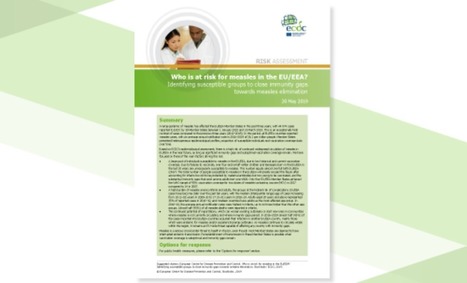
A large epidemic of measles has affected the EU/EEA Member States in the past three years, with 44 074 cases reported to ECDC by 30 Member States between 1 January 2016 and 31 March 2019.
An Australian influenza vaccine believed to be the first in the world completely designed by artificial intelligence is about to start clinical trials.
An important note on language: The Health Misinformation Working Group researchers acknowledge that there are implications of using terms like ‘anti-vaccine’ or ‘anti-vax’ to the broader academic and general discourse. In general, we utilize the terms ‘vaccine hesitancy’ or ‘vaccine hesitant’ to describe the spectrum of concerns in perspectives that individuals may have towards vaccinations. The World Health Organization classifies vaccine hesitancy as: “a behavior, influenced by a number of factors including issues of confidence (do not trust a vaccine or a provider), complacency (do not perceive a need for a vaccine or do not value the vaccine), and convenience (access)” (WHO, 2014, as cited by Edwards et al., 2016). Using polarizing terminology such as ‘pro-vaccine’ or ‘anti-vaccine’ in this context is likely not reflective of the true landscape of perspectives, and can contribute negatively to perceptions of what may or may not be prevalent norms. If we use the term ‘anti-vaccine’, it is purely to reference content that can be identified as disinformation or misinformation explicitly against vaccination. Each year, more than 300,000 women die of cervical cancer, and more than half a million women are diagnosed. Nine in 10 women who die from cervical cancer are in poor countries, with the survival rate ranging between 33 and 77%; the overall numbers and disparity are unacceptable, especially given they can be minimized through one important intervention: Human Papillomavirus (HPV) vaccination. Yet hesitancy around the HPV vaccine is widespread.
Author summary Recently identified broadly neutralizing antibodies (bnAbs) show great potential for clinical interventions against HIV-1 infection. Among the bnAbs isolated to date, those targeting the CD4bs are the most abundant and thoroughly studied as they disrupt the crucial step of viral...
RESULTS: The study cohort consisted of 290 939 girls aged 12-17 years who were eligible for vaccination between 2007 and 2013. There was no significant risk for developing an autoimmune disorder following HPV4 vaccination (n = 681; rate ratio 1.12, 95% CI 0.85-1.47), and the association was unchanged by a history of immune-mediated disorders and time since vaccination. Exploratory analyses of individual autoimmune disorders found no significant risks, including for Bell palsy (n = 65; rate ratio 1.73, 95% CI 0.77-3.89), optic neuritis (n = 67; rate ratio 1.57, 95% CI 0.74-3.33) and Graves disease (n = 47; rate ratio 1.55, 95% CI 0.92-2.63).
INTERPRETATION: We did not observe an increased risk of autoimmune disorders following HPV4 vaccination among teenaged girls. These findings should reassure parents and health care providers.
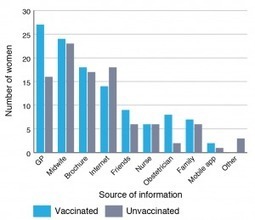
Introduction Pregnant women are at increased risk of suffering serious complications from influenza.1 Influenza can also have adverse effects on the fetus, and increases the risk of premature birth, stillbirth and pregnancy loss.1,2 A variety of overseas3,4 and Australian studies5-8 have shown that vaccinating pregnant women is safe and effective in reducing these complications. Pregnant women have been classified as the group of highest priority for seasonal influenza vaccination programs by the World Health Organization since 2012.9 Influenza vaccination in pregnancy has been recommended by the Australian Technical Advisory Group on Immunisation since March 2000, and has been funded under the National Immunisation Program since January 2010.10 Vaccination is available through general practitioners (GPs) and some antenatal clinics. Despite being strongly recommended, vaccine uptake is suboptimal. Factors identified as contributing to poor uptake include lack of awareness by pregnant women, lack of provider recommendation, and maternal concerns about safety and efficacy for mother and child.
A team of researchers at the University of New Mexico is developing a new vaccine that they hope will be able to prevent Alzheimer's disease in humans after seeing promising results in tests with...
There is no influenza outbreak in South Africa, other than the normal increase of cases expected during winter, the National Institute for Communicable Diseases (NICD) has said...
China has ordered a mass cull of pigs in order to contain the swine fever epidemic, but it could take years for the pork industry to recover. In the U.S., the shortage means paying more for bacon, ham and other foods.
Health experts are blaming the rapidly increasing spread of measles, which was previously rare because of a high vaccination rate, on the worldwide anti-vaccine movement.
To get content containing either thought or leadership enter:
To get content containing both thought and leadership enter:
To get content containing the expression thought leadership enter:
You can enter several keywords and you can refine them whenever you want. Our suggestion engine uses more signals but entering a few keywords here will rapidly give you great content to curate.


 Your new post is loading...
 Scoop.it!