


Follow, research and publish the best content
Get Started for FREE
Sign up with Facebook Sign up with X
I don't have a Facebook or a X account
Already have an account: Login

Animal Models - GEG Tech top picks
7.6K views |
+1 today
 Your new post is loading...
 Your new post is loading...
Your new post is loading...
 Scoop.it!

Genome editing tools have revolutionized the generation of genetically modified animals including livestock.
BigField GEG Tech's insight:
In this study, the scientists utilized the CRISPR/Cas9 system to edit the NANOS2 gene in pig embryos to generate offspring with mono-allelic and bi-allelic mutations. They found that NANOS2 knockout pigs phenocopy knockout mice with male specific germline ablation but other aspects of testicular development are normal. Moreover, male pigs with one intact NANOS2 allele and female knockout pigs are fertile. From an agriculture perspective, NANOS2 knockout male pigs are expected to serve as an ideal surrogate for transplantation of donor spermatogonial stem cells to expand the availability of gametes from genetically desirable sires. 
Scoop.it!
BigField GEG Tech's insight:
Here, the scientists show that the SPAR-encoding lncRNA is highly expressed in a subset of tissues and use CRISPR/Cas9 engineering to develop a SPAR-polypeptide-specific knockout mouse while maintaining expression of the host lncRNA. They find that the SPAR-encoding lncRNA is downregulated in skeletal muscle upon acute injury, and using this in vivo model they establish that SPAR downregulation enables efficient activation of mTORC1 and promotes muscle regeneration. These data provide a mechanism by which mTORC1 activation may be finely regulated in a tissue-specific manner in response to injury, and a paradigm by which lncRNAs encoding small polypeptides can modulate general biological pathways and processes to facilitate tissue-specific requirements, consistent with their restricted and highly regulated expression profile.
Scoop.it!
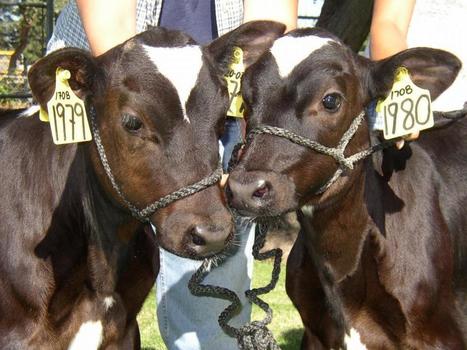
It has been 20 years since Dolly the sheep was successfully cloned in Scotland, but cloning mammals remains a challenge. A new study by researchers from the U.S. and France of gene expression in developing clones now shows why most cloned embryos likely fail.
BigField GEG Tech's insight:
In a study published Dec. 8 in the journal Proceedings of the National Academy of Sciences, scientists used RNA sequencing to look at gene expression in cloned cows during implantation in order to get a better understanding of the molecular mechanisms that lead to a high rate of pregnancy failure for clones. The study is the culmination of 12 years of collaboration and combines the French team’s expertise in cloning and reproductive biology with the U.S. team’s expertise in functional genomics.
Scoop.it!
BigField GEG Tech's insight:
Animal testing is a crucial part of developing new medicines, but it is accompanied by a host of ethical concerns. Stem cells could be one of the alternatives, according to the European Commission’s Joint Research Center on alternative methods to animal experimentation in research and regulation. While attention to stem cells has been focused on potential in regenerative medicine, they have also earned a reputation in R&D for their capacity to produce human tissues and to model diseases. Indeed, they could lead to the development of more ethical, efficient and economical tools that could fast track R&D.
Scoop.it!
BigField GEG Tech's insight:
In order to investigate the role of MeCP2 in brain development and RTT pathogenesis, we aimed to set up the MeCP2-null rat model using the CRISPR/Cas9 technology. Their results indicated that the MeCP2 knockout rats showed body weight loss, anxiety tendency and cognitive deficits. The MeCP2-null rat model established in this study recapitulates the major symptoms of RTT patients and provides an alternative tool for future studies of MeCP2 functions.
Scoop.it!
BigField GEG Tech's insight:
Here, the authors show that biallelic modification of BCO2 resulted in yellow fat, compared with the fat color in monoallelic individuals and wild types (snow-flower white). These results indicate that genetic modification via CRISPR/Cas9 holds great potential for validating gene functions as well as for generating desirable phenotypes for economically important traits in livestock.
Scoop.it!
BigField GEG Tech's insight:
Miniature pigs are considered to have the greatest potential as xenotransplantation donors. A GGTA1-knockout (GTKO) miniature pig might mitigate or prevent HAR in xenotransplantation. Biallelic GTKO cell lines were established from single-cell colonies of fetal fibroblasts derived from Diannan miniature pigs following transfection by electroporation with TALEN plasmids designed to target exon 6 of porcine GGTA1.
Scoop.it!
BigField GEG Tech's insight:
The present study describes the generation of a HO-1 deficient Hmox1−/− rat model and characterizes its renal and extrarenal phenotype. Hmox1−/− rats had growth retardation and splenomegaly compared to their Hmox1+/+ littermates. Focal segmental glomerulosclerosis-type lesions and interstitial inflammatory infiltrates were prominent morphologic findings and were associated with increased blood urea nitrogen, serum creatinine and albuminuria. There was no increase in iron deposition in glomeruli, tubules or interstitium. Iron deposition in spleen and liver was reduced. Electron microscopic examination of glomeruli revealed edematous podocytes with scant areas of foot process effacement but otherwise well preserved processes and slit-diaphragms. Of the filtration barrier proteins examined, β-catenin expression was markedly reduced both in glomeruli and extrarenal tissues. Since the rat is the preferred laboratory animal in experimental physiology and pathophysiology, the rat model of HO-1 deficiency may provide a novel tool for investigation of the role of this enzyme in renal function and disease.
Scoop.it!
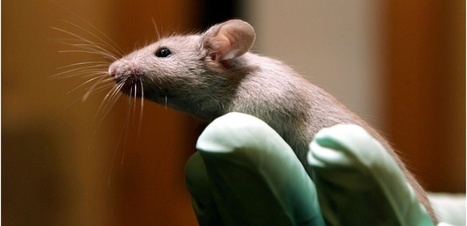
The Polycomb Group protein EZH2 is upregulated in most prostate cancers, and its overexpression is associated with poor prognosis. Most insights into the functional role of EZH2 in prostate cancer hav
BigField GEG Tech's insight:
In this study, the authors developed one such transgenic mouse model for conditional overexpression of Ezh2. In this transgene, Ezh2 and Luciferase are transcribed from a single open reading frame. They report the generation of a wildtype Ezh2 overexpression mouse model that allows for intravital surveillance of tissues with activated transgene. This model will be an invaluable tool for further unravelling the role of EZH2 in cancer.
Scoop.it!

Results of animal studies suggest that rapamycin may be a therapeutic strategy for Leigh syndrome, and possibly other mitochondria diseases.
BigField GEG Tech's insight:
Both mouse and fruit fly animal models of Leigh syndrome suggest that blocking a specific pathway controlled by the protein TOR increases animals’ lifespan. The results suggest that a future therapeutic strategy for Leigh syndrome, and possibly other mitochondria diseases, may require TOR inhibition.
Scoop.it!
BigField GEG Tech's insight:
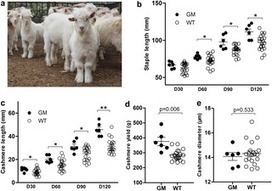
By investigating the influence of gene modification on the phenotypes of Cas9-mediated goats, we herein demonstrate that the utility of this approach involving the disruption of FGF5 results in increased number of second hair follicles and enhanced fiber length in Cas9-mediated goats, suggesting more cashmere will be produced.
Scoop.it!
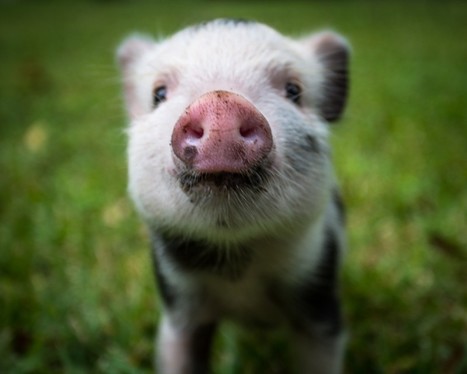
The CRISPR/Cas9 genome editing tool has increased the efficiency of creating genetically modified pigs for use as biomedical or agricultural models. The objectives were to determine if DNA editing res
BigField GEG Tech's insight:
In this study, the scientists designed pairs of CRISPR guide RNAs that flanked the start codon and polyadenylated Cas9 which were co-injected into the cytoplasm of zygotes and cultured in vitro to the blastocyst stage. Blastocysts were collected as they formed on days 5, 6 or 7. Separately, embryos were surgically transferred into recipient gilts on day 4 of estrus. The rate of blastocyst development was not significantly different between CRISPR injection embryos or the non-injected controls at day 5, 6 or 7. Injection of three CRISPR sets of guides resulted in a detectable INDEL in 92–100 % of the embryos analyzed. There was not a difference in the number of edits or sex ratio of male to female embryos when compared between days 5, 6 and 7 to the controls. There were 12 resulting piglets and all 12 had biallelic edits of TMRPSS2. Zygote injection with CRISPR/Cas9 continues to be a highly efficient tool to genetically modify pig embryos.
|
Scoop.it!
BigField GEG Tech's insight:
Studies in animal models have proven extremely useful in understanding the mechanisms of many human diseases and in assessing new therapeutic strategies. But current animal models of human neurological diseases associated with aging, such as Alzheimer’s disease (AD), Parkinson’s disease (PD), and amyotrophic lateral sclerosis (ALS), may not recapitulate key aspects of disease pathology. Recently, investigators have found that dog models of AD may present a truer, more translatable picture of the disease than genetic mouse models.
Scoop.it!
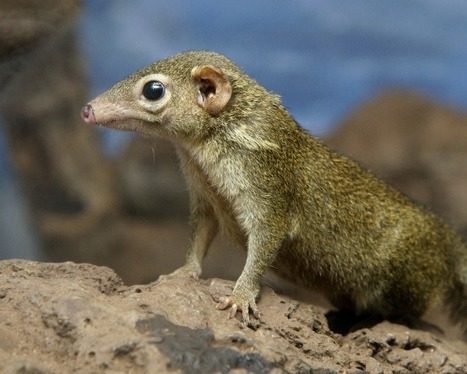
sed to enrich tree shrew SSCs. RNA-sequencing analysis revealed that t
BigField GEG Tech's insight:
Tree shrews have a close relationship to primates and have many advantages over rodents in biomedical research. However, the lack of gene manipulation methods has hindered the wider use of this animal. In this work, the authors transduced tree shrew spermatogonial stem cells (SSCs) with (EGFP)-expressing lentiviral vectors. After transplantation into sterilized adult male tree shrew's testes, the EGFP-tagged SSCs were able to restore spermatogenesis and successfully generate transgenic offspring.
Scoop.it!

A dire shortage of organ donors has led some researchers to consider an unusual solution: They are breeding genetically modified pigs whose organs could be compatible for human transplant.
BigField GEG Tech's insight:
There are more than 120,000 people in the U.S. waiting for an organ transplant and not enough donors. The dire shortage has led some researchers to consider an unusual solution: They are breeding genetically modified pigs whose organs could be compatible for human transplant. Researchers have been trying for decades to make animal-to-human transplants work, a process known as xenotransplantation. Pigs are a particularly promising source of organs. They produce big litters. Organs such as the kidney and liver are similar...
Scoop.it!
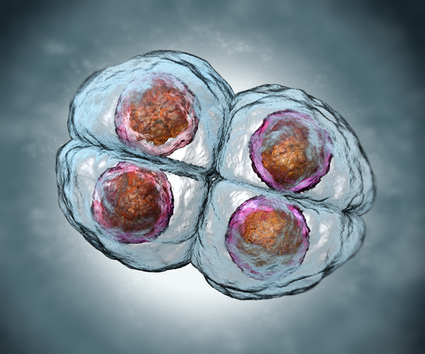
Due to a rising demand of porcine models with complex genetic modifications for biomedical research, the approaches for their generation need to be adapted. In this study we describe the direct introd
BigField GEG Tech's insight:
In this study the scientist describe the direct introduction of a gene construct into the pronucleus (PN)-like structure of cloned embryos as a novel strategy for the generation of genetically modified pigs, termed “nuclear injection” To evaluate the reliability of this new strategy, the developmental ability of embryos in vitro and in vivo as well as the integration and expression efficiency of a transgene carrying green fluorescence protein (GFP) were examined. This novel strategy could be useful particularly for the generation of pigs with complex genetic modifications.
Scoop.it!
BigField GEG Tech's insight:
Mice made susceptible to MERS-CoV, using CRISPR–Cas9 to alter the gene encoding the dipeptidyl peptidase 4 receptor, allow efficient viral replication in the lungs and display symptoms indicative of severe acute respiratory stress.
Scoop.it!
BigField GEG Tech's insight:
In this wotk, the authors used cytoplasmic microinjection of gRNA and CAS9 mRNA into 1-cell mouse embryos to rapidly generate enhancer knockout mouse lines. The current study describes their analysis of the genomes of these enhancer knockout lines to detect possible off-target effects. They conclued that the problem of off-target effects in transgenic mice have been exaggerated and that CAS9/CRISPR represents a highly effective and accurate method of deleting putative neuropeptide gene enhancer sequences from the mouse genome.
Scoop.it!
BigField GEG Tech's insight:
Here, the scientists confirmed TALEN-mediated knock-in via non-homologous end joining in the crustacean Daphnia magna, a model organism for ecological and toxicological genomics. They obtained H2B-GFP expression in Daphnia with a germline transmission efficiency of 3%. Of the three transgenic animals generated, two had donor DNA at the targeted genomic site, which suggested concurrent cleavage of the injected plasmid DNA and genome DNA. The availability of such tools that are capable of targeted knock-in of foreign genes will be extremely useful for advancing the knowledge of gene function and contribute to an increased understanding of functional genomics in Daphnia.
Scoop.it!
BigField GEG Tech's insight:
This study was conducted to confirm that 1-site and 4-site ppU6-GGTA1-gRNA CRISPR vectors together with the pCX-Flag2-NLS1-Cas9-NLS2 plasmid can both generate KO pigs by direct pronuclear microinjection. In total, 41 and 53 fertilized eggs were microinjected on 1-site and 4-site strategies, respectively. The results show that mutant pigs could be generated by direct pronuclear microinjection of CRISPR vectors and that the 4-site strategy has a better mutant efficiency.
Scoop.it!
Follistatin (FST), which was first found in the follicles of cattle and pigs, has been shown to be an essential regulator for muscle development. Mice that were genetically engineered to overexpress F
BigField GEG Tech's insight:
Here, the scientists describe transgenic Duroc pigs that exogenously express Fst specifically in muscle tissue. Their findings indicate that muscle-specific Fst overexpression in pigs enhances skeletal muscle growth, at least partly due to myofiber hypertrophy and providing a promising approach to increase muscle mass in pigs and other livestock.
Scoop.it!
BigField GEG Tech's insight:
Researchers at Florida Atlantic University and The Scripps Research Institute, in the US, have developed a new animal model of epilepsy that will allow the screening of hundreds of thousands of potential antiepileptic compounds. This work is published in the leading scientific journal, Plos One
Scoop.it!

What makes a good animal model? New techniques bring opportunities and challenges to model organisms.
BigField GEG Tech's insight:
Different types of studies use different stand-ins: Flies for genetics; zebrafish for early development; rats and mice and monkeys for cancer, neuroscience and more. Now, new techniques such as gene editing mean that scientists can probe and alter the genes of any animal. The methods open the door for new organisms — such as squid and octopuses — to join scientists’ basic toolkits. With these new arrivals come new questions. What is needed for a good animal model, and how are gene-snipping tools changing the game?
Scoop.it!
BigField GEG Tech's insight:
Microinjection of DNA expression cassettes into fertilized zygotes has been a standard method for generating transgenic animal models but is limited by the random integration of the DNA of interest into the genome, leading to potential disruption of endogenous genes or regulatory elements, variation in copy number, or integration into heterochromatic regions that inhibit transgene expression. A new method, called Pronuclear Injection-based Targeted Transgenesis (PITT), employs an enzymatic transfer of exogenous DNA from a donor vector to a previously created landing-pad site in the mouse genome. DNA transfer is achieved using molecular tools such as the Cre-LoxP recombinase and PhiC31-attB/P integrase systems. Here, the authors provide protocols for performing PITT and an overview of the current PITT tools available to the research community.
|











Here, the authors used CRISPR/Cas9 (clustered regularly interspaced short palindromic repeats/CRISPR-associated 9) techniques to produce a precise mouse model carrying a human coding SNP rs1039084 (encoding human p. N436S) in the STXBP5 locus associated with decreased thrombosis. They demonstrated that CRISPR system facilitates the rapid and efficient generation of animals to study the function of human genetic variation in vascular diseases.