



Animal Models - GEG Tech top picks
7.7K views |
+0 today
 Your new post is loading...
 Your new post is loading...
Your new post is loading...
 Scoop.it!
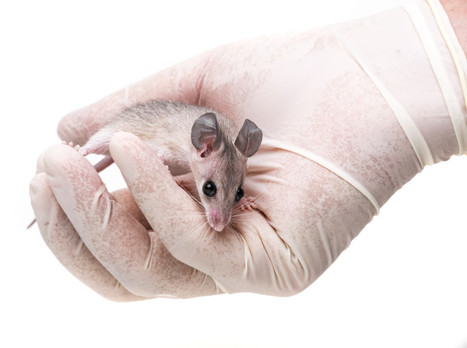
Despite the prevalence of Sjögren’s syndrome – an autoimmune disease most commonly known for causing dry eyes and mouth - a lack of knowledge about how the condition starts has stalled the development of new treatments. Researchers have now developed a specialized animal model of Sjögren’s that engrafts human cells into mice, allowing scientists to track various factors that affect disease development and discover potential new therapies.
BigField GEG Tech's insight:

Scoop.it!
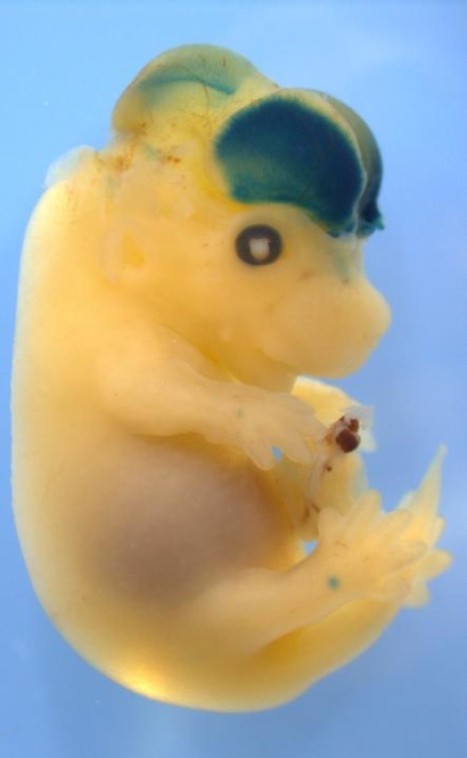
The human brain expanded dramatically in size during evolution, imparting us with unique capabilities. Scientists have now shown that it's possible to pick out key changes in the genetic code between chimpanzees and humans and visualize their respective contributions to early brain development in mouse embryos. The findings may lend insight what makes the human brain special and why people get some neurological disorders, such as autism and Alzheimer's disease, whereas chimpanzees don't.
BigField GEG Tech's insight:
Scoop.it!
BigField GEG Tech's insight:
In this review, the scientists examine the organ disease phenotypes in these new Cystic Fibrosis (CF) models and the opportunities to test gene therapies at various stages of disease progression in affected organs. They then discuss the progress in developing recombinant replication-defective adenoviral, adeno-associated viral, and lentiviral vectors to target genes to the lung and pancreas in ferrets and pigs, the two most affected organs in CF.
Scoop.it!
BigField GEG Tech's insight:
In this study, the scientists tested genome editing activity of CRISPR and ZFN on IGF2 gene in the Lantang porcine fetal fibroblasts (PEF). CRISPR/Cas9 presented cutting efficiency up to 9.2%, which was significantly higher than that generated by ZFNs with DNA cutting efficiency lower than 1%. However, even by using CRISPR/Cas9, the relatively lower percentage of genetically modified cells in the transfected population was not satisfied for somatic nuclear transfer (SCNT). Therefore, they used a SSA (Single-strand annealing) reporter system to enrich genetically modified cells induced by ZFN or CRISPR/Cas9. T7 endonuclease I assay revealed that this strategy improved genome editing activity of CRISPR/Cas9 by 5 folds, and was even more effective for improving genome editing efficiency of ZFN.
Scoop.it!

wledge on the underlying mechanism, and discusses new opportunities for generating genetically modified farm animals.
BigField GEG Tech's insight:
This review provides an update on the use of ZFNs to modify the genome of farm animals, summarizes current knowledge on the underlying mechanism, and discusses new opportunities for generating genetically modified farm animals.
Scoop.it!

BigField GEG Tech's curator insight,
December 31, 2014 6:17 AM
In this review, the authors examine the organ disease phenotypes in new CF models and the opportunities to test gene therapies at various stages of disease progression in affected organs. They then discuss the progress in developing recombinant replication-defective adenovirus, adeno-associated virus, and lentiviral vectors to target genes to the lung and pancreas in ferrets and pigs, the two most affected organs in CF.
Scoop.it!
BigField GEG Tech's insight:
The authors show that efficient genetic modifications can be introduced into spermatogonial stem cells using the CRISPR-Cas9 system. Fertilization using round spermatids generated from these lines gave rise to offspring with the corrected phenotype at an efficiency of 100%.
Scoop.it!
BigField GEG Tech's insight:
Thanks to CRISPR/Cas-based method, the authors have successfully obtained p53 biallelic mutant monkeys. The scientists have observed that about 63% of embryos were biallelic mutant. Moreover, they have shown that homology directed repair (HDR)-driven gene editing for precise nucleotide modification can be achieved with an efficiency near 22%. geg-tech.com
Scoop.it!
BigField GEG Tech's insight:
In this study, the authors demonstrated that zygote injection of TALEN mRNA can produce gene-edited cattle and sheep. In both species the myostatin (MSTN) gene has been targeted. This provides a practical alternative to somatic cell nuclear transfer for gene knockout or introgression of desirable alleles into a target breed/genetic line.
|
Scoop.it!

In a breakthrough discovery, researchers have revealed how damage from obesity in mice is passed from a mother to her children, and also how that damage can be reversed.
BigField GEG Tech's insight:
These results demonstrate that obesity before conception imparts a legacy of mitochondrial loss in offspring that is caused by endoplasmic reticulum stress and is reversible during the final stages of oocyte development and maturation.
Scoop.it!

Mouse lines with an inducible Cas9 gene enable in vivo disease modeling
BigField GEG Tech's insight:
The authors describe a conditional transgenic approach that allows temporal control of CRISPR-Cas9 activity for inducible genome editing in adult mice. They show that doxycycline-regulated Cas9 induction enables widespread gene disruption in multiple tissues and that limiting the duration of Cas9 expression or using a Cas9D10A (Cas9n) variant can regulate the frequency and size of target gene modifications, respectively.
Scoop.it!
BigField GEG Tech's insight:
The scientists applied pairs of TALEN or sgRNAs and Cas9 to create deletions in the Rab38 gene. They found that the deletion of 3.2 or 9.3 kb, but not of 30 kb, occurs at a frequency of 6–37%. This is sufficient for the direct production of mutants by embryo microinjection.
Scoop.it!
BigField GEG Tech's insight:
The authors utilized the CRISPR-Cas9 system to generate Kcnj13 mutant mice by zygote injection to verify the pathogenic role of human KCNJ13, mutations of which are thought to cause Leber congenital amaurosis (LCA). They found that complete loss of Kcnj13 is likely postnatal lethal. Among surviving F0-generation mice examined, 80% show mosaic KCNJ13 expression in the retinal pigment epithelium (RPE). These results suggest that KCNJ13 expression is required for RPE cells to maintain photoreceptor survival. Moreover, they show that CRISPR-Cas9 engineered mosaicism can be used to rapidly test candidate gene function in vivo.
Scoop.it!
BigField GEG Tech's insight:
In this study, the scientists present a highly efficient method for introducing gene modifications at almost all target sequences in randomly selected embryos. The gene modification activity of TALEN is enhanced by its fusion to the 3′UTR of the Xenopus DEADSouth gene. The addition of this sequence promotes mRNA translation in the oocytes and increases the expression of TALEN proteins to near-maximal levels three hours post fertilization.
Scoop.it!
BigField GEG Tech's insight:
This review provides an overview of the various naturally occurring and genetically engineered animal models of cardiomyopathy that allow detailed and integrated physiological and molecular studies of cardiomyopathies, as well as evaluation of therapy. The recent development of new genome editing tools and the improvement of gene transfer techniques allow to engineer cardiomyopathy models in larger animals than zebrafish and or mice such as pigs or non-human primates.
Scoop.it!
BigField GEG Tech's insight:
Six transgenic A53T monkeys were produced via lentiviral vector expressing A53T in fertilized monkey eggs and subsequent embryo transfer to surrogates. Transgenic A53T is expressed in the monkey brain and causes age-dependent non-motor symptoms, including cognitive defects and anxiety phenotype, without detectable sleeping disorders. The transgenic α-syn monkeys demonstrate the specific early symptoms caused by mutant α-syn and provide insight into treatment of early Parkinson's disease.
Scoop.it!
BigField GEG Tech's insight:
This article briefly discusses the current progress of transgenic pig models for cancer, cardiovascular diseases, diabetes, neurodegenerative diseases, ophthalmology, and xenotransplantation, and future potential of this large animal model. Excellent comprehensive reviews regarding transgenesis in pigs in general and recent developments of innovative molecular tools, such as transposons, recombinases, and programmable nucleases, can be found elsewhere.
Scoop.it!
BigField GEG Tech's insight:
Scientists have modified eGFP-expressing primary fibroblasts from cloned bovine transgenic embryonic tissues thanks to CRISPR/Cas9 systems which targets eGFP. Ten days after electroporation, more than 40% of the cells had lost eGFP expression. The fibroblasts mutated with the CRISPR/Cas9 system were applied for somatic cell nuclear transfer, and the reconstructed embryos were successfully developed into the blastocyst stage. geg-tech.com
Scoop.it!

The genome sequence of the ferret, a model of human respiratory disease, enables research on influenza and cystic fibrosis.
BigField GEG Tech's insight:
Scoop.it!
BigField GEG Tech's insight:
The authors showed that the use of a LV-mediated delivery of APPSw/Ind in adult rats represents a cost and time-effective animal model for the study of mechanisms underlying APP-linked fAD pathogenesis. The relevance of this animal model to the study of sporadic AD is discussed. This is the type of vector which is offered by GEG-tech. http://geg-tech.com/services.html
Scoop.it!
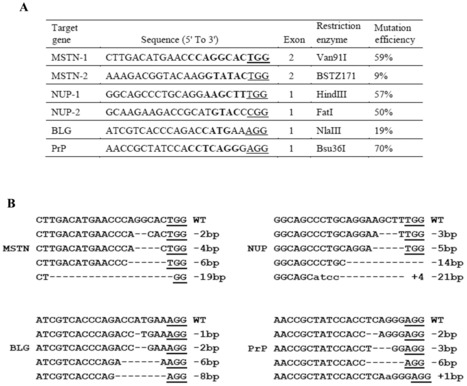
PLOS ONE: an inclusive, peer-reviewed, open-access resource from the PUBLIC LIBRARY OF SCIENCE. Reports of well-performed scientific studies from all disciplines freely available to the whole world.
BigField GEG Tech's insight:
The authors showed that four genes can be disrupted simultaneously in goat fibroblasts by CRISPR/Cas9-mediated genome editing. The single-gene knockout fibroblasts were successfully used for somatic cell nuclear transfer (SCNT) and resulted in live-born goats harboring biallelic mutations. The CRISPR/Cas9 system represents a highly effective and facile platform for targeted editing of large animal genomes, which can be broadly applied to both biomedical and agricultural applications.
|


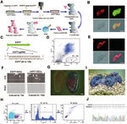







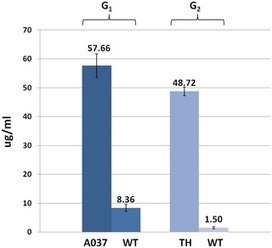
In this study, the scientists constructed a lentiviral vector containing a synthetic cLY signal peptide and a 447 bp synthetic human lysozyme (hLY) cDNA sequence driven by an oviduct-specific ovalbumin promoter, In this way, they demonstrated that transgenic hens with stable oviduct-specific expression of recombinant human lysozyme proteins can be created by microinjection of lentiviral vectors.
www.geg-tech.com