
Training and Assessment Innovation
6.2K views |
+0 today


Engage,enliven and excite your training and assessment
Curated by
Jess Chalmers
 Your new post is loading...
 Your new post is loading...
Your new post is loading...
 Scoop.it!
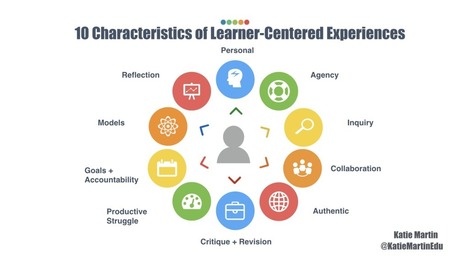
Education Reimagined defines the paradigm shift from teacher-centered to learner-centered as shifting how we see learners and their critical role in their own learning now, and throughout their lives. The critical shift is that “Learners are seen and known as wondrous, curious individuals with vast capabilities and limitless potential. This paradigm recognizes that learning is…
Via Rod Murray, juandoming 
Scoop.it!

Rebecca Scriven's curator insight,
October 3, 2017 8:58 PM
This list is great for finding out what's new on the tools scene.
Scoop.it!
"Like other impulsive buys, a bright and shiny tool make compelling promises, but unless it aligns to the approaches and goals of the educators and students who will be using it, the tool will collect dust on the digital shelf." Via EDTECH@UTRGV
Scoop.it!

Via Dr. Susan Bainbridge
Scoop.it!
As the workplace changes, so must education and training. Exciting experiments are under way--but are they enough?
Scoop.it!

How can you possibly cater to the needs of each learner when you have upwards of 100 or more interacting with the content? Luckily, there are proven strategies for engaging a diverse audience. Via EDTECH@UTRGV
Scoop.it!

By Adam Kulaas - As students navigate their learning journey, we must deliver explicit, student-owned opportunities to set and map their course. Via juandoming
Scoop.it!
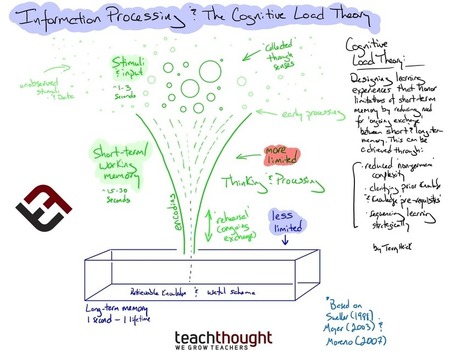
What Is The Cognitive Load Theory? A Definition For Teachers by Terry Heick Preface: I’m (very clearly) not a neurologist. While I often have dedicated a lot of thought and research into things I write, sometimes I write about things in order to understand them–or understand them better. Via EDTECH@UTRGV

EDTECH@UTRGV's curator insight,
September 16, 2017 12:02 PM
How does cognitive lead theory impact e-learning design? 
David Baker's curator insight,
September 17, 2017 1:39 PM
Cognitive Load Theory is helpful as a coach when thinking about the challenge of teachers reflecting on their practice. Video is a resource as a coach that enhances access to prior events both noticed and not noticed.
Scoop.it!

Wondering what are some of the benefits of Informal Learning In The Workplace? Check 8 benefits of Informal Learning In The Workplace.
Scoop.it!

Online learning, new media, connectivism, MOOCs, personal learning environments, new literacy, and more from Stephen Downes Via juandoming
Scoop.it!

Flash forward eight years and the classrooms look very different in my same school district. In the two years since my district began our 1:1 laptop initiative our classrooms have evolved once more. New technology, new standards, and new content. Throughout this process I have tried my best to stay on top of where education is headed and what are the emerging “next” practices. Now when I talk to teachers in my district and around the country, I try to focus on the key elements of innovative teaching. With technology, standards, and content continually changing…these “innovative commandments” give teachers a starting point regardless of their situation. Via John Evans
Scoop.it!
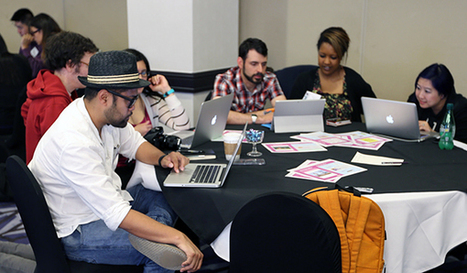
I’ve been doing a lot of reflecting on what makes a good and accessible digital assignment for faculty and teachers who are not comfortable with digital tools but open to learning and experimenting. An approach I’ve often seen is what I’ve recently started calling the kitchen sink approach to “onboarding.” In this approach, a suite of tools or a single tool that can do “everything you can imagine and more” is shown or given to a faculty member to integrate into their already existing course or assignment. The hesitant but eager faculty member, initially excited to try something new, quickly becomes overwhelmed and frustrated as they attempt to make the tool live up to the promises of “doing everything and more.” Frustrated, the faculty member then abandons integrating the tool because they “tried and it didn’t really work with their style of teaching” or “there is too much stuff in the course already to add digital tools.” Via Kim Flintoff
|
Scoop.it!

Connecting projects that students can do locally to a global community both builds global competency and helps students to see how their work impacts the world. Via EDTECH@UTRGV
Scoop.it!
Rebecca Scriven's curator insight,
October 3, 2017 8:58 PM
This list is great for finding out what's new on the tools scene.
Scoop.it!

Belouga is a web based educational platform that connects classrooms around the world. Our mission is to encourage intercultural communication to create a better tomorrow. Via Nik Peachey

Nik Peachey's curator insight,
September 28, 2017 3:48 AM
A great platform to link up classrooms across the world.
Scoop.it!

"“Immersive learning”, “simulations”, and “interactive environments” are all terms we hear frequently in the world of eLearning. We know that if we can immerse learners in a story or an environment, then we’re likely to hold their attention and keep them thinking about their experience long after." Via EDTECH@UTRGV
Scoop.it!

“Higher education has been in lockstep for a long time with a diet of lectures, seminars and tutorials delivered in four concurrent subjects at a time across semesters. Via Kim Flintoff

Kim Flintoff's curator insight,
September 23, 2017 9:19 PM
“But we know 21st century students come with increasingly diverse preparedness, expectations, dependencies and interests. We asked how we could reimagine a first year that offered a very different experience.”
Scoop.it!

As it pertains to fundamental information processing, the Cognitive Load Theory matters. In fact it might be the most important thing for a teacher to know. Via juandoming
Scoop.it!

Change is a key characteristic of the 21st century--a cause & effect. And change in education technology specifically can impact on your teaching. Via EDTECH@UTRGV
Scoop.it!

If all required learning materials, including textbooks, were provided to all students on or before the first day of class Via EDTECH@UTRGV
Scoop.it!
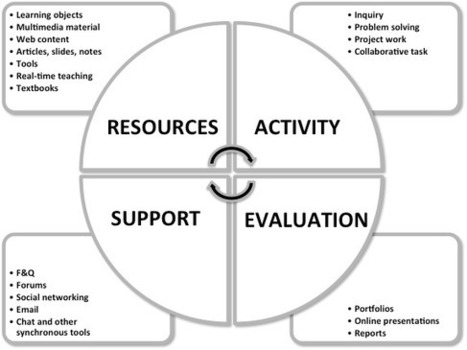
"Student engagement has long been recognized as a serious challenge to learning and teaching in higher education. While increasing and innovative use of interactive digital technologies has been a hallmark of recent changes to higher education practice, the integration of traditional and innovative..." Via Leona Ungerer, juandoming
Scoop.it!
Performance expert and coauthor of "Peak Performance: Elevate your Game, Avoid Burnout and Thrive with the New Science of Success," Brad Stulberg explain
Scoop.it!
Objective: To present the core ideas of connectivism in both a learning and scientific context, in a sense unifying the ideas of discovery, interaction and edu… Via Ana Cristina Pratas
|









"Education is change, and change is at once our greatest strength and our greatest challenge. Change happens in society gradually and imperceptibly, but change happens to individuals abruptly and without warning. It is as though we wake up one morning to find that the world we once knew has disappeared, while all around us people proceed with their lives as usual as though nothing had happened.
This essay is about change. It is about the change we see individually in our homes and in our workplaces, and this essay is about the larger changes sweeping through society. This essay is also about technology, where we think of ‘technology’ in its broadest sense. It’s about information, computation, automation and analytics. It sets these against a milieu of broad social and cultural change, where we are afforded both the chance to redesign our system of education from the ground up, and the need to preserve what is important and valuable and desirable in the system we already have.
This essay is addressed to both the teachers of today and to the students of tomorrow. It is addressed to policy makers and pundits, to technology designers and developers, and to those who by virtue of office or inclination have the voice to speak to the future, to inform the weld of what we can do and what we want to do. To change the world, one must get inside change, and look outward at all the possibilities that change affords, and then choose."