


Do you wonder why you are waking up tired? Read on for a host of tips and tricks that can help you to get better quality sleep and wake up refreshed.


 Your new post is loading...
 Scoop.it! Do you wonder why you are waking up tired? Read on for a host of tips and tricks that can help you to get better quality sleep and wake up refreshed. 
No comment yet.
Sign up to comment
Scoop.it!

You’d probably be lying to yourself if you said you’ve never gone into a new job and resolved to outperform your team’s expectations. You have plenty of good ideas and want everyone to know that you’re a genius of sorts. Most of the time, that mind-set’s great for your career—it pushes you to be your best day in and day out. But the problem is that some people think that motivating themselves this way gives them permission to push their teammates around.
While your company hired you because you bring something unique to the table, that doesn’t give you license to be condescending about it. So if you want to convince your coworkers that you perform above your pay grade, here are a few mind-sets you should adopt ASAP. Via The Learning Factor

The Learning Factor's curator insight,
September 4, 2016 6:41 PM
Being the new hire with tons of "great ideas" won't always endear you to your team. Here's a better way to have an influence early on.
Scoop.it!

New report lists the rising expectations for quality online education leadership as it expands to more institutions and courses. Via Dr. Susan Bainbridge
Scoop.it!

In a landscape marked by financial constraints and tough competition, institutions must invest in areas that matter most. Via EDTECH@UTRGV
Scoop.it!
Scoop.it!

My dad retired as a Library Science professional soon after which the profession of Library management was transformed by digital forces. With the rise of digital content, we now needed different kind of librarians who could help us walk through this maze of information and find what we need, not Via juandoming
Scoop.it!
Learn more / En savoir plus / Mehr erfahren:
http://www.scoop.it/t/21st-century-learning-and-teaching/?tag=eLeaderShip
Via Gust MEES
Scoop.it!

This is a re-work of a previous post. There is a lot of talk about transforming workplace learning. But what does it actually mean? A recent Harvard Business Review article, What do you really mean… Via juandoming
Scoop.it!

From
paper

The Educational leadership Daily, by Curt Meshak: updated automatically with a curated selection of articles, blog posts, videos and photos. Via Dr. Susan Bainbridge
Scoop.it!
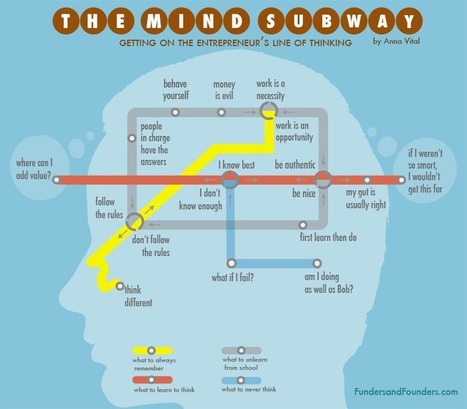
“Forget everything you learned,” they told me on the first day of law school. Three years and $150,000 later they erased from my mind all the half-truths I learned from school and my family. They were not teaching law, they acknowledged, they were teaching thinking. As an entrepreneur, you, too, have to relearn everything from scratch. By yourself. Via Kim Flintoff

Kim Flintoff's curator insight,
July 12, 2016 9:48 PM
The comments on education are a prompt to rethink what education prioritises.
Scoop.it!

Never before has there been such a push for employees to take ownership of their own corner of a company.
Scoop.it!

In order to gamify eLearning courses successfully take these points into consideration before slapping on a point system and calling it a day. Via EDTECH@UTRGV

caseytburns@gmail.com's curator insight,
September 6, 2025 7:34 PM
This is a great article directed at the corporate world and it emphasizes that the success of gamification in workplace training depends on intentional design rather than superficial add-ons. Effective gamification begins with aligning learning mechanics to organizational objectives, ensuring that elements like points, badges, or challenges reinforce specific outcomes rather than distract from them. This approach requires integrating principles of behavioral psychology by tapping into core motivational drivers such as rewards, recognition, and social dynamics to sustain long-term engagement and retention. Furthermore, the use of incremental pathways, narratives, and leaderboards creates a sense of progression while encouraging both individual mastery and team collaboration. Importantly, gamification should be embedded into existing training experiences like microlearning modules or adaptive platforms, rather than presented as stand-alone “games” disconnected from the actual content. Finally, continuous evaluation of learner feedback, engagement metrics, and performance outcomes is essential to maintaining relevance and countering the novelty effect that often diminishes the impact of gamified learning over time.
Scoop.it!

Pay attention to what comes out of your mouth. The language you use affects how you experience your world, and how others experience you. Inevitably, things get "lost in translation."
If you're familiar with cognitive distortion or cognitive bias, these psychology terms teach us that there are subtle ways that our mind can convince us of something that isn't really true. These inaccurate thoughts are usually used to reinforce negative thinking or emotions, thus holding us back.
We all do this, both consciously and unconsciously, and how we do it provides pointers to our underlying beliefs about ourselves, our peers, partners and colleagues, and the immediate world around us.
Via The Learning Factor
The Learning Factor's curator insight,
August 21, 2016 6:49 PM
Believing these negative thoughts can become a self-fulfilling prophecy you want no part of, trust me. 
Alex's curator insight,
August 22, 2016 3:29 AM
So important, not only in business. Don't let anyone bring you down- simple as that.
|
Scoop.it!

Scoop.it!

This article describes the creation of SkillCamp, a marketing and sales learning framework and academy in the agricultural industry that covers different content delivery methods, from classroom training to online performance support. It also discusses key principles of performance support and success factors for establishing such a framework. This is vital reading for managers and executives! Via Marta Torán, juandoming

Marta Torán's curator insight,
September 5, 2016 2:24 PM
Un modelo de éxito de formación corporativa. Alinear el aprendizaje a los objetivos de negocio.
Scoop.it!

When the office is almost too much to stomach, music can deliver much-needed relief on the job. Before you press Play, however, have a handle on when your tunes will be most beneficial for you and your brain.
Learning = Stop Learning requires your brain to analyze and remember instructions and facts. When music is on, however, your brain has to process auditory data on top of processing the instructions and facts. Because of this multitasking, the brain can interpret the instructions and facts improperly, either associating them in odd ways or making mistakes about what's important enough to store. Thus, if you have to learn something at work, it's best to turn off your music, especially if you're learning verbally or through reading and the music has lyrics.
Noisy = Play If your workspace is noisy, the brain will try to handle all the individual pieces of data in the noise. All that data processing takes energy you otherwise could use to focus on your job. It also increases levels of the stress-hormone cortisol and decreases levels of dopamine. Those hormonal changes negatively affect the prefrontal cortex, hindering executive function. Thus, productivity can go down, even if doing your required task doesn't require you to learn. In this scenario, listening to music can actually help, because it blocks out the other excessive input that could overwhelm you and keeps you calm. Via The Learning Factor
The Learning Factor's curator insight,
September 1, 2016 6:44 PM
Music has enriched people's personal lives pretty much since the beginning of time, but scientists today have uncovered how best to make music enrich your professional life, too. 
rodrick rajive lal's curator insight,
September 2, 2016 5:01 AM
Listening to music can help when you are doing repetitive work, and when you are in a noisy surrounding. However, music can hamper effective learning especially because then the brain has to process auditory signals, and instructions and information one is going through!
Scoop.it!

In this post, we will focus on WHAT knowledge is relevant in a 21st century curriculum. Via EDTECH@UTRGV
Scoop.it!

When Phil Sykes took over as the University of Liverpool’s librarian, he made a prediction – library use would fall as much more learning material was placed online. Via Peter Mellow
Scoop.it!
This is a re-work of a previous post. There is a lot of talk about transforming workplace learning. But what does it actually mean? A recent Harvard Business Review article, What do you really mean… Via Ana Cristina Pratas
Scoop.it!

"Blake Montgomery, one-half of the EdSurge On Air podcast team, is bidding EdSurge adieu to take on a role as a Tech Reporter at Buzzfeed. But before he leaves, he's got some thoughts about what he's noticed from his year at EdSurge." Via EDTECH@UTRGV
Scoop.it!

Many companies and carmakers are working on autonomous driving technology. These are the leaders, the timelines they've set and the tech that will drive it. Via Marc Wachtfogel, Ph.D.
Scoop.it!

Whether you’re a CEO or a line manager, your team is just as important as a group as its members are as individuals. Today’s tech companies offer many perks to attract and retain the best employees. We offer competitive salaries, training and the promise of success—professionally and financially. But how we treat them as individuals can determine the way their DNA will impact the fabric of your organization. What are you doing, as their manager, to make sure they are satisfied and making the best contribution to your organization? Whether it’s an hour a week or 30 minutes once a month, making time for an individual says you give a damn about them as a person. The 1:1 is the only forum where you can have an honest, private, conversation with each other about what’s really going on—professionally and personally. This is a routine opportunity for you, as a manager, to assess the parts (your employees) that lead to the productive whole (your team)—which we all know is more powerful than the sum of said parts. Via The Learning Factor
The Learning Factor's curator insight,
August 25, 2016 6:37 PM
The one-on-one meeting between supervisor and staff is an invauable tool for managing, but requires much attention to detail.
rodrick rajive lal's curator insight,
August 26, 2016 4:09 AM
The one on one meetings usually take place before annual assessments of employee performance. Appraisal reports are often preceded by a one on one meeting with the employee. In many cases, misunderstandings are removed when these 1-1 meetings take place.
Scoop.it!

But too many rules can stifle the freedom to try new things Via Kim Flintoff
Kim Flintoff's curator insight,
August 17, 2016 8:38 AM
Even more so in educational settings I suspect...
Scoop.it!

Trust is complicated: a word we use easily and frequently and yet one which contains a great deal of ambiguity when we try to nail down its meaning. We know it when we feel it, we know it when we lose it, we enjoy it when we have it, and yet it's very hard to… Via juandoming
Scoop.it!
See it with animations! https://vimeo.com/179236019 It’s impossible to win over an audience with a bad presentation. You might have the next big thing, but if … Via Ana Cristina Pratas
|






