

Some will question its credibility. But the alternative future to the one imagined in the World Justice Report is far more bleak


|
Scooped by
Graham Watson
onto The Economic Method June 4, 4:35 AM
|
 Scoop.it!
Some will question its credibility. But the alternative future to the one imagined in the World Justice Report is far more bleak


 Your new post is loading...
 Your new post is loading...
Your new post is loading...
Scoop.it!
From
www

From advance ticket purchases to fans traveling from around the world, World Cup ticket sales generate a range of economic activity.
Graham Watson's insight:
This IMF clip looks at how you measure the impact of the World Cup, noting that the ticket price isn't included in national income, but the consumption of goods and services on the day. It considers the implications of the spending of both domestic and foreign consumers, noting that the spending of one is household consumption but that for the other it's an export of services.
I'd file this under "One for the Nerds"...
Scoop.it!

Our roadmap has been shaped by experts across the world. We call on political leaders at all levels to use it, says Olivier De Schutter and others
Graham Watson's insight:
A group of economists have signed an article in today's Guardian that argues that traditional models of economic growth are no longer fit for purpose and that extreme inequality and our inability to confront climate change mean that we need to go beyond GDP in looking at what really matters when an economy develops.
Scoop.it!
Some will question its credibility. But the alternative future to the one imagined in the World Justice Report is far more bleak
Graham Watson's insight:
One of those age-old questions: how best to measure economic performance gets another answer with the publication of the World Justice report that looks beyond GDP to consider a wider definition of prosperity and incorporates the concepts of "sufficiency" and "planetary habitability", as well as warning of the dangers of the growth of AI.
As such it represents another challenge to the status quo that directly links economic growth to subjective well-being.
Scoop.it!

Rightwing parties want to follow in US’s footsteps of minimal government intervention, but at what cost?
Graham Watson's insight:
This clip looks at how the US model of capitalism inevitably results in extreme inequality and cast people aside in a way that European models of capitalism doesn't. But is this true?
I'm not sure that it does - although it is worrying that such a model of capitalism appeals to some many member of the political right in Europe. For me, the danger of this view is that it's predicated on the fact that those people who work hardest get richest, which patently isn't true.
Scoop.it!

From the firing of the labor statistics chief to plans for a new census, the president’s moves serve to entrench authoritarianism
Graham Watson's insight:
I've put this opinion piece here because it highlights how President Trump's recent moves to question official statistics and fire the Chief of Labour Statistics undermine the impartiality of data and the adverse consequences of this for both policymaking in the short-term and democracy in the longer term.
Scoop.it!

Between AI, changes under Trump and a ‘tougher environment’, what do we really know about the jobs market?
Graham Watson's insight:
This Gene Marks article has wider implications than merely looking at the US labour market - in it he posits whether the latest employment data is really that accurate. In the US, he thinks that over-employment, with people having more than one job, might distort unemployment and job creation data, whereas in the UK we're more concerned about under-employment and it's impact.
Either way, global statistical agencies are struggling to keep abreast of the latest labour market trends.
Scoop.it!

With the UK still shaking off the psychological side-effects of Covid, Rachel Reeves might want to broaden her aims
Graham Watson's insight:
Another look at the now increasingly old debate about what the government's macroeconomic objectives should be, with Heather Stewart arguing that in the post-Covid age, there should be an explicit focus on happiness - however that can be measured - and that might allow the government to reshape the narrative in its favour.
Scoop.it!
Dan Gardner is the coauthor of "How Big Things Get Done," a book that explores why so many billion-dollar projects, from nuclear power plants to Olympic Games, go wrong and how some manage to succeed. Drawing on data from over 16,000 megaprojects,
Gardner and his coauthor Bent Flyvbjerg reveal the startling truth: Only 0.5% of big projects are delivered on time, on budget, and with the promised results. Business Insider interviewed Dan Gardner to learn about some of the world's most high-profile projects, like the Sydney Opera House, which soared 1,400% over budget, and the troubled California High-Speed Rail, which is expected to cost over $100 billion and hasn't moved any passengers yet. He also spotlights the rare successes, like the Empire State Building and the Hoover Dam, to show what’s possible when projects are built on smart planning, strong leadership, and modular thinking.
Graham Watson's insight:
This Business Insider clip interviews Dan Gardner, co-author, with Bent Flyvbjerg, of "How Big Things Get Done" looking at why so many megaprojects are overrun their budgets and deadlines, resulting in higher costs and a loss of economic welfare, to the extent that some of the most egregious examples, such as the Montreal Olympics and the Sydney Opera House represent examples of government failure. It's an excellent introduction to many of the key ideas contained in the book.
Scoop.it!

The long read: President Trump’s tariffs have plunged the world economy into chaos. But history counsels against despair – and the left should seize on capitalism’s crisis of legitimacy
Graham Watson's insight:
The Guardian's long read looks at the future of global capitalism in the post-Trump era and argues that it represents a chance for the political Left to get on the front foot and make a compelling case for reshaping the economic order to emphasise sustainability and equality.
You may not agree with it, but it's worth your consideration nonetheless.
Scoop.it!

ONS, already working on fixing a survey, uncovers problems with two indices used to measure prices in economy
Graham Watson's insight:
Oops! It seems as though the quality of economic data being generated by the ONS is currently below par with the agency having detected problems with the way in which it calculates certain price indices, including the Producer Price Index, and this has implications for its ability to ensure that growth figures are accurate. As a result, it's warned that it will have to revise data for 2022 and 2023, but the consensus view that that, to some extent the changes will balance one another out and have few implications for economic growth.
Scoop.it!

Sustainability-focused inclusive income formula accounts for non-monetary factors overlooked in GDP, says ONS
Graham Watson's insight:
A rare, but important entry to the Economic Method board, with the news that the ONS is looking at formalising alternatives to GDP such as inclusive income and wealth.
The latter are intended to capture things that GDP misses, like housework and other non-marketed transactions such as "Parents who take their children to events in their own car rather than a taxi, home-cooked meals and voluntary childcare and care of older relatives". Such things are included in Gross Inclusive Income (GII) but Net Inclusive Income (NII) is more volatile, taking into account the negative effect of wear and tear (i.e. depreciation) on household goods.
Scoop.it!
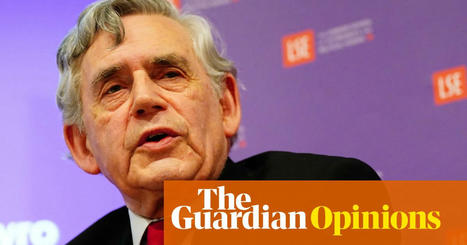
Editorial: Gordon Brown challenged Conservative ideas to fix the economy. His successors unfortunately will not
Graham Watson's insight:
An interesting Guardian opinion piece that argues that whereas in 2010, Gordon Brown had a genuine alternative vision to the economic policies being peddled by the Conservative Party, the current Labour Opposition doesn't.
It highlights the notion of post-neoclassical endogenous growth theory and one of the current fads - modern monetary theory - and suggests that both offer alternatives. But do they?
Scoop.it!

People are using notes and coins as a way of budgeting while prices rise, says the British Retail Consortium.
Graham Watson's insight:
An interesting aside, in that the amount of payments made by cash has increased in the past month, with consumers keeping a closer eye on what they're spending. It's an interesting fact of economic life that people perceive budgeting to be easier if payments are made in cash.
|
Scoop.it!

From thousands of lives lost to an economic shock likely to plunge millions into poverty, the world is paying dearly
Graham Watson's insight:
This Guardian article attempts to achieve the impossible, in quantifying the cost of the wider Iran conflict, and including the Israeli attacks on Hezbollah and Iran. It looks at different aspects of this - not least an increase in global uncertainty and the longer-term impacts of this.
It identifies lives lost, the effect on economic growth, the cost of higher fuel prices and the cost of living crisis triggered by this, which might see an additional 32 million people pitched into poverty.
Scoop.it!

Global report provides an alternative to climate breakdown, political extremism and economic tensions
Graham Watson's insight:
More on the release of the Global Justice Report, from the World Inequality Lab - a veritable feast of Guardian journalism, on traditional Guardian-related material for a Guardian-reading public.
Facetiousness aside, it does raise interesting points about promoting sustainable development and the policy measures required to do that - wealth taxes for billionaires, sharp reductions in working hours and changes in dietary and investment habits. Of course, there's a degree to which this is utopian, but why not? Change can sometimes be the result of radical ideas as much as incremental factors.
Scoop.it!

Editorial: On the 250th anniversary of The Wealth of Nations, the Scottish philospher is still invoked by the right. Yet he worried about inequality, monopoly and the power of wealth
Graham Watson's insight:
An editorial celebrating the 250th anniversary of the publication of "The Wealth of Nations" makes the perfectly valid point that Adam Smith only used the phrase "the invisible hand" once and to claim that he's the father of free market economics is actually a bit of a misrepresentation.
Of course it is. Anecdotally, I can think of few Scots who are extreme free marketeers and anyone familiar with Smith's work can cite countless examples of thinking that isn't "free market". For me, the obvious one I've been teaching about this week is his canons of taxation. The first canon is fairness, which implies progressive taxation.
Scoop.it!

Joel Mokyr has warned of ‘dark clouds’ amid Trump tariffs, while Philippe Aghion and Peter Howitt have written about role of ‘creative destruction’
Graham Watson's insight:
The annual announcement of the Nobel Prize for Economics has come today, with Joel Mokyr, Philippe Aghion and Peter Howitt being rewarded for their work on the relationship between innovation and growth, notably in the form of creative destruction.
Scoop.it!

Troubles at UK statistics body are muddying economic picture for Treasury and spending watchdog, sources warn
Graham Watson's insight:
This is a rather concerning article, highlighting the shortcomings of the Office for National Statistics and the fact that a lack of accurate data might impact the quality of economic policymaking.
A shortcoming like this means that the data being used both by the Treasury and the Office for Budgetary Responsibility might be working on the basis of incomplete or missing data and that's dangerous.
Scoop.it!

From Rachel Reeves to the MPC, and thinktanks to unions and lobby groups, many of the authoritative voices we hear discussing economics are female
Graham Watson's insight:
Heather Stewart's piece for tomorrow's Guardian notes the rise of female economists, arguing that they've stealthily become more important in the recent past and highlighting a number of prominent UK based examples.
It's a welcome move, although I'd argue that it's more important that they're good economists, irrespective of gender, and that it's a little bit insular in ignoring women such as Janet Yellen, Christine Lagarde, Kristalina Georgieva and Ngozi Okonjo-Iweala to name four globally renowned female economists.
Scoop.it!

Asset manager Aberdeen’s surprise cut to funding research into inequality has left those that used its grants for good work reeling, says Guardian columnist Polly Toynbee
Graham Watson's insight:
Is Polly Toynbee right, are capitalism and progressive change mutually exclusive? If this example is taken in isolation - with asset manager Aberdeen (note vowels!) cutting research funding into inequality - then it might look that way.
And when companies undertake things such as this, that add nothing to their profits, but obviously incur costs, we might think about their motivation for doing so.
Scoop.it!

Devereux Review on the UK’s main statistics body also says a revision of past figures may be required
Graham Watson's insight:
I rarely post on this board, but this is a fundamental methodological point about the role of the Office for National Statistics and its importance in policymaking.
In short, the criticisms of the Devereux Review are fairly damning: there are "deep-seated" problems and this has adverse implications. Policymaking is only as good as the data it's based upon, and it seems that the ONS is falling short in many areas and that, over time, previous figures are likely to need to be revised - note, this will trigger hand-wringing and claims that inaccurate data has unfairly tarnished the reputation of the previous government.
As a result, there's going to be a £10m investment in the ONS; however, £10m doesn't go a long way.
Scoop.it!
Caveat from statistics agency is latest sign of its problems collecting reliable economic data
Graham Watson's insight:
More problems with data gathering at the Office for National Statistics with the latest data on UK wage growth being qualified in the wake of late data from one firm. You wouldn't imagine that it could have such an effect, even if it were a large private sector employer like Tesco, but it calls into question the data that used to help policymaking in the UK.
Scoop.it!

Wind and wave power is set to be included in calculations of the size of countries' economies for the first time, as part of changes approved at the United Nations.
Graham Watson's insight:
The way in which GDP is calculated is going to change, with the UN agreeing that a number of other economic activities should be valued including wind and wave power, and data is also being given a value. As a result, of this minor tweak, it's likely to increase GDP by 2-3%.
This, in itself, won't see an increase in living standards, but it does have potentially more interesting implications for defence spending because the government has committed to spending a fixed percentage of GDP on defence. As a result, if GDP grows, this means that the government are going to have to find more to fund this.
Scoop.it!
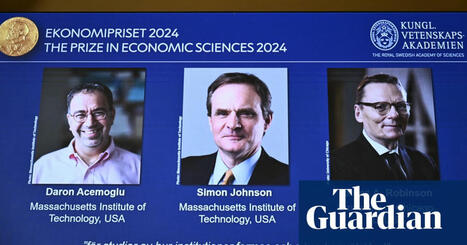
British-born Simon Johnson and James A Robinson and Turkish-American Daron Acemoğlu share £810,000 prize
Graham Watson's insight:
Excellent news for British economists - with the announcement that this year's Nobel Prize for Economics has been awarded to Daron Acemoglu, Simon Johnson and James Robinson for their work on the importance of inclusive institutions in promoting development.
Scoop.it!

Interviews with people in remote communities challenge widely held perception that money buys happiness
Graham Watson's insight:
Always nice to remind yourself of the Beatles' contribution to economic thought. As they pointed out in their 6th single, "Can't Buy Me Love" in 1964, "I don't care to much for money, 'cos money can't buy me love".
And so it would seem, with indigenous people showing similar, if not higher levels of happiness with people in High Income Countries.
|





One of those age-old questions: how best to measure economic performance gets another answer with the publication of the World Justice report that looks beyond GDP to consider a wider definition of prosperity and incorporates the concepts of "sufficiency" and "planetary habitability", as well as warning of the dangers of the growth of AI.
As such it represents another challenge to the status quo that directly links economic growth to subjective well-being.