


Bitcoin was intended to ultimately replace government-issued currencies. But while its price has surged, the use of Bitcoin as a currency is not taking off


 Your new post is loading...
 Your new post is loading...
Your new post is loading...
 Scoop.it!
Bitcoin was intended to ultimately replace government-issued currencies. But while its price has surged, the use of Bitcoin as a currency is not taking off
Graham Watson's insight:
For me, this story encapsulates the reason why the current Bitcoin bubble is just that, a bubble. For cryptocurrencies to have real worth, they need to fulfil all of the functions of money and, at present, Bticoin simply isn't a medium of exchange. Equally, it doesn't have the characteristic of a 'good money' of being widely accepted in payment of a debt. Thus, if I were thinking of investing in Bitcoin, I have to say - I'd be very, very careful. 
No comment yet.
Sign up to comment
Scoop.it!

The crypto-currency remains popular with criminals, the police have warned.
Graham Watson's insight:
The regulatory fightback has begun - the Treasury has gone public, suggesting that cryptocurrencies need to be more closely regulated, in line with existing money laundering legislation. Whether this will be as easy in practice as it appears in theory, is a different matter.
Scoop.it!

Disciples of the cryptocurrency plan to hold on for dear life but traditional finance is getting twitchy
Graham Watson's insight:
Is Bitcoin a bubble? The Guardian has a closer look - if it were me, I'd just wonder what I could spend my Bitcoins on in the course of an ordinary week.
Scoop.it!
Austrian business cycle theorists argue that the central bank could be distorting market signals for entrepreneurs. How does this contribute to booms an
Graham Watson's insight:
More first-class economics: an Austrian anaylsis of the business cycle via Marginal Revolution University. It's Hayek to the max.
Scoop.it!

This simple yet transformative piece of technology made civilisation possible.
Graham Watson's insight:
The next in the 5O Things That Made the Modern Economy series. It's not revolutionary, however it has had a significant effect on contemporary society. The plough revolutionised farming, and with it our diets.
Scoop.it!
Many economic downturns throughout human history can be explained by real business cycle (RBC) theory. So what makes this theory “real” and what are its drawbacks? We’ll cover both in this five-minute tour of RBC.
Graham Watson's insight:
I have to confess that Marginal Revolution University is one of my favourite sites. Anything to popularise economics and explain concepts in eye-catching, and accurate ways. This video looks at yet another theory of the business cycle, the real business cycle, and helps clarify why it's more 'real' than other types of business cycle and what the limitations of the theory are. One of the classic examples - the impact of the OPEC oil price shock of 1973-74 is cited.
Scoop.it!

Everything about how we spend, save and bank is being challenged. Will consumers have to pay a heavy price?
Graham Watson's insight:
Wowsers! The BBC have ramped up their electronic content with this detailed consideration of how the characteristics of money are changing in the modern economy. The functions remain the same but the nature of money changes. The fantastic collection of resources looks at the development of ATMs, new forms of mobile payment and their adoption across the world, and, of course, the rise of cryptocurrencies. It's all whizz-bang, as they used to say...
Scoop.it!

The vultures are circling above Philip Hammond, and one of them is distinctly Gove-shaped. But with the right buzzwords, any of us could become chancellor, writes Stefan Stern, the co-author of Myths of Management
Graham Watson's insight:
A quick guide to how to speak Economics. Apparently, Michael Gove is practising. One wonders if he's still got enough knives left in his armoury.
Scoop.it!

Shadow chancellor John McDonnell to say ‘overwhelming challenge of climate change’ must be addressed from very centre of government
Graham Watson's insight:
Didn't spot this first time around, which is a pity. This Guardian piece suggests that any future Labour Party government is going to take account of climate change when making economic forecasts. In turn, this is likely to affect policymaking My gut instinct to this is mixed: good, in that the economic effects of climate change can't be ignored; bad, in that I'm worried that it might permit policy making to be subject to an awful lot of 'bad economics' based on flawed assumptions and poor predictions of future outcomes.
Scoop.it!
When the economy is going through a recession, what should be done to ease the pain? And why do recessions happen in the first place? We’ll take a look at one of four major economic theories to find possible answers – and show why no theory provides a silver bullet.
Graham Watson's insight:
A nice theoretical clip from Marginal Revolution University looking at four major theories of business cycles, how they apply to the 'Great Recession' of 2008 and whether or not their solutions are applicable. First up: Keynesianism, and demand management.
Scoop.it!
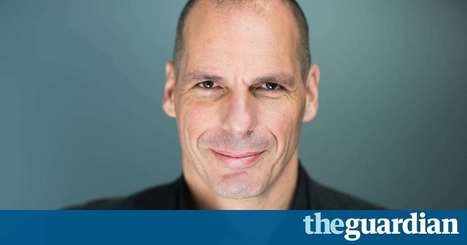
Economics is political, and should be discussed in terms everyone can understand, argues this brief history of capitalism
Graham Watson's insight:
I pop this here because Yanis Varoufakis is a poster boy for the new Left and this book looks like it might well be worth reading, although on the evidence of all the review, I know most of the examples cited. That said, it won't do any harm.
|
Scoop.it!
Tyler Cowen puts Keynesian, monetarist, real business cycle, and Austrian theories to work to explain a downturn from recent economic history: the Great Recession.
Graham Watson's insight:
The ever-affable Tyler Cowen looks at the various different models of the business cycle and how they explain the so-called Great Recession. More typically excellent stuff from Marginal Revolution University...
Scoop.it!

The growth of easily available credit profoundly altered our attitude to money.
Graham Watson's insight:
I wondered when this would appear in the 50 Things That Made the Modern Economy series: the credit card. It has revolutionised payments in the UK, to the extent that, in value terms, more transactions are made by card than cash these days.
Scoop.it!
Graham Watson's insight:
For those of you who haven't seen this...it's now seven years old but proof that the EconStories team did a good job.
Scoop.it!

The virtual currency has risen from around $1,000 at the start of the year to a record of $9,700.
Graham Watson's insight:
More on the inexorable rise in the value of Bitcoin. The faster the cryptocurrency rises, the greater the likelihood of the current boom being a classic 'bubble'. One wonders what's driven the increased demand for Bitcoin other than speculative purposes? Unless there's been a change in attitudes among particular groups of whom I'm unaware. Has it become the 'currency' of choice for money launderers, for example.
Scoop.it!
Our FT Alphaville editor explains why she thinks buying cryptocurrencies is more similar to gambling than to investing. She also explores how regulators and tax authorities around the world are slowly catching up with this technology.
Graham Watson's insight:
I've 'scooped' quite a bit about cryptocurrencies - and this FT clip highlights the fact that unlike normal currencies, Bitcoin doesn't pay interest, suggesting that unlike investing, holding cryptocurrency is more like gambling than investing.
Scoop.it!

Editorial: Recreational shopping is not about collecting objects so much as experiences
Graham Watson's insight:
A more sociological perspective on Black Friday - and I have to say, I for one, agree. It has no place in the UK.
Scoop.it!

One unit of the cryptocurrency now valued at more than six times an ounce of gold, after tenfold rise since start of 2017
Graham Watson's insight:
More on Bitcoin: it's broken the $8,000 barrier - and is now worth six times the value of an ounce of gold. But how can this be justified? Is this indicative of a classic asset bubble? And what is bitcoin? All are investigated here. Is there a chance that in a century's time, we'll all be using it, or will it have passed into Cockney rhyming slang?
Scoop.it!
Meet the monetarists! This business cycle theory emphasizes the effect of the money supply and the central bank on the economy.
Graham Watson's insight:
More excellence from Marginal Revolution University - this team you're invited to meet the monetarists, starting with its 'eminence grise' - Milton Friedman.
Scoop.it!

The value of cryptocurrencies is rising fast. But is it sustainable? And how does it work, anyway? These questions, and many more, answered…
Graham Watson's insight:
Excellent Guardian expose of Bitcoin. What is it? How does it work? Is it currently experiencing a 'classic bubble'? Informative, but not enough to convince me that it's a viable alternative to more traditional forms of money. Yet.
Scoop.it!

The price of Bitcoin has finally surpassed the £5,000 mark and set a new record.
Graham Watson's insight:
I put this here because the 'success' of Bitcoin asks some interesting questions about the functions and characteristics of money. And I also confess that I'd have like to have bought a stack of it three or four years ago. But is Bitcoin yet a 'good' money and what do we mean by the term? Equally, isn't it a great example of the ultimate 'fiat' currency - why does it have any value. Who backs it? And how do you 'cash' it?
|




