


As consumers are nudged towards card payments, it’s big corporations that benefit most
Get Started for FREE
Sign up with Facebook Sign up with X
I don't have a Facebook or a X account


 Your new post is loading...
 Your new post is loading...
Your new post is loading...
 Scoop.it!
As consumers are nudged towards card payments, it’s big corporations that benefit most 
No comment yet.
Sign up to comment
Scoop.it!

Person-to-person payment apps are rising fast in popularity around the world, but are they safe?
Graham Watson's insight:
Is the end in sight for cash - the rise of person-to-person payment apps is revolutionising shopping and even repaying your friends.
However, there are still concerns about the security of some apps.
Scoop.it!

Bitcoin continues to decline, amid reports that the US bank will shelve plans to establish a crypto trading desk.
Graham Watson's insight:
I've 'scooped' quite a lot about the Bitcoin bubble. Does this story spell the beginning of the end for the cryptocurrency? As it is, it's spooked investors, and seen demand fall, with obvious implications for price.
Scoop.it!

Banks are closing ATMs and branches in an attempt to ‘nudge’ consumers towards digital services, says campaigner and former broker Brett Scott
Graham Watson's insight:
If cash is no longer king, what does this mean for the modern economy. Brett Scott isn't convinced that it's a good thing - his view is that, in 'nudging' consumers towards digital services, it is allowing 'big finance' to exploit them.
I suspect there's some truth in this - for example, the current charges on using debit and credit cards overseas, and the commission charges for getting hold of foreign currency or travellers cheques is a con, and I suspect that there are many more examples.
Scoop.it!

In Manchester, groundbreaking economics courses are giving locals the means to challenge some of society’s received wisdom – for free, says Guardian columnist Aditya Chakrabortty
Graham Watson's insight:
Another simple answer to a question in a headline: they become Economics teachers.
However, this is instructive, in many senses, in that it highlights the fact that Economics is arcane to many, does seemingly try to isolate itself via jargon, and has become cultish, in that there are elements of the discipline which seek to make it exclusive rather than inclusive.
And fundamentally, it's also an inspiring story about how to bring the subject to a diverse audience many of whom are sceptical about the function of the subject.
Scoop.it!
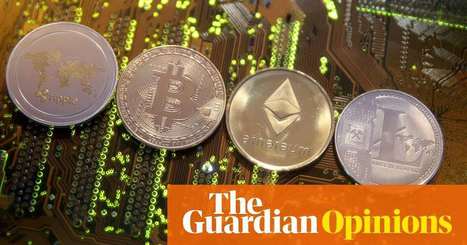
Attempts to reinvent money such as bitcoin often create excitement, but achieve little
Graham Watson's insight:
Robert Schiller on Bitcoin.
A precis: much sound and fury, signifying nothing.
Scoop.it!

The long read: This is what happens when you turn the natural world into a profit-making machine
Graham Watson's insight:
Just a great piece looking at modern capitalism through the prism of cheap food production, not so much theoretical economics but a really fascinating read nonetheless.
Scoop.it!

The problem for progressives is that neo-classical beliefs have taken politics to the right
Graham Watson's insight:
Typically insightful Larry Elliott piece that highlights the fact that to be 'progressive' these days is a difficult business with both the Left and the Right, to a great extent, advocating the free market. It also links the study of the subject to a fantastic Prospect debate that focuses on the problems facing the subject, which is worth closer scrutiny.
Scoop.it!
If central banks ever issued their own cryptocurrencies, they could become rivals to cash, draining funds from the commercial banking system and accidentally driving up market interest rates, a global watchdog has warned.
Graham Watson's insight:
Interesting Telegraph article that suggests that the rise of central bank sponsored cryptocurrencies could destabilise the financial system by reducing liquidity in conventional money markets, and, as a consequence, driving up interest rates. It's an interesting hypothesis.
Scoop.it!

Overpriced cryptocurrencies owe their diminishing credibility to an over-hyped technology
Graham Watson's insight:
The Bitcoin bubble has burst, it would seem. Much like many of the water pipes in the Birmingham area.
Scoop.it!

Research from the US suggests a drop in conception rates could indicate a recession is on the way.
Graham Watson's insight:
Sometimes you come across an article that is simply too good to be true - are pregnancy rates a leading indicator of recessions? Some recent American research suggests as much. According to the article, the authors of the paper, Daniel Hungerman, Kasey Buckles and Steven Lugauer "found that conception rates drop several months before other signs of a recession become visible." Is this credible research, and who on earth would think of funding it?
Scoop.it!

Data centres mining the crypto-currency will use more electricity than homes this year, an energy firm says.
Graham Watson's insight:
Prize for today's most bizarre story...
Scoop.it!

Investor fears over tightening crypto-currency legislations could be contributing to the fall.
Graham Watson's insight:
Going down....
|
Scoop.it!

Making money from making money is big business. Many countries print notes outside their borders with private companies.
Graham Watson's insight:
Just an interesting article about banknotes, with the majority of the world's banknotes printed outside the borders of the country using them. This is, in part, prompted by a recent event in Liberia where the Liberian government lost $104m that had been printed overseas.
That smacks of something similar that stoked Congolese hyperinflation, nearly 20 years ago, when widescale abuse of the knowledge of which notes were being printed meant that a given run of notes was printed up to ten times. You might have a think about how this might impact inflation - perhaps using the Fisher equation?
Scoop.it!

Payment by plastic cards now account for three-quarters of consumer spending in stores.
Graham Watson's insight:
A little aside - cash is no longer king. In fact, it only accounts for around 22% of consumer spending. That is because credit cards are ubiquitous, and fulfil many of the functions of money.
Scoop.it!

Universities that only train young people to be City analysts leave us unable to learn from the past or predict the future
Graham Watson's insight:
Is this true? And do I feel threatened by it?
In part, yes. I work in education, but I'm of the view that you could have said that same about any cohort of undergraduates or graduates, as the baton passes from one generation to another. Do they know as much as us? What is to blame for this?
I don't even think this is economic-specific either. I think that its chronocentrism - we've forgotten the state of our own education when we left university. Did we really know that little then? The answer, I fear, is probably 'Yes'.
Scoop.it!
Oil spills, deforestation and divorce are all good for GDP, so why is it still the yardstick we use to measure an economy? The Prime Minister of Norway and leading economists explain the debate.
Graham Watson's insight:
A look at the nature of GDP, how it is calculated and how it falls short of measuring the real value of output generated by a 21st century economy. I suspect that this might end up being in my material on GDP next year.
Scoop.it!

Consumers used debit cards 13.2bn times in 2017, while the number of cash payments fell 15%
Graham Watson's insight:
This story in the Guardian caught my eye - it's about the fact that cash is no longer king: in 2017, we spent more via debit cards than in cash.
This has all sorts of implications, not least the fact that card payments have a lower opportunity cost, and this might encourage people to spend more than they can afford.
Scoop.it!
A learning resource for 7 – 13 year olds. Find out about money, its uses - past and present - and why we trust its value. The concepts are explained usin
Graham Watson's insight:
So, OK, this might be a little bit basic for post-16 education, but this Bank of England investigation is one of four looking at the nature of money. I might have to show it to my son!
Scoop.it!

Millennials' distrust of British banks, and a growing interest in supporting local communities, has helped spawn a new crop of local digital currencies.
Graham Watson's insight:
An interesting article that flags up some of the local currencies operating in the UK and might get you thinking about the characteristics and functions of money.
Scoop.it!

Barclays analysts compare speculation in digital currency to spread of infectious disease
Graham Watson's insight:
A link between epidemiology and Bitcoin? Yes, this article suggests that Barclays analysts are using the tools of the former to model that price of the latter, and that last year's 'bubble' was due to 'infected' buyers.
Scoop.it!

Remotely explore a virtual shopping centre or pay with a swipe of your hand. Is this how we might shop in future?
Graham Watson's insight:
I've scooped an awful lot of clip relating to Bitcoin, but that's just one part of the future of money - this is another. It is a Visa clip that looks at how future money might be used to fulfil its vital functions.
Scoop.it!
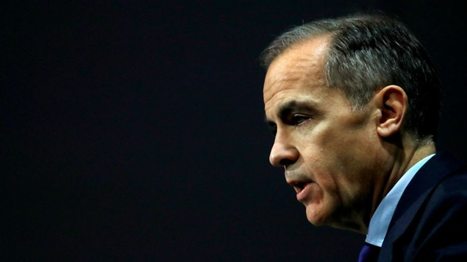
Bitcoin and other digital currencies must be regulated, Bank of England governor Mark Carney warns.
Graham Watson's insight:
The regulatory crackdown on Bitcoin continues: this time it's Mark Carney, Governor of the Bank of England, who is arguing for the regulation of digital currencies, which is precisely the sort of thing that their advocates argue makes them special.
Scoop.it!
An estimated £3-4 billion is being laundered via cryptocurrencies in Europe every year, the director of Europol has told the BBC. It comes as the Shadow Treasury Minister, Alison McGovern, says much speedier regulation is needed. But what are cryptocurrencies? Spencer Kelly explains all.
Graham Watson's insight:
This BBC clip looks, in a straightforward manner, at how cryptocurrencies work. It's actually one of the simplest explanations that I've seen and worth a look.
Scoop.it!

The most memorable comments on the cryptocurrency from senior figures in world finance
Graham Watson's insight:
Who said what on Brexit: a Guardian compilation of edited highlights.
|





My wife and I were discussing the 'cashless society' this morning, arguing that our children's primary school should have a system of electronic payment for school meals and breakfast club and so on. We think that it would be much easier and cheaper for the school and for parents, and also reduce the amount of cash held on the premises.
However, perhaps we've overlooked the poor and those without internet access - as this article implies. That said, I can't think of many people who always carry odd sums - like £4 - to pay for breakfast club.
And ATMs are closing at an alarming rate too - so, does the dash for 'cashless' transactions raise distributional issues?
Certainly those living in rural communities seem to think so - but it could also be argued that by choosing to live there, that's a price they have to be prepared to pay. And, equally, does it discriminate against SMEs. In this day and age, I'm less convinced.