


Overpriced cryptocurrencies owe their diminishing credibility to an over-hyped technology


 Your new post is loading...
 Your new post is loading...
Your new post is loading...
 Scoop.it!
Overpriced cryptocurrencies owe their diminishing credibility to an over-hyped technology
Graham Watson's insight:
The Bitcoin bubble has burst, it would seem. Much like many of the water pipes in the Birmingham area. 
No comment yet.
Sign up to comment
Scoop.it!

Research from the US suggests a drop in conception rates could indicate a recession is on the way.
Graham Watson's insight:
Sometimes you come across an article that is simply too good to be true - are pregnancy rates a leading indicator of recessions? Some recent American research suggests as much. According to the article, the authors of the paper, Daniel Hungerman, Kasey Buckles and Steven Lugauer "found that conception rates drop several months before other signs of a recession become visible." Is this credible research, and who on earth would think of funding it?
Scoop.it!

Data centres mining the crypto-currency will use more electricity than homes this year, an energy firm says.
Graham Watson's insight:
Prize for today's most bizarre story...
Scoop.it!

Investor fears over tightening crypto-currency legislations could be contributing to the fall.
Graham Watson's insight:
Going down....
Scoop.it!

The South Korean firm reveals it has begun making chips designed to be used to mine crypto-cash.
Graham Watson's insight:
More Bticoin, but this time a move likely to prop up the price of the cryptocurrency, with Samsung admitting that they've invested in chips designed to 'mine' the cryptocurrency. Whether this is a good long-term bet depends upon what happens to the value of Bitcoin in the months ahead.
Scoop.it!

Digital currencies such as bitcoin have caused a financial frenzy. Alex Hern explains what they are – and whether this is the end of ‘real’ money
Graham Watson's insight:
The Guardian looks at the impact of digital money on the 'real' economy and what cryptocurrencies actually are. If you're new to the idea - where have you been over the last year? If you're not, you're likely to have an opinion - Bitcoin is the monetary equivalent of Marmite as far as I can make out.
Scoop.it!

Volatility, high fees and longer transactions mean the payments firm will dump the cryptocurrency.
Graham Watson's insight:
Is this another nail in the Bitcoin coffin, as a US payments firm, Stripe, ditch the currency? IF this happens Bitcoin starts to lose its use as a medium of exchange, and given that recent volatility in its price have meant that it's less useful as a store of value and unit of account - and thus less able to fulfil three of the functions of money.
Scoop.it!
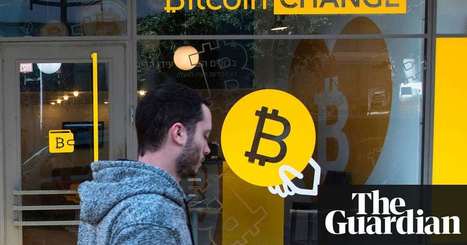
Despite losing 40% in a matter of weeks the cryptocurrency still has further to drop according to experts at Capital Economics
Graham Watson's insight:
Bitcoin. Bubble? Discuss.
Scoop.it!

Bitcoin's price dropped by more than $1,000 in just one hour on Tuesday morning amid reports that governments in China and South Korea are planning further crackdowns on the digital currency.
Graham Watson's insight:
What goes up, must come down. This appears to apply to Bitcoin as much as it does to objects being affected by the force of gravity. As the article notes: "It has now lost 40pc of its value since its $20,000 high in mid December". The reason is simple D&S: fears of a regulatory backlash in a number of countries has meant that demand for the cryptocurrency has fallen...hence...
Scoop.it!

The billionaire investor and his longtime manager Charlie Munger, two of the world’s most successful investors, say they’d never invest in cryptocurrencies
Graham Watson's insight:
It appears that great minds think alike! Warren Buffett appears to chare my view on Bitcoin and other cryptocurrencies.
Scoop.it!

Even in the turbulent world of cryptocurrencies, Dogecoin is seen as a pretty wild creature.
Graham Watson's insight:
Another day, another cryptocurrency, to coin a phrase. But isn't this all evidence of the extent to which this sort of bubble is unsutainable, not least because Dogecoin has few of the characteristics of money and fulfils next to none of the functions.
Scoop.it!
The digital currency Bitcoin has been making headlines this week after a huge increase in value, but ministers are to introduce tighter regulations on the cryptocurrency.
Graham Watson's insight:
Does Bitcoin encourage money laundering - and to what extent is it increasingly become accepted as a medium of exchange? This BBC article looks at both of these questions.
Scoop.it!

The Chicago-based CME exchange begins Bitcoin trading for investors.
Graham Watson's insight:
More on Bitcoin: the value of the cryptocurrency has rocketed: it has been as high as $20,000 over the past week, and the beginning of futures trading has only served to boost demand for the currency despite fears that it represents a classic bubble.
|
Scoop.it!
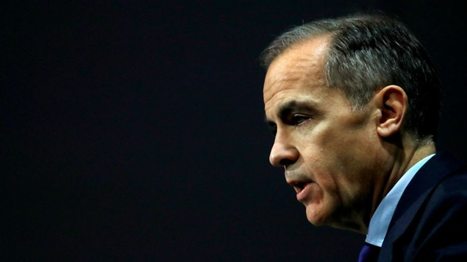
Bitcoin and other digital currencies must be regulated, Bank of England governor Mark Carney warns.
Graham Watson's insight:
The regulatory crackdown on Bitcoin continues: this time it's Mark Carney, Governor of the Bank of England, who is arguing for the regulation of digital currencies, which is precisely the sort of thing that their advocates argue makes them special.
Scoop.it!
An estimated £3-4 billion is being laundered via cryptocurrencies in Europe every year, the director of Europol has told the BBC. It comes as the Shadow Treasury Minister, Alison McGovern, says much speedier regulation is needed. But what are cryptocurrencies? Spencer Kelly explains all.
Graham Watson's insight:
This BBC clip looks, in a straightforward manner, at how cryptocurrencies work. It's actually one of the simplest explanations that I've seen and worth a look.
Scoop.it!

The most memorable comments on the cryptocurrency from senior figures in world finance
Graham Watson's insight:
Who said what on Brexit: a Guardian compilation of edited highlights.
Scoop.it!

The bank stops its credit card customers buying the digital currency amid fears its value will keep falling.
Graham Watson's insight:
More Bitcoin, with Lloyd's Bank banning its credit card customers from using them to buy the cryptocurrency, as people start to worry about the bubble bursting. Last week, Bitcoin fell by 30% to just over $8,000, which itself is less than half of the $19,000 it was worth in November.
Scoop.it!

If you have profited from crypto-currencies you could be liable for tax, says Rory Cellan-Jones.
Graham Watson's insight:
Yet another nail in the Bitcoin coffin? HM Customs and Revenue are starting to get a handle on the capital gains made by Bitcoin owners. And this might, at the margin reduce demand, and affect price.
Scoop.it!

Davos speakers round on cryptocurrency as Robert Shiller calls it a clever idea with an impermanent future
Graham Watson's insight:
Robert Schiller can't see Bitcoin becoming a permanent feature of the global financial system - however, he can see a future for blockchain technology.
Scoop.it!

The move is aimed at preventing cryptocurrencies being used for crimes such as money laundering
Graham Watson's insight:
More regulation of Bitcoin in South Korea, the 3rd largest market for the currency. Surely this can only mean one thing for the value of the cryptocurrency.
Scoop.it!

The Asian nation has been a big adopter of virtual currency, so developments there have a global impact.
Graham Watson's insight:
The BBC with a bit more detail about why the regulatory actions of South Korea have had such a significant effect upon the price of Bitcoin. In short, it points out that the South Korean economy is the third largest market for Bitcoin.
Scoop.it!

Government cryptocurrency concerns include tax evasion and people developing gambling addictions
Graham Watson's insight:
The regulatory fightback against cryptocurrencies begins here: South Korea has banned Bticoin trading amid concerns about tax evasion.
Scoop.it!

African millennials explain to Catherine Byaruhanga the attraction of risky cryptocurrency Bitcoin.
Graham Watson's insight:
Even more on cryptocurrency - this time the adoption of Bitcoin in Africa. Normally, I'm all in favour of the adoption of technology in developing economies but this strikes me as an instance of where technology might not have positive effects. For the average African, Bitcoin will fulfil none of the 'real' functions of money as a medium of exchange, for instance, meaning that it's almost exclusively a form of investment whose value can go up as well as down.
Scoop.it!

Bitcoin has had an interesting year, so should we now take it seriously?
Graham Watson's insight:
The year in Bitcoin - note the remarkable rise in the value of Bitcoin. But is it really a viable currency yet?
Scoop.it!

Neoclassical economics has become an unquestioned belief system and treats those challenging the creed as dangerous
Graham Watson's insight:
A Larry Elliott Christmas gift: another look at an Economic Reformation. a must-read for any ToK students, and anyone interested in the methodology of the subject. Depressingly, he writes that, despite the challenge to economic orthodoxy in the aftermath of the financial crisis, normal service has been resumed.
|




