
Research from the US suggests a drop in conception rates could indicate a recession is on the way.
Get Started for FREE
Sign up with Facebook Sign up with X
I don't have a Facebook or a X account


|
Scooped by
Graham Watson
onto The Economic Method February 26, 2018 3:25 PM
|
 Scoop.it!
Research from the US suggests a drop in conception rates could indicate a recession is on the way.


 Your new post is loading...
 Your new post is loading...
Your new post is loading...
Scoop.it!

Joel Mokyr has warned of ‘dark clouds’ amid Trump tariffs, while Philippe Aghion and Peter Howitt have written about role of ‘creative destruction’
Graham Watson's insight:
The annual announcement of the Nobel Prize for Economics has come today, with Joel Mokyr, Philippe Aghion and Peter Howitt being rewarded for their work on the relationship between innovation and growth, notably in the form of creative destruction.
Scoop.it!

Troubles at UK statistics body are muddying economic picture for Treasury and spending watchdog, sources warn
Graham Watson's insight:
This is a rather concerning article, highlighting the shortcomings of the Office for National Statistics and the fact that a lack of accurate data might impact the quality of economic policymaking.
A shortcoming like this means that the data being used both by the Treasury and the Office for Budgetary Responsibility might be working on the basis of incomplete or missing data and that's dangerous.
Scoop.it!

From Rachel Reeves to the MPC, and thinktanks to unions and lobby groups, many of the authoritative voices we hear discussing economics are female
Graham Watson's insight:
Heather Stewart's piece for tomorrow's Guardian notes the rise of female economists, arguing that they've stealthily become more important in the recent past and highlighting a number of prominent UK based examples.
It's a welcome move, although I'd argue that it's more important that they're good economists, irrespective of gender, and that it's a little bit insular in ignoring women such as Janet Yellen, Christine Lagarde, Kristalina Georgieva and Ngozi Okonjo-Iweala to name four globally renowned female economists.
Scoop.it!

Asset manager Aberdeen’s surprise cut to funding research into inequality has left those that used its grants for good work reeling, says Guardian columnist Polly Toynbee
Graham Watson's insight:
Is Polly Toynbee right, are capitalism and progressive change mutually exclusive? If this example is taken in isolation - with asset manager Aberdeen (note vowels!) cutting research funding into inequality - then it might look that way.
And when companies undertake things such as this, that add nothing to their profits, but obviously incur costs, we might think about their motivation for doing so.
Scoop.it!

Devereux Review on the UK’s main statistics body also says a revision of past figures may be required
Graham Watson's insight:
I rarely post on this board, but this is a fundamental methodological point about the role of the Office for National Statistics and its importance in policymaking.
In short, the criticisms of the Devereux Review are fairly damning: there are "deep-seated" problems and this has adverse implications. Policymaking is only as good as the data it's based upon, and it seems that the ONS is falling short in many areas and that, over time, previous figures are likely to need to be revised - note, this will trigger hand-wringing and claims that inaccurate data has unfairly tarnished the reputation of the previous government.
As a result, there's going to be a £10m investment in the ONS; however, £10m doesn't go a long way.
Scoop.it!
Caveat from statistics agency is latest sign of its problems collecting reliable economic data
Graham Watson's insight:
More problems with data gathering at the Office for National Statistics with the latest data on UK wage growth being qualified in the wake of late data from one firm. You wouldn't imagine that it could have such an effect, even if it were a large private sector employer like Tesco, but it calls into question the data that used to help policymaking in the UK.
Scoop.it!

From
www

Wind and wave power is set to be included in calculations of the size of countries' economies for the first time, as part of changes approved at the United Nations.
Graham Watson's insight:
The way in which GDP is calculated is going to change, with the UN agreeing that a number of other economic activities should be valued including wind and wave power, and data is also being given a value. As a result, of this minor tweak, it's likely to increase GDP by 2-3%.
This, in itself, won't see an increase in living standards, but it does have potentially more interesting implications for defence spending because the government has committed to spending a fixed percentage of GDP on defence. As a result, if GDP grows, this means that the government are going to have to find more to fund this.
Scoop.it!

British-born Simon Johnson and James A Robinson and Turkish-American Daron Acemoğlu share £810,000 prize
Graham Watson's insight:
Excellent news for British economists - with the announcement that this year's Nobel Prize for Economics has been awarded to Daron Acemoglu, Simon Johnson and James Robinson for their work on the importance of inclusive institutions in promoting development.
Scoop.it!

Interviews with people in remote communities challenge widely held perception that money buys happiness
Graham Watson's insight:
Always nice to remind yourself of the Beatles' contribution to economic thought. As they pointed out in their 6th single, "Can't Buy Me Love" in 1964, "I don't care to much for money, 'cos money can't buy me love".
And so it would seem, with indigenous people showing similar, if not higher levels of happiness with people in High Income Countries.
Scoop.it!

Amazon, eBay and others record rise in reselling as cost of living crisis bites and customers try to shop sustainably
Graham Watson's insight:
Might this classify as an economic indicator? I would argue that the level of sales of secondhand goods is a good proxy for the state of the economy. It should be easy to understand why, applying the concept of income elasticity of demand, and there might be some nice data to support the hypothesis.
Scoop.it!
The IMF's is just one of many forecasts for the UK economy, how much weight should we give it?
Graham Watson's insight:
What do we care about what experts say?
This is a brief summary of Faisal Islam's BBC article - and, alas, reflects the growing trend to disregard expert opinion if it fails to support our own views. There's a little bit of theory here - but I suspect that this has more to do with the impact of pluralistic ignorance on policymaking.
Scoop.it!
With our current economic system treating nature as an ‘externality’, how can market processes adjust to price risk associated with the loss of nature and biodiversity? Bernardus J. Marttin, Member of the Managing Board with Rabobank, argues for the concept of natural capital which factors in such externalities, integrating nature’s welfare into any measures on prosperity.
Graham Watson's insight:
To what extent are traditional measures of national income and economic welfare appropriate. This clip looks at how we might start valuing nature appropriately, reflecting biodiversity.
Scoop.it!

Ben Bernanke, who led the Fed through the financial crisis, is one of a trio to scoop the award.
Graham Watson's insight:
This year's Nobel Prize for Economics is shared by former Federal Reserve boss, Ben Bernanke, and fellow economists Douglas Diamond and Philip Dybvig, all of whom worked on the prevention of bank runs, which may have helped avert a more severe global financial crisis in 2008.
|
Scoop.it!

From the firing of the labor statistics chief to plans for a new census, the president’s moves serve to entrench authoritarianism
Graham Watson's insight:
I've put this opinion piece here because it highlights how President Trump's recent moves to question official statistics and fire the Chief of Labour Statistics undermine the impartiality of data and the adverse consequences of this for both policymaking in the short-term and democracy in the longer term.
Scoop.it!

Between AI, changes under Trump and a ‘tougher environment’, what do we really know about the jobs market?
Graham Watson's insight:
This Gene Marks article has wider implications than merely looking at the US labour market - in it he posits whether the latest employment data is really that accurate. In the US, he thinks that over-employment, with people having more than one job, might distort unemployment and job creation data, whereas in the UK we're more concerned about under-employment and it's impact.
Either way, global statistical agencies are struggling to keep abreast of the latest labour market trends.
Scoop.it!

With the UK still shaking off the psychological side-effects of Covid, Rachel Reeves might want to broaden her aims
Graham Watson's insight:
Another look at the now increasingly old debate about what the government's macroeconomic objectives should be, with Heather Stewart arguing that in the post-Covid age, there should be an explicit focus on happiness - however that can be measured - and that might allow the government to reshape the narrative in its favour.
Scoop.it!
From
www
Dan Gardner is the coauthor of "How Big Things Get Done," a book that explores why so many billion-dollar projects, from nuclear power plants to Olympic Games, go wrong and how some manage to succeed. Drawing on data from over 16,000 megaprojects,
Gardner and his coauthor Bent Flyvbjerg reveal the startling truth: Only 0.5% of big projects are delivered on time, on budget, and with the promised results. Business Insider interviewed Dan Gardner to learn about some of the world's most high-profile projects, like the Sydney Opera House, which soared 1,400% over budget, and the troubled California High-Speed Rail, which is expected to cost over $100 billion and hasn't moved any passengers yet. He also spotlights the rare successes, like the Empire State Building and the Hoover Dam, to show what’s possible when projects are built on smart planning, strong leadership, and modular thinking.
Graham Watson's insight:
This Business Insider clip interviews Dan Gardner, co-author, with Bent Flyvbjerg, of "How Big Things Get Done" looking at why so many megaprojects are overrun their budgets and deadlines, resulting in higher costs and a loss of economic welfare, to the extent that some of the most egregious examples, such as the Montreal Olympics and the Sydney Opera House represent examples of government failure. It's an excellent introduction to many of the key ideas contained in the book.
Scoop.it!

The long read: President Trump’s tariffs have plunged the world economy into chaos. But history counsels against despair – and the left should seize on capitalism’s crisis of legitimacy
Graham Watson's insight:
The Guardian's long read looks at the future of global capitalism in the post-Trump era and argues that it represents a chance for the political Left to get on the front foot and make a compelling case for reshaping the economic order to emphasise sustainability and equality.
You may not agree with it, but it's worth your consideration nonetheless.
Scoop.it!

ONS, already working on fixing a survey, uncovers problems with two indices used to measure prices in economy
Graham Watson's insight:
Oops! It seems as though the quality of economic data being generated by the ONS is currently below par with the agency having detected problems with the way in which it calculates certain price indices, including the Producer Price Index, and this has implications for its ability to ensure that growth figures are accurate. As a result, it's warned that it will have to revise data for 2022 and 2023, but the consensus view that that, to some extent the changes will balance one another out and have few implications for economic growth.
Scoop.it!

Sustainability-focused inclusive income formula accounts for non-monetary factors overlooked in GDP, says ONS
Graham Watson's insight:
A rare, but important entry to the Economic Method board, with the news that the ONS is looking at formalising alternatives to GDP such as inclusive income and wealth.
The latter are intended to capture things that GDP misses, like housework and other non-marketed transactions such as "Parents who take their children to events in their own car rather than a taxi, home-cooked meals and voluntary childcare and care of older relatives". Such things are included in Gross Inclusive Income (GII) but Net Inclusive Income (NII) is more volatile, taking into account the negative effect of wear and tear (i.e. depreciation) on household goods.
Scoop.it!

Editorial: Gordon Brown challenged Conservative ideas to fix the economy. His successors unfortunately will not
Graham Watson's insight:
An interesting Guardian opinion piece that argues that whereas in 2010, Gordon Brown had a genuine alternative vision to the economic policies being peddled by the Conservative Party, the current Labour Opposition doesn't.
It highlights the notion of post-neoclassical endogenous growth theory and one of the current fads - modern monetary theory - and suggests that both offer alternatives. But do they?
Scoop.it!

People are using notes and coins as a way of budgeting while prices rise, says the British Retail Consortium.
Graham Watson's insight:
An interesting aside, in that the amount of payments made by cash has increased in the past month, with consumers keeping a closer eye on what they're spending. It's an interesting fact of economic life that people perceive budgeting to be easier if payments are made in cash.
Scoop.it!
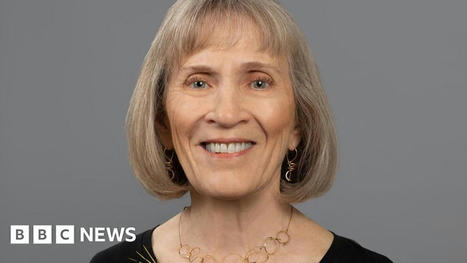
American Claudia Goldin is only the third woman to receive the prestigious economics prize.
Graham Watson's insight:
Claudia Goldin has become the third woman to win the Nobel Prize for Economics for her work on women's pay over time, identifying those factors that have contributed to altering female participation rates in the labour force, and the effect of this on their wages over time.
Scoop.it!

The kiosks promised to make life easier for shoppers and stores. Instead, they’ve done the opposite
Graham Watson's insight:
I've 'scooped' this because self-checkouts something that fascinate me. This article summarises many of my frustrations - and might get you thinking about the human resource and operational issues that are raised.
In the first instance, the rise of the self-checkout has also seen an uptick in shoplifting, which will affect supermarket revenues. Equally, despite the 'promise' of lower costs because of fewer checkout assistants, you still need to employ someone to monitor the self-checkout.
I would also add that I think that there's been no innovation in the sector, because supermarkets have little incentive to invest in them. They are good enough - but no more. Given the cost implications for the firms, I've often thought that shoppers using them should getting a tiny discount on their shopping..
Scoop.it!
How much weight should we put on predictions from the Office for Budget Responsibility and other experts?
Graham Watson's insight:
A pretty fundamental question is posed in this article, and it looks at the record of the Office for Budgetary Responsibility in forecasting growth and borrowing, and reasons why, even though, forecasting is notoriously difficult it's currently form is infinitely preferable to what went before.
|




