Your new post is loading...
In an actual power supply system planning and design project, activities such as power load and demand forecasting, grid connections, availability of resources and technology are followed by grid planning and network design. For our study we developed a framework for preliminary techno-economic assessment of both the liquid natural gas (LNG) supply chain and the high level analysis of distributed power and microgrids. Life cycle capital and operational cost models of several possible LNG supply chains and the costs for distributed generation and microgrids are calculated using different models. One model uses milk run data to determine the appropriate supply chain configurations for each LNG demand site (power generation), and calculate the most effective cost of supplying fuel to the power plants served by the milk run. This result is being used as input to refine the estimate for fuel costs required to run gas-fired power plants in the next model for each power generation site and microgrid location. This model will then generate overall power supply costs and related data such as carbon emissions. This approach ensures that the significant and relatively high costs of new LNG supply and distribution infrastructure to support gas-fired power generation in the case study are modeled accurately. Click headline to read more and access hot links to prior posts in this series--
A new study reports that of nine coastal cities around the world, Shanghai is themost vulnerable to damage and destruction from serious flooding.The study uses a new method for estimating how vulnerable cities are to flooding that looks at social and economic factors as well as weather patterns and environmental factors. A team of scientists from the UK and the Netherlands developed The Coastal City Flood Vulnerability Index (CCFVI), which combines 19 factors including a city’s speed of recovery, level of economic activity, and a population’s awareness of flood shelters. “Vulnerability is a complex issue,” lead author of the study Professor Nigel Wright of the University of Leeds says in a statement. “It is not just about your exposure to flooding, but the effect it actually has on communities and business and how much a major flood disrupts economic activity. Our index looks at how cities are prepared for the worst—for example, do they have flood defenses, do they have buildings that are easy to clean up and repair after the flood? It is important to know how quickly a city can recover from a major flood.” The study was published in the journal Natural Hazards. Click headline to read more access hot link to study--
Florida Institute of Technology (FIT) has joined many other Universities in adding their Intellectual Property (IP) and Lab Facilities to the resource catalogs created by the Florida Cleantech Acceleration Network (FL-CAN). The FL-CAN program also offers services that include market assessment, Small Business Innovation Research (SBIR) proposal development, market research expertise, and others available at http://www.flcleantech.com.FL-CAN collaborates with several Florida Universities, now including FIT, to increase access to a list of over 400 intellectual properties (IP) and 80 Laboratory Facilities capable of supporting efforts in clean technology industries. These lists and other FL-CAN services were established to bring entrepreneurs, innovators, companies and researchers together to form a network for cleantech advancements. “FL-CAN is always working to add to our already extensive network in order to help more and more individuals and companies in the cleantech field,” said Thomas O’Neal, associate vice president for research and commercialization at UCF, and the principal investigator on the FL-CAN project. Click headline to read more--
Major cities along the East Coast of the United States are now scrambling to adapt to, not necessarily prevent, climate change. With recent research showing that sea levels are rising quickly along the East Coast, major hubs such as Boston and New York City have been busy thinking up ways to ensure they won’t end up underwater. To combat the environmental threat, both cities have assembled action committees composed of scientists and government officials that will assess just what can be done. The fear of flooding is particularly worrisome in Boston, a waterfront city that has multiple neighborhoods built on marshes and mudflats and that frequently experiences major storms. Click headline to read more--
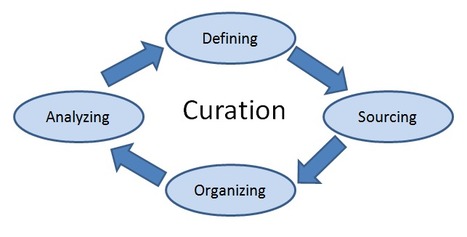
Many have talked about a pyramid of participation in which many consume information online but few actively produce it. These models are clearly hierarchical with production valued more than consumption. Yet, concepts like curation, or circulation, focus on mid-level activities which are more widespread in our culture and which nevertheless have been central to defining digital culture from the beginnings. Click headline to read more and access Part One & Two of this interview--
Via Manuel Pinto
When the majority of information moves from print to digital form, we need a new set of critical skills in order to find what we need and use if properly. Many students get to college without having learned much in the way of information literacy, although professors often expect it was already taught. How should schools teach kids about finding good materials for research? About plagiarism? About finding authoritative sources online? Click headline to read more and access hot links--
Via Manuel Pinto
"Cleantech is the new frontier for civilization,” Pin Ni, the President of Wanxiang America, told me in an interview this week. While Wanxiang might be an entirely unfamiliar name in the U.S., it’s one of China’s largest industrial parts companies with $13 billion in revenue and 45,000 employees. Wanxiang’s American division is sizable in its own right, with around $2.5 billion in revenue and 6,000 people. Wanxiang has emerged as a company that has been making some really aggressive investments into U.S.-based cleantech startups, and the firm has invested in quite a few companies that had hit a wall financially. Most recently Wanxiang said it planned to invest up to $450 million into ailing lithium ion battery maker A123 Systems, which could eventually give Wanxiang 80 percent ownership. A123 Systems, based in Waltham, Mass. has been bleeding cash for months, with weak sales and a battery recall for a line it produced for electric car maker Fisker Automotive. It was on the verge of being delisted from the Nasdaq. Ni described A123 Systems to me as one of the clear leaders in lithium ion battery manufacturing that has been facing significant financial challenges. Wanxiang will work to help A123 get “financially stabilized,” said Ni. Wanxiang also invested $420 million into GreatPoint Energy, a company based in Cambridge, Mass. that converts coal into cleaner-burning natural gas. At the time that deal was described by the Wall Street Journal as “the largest ever by a Chinese corporation into a venture-capital-funded U.S. company.” GreatPoint Energy planned to use the money partly to build a large-scale plant in China to convert coal into natural. Click headline to read more--
Hawke's Bay lines company Unison Networks has announced a partnership with Telvent, a global IT solutions provider, to evolve its network management system through Unison's fibre-based Smart Grid. Unison will be the first lines company in New Zealand to implement its Advanced Distribution Management System (ADMS). Unison Group chief executive Ken Sutherland said the ADMS merged a range of technologies into one comprehensive network management system that would meet the company's requirements now, while serving as the foundation for future smart grid developments. "The Telvent system is regarded as one of the leading network management applications globally. It will provide us with an innovative tool set capable of supporting our long-term Smart Grid strategy," Mr Sutherland said. Deployed in more than 25 countries, Telvent's ADMS supports utility companies in making power generation and distribution more efficient and sustainable. Mr Sutherland said that by improving network efficiencies through intelligent automation, Unison would be able to monitor, control and improve overall knowledge of the state of its network. Click headline to read more--
In 2011, after nearly nine years of war and occupation, U.S. troops finally left Iraq. In their place, Big Oil is now present in force and the country’s oil output, crippled for decades, is growing again. Iraq recently reclaimed the number two position in the Organization of the Petroleum Exporting Countries (OPEC), overtaking oil-sanctioned Iran. Now, there’s talk of a new world petroleum glut. So is this finally mission accomplished? Well, not exactly. In fact, any oil company victory in Iraq is likely to prove as temporary as George W. Bush’s triumph in 2003. The main reason is yet another of those stories the mainstream media didn’t quite find room for: the role of Iraqi civil society. But before telling that story, let’s look at what’s happening to Iraqi oil today, and how we got from the “no blood for oil” global protests of 2003 to the present moment. Click headline to read more--
Market changes and an investment of $800 million to $1 billion over 15 years could bring more than 100 GW of geothermal energy to the US grid by 2050, according to a study recently released by a multi-disciplinary research group at MIT. That investment, is less than the cost of a single “new generation” coal-powered plant, and the amount of energy is equivalent to 200 coal-fired power plants or 100 new nuclear power plants. The report says the heat that lies in the rock six miles beneath Oregon’s Newberry Volcano alone could provide 2,500 times as much energy as the United States currently uses. MIT's research follows up research published last year by Southern Methodist University (SMU). SMU research shows that the U.S. houses more than 2.98 million megawatts of geothermal energy that could be tapped by advanced geothermal technologies. The “deep geothermal power” that lies beneath the Newberry Volcano requires “Enhanced Geothermal Systems” (EGS) to pump water down into the hot rock, and then back to the surface (sometimes as steam) to power generators at the surface. This system produces zero emissions, and, unlike wind and solar, provides energy at a consistent level that outperforms coal plants. Click headline to read more--
As the Internet increasingly globalizes, the interconnection between networks, content providers and users is more and more critical to creating the ‘network of networks’ that is the Internet. At the center of this globalization are Internet exchange points (IXPs), facilities where all Internet players can interconnect directly to each other, thereby improving quality of service and reducing transmission costs. IXPs have already played a key role in the development of an advanced Internet ecosystem across North America, Europe and Asia. This paper details the impact that such IXPs have had in two emerging markets in sub-Saharan Africa: Kenya and Nigeria. The benefits for Internet Service Providers (ISPs) alone includes savings on international capacity costs, along with an improved quality of service resulting in additional revenues, with a total value worth millions of dollars per year. IXPs typically follow a gradual evolution path, building on the growing number and diversity of their members over time. Early in the Internet development cycle in most countries, Internet Service Providers often find it cost-effective to use their international Internet connections to exchange domestic traffic, a process often known as ‘tromboning.’ Tromboning is the result of unilateral action, with each ISP independently concluding that it is more cost-effective to use its international connections for domestic traffic exchange than to connect to every other ISP separately. However, the use of international capacity for domestic traffic is expensive, and this tromboning can be eliminated, with corresponding cost savings, if ISPs adopt a co-operative approach to create a local IXP where domestic traffic can be exchanged. Click headline to read more--
A newly opened wind farm on the roof of the Oklahoma Medical Research Foundation is claimed by turbine suppliers Venger to be the largest building-integrated wind fars in the US. But might it be the largest in the world? On June 22, 2012, wind turbine manufacturer put out a nondescript press release with the headline "Venger Wind Farm Installed on Roof of Oklahoma Medical Research Foundation (OMRF)." Welcome, but at first glance, not particularly ground-breaking news. Rooftop wind installations of significant capacity are relatively rare, but not so rare that a new one is likely to grab many headlines beyond local news coverage. But a second look reveals, four sentences into a lengthy opening first paragraph, the following nugget of information: "the project is the largest building integrated wind energy system in the US." Yes, this appeared in the first paragraph, but with the sheer volume of press releases put out on a daily basis, this may as well have been written in Hittite. Talk about burying the lede. Credit must go to Inhabitat's Timon Singh for spotting this significant detail (assuming that's where he saw the story). But enough about the subtleties of press release writing. Just how large is "large?" One hopes and assumes that by size, Venger is referring to installed capacity: the power the farm is capable of producing at peak output. The roof of the OMRF is now graced with 18 of Venger's 18.5-ft (5.6-m) V2 vertical-axis wind turbines. Each has a capacity of 4.5 kW, giving the installation a theoretical capacity of 81 kW overall. As rooftop installations go, that's certainly nothing to be sniffed at. As a basis for comparison, the three turbines integrated into London's Strata residential block have a combined capacity of 57 kW. Click headline to read more and view pix--
“We will never have bipartisan support for a sensible, comprehensive domestic energy policy until realism and fact can supersede ideology and fiction." The line above, from Southern Methodist University’s Bernard Weinstein and quoted in yesterday’s post on energy policy, bears regular repeating because of the damaging role misinformation and deception play in hindering development of America’s energy resources. In the interests of promoting “realism and fact” in the discussion of hydraulic fracturing, check out this Q&A produced earlier this year by the Michigan Department of Environmental Quality. We haven’t seen a better one-stop shop for basic information as well as the debunking of fracking myths – from flammable water faucets to earthquakes (h/t Steve Everley). Some highlights: Click headline to read the Q & A--
|
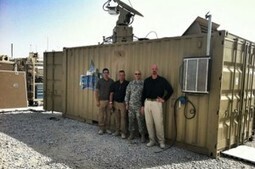
The US Army has begun sending rapid prototyping Expeditionary Labs to Afghanistan, to create and modify tools and weapons in the battlefield. Each lab is built out of a standard 20-foot (6m) shipping container, costs $2.8 million, and contains more tools than you can ever imagine — including a state-of-the-art 3D printer. As it currently stands, the Army’s Rapid Equipping Force (REF) is tasked with making sure that soldiers are equipped with the latest and greatest situational gear. It is also the REF’s task to iron out hardware bugs as quickly as possible — if a piece of equipment isn’t working as expected (due to Afghanistan’s climate, for example), the REF has a team of scientists and engineers that quickly prototype a replacement and send it out to the soldiers. The problem is, this process usually takes a couple of months. The scientists and engineers have to fly over from the US, talk to the soldiers to suss out their requirements, and then head back to the motherland to actually produce the new prototype. With the first Expeditionary Lab now in place at Regional Command South near Kandahar, and a second one planned for deployment at RC East later this year, prototypes can now be produced in hours. Click headline to read more--
Geothermal development in California may have slowed in recent years, but its low cost and high reliability in comparison with solar and wind power should spark future growth, according to a panel of geothermal experts. Geothermal has thrived in other western U.S. states, but development has been hindered in California due to a lack of purchase power agreements, a lack of reliable transmission and a recent investment boom in solar and other renewable sources. "California, the home of geothermal and the largest segment of the industry, seems to be right now treading water," said Karl Gawell, Executive Director of the Geothermal Energy Association (GEA). Click headline to read more--
Many cities I work with are encouraging clusters of innovative, high-value, technology-based businesses to grow at the heart of their economies. They are looking to their Universities and technology partners to assist those clusters in identifying the emerging sciences and technologies that will disrupt existing industries and provide opportunities to break into new markets. In advising customers and partners on this subject, I’ve found myself drawn to four themes. Each has the potential to cause significant disruptions, and to create opportunities that innovative businesses can exploit. Each one will also cause enormouse changes in our lives, and in the cities where most of us live and work. Click headline to read more--
The development of sustainable urban infrastructure is one of the greatest challenges of the 21st Century. Professional services firm KPMG recently released its latest Infrastructure 100: World Cities Edition, which identified the world’s 100 most innovative and inspiring urban infrastructure projects. How we made it in Africa takes a look at the six African projects that were included in the top 100. Click headline to read more--
The three-week Youth Leadership Program focuses on the theme of Media Literacy. The participants will learn about leadership development, civic education and community service through engagement with students in local high schools, encounters with civic, youth, and governmental organizations, and participation in community service activities and leadership workshops. The program is implemented by nonprofit organization World Learning. Click headline to read more--
Via Manuel Pinto
Orange Business Services, the business services arm of France Telecom continues to dominate the global Ethernet services market in terms of port shares, as seen in Vertical Systems Group's mid-2012 global provider Ethernet Leaderboard. The French service provider's ongoing dedication to building out fiber and its global network in key markets including both Asia Pacific and Latin America have helped it maintain its dominance in the global Ethernet market. Complementing its own network buildouts, the service provider continues to work with various External-Network to Network Interconnection (E-NNI) service partners in all of the regions where it provides service. Coming right behind Orange Business were both Verizon and Colt which continued to hold onto their No. 2 and 3 rankings on the global Leaderboard. Click headline to read more--
The Federal Communications Commission is seeking insights on how slow a broadband connection can be and still be considered broadband, as well as what would constitute a reasonable data cap. In a notice of inquiry (formal FCC speak for “send us your comments”) the regulatory agency asked Tuesday if the current definition of broadband is too slow for how people currently use their connections, and if it needs to establish guidelines for data caps. The inquiry also asked about mobile broadband speeds and caps as well as latency and other topics. But the important thing here is that the FCC seems to be recognizing that the 4 Mbps download/1 Mbps upload minimum standard for broadband isn’t so useful anymore — not with multiple people in a household all trying to watch Netflix and make video calls at the same time. From the notice: Click headline to read more and access hot links--
A joint declaration of the intent to found a bilateral energy partnership was recently announced by Germany’s Federal Minister of Economics and Technology and Morocco’s Minister of Energy, Mines, Water and the Environment. Their partnership will primarily be focused on the continued growth and expansion of renewable energy and the political backing of the Desertec project. The partnership will also help to expand power grids, energy efficiency, and energy research. Click headline to read more and access hot link--
Solar panel and project giant First Solar is looking to take over more than 20 percent of India’s solar panel market by ramping up its plans for project development in India, according to Sujoy Ghosh, First Solar’s head of the Indian market, in an article on Renewable Energy World (written by a Bloomberg reporter). Commercial and industrial building owners in India are increasingly interested in looking into their own solar panel power projects as a way to defend against the wide sweeping grid blackouts of the Summer, and First Solar wants to be the one to build these projects. First Solar has been selling its cadmium-telluride-based solar panels into the Indian market for quite some time. The company first started announcing deals in India for its solar panels in December 2010 and then boosted its sales shipment forecast from 100 MW to around 200 MW for 2011. The company is looking at shipping about 200 MW for at least five projects in 2012, according to an estimate by GTM Research late last year. But a lot of those deals is First Solar acting as a supplier. The company has found a lot of success as a supplier in the Indian solar market partly because of a national Indian rule that says solar panel projects that use traditional silicon-based solar panels in India need to use solar cells made in India. But First Solar’s panels are made from cadmium telluride, not silicon. Because First Solar has such a scale of manufacturing, it is also able to make its solar panels at rock bottom prices, so has been winning over bids on price as well. Click headline to read more--
Hot on the heels of Daimler announcing the largest ever field-test of its car-to-X vehicle communications system in Germany, a similar program being conducted by the U.S. Department of Transport (DoT) got underway this week in the Ann Arbor region of Michigan. Whereas the Daimler trial involves 120 network-linked vehicles, the Connected Vehicle Safety Pilot Model Deployment Program will see some 3,000 vehicles hitting the road in the world's biggest ever real world test of connected-vehicle communication technology. Described as a “scaled-down version of a future in which all vehicles will be connected,” the model deployment, which is being conducted by the University of Michigan Transportation Research Institute (UMTRI) as part of a US$22 million partnership with the DoT, is designed to determine how well vehicle wireless communication technology works in real world conditions and the effectiveness of vehicle to vehicle (V2V) and vehicle to infrastructure (V2I) systems in improving road safety. Click headline to read more and access hot links--
Wringing more solar electricity from low-cost materials is a major focus for scientists and those who want the world to get away from using fossil fuels for electricity. Researchers at IBM recently announced that they were able to do just that with a new type of compound that uses cheaper ingredients than what goes into some of the solar panels today. The researchers reported in Advanced Energy Materials that they fabricated solar cells with copper, zinc, tin and sulfur (CZTS) that for the first time could convert 11.1 percent of the sunlight that falls on it into electricity. That’s a 10 percent improvement from the 10.1 percent efficiency IBM achieved last year and published in Progress in Photovoltaics. The more electricity you can squeeze from the same set of materials, the lower the generation cost. So increasing the efficiency of solar cells is important to lower the price of solar electricity, which is currently more expensive than generating electricity from coal or natural gas. Coal and natural gas technologies have already benefited from decades of improvements, so replacing them with equally cheap power will take time. Click headline to read more--
Cyber security challenges for smart grids and utilities in India are not unknown these days. Recently, India's power minister Veerappa Moily constituted a three-member panel to investigate massive power failures in the country a few days before. Keeping in mind the cyber attack angle, he also added four additional members, including a cyber-security expert in this panel making it a seven member’s panel. It is obvious that India is excluding any possible cyber intrusions and cyber attack upon the power grids that may have resulted in blackout. Power grids and utilities cyber security in India and their challenges are not easy to manage. They require a systematic, dedicated and security oriented approach on the part of Indian government. In fact, smart meters are becoming headache for power companies world wide. Cyber security in India is still in its infancy stage. Naturally, the critical infrastructure protection in India is still not upto the mark. In fact, we have no critical ICT infrastructure protection policy of India as well. Meanwhile, sophisticated and specially customised malware like Stuxnet and Duqu have already proved that critical infrastructures around the world like power grids, nuclear facilities, satellites, defense networks, governmental informatics infrastructures, etc are vulnerable to diverse range of cyber attacks. Click headline to read more and access hot links--
|