Our Global Future in the 21st Century is based on "The Third Industrial Revolution" which finally connects our new ICT infrastructure with distributed energy sources that are both renewable and sustainable
“We will never have bipartisan support for a sensible, comprehensive domestic energy policy until realism and fact can supersede ideology and fiction."
The line above, from Southern Methodist University’s Bernard Weinstein and quoted in yesterday’s post on energy policy, bears regular repeating because of the damaging role misinformation and deception play in hindering development of America’s energy resources.
In the interests of promoting “realism and fact” in the discussion of hydraulic fracturing, check out this Q&A produced earlier this year by the Michigan Department of Environmental Quality. We haven’t seen a better one-stop shop for basic information as well as the debunking of fracking myths – from flammable water faucets to earthquakes (h/t Steve Everley).
Since the defeat of US carbon legislation in 2010, conventional political wisdom has held that climate was a losing issue. Politicians left and right have sought to distance themselves or even reverse their positions on climate change. And emboldened "deniers" have ramped up their anti-science agenda.
The reality is that the trend in public opinion is going the other way and candidates in the current election cycle would do well to pay attention. A report from Yale and George Mason University summarizing recent voter polls indicates just how wrong the conventional wisdom is. It concludes that "at the national level and among ten key swing states – taking a proclimate stand appears to benefit candidates more than hurt them with registered voters."
Even more intriguing for those looking for votes are the following conclusions:
Now that M.J. "Jay" Brodiehas officially ended his service as head of the Baltimore Development Corporation, it's time to focus on his yet to be named successor and the economic development challenges he or she will face. This century has led off with a major recession and cutbacks in most government programs. We need to focus on the needs of our most distressed neighborhoods as we move forward, using approaches that make the best use of limited resources.
According to the list of requirements the city has laid out for the new BDC head, the new director will be expected not only know about realestate development and the many tools the agency now has in place but must also be able to "plan, direct, coordinate and administer a comprehensive economic development plan with city agencies and partners." That is no small matter.
India's recent massive power grid failure - the largest in history which left some 670 million people without power - has renewed calls for so-called smart grids in the United States, as some analysts have questioned whether a similar event could occur in North America.
Initial thoughts of a similar situation happening in the U.S. draw criticism from many quarters, especially from power industry officials who note that the American grid is much more hearty.
"But there are still situations that can cause major failures, and the interconnected nature of the electrical grid means a problem in one place can be far-reaching," writes Jesse Emspak at Discovery News.
Steven Greenlee, a spokesman for the California Independent System Operator Corporation, which manages power distribution for much of the state, notes that interconnectivity.
India’s massive grid blackouts this month have been the subject of much debate and much concern — and from a clean power perspective, highlights a market where there is much opportunity.
But there are actually a good deal of projects in India that are already focused on installing solar projects, both for rural villages and larger utility-scale programs. Here’s 10 that I’ve been following:
Connected sustainable cities employ ubiquitous, networked intelligence to ensure the efficient and responsible use of the scarce resources – particularly energy and water – that are required for a city’s operation, together with the effective management of waste products that a city produces, such as carbon emissions to the atmosphere.
Click headline to access hot links to the book's foreward and to download the e-book.
For anyone interested in economic change, Finland is an interesting case for two reasons. First, Finland has transformed itself in a relatively short period from a resource-intensive economy into a knowledge-based one. Second, the transformation coincided with major macro economic crisis in the early nineties – recovery from a deep recession and major structural transformation took place simultaneously. Among the OECD countries Finland is one of the late industrializing ones. Industrialization process really took off in the latter part of the nineteenth century, but the income per capita level remained roughly one half of that in the Great Britain – the leading economy at that time.
Still, during the post war decades, up the 1960s, Finland was in the catching–up phase of development — relying mainly on imported technologies and abundant forest resources. Physical investment intensity was among the highest in Europe, and foreign trade, financial markets and capital movements were heavily regulated.
Today, Finland is not only one of the most open economies in the world, but also one of the leading knowledge-based economies. Research and development expenditure in relation to GDP is one of the highest in the world – about 3,5 %. Higher education enrollment is well above the OECD average; number of researchers in relation to population is higher than in any other country. During the 1990s the economy oriented heavily towards ICT (information and communication technologies), and by the end of the decade the country was the most ICT specialized economy in the world.
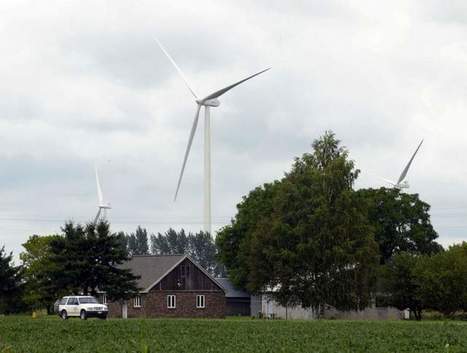
It's a conversation Randy Saxton tries to avoid at all costs because, frankly, it never leads anywhere good. It's hard to do that, however, because the subject — the massive wind turbines now towering over the area — is impossible to miss.
And everyone here has an opinion.
"Whoever you're talking to, they want you to be on their side of the issue," said Saxton, whose home south of Ludington is surrounded by turbines. "You've got one person, usually with a windmill on their property who's getting money for it, saying, 'Aren't they beautiful.' Then there's the other one, who doesn't have one, who feels they're ugly and has absolutely no use for it."
The disagreements over wind turbine farms in Michigan go far beyond aesthetics and have heightened in intensity to go beyond polite conversations. Wind power issues have led to showdowns in elections, public relations battles waged in rural communities and face-offs at local government meetings.
Interest in developing Michigan's wind energy capacity began in earnest late in 2008 when then-Gov. Jennifer Granholm signed legislation requiring the state to generate 10 percent of its electricity from renewable sources by 2015.
Prior to the legislation, the Michigan Public Service Commission was aware of 34 operational turbines in the state. Today, at least 288 of them are fully constructed and producing energy, but there are probably many more, since energy companies are not required to report new turbines.
As these farms have been proposed and constructed, troubles have inevitably risen.
As a power crisis grips the country, a powerful opportunity emerges for IT enabled smart grids. The IT industry says it is this political will that will need to push smart grids from mere pilot project to large scale implementation.
To boost the quality of its education system, Brunei Darussalam has formed key partnerships with foreign governments and leading international institutions, as well as taken a leadership role in regional education.
On June 11, for example, the University of Brunei Darussalam (UBD) and the US-based East-West Centre, a research organisation aimed at promoting better relations between the US and Asia, signed a memorandum of understanding (MoU) to provide English-language instruction to all 10 ASEAN countries.
The MoU represents just one education-related partnership the Sultanate has formed in recent years. Indeed, it follows up on an announcement in November 2011 launching the Brunei-US English Language Enrichment Project for ASEAN, a $25m project funded by the Bruneian government to span five years.
Next month will see government officials and teacher-trainers from all ASEAN countries arrive in both Brunei Darussalam and the US state of Hawaii for three-month English courses to improve their communications skills, discuss issues impacting the region and learn how to best use information technology. The teachers will have then have the opportunity to teach at higher education institutions in various ASEAN countries, implementing what they’ve learned in Hawaii.
Recent collaborative efforts also include an agreement between UBD and the US’s University of Michigan to conduct research and development programmes, an initiative announced in late July by Andrew Haig, a professor in the physical medicine and rehabilitation department at the University of Michigan.
Qatar National Broadband Network Company (Q.NBN) is a share holding company wholly owned by the government, with a mandate to enable accessible high-speed communications with the right cutting edge technology platform across Qatar. Through its visionary and collaborative approach to the market, Q.NBN will help to empower the nation with broadband fiber access to citizens and businesses alike in line with the Qatar ICT Strategy 2015.
Q.NBN aims to have 95% coverage as it serves the wider digitization agenda of the country. The next generation fiber optics network which is the alternative to copper will become exponentially faster, bringing community and enterprise benefits of enhanced delivery of services, cost savings, increased competitiveness and improved sustainability.
Q.NBN will focus solely on the deployment of a network infrastructure, providing equal and open access to operators to offer choice for the end-user and efficiently leveraging existing and new infrastructure in Qatar.
If the pictures of those towering wildfires in Colorado haven't convinced you, or the size of your AC bill this summer, here are some hard numbers about climate change: June broke or tied 3,215 high-temperature records across the United States. That followed the warmest May on record for the Northern Hemisphere – the 327th consecutive month in which the temperature of the entire globe exceeded the 20th-century average, the odds of which occurring by simple chance were 3.7 x 10-99, a number considerably larger than the number of stars in the universe.
Meteorologists reported that this spring was the warmest ever recorded for our nation – in fact, it crushed the old record by so much that it represented the "largest temperature departure from average of any season on record." The same week, Saudi authorities reported that it had rained in Mecca despite a temperature of 109 degrees, the hottest downpour in the planet's history.
Not that our leaders seemed to notice. Last month the world's nations, meeting in Rio for the 20th-anniversary reprise of a massive 1992 environmental summit, accomplished nothing. Unlike George H.W. Bush, who flew in for the first conclave, Barack Obama didn't even attend.
Youth culture was once car culture. Teens cruised their Thunderbirds to the local drive-in, Springsteen fantasized about racing down Thunder Road, and Ferris Bueller staged a jailbreak from the 'burbs in a red Ferrari. Cars were Friday night. Cars were Hollywood.
Yet these days, they can't even compete with an iPhone - or so car makers, and the people who analyze them for a living, seem to fear. As Bloomberg reported this morning, many in the auto industry "are concerned that financially pressed young people who connect online instead of in person could hold down peak demand by 2 million units each year." In other words, Generation Y may be happy to give up their wheels as long as they have the web. And in the long term, that could mean Americans will buy just 15 million cars and trucks each year, instead of around 17 million.
"A car is a symbol of freedom," one consumer researcher told Bloomberg. "But unlike previous years, there are many different ways that a Gen Y person can capture that freedom."
Young adults are in fact buying fewer cars and trucks today than in the past. According to CNW Marketing Research, Americans between the ages of 21 to 34 purchased just 27 percent of new cars in 2010, down from 38 percent in 1985. Bloomberg quotes the industry analysts at R.L. Polk & Co., who say that "the rate of U.S. auto sales to 18-34-year-old buyers declined to 11 percent in April 2012, down from 17 percent for the same age group in April 2007, before the recession."
Florida may have missed out on its chancefor high-speed rail, but residents of the Sunshine State might still soon be able to travel from Disney World to South Beach without hopping in the car or buying a pricey plane ticket.
Beginning in 2014, a privately funded passenger rail will offer service up and down the coast of Florida between downtown Miami and Orlando International Airport with stops in Fort Lauderdale and West Palm Beach. Launched by Florida East Coast Industries (FECI) and titled the All Aboard Florida project, the $1 billion plan will also include the development of a massive new train station in downtown Miami.
Running at speeds of 100 miles per hour, the new trains won’t quite qualify as “high-speed,” but passengers should expect to make it to Miami from Orlando in just over three hours—about an hour less than the time it would take to drive the distance.
The new train, which was announced by FECI last week, will presumably fill the void left by Florida Governor Rick Scott’s 2011 decision to reject $2.4 billion in federal stimulus money for a high-speed rail. While Scott deemed the project too costly, FECI seems to think a cross-state line could actually make money.
A lot has been written about how cloud computing is often times more energy efficient than when companies host their own IT infrastructure. But Google’s App Engine platform as a serviceis not just more efficient, it’s also carbon neutral.The technology we’ve built for App Engine is “remarkably efficient in its resource usage,” says Peter Magnusson, a director of engineering at Google. It’s on the order of “10 times more efficient than running it on infrastructure as a service.”
That’s partly because Google has spent years building energy efficiency into the core of its web architecture. The company famously designs all of its data centers and servers from the ground up to maximize efficiency. Google has been praised by competitors and researchers alike for its ability to curb the energy consumption of its massive data center infrastructure.
But that’s also because of the efficiencies inherent in lumping together applications in one system, and sharing compute power across many servers. “We have massive multi-tenancy; we’re serving over a million applications on this thing, we have a quarter million active developers on it,” said Magnusson. Magnusson compares the architecture efficiency of App Engine to the efficiencies inherent in a skycraper.
The Northeast Corridor of the United States, which stretches from Boston to Washington, D.C., is the country’s most populous and traveled span of land. (It’s also the oldest, on average.)
It’s also a great place to see multi-modal transportation efforts at work: With each major city in the corridor no more than three hours apart — Boston to Providence to New York to Philadelphia to Baltimore to Washington — it’s a great place to truly evaluate the merits of traveling by rail versus air, train versus plane.
Lately, trains are winning. The New York Times writes this morning that rail operator Amtrak is seeing passengers increasingly choosing rail over air.
Ron Nixon writes:
'Between New York and Washington, Amtrak said, 75 percent of travelers go by train, a huge share that has been building steadily since the Acela was introduced in 2000 and airport security was tightened after 2001. Before that, Amtrak had just over a third of the business between New York and Washington.'
Why? Passengers cite security hassles (no liquids! no shoes! no laptops!), inconvenience (airports are hardly the easiest to get to, removing the time advantage of flying) and frequent flight delays as reasons that air travel has become less attractive in this area of the country.
In many places, trains and airplanes complement each other; along the densely developed Northeast Corridor, they compete directly. The exchange between the two, then, is easily observed: Amtrak’s market share between New York and Washington increased 38 percentage points over the last decade; between New York and Boston, it’s up 34 percentage points.
With approval from the state Department of Public Utilities, National Grid is moving ahead with plans to launch a smart grid pilot program among 15,000 city customers — the largest smart grid program in Massachusetts.
National Grid will install thousands of “smart” meters, finalize contracts with vendors and begin a marketing campaign to teach customers about the program. Utility executives said it will be 12 to 14 months before the program is fully up and running.
“We’re very excited,” said Edward H. White Jr., vice president of customer and business strategy for National Grid. “This is when the hard work really begins.”
Smart grid refers to technology used to make the electric grid work smarter. As part of legislation passed in 2008, all Massachusetts utilities were required to test smart grid technology in pilot programs.
National Grid plans to install new meters outside customers’ homes, as well as technology inside their homes. The technology will allow grid operators and customers to track energy use in real time.
While customers won’t be charged to participate in the pilot, they may have to pay higher rates for using energy during high-demand periods. Similarly, they could save money by shifting energy use to low-demand periods.
The pilot will include customers in the north and northwestern parts of Worcester.
Mr. White said National Grid is hiring a marketing and communications firm to help it communicate details of the program with customers. The utility is also using Facebook, Twitter and a website, www.green2growth.com, to communicate with the public.
Additionally, the company is working to establish a “sustainability hub” on Main Street, near Clark University, where anyone interested can go to learn about smart grid and energy efficiency. The hub will be staffed by National Grid employees and college students, Mr. White said.
The Uber car service says it has been told to stop operating in the Boston metropolitan area. The issue stems from a complaint filed in Cambridge, Mass. that holds that there are no standards for the use of GPS devices in this context. Uber customers use their smartphones to summon the car service.
According to the Massachusetts Division of Standards, “there are no established measurement standards for [GPS's] current application and use in determining transportation costs similar to that of approved measurement systems in taximeters and odometers.” The decision came after a “sting” operation snagged Uber in Cambridge.
Uber disclosed the news in its blog along with its response:
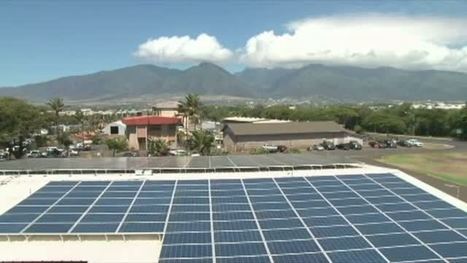
The run for green energy is on especially in the state with the highest electricity prices in the nation. The goal of forty percent renewable energy by 2020 is set.
But if youʻve been trying to get solar panels on your rooftop you probably found – it is not that simple.
Wailuku resident Eliza Akana applied for solar, hoping to reduce her energy bills. After weeks of waiting on MECO to give the green light she learned we were not able to get solar without an expensive study.
Eliza Akana is located in a so called red zone. Red means that the circuit already has more than 15 percent solar. Due to a federal guideline, anything above 15% then requires the utility companies to take a closer look at the system.
The first study is what is called a supplemental review, which is paid for by the utility. If it fails that then another study is required which can cost $3000 for private households and $30,000 for businesses.
Haiku resident Tom Cochran decided to go green on his property and he applied for solar energy. After a month of waiting on MECOʻs OK he received a letter from the company stating that “a minor Interconnection Requirement Study (IRS) is necessary (..) to ensure reliable electrical service for all customers.” Price tag for the study? $3000 The study will take “…approximately 150 days…” and after that they could determine that a “more comprehensive study was needed”.
A deal breaker for many customers, including Tom Cochran.
Click headline to read more and watch video clip--
The notice of the hearing landed in my inbox from the High Street Hill Association, one of many neighborhood organizations on the front lines of local government here in the Boston metro area. The local utility company, NStar, wanted to cut down a dozen trees along the streets of Brookline, Massachusetts.
The condemned trees, mostly Norway maples and red oaks, were listed with the Latin names for each species: Acer platanoides, Tilia cordata, Quercus rubra, and Catalpa bignonioides. But I knew each one was likely a treasured urban asset, providing shade and greenery and, critically, each one a sponge for carbon dioxide. Was it really necessary to get out the chainsaw?
According to NStar and many other utilities around the country, it is. Recent severe weather, violent thunderstorms, hail, wind shear and tornadoes, the latter historically not common in New England but seemingly appearing with increased frequency, has been toppling trees all over. Limbs and entire trees come down on power lines, and customers are without power for days. Therefore: get rid of the trees, spare the overhead power lines; problem solved.
But it’s a classic feedback loop in the era of global climate change, like heat waves prompting greater use of air conditioners, which in turn ramps up energy use in the power grid, and makes the power plants work harder and pump out more greenhouse gas emissions.
Likewise, the severe weather of late, from funnel clouds in Massachusetts to the drought in the Midwest, is being seen as an early sign of things to come – volatile patterns linked to gradual warming. Trees are obviously not the answer for mitigating greenhouse gas emissions at this point, to try to slow the march of increased emissions. But they do their part. That’s why mayors such as New York’s Michael Bloomberg have started campaigns to plant many more.
Broadband Infraco, for the first time, generated positive cash from operations of R52-million during the year – contributing to a 54% improvement in the company’s net loss, which was reduced to R95-million. Last year, the company recorded a R206-million loss for the year, CFO Ramasela Magoele, standing in for the newly appointed CEO Puleng Sejanamane, told journalists at a media briefing.
The company, which came under fire last year after an external audit revealed significant irregular and wasteful expenditure, also increased its revenue by 36%, reaching R393.6-million, compared with the R297.6-million in the prior year.
Public Enterprises Minister Malusi Gigaba commended the group’s performance and stabilisation, but warned that despite achieving or exceeding many of its key targets, much remained to be done to ensure the long-term sustainability of the company.
He noted that increasing focus must be placed on the development of leadership and management competencies and effective people management, as well as the continued alignment of the business plan with the national aims for broadband infrastructure. He also believed that a plan should be developed to ensure that government was efficient and cost-effective in its broadband services, while attracting the broadband traffic of other State-owned companies and national and provincial government.
Size matters when it comes to Indian IT services companies.
Sales and profits of both smaller tier two Indian IT players — those with less than $500 million in annual revenue — and tier one giants like Tata Consultancy Services (TCS) and Wipro — are both way up over the past 18 months. But, the valuations of tier two companies were off sharply compared to the big guys, according to new research from Martin Wolf M&A Advisors, a company that consults with tech companies about their merger and acquisition options.
For the period from January 1, 2011 till August 1, 2012, the valuation for the big Indian IT providers fell 15.6 percent compared to a 24.9 percent fall-off in valuations for the tier two companies, according to the MW IT Index India Edition which looks at 36 Indian IT service providers — which make money implementing businesses — in both camps.For that same period, sales for tier one players were up 33.5 percent compared to 38.4 percent for the tier two players. Profit for the top-tier IT providers was up a healthy 43.4 percent compared to a healthier 78 percent for their tier two counterparts.
As a yet-tiny market of electric cars is ramping up surely but slower than initially hoped for, there are those who say compressed natural gas (CNG) is also a viable alternative for U.S. transportation.
Among them are a coalition of close to half of the U.S. state governments that have told American carmakers to make natural gas-powered vehicles, saying their agencies will buy them for state fleets.
The thrust was poignantly outlined on Wednesday this week, when Oklahoma Gov. Mary Fallin met with automobile manufacturers and dealers, and purchasing officials from more than a dozen states in Oklahoma City, Bloomberg reports. As the governor for one of the most ready to go CNG states, she was joined by 22 states collectively grouped to solicit bids for the purchase of natural gas-powered vehicles for state fleets.
“We’re serious. We’re ready to buy natural gas vehicles now," said the Oklahoma governor. "We all know that natural gas is a cleaner form of energy. It’s an abundant form of energy. It’s a less expensive and cheaper form of energy, one that will not only create American-made jobs, it will be good for our national security and economic security.”
The thrust for more natural gas vehicles available for purchase by states has been led by Fallin as well as Colorado Gov. John Hickenhoper. Their goal is to promote the natural gas industry and among the states that have joined them are natural gas producing states including Texas, Wyoming, West Virginia and Pennsylvania.
Strengthening the natural gas industry, Fallin said, "will help provide our states with money back into our local economies, money back into our state budgets, which will be beneficial for those governors who are participating in this."
When we were young, our parents warned us not to sit too close to the TV. "Bad for your eyes," they said. No one knew that televisions were zapping us with radiation, the result of a little design flaw in the color sets sold in the sixties. But those were the days of lead paint, of chemistry sets with mercury droplets, of toy stores that sold radioactive rocks. What child didn't want to mutate radioactively into a superhero?
In the past five decades, popular attitudes towards these hazards have changed dramatically, thanks in part to the way television and other media have taught us to appreciate our planet's natural beauty and beware the dangers that industrial processes pose to the Earth and its inhabitants. The media have covered a host of ecological topics, from environmental science to the ways consumers can live greener lives. But they have failed to explain their own contribution to environmental problems.
A lot of people who work in the media wouldn't consider their jobs as harmful to the environment. But media and communications technologies are rapidly becoming some of the biggest energy consumers in the world. Household electronics were responsible for about 15 percent of global residential electricity consumption in 2009. In many homes, this is more than the power needs of traditional large appliances.
Over the course of the last two weeks, two scientists -- James E. Hansen of Columbia University and Richard A. Muller at the University of California, Berkeley -- took to the pages of two prominent American newspapers to present new and compelling evidence that climate change is real, that it is driven overwhelmingly by human activity, and that its dire effects are already upon us.
And then nothing happened.
"Call me a converted skeptic," Muller wrote in an essay published July 28 in The New York Times, citing research posted, though not peer-reviewed, to the website of the Berkeley Earth Surface Temperature initiative. "Three years ago I identified problems in previous climate studies that, in my mind, threw doubt on the very existence of global warming. Last year, following an intensive research effort involving a dozen scientists, I concluded that global warming was real and that the prior estimates of the rate of warming were correct. I'm now going a step further: Humans are almost entirely the cause."
Hansen's turn came a week later. "Our analysis shows that it is no longer enough to say that global warming will increase the likelihood of extreme weather and to repeat the caveat that no individual weather event can be directly linked to climate change," Hansen declared in The Washington Post on Sunday, citing peer-reviewed work published the following day in the Proceedings of the National Academy of Sciences. "To the contrary, our analysis shows that, for the extreme hot weather of the recent past, there is virtually no explanation other than climate change."
To get content containing either thought or leadership enter:
To get content containing both thought and leadership enter:
To get content containing the expression thought leadership enter:
You can enter several keywords and you can refine them whenever you want. Our suggestion engine uses more signals but entering a few keywords here will rapidly give you great content to curate.


 Your new post is loading...