Your new post is loading...
As Tropical Storm Isaac roars over Louisiana and elsewhere on the Gulf Coast, it threatens to disrupt a fragile environment that's still recovering from BP's Deepwater Horizon oil spill in the summer of 2010. By disturbing the sediments in which the spilled oil is buried, near the beach and deeper in the water, the hurricane could release large quantities of oil, several researchers warn. "This is another disaster on top of the hurricane that we're going to have to deal with," Garret Graves, chairman of Louisiana's Coastal Protection and Restoration Authority, told the Huffington Post. "The threat is not insignificant." So far there have been no reports of oil, but that isn't surprising considering most everybody is taking shelter or has evacuated the area, said Lt. Alyssa Johnson, operation officer at the National Response Center, a federal organization responsible for coordinating a response plan to environmental releases of oil or other hazardous materials. Isaac's storm surge, expected to reach heights of 6 to 12 feet (about 2 to 3.5 meters), could transport oil inland, where it could further affect marshlands and wildlife or come into contact with people, Graves told the Bloomberg news service. It also could flood areas containing contaminants such as pesticides, fertilizers and septic system bacteria and wash these back out into coastal waters or into groundwater, University of Florida researcher Andrew Zimmerman told OurAmazingPlanet in an email. But it's unclear how much oil remains in Gulf sediments and along the shoreline — and how much might be stirred up. "It could be a lot or a little," said University of Florida researcher Andrew Zimmerman. Click headline to read more--
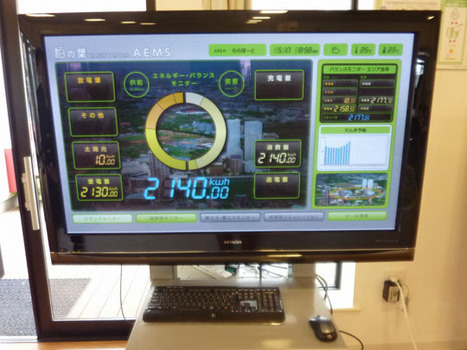
The power shortages that hit the country following the March 2011 disasters made better energy management an imperative and spawned efforts to create efficient "smart cities. "Ideas for these environmentally friendly communities that employ cutting-edge technology have been flourishing — especially in the disaster-hit Tohoku region — as the government encourages businesses and municipalities to launch subsidized smart city recovery projects. In addition to smart city projects nationwide that were under way before the March 11 earthquake, tsunami and subsequent Fukushima nuclear crisis, around 50 such initiatives have emerged in Tohoku. Among them, the Ministry of Economy, Trade and Industry in April selected eight pioneer projects in Fukushima, Miyagi and Iwate prefectures as candidates for subsidies METI will provide by March 2016 to promote smart communities. In a fiscal 2011 extra budget, the government earmarked ¥8.06 billion for such subsidies. Click headline to read more--
President Obama on Thursday signed an executive order outlining the administration's intent to promote and facilitate investments in industrial energy efficiency. The order also underscored the administration's support for combined heat and power (CHP) and noted that investments in CHP technology as well as industrial energy efficiency overall can save manufacturers as much as tens of billions of dollars over the next decade and strengthen the manufacturing industry, create jobs, and reduce energy consumption and air pollution. CHP now provides about 12% of U.S. energy capacity, or in other words, 82 gigawatts, according to the U.S. Clean Heat & Power Association (USCHPA). The executive order also announced a national CHP deployment goal of an additional 40 gigawatts by 2020. Coincidentally, Smart Grid News had reported on the status of CHP and its resurgence Wednesday. The story noted that the technology – which involves using waste heat, a byproduct of generating electricity, for heating and cooling – has become increasingly popular across a variety of manufacturing and other industries and businesses as a way to keep energy costs down and maintain competitiveness. Click headline to read more and access hot links--
This week, nearly 60 renowned economists and other experts around the country sent a letter to Governor Jerry Brown emphatically voicing their strong support for the design of California’s groundbreaking cap-and-trade program, a key element of the Global Warming Solutions Act (AB 32). Sent just days before the expected simulated auction of greenhouse gas allowances, the letter to Brown commended his leadership “in implementing the world’s most comprehensive climate law” and his commitment to auction allowances – rather than give them away free – “as part of the crucial launch phase” of the cap-and-trade program, one of the critical strategies California is pursuing to achieve AB 32’s mandate to reduce California’s carbon pollution to 1990 levels by the year 2020. “Auctioning allowances generates proceeds for government to redistribute to households, reduce other taxes, or achieve further environmental and equity goals that otherwise may not be achieved if allowances are given for free,” the economists noted in the letter. As the California Air Resources Board prepares for Thursday’s planned simulation in the run-up to the Nov. 14 auction, there have been 11th hour calls from opponents to modify, delay or outright cancel the auctions, which are an integral component of the overall program . A number of economists and experts, however, urged that the quarterly auctions proceed as planned, emphasizing that giving away all the allowances could result in windfall profits to industry. Click headline to read more--
The Indian government has reportedly passed a $4.13 billion plan to boost the production of electric and hybrid vehicles, with a goal to have 6 million green vehicles on its roads by 2020. Reuters reports that 4 to 5 million of these vehicles are expected to be electric and hybrid two-wheelers (scooters, commuter cars, electric bikes). The proclamation could provide a new market for all our electric and hybrid vehicle-focused entrepreneurs looking to find new markets. However, there are at least 5 things I think you should know about this plan: Click headline to read more--
As part of the ‘Project Plug-IN’ initiative, Toyota is partnering with Duke Energy and Energy Systems Network (ESN) on a pilot designed to determine the best way to manage plug-in hybrid electric vehicles (PHEVs) charging based on integrated communication between the vehicle and the electric power grid. The pilot, which will use advanced technologies to give customers the ability to minimize electricity costs by communicating with the utility company to recharge during off-peak periods, will also test and validate the effectiveness of communication standards developed by the Society of Automotive Engineers (SAE) to provide a simple and affordable smart grid communication protocol between the vehicle, the charging station, and the utility company to effectively manage vehicle charging. The project is using five Prius Plug-in Hybrid vehicles driven by Duke Energy customers living in the Indianapolis, Indiana, area. These customers will drive the cars regularly during the pilot period, which is scheduled to start in early 2013 and last for at least 12 months. Click headline to read more--
In the face of strident anti-nuclear public sentiment, the government will consider abandoning nuclear power generation, sources said, a turnaround from its previous stance of continued reliance. In response to the Fukushima nuclear disaster last year, the government proposed three options for the ratio of nuclear energy in power generation in 2030—zero percent, 15 percent and 20-25 percent—as a basis for a new energy policy. To facilitate a "national debate" on the options, the government conducted deliberative polling, held public hearings and sought public opinion through the Internet and other means from July to August. Now, a government panel tasked with analyzing the results of that debate is set to conclude that many citizens favor a nuclear-free society, the sources said. The government had previously expected to choose the 15-percent option. The panel, set up earlier in August, is headed by national policy minister Motohisa Furukawa and comprises eight private-sector experts in opinion polling and other areas. The strong support for the nuclear-free option has made it difficult for the government to stick to its preferred 15-percent option. "We cannot win the upcoming election unless we put up a zero-percent policy," a Lower House member of the ruling Democratic Party of Japan said. Click headline to read more--
There is no shortage of smartphone apps that compile information from official weather monitoring sources, but if you’re looking to get some info on conditions closer to home – or inside it – then the Urban Weather Station from Netatmo could fit the bill. Designed specifically for iOS devices, (but also supporting Android devices), the cylindrical units monitor a range of environmental elements inside and out. Netatmo also hopes to use the Wi-Fi-connected devices to create “the largest weather and air quality monitoring network ever established.” The Netatmo system consists of two separate modules, one for indoors that is powered by USB, and one for outdoors, which draws power from four AAA batteries that should provide power for up to one year. The indoor unit’s sensors measure temperature, humidity, air pressure, CO2 levels and sound levels, while the outdoor unit measures temperature and humidity. Users can access a seven-day forecast, with those in the U.S and Europe also able to access outdoor air quality index information, both of which are pulled from online sources. Both units transmit their readings to an iPhone, iPad, iPod touch or Android device running version 2.3.4 or higher via Wi-Fi (b/g/n), with readings accessed via a free app. Click headline to read more--
A team of physicists from the University of Oregon (UO) has calculated that cooling the emissions from coal-fired power plants would result in a reduction of the levels of dangerous chemicals entering the atmosphere, including CO2, by 90 percent. While cryogenic treatment would also see a 25 percent drop in efficiency, and therefore result in electricity costs increasing around a quarter, the researchers believe these would be offset by benefits to society, such as reductions in health-care and climate-change costs. Previous studies, including one conducted in the 1970s by the Bechtel Corp. of San Francisco, have shown that cryogenic treatment of flue gases from coal-fired power plants can work. While the Bechtel study was looking at its effectiveness in capturing sulfur dioxide emissions, it also noted that large quantities of CO2 would also be condensed – something that didn’t warrant much attention back in the 70s but is of tremendous interest now. Building on previous research he carried out in the 1960s into using cryogenic treatment technology as a way to remove odor-causing gases being emitted from a paper mill in Springfield, Oregon, UO physicist Russell J. Donnelly and his team have now composed a math-driven formula on an electronic spreadsheet that could be used by industry to weigh up the potential benefits of the technology. Click headline to read more--
Imagine a world where rooms are lit by their walls, clothes are smartphones and windows turn into video screens. That may seem like a bit of science fiction, but not for long. Researchers at MIT are using a two-dimensional version of molybdenum disulfide (MoS2) to build electrical circuits that may soon revolutionize consumer electronics. We've heard a great deal about graphene in recent years. A two-dimensional version of graphite, graphene has proven to be something of a wonder substance. It’s tremendously hard, highly heat conductive, is possessed of unique optical qualities ... and that’s just scratching the surface as engineers discover new uses for it in everything from solar panels to space elevators. By comparison molybdenum disulfide is a humble substance used largely for lubricant or as a catalyst in petroleum refining. That, however, is changing. Last year, Swiss scientists described a version of molybdenum disulfide that had the same 2D-style structure as graphene and now researchers at MIT are using it to build electrical circuits. Until recently, MIT had been trying with little success to make electrical circuits out of graphene, but the wonder material turned out to be harder to use than thought. It’s a natural conductor, probably the best ever discovered, which makes it great for some applications, but not for electronics. To make a transistor out of graphene, for example, requires some very clever and problematic doping with various elements. Even, then, the results are often disappointing. Molybdenum disulfide, on the other hand, is a natural semiconductor, which makes turning it into transistors very easy. This was especially the case when Yi-Hsien Lee, a postdoctoral student, learned how to use a chemical vapor deposition process to make large sheets of molybdenum disulfide. These sheets and mechanically-produced flakes of the material formed the basis for the circuits described recently in the journal Nano Letters. Click headline to read more--
I sat through the entire Chris Christie keynote at the RNC opener hoping he would talk about wind and solar. Boy was I disappointed! Oh well, at least we have YouTube to remind us how his support for renewables has been key to NJ job creation and economic growth. The opening quote says it all. "There's no doubt that renewable energy is the future here in New Jersey and there is really no better time than for us the begin the discussion of not only how it will lead us to energy independence, but also how it will help create more good paying, middle class jobs for New Jerseyans. It's a change that President Obama stands firmly behind. I couldn't agree more." Tell it like it is, Governor! Click headline to watch video clip--
Having ubiquitous internet capacity and a national backbone that provides critical ICT infrastructure to carry data traffic to all parts of the country is as important as having power, transportation and water infrastructure in today’s globally connected and increasingly knowledge based world. All over the world broadband or more importantly universal access to broadband is becoming a significant indicator of development and competitiveness amongst nations. Broadband has the potential of enabling entire new industries and introducing significant efficiencies into education delivery, health care provision, energy management, public safety, government/citizen interaction, and the overall organization and dissemination of knowledge. It is therefore no wonder that empirical data that tell us that every 10% increase in access to broadband in developing countries results in a commensurate 1.38% increase in GDP. These compelling statistics should provide the impetus to meet broadband demand and if it is not there create that demand. In Nigeria there is already clear evidence of demand for broadband in many facets of our economic and social lives. Broadband for education, for health, for business, for entertainment and leisure. There are very few aspects of our lives that are not impacted or affected by the internet. So the demand is there, in fact so is the supply when you take into consideration the internet capacity that we have landed on our shores. The challenge for us in Nigeria is not the proverbial last mile but the last hundreds of miles – taking that landed capacity to cities, communities, institutions and homes. Click headline to read more--
A study commissioned by the United Kingdom's Department of Energy and Climate Change recently revealed that over half the population is unaware of the existence of smart meters. Over 51% of the 2,396 energy bill-payers interviewed by the Ipsos Mori research team in Britain said they had never heard of smart meters. Only one in four said they knew at least a fair amount about the meters, 24% had heard of them but knew nothing about them, while just 2% claimed to know "a great deal". The study comes amid plans to roll-out smart meters in all of Britain's 30 million households from 2014 to 2019. Click headline to read more--
|
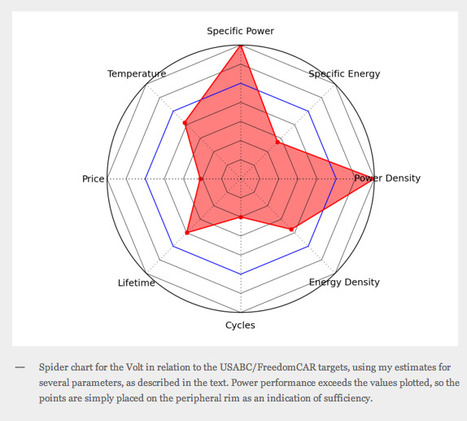
Batteries fail — its ‘s certain as death and taxes. Rechargeable batteries at least offer the possibility of repeating the cycle. But alas, the story cannot repeat indefinitely. One cheerful thought after the other, yes? But wait, there’s more . . . Add to their inevitable demise an overall lackluster performance in battery storage technology, and we have ourselves the makings of a blog post on the failure of batteries to live up to their promises. To set the stage, the specific energy of gasoline — measured in kWh per kg, for instance — is about 400 times higher than that of a lead-acid battery, and about 200 times better than the Lithium-ion battery in the Chevrolet Volt. We should not expect batteries to rival the energy density delivered by our beloved fossil fuels — ever. A recent article in APS News reported on an emerging view that batteries are failing to live up to our dreams in the electric car realm: Click headline to read more--
From Guam to India to New Zealand - and from Florida to California and points in between - the smart grid build-out has definitely not run out of steam if our weekly list of smart grid project wins is any indication (and we think it is). Click headline to see who's been tapped for metering projects, transmission work, efficiency programs, solar R&D – and much more.
The Romney Energy Planhit my desk last week and I've been thinking about it since. The reality is that the plan is a political document, heavy on grand principles and light on specifics. It sets a goal of achieving energy independence by 2020 through tapping our abundant natural resources, giving states more power over permitting and regulation, and opening public lands and offshore regions to to energy development. The plan is clearly constructed to endear Romney to the oil and gas industry. It notes the now obvious fact that new drilling techniques have enriched the U.S. with accessible fossil resources. The text is salted with "drill, baby drill" crowd pleasers such as removing barriers to drilling on public lands, approving the XL pipeline, and opening offshore regions for more exploration. It's hard to feign surprise about this stance from a political perspective. These positions enable Romney to appeal to the right wing of the Republican party and simultaneously open the wallets of a deep-pocketed lobby. Click headline to read more--
Car Charging Group, Inc. now provides EV charging services at three locations at University Park at MIT in Cambridge, Massachusetts. This is done through the company’s partnership with Forest City Enterprises, Inc. Charging services are now available at parking garages located at 30 Pilgrim Street, 55 Pilgrim Street, and 80 Landsdowne Street on the University Park campus. "We are excited to support Forest City's green initiatives at their properties and provide electric vehicle charging services at MIT," said Michael D. Farkas, CEO of CarCharging. "As our first EV charging services at a university related project, we believe that placing stations at MIT, a leader in the advancement of scientific and engineering research, perfectly complements the vision of our company." Click headline to read more--
One of the worldwide challenges in relation to the development of national broadband networks is equality. Broadband is critical for the digital infrastructure and it is essential that everybody enjoys the same level of quality and affordability. This is a major challenge and as a rough measuring stick approximately one-third of the people in developed economies would miss out if there were not a requirement for equality. We see some of the problems related to this issue arising in other countries. The digital infrastructure is essential for commerce, healthcare, education, government services and M2M services such as smart grids. Governments would find it hard to sell their e-health, e-government and e-education programs just to those who enjoy access to good quality infrastructure. Nevertheless this is exactly what is happening in countries with a patchwork of broadband islands. A structure of this kind severely impedes the development of the digital economy. Furthermore, if there is no broadband equality people who are missing out on good quality broadband would be greatly disadvantaged economically – for example, the people living in regional towns and communities on the outskirts of larger cities. Lack of affordability would severely affect the more vulnerable sections of society. The major new inflection point in the digital industry is that from now on more devices than people will be connected to that infrastructure – internationally we are talking about trillions of devices and sensors. The infrastructure needs to be sufficiently robust to handle this gigantic computer network, which must be able to process and analyse massive volumes of data in real time. This includes monitoring, data gathering and real time analyses of the environment, sustainability, biodiversity, traffic, infrastructure, weather, people movements, national health (epidemic monitoring) and so on. Many of these ICT systems need to be nationwide and require nationwide networks with a minimum level of quality and capacity. These requirement have very little to do with the speed of the network. Far more important for such services are capacity, robustness, affordability, security, privacy and low latency. Click headline to read more-
3D printing technology has given us guns, drugs, arms and robots — but how would you like to print your own car? That is what a team of engineers in Belgium have created — a racer called the Areion. Developed as part of the Formula Student Challenge, the entire body of the vehicle was produced by the three-dimensional technology. The challenge was to create a design and build a small but powerful single-seat race car. Judges then tested the safety, reliability, and financial viability of the product as a marketable item. The competition also includes a rain test — where the car is sprayed with water for 120 seconds from behind, front and above. The electronics have to work perfectly to pass. Taking this further, the team Formula Group T turned to a process called “mammoth stereolithography” that prints out large, custom objects. The object builder used, Materialise, is able to print out parts as large as 2100 x 680 x 800mm — more than enough for the Areion. Click headline to read more--
Scientists at the Massachusetts Institute of Technology (MIT) have succeeded in genetically altering Ralstonia eutropha soil bacteria in such a way that they are able to convert carbon into isobutanol, an alcohol that can be blended with or even substituted for gasoline. It is hoped that once developed further, this technology could help reduce our reliance on fossil fuels, and lessen the amount of carbon dioxide released into the atmosphere by smoke stacks. When their regular carbon food sources become scarce, R. eutropha ordinarily respond by synthesizing a type of polymer, in which they store whatever carbon they’re able to find. By “knocking out a few genes, inserting a gene from another organism and tinkering with the expression of other genes,” the team of MIT biologists were able to get the bacteria to produce isobutanol instead of that polymer. Unlike certain other biofuels, isobutanol can be used directly as is, requiring no refining. The bacteria produce the alcohol continuously, releasing it into their fluid environment, from which it can be filtered. This differs from experiments conducted at other institutions, in which various types of bacteria have had to be destroyed in order to harvest the desired biofuel byproducts from their bodies. Click headline to read more--
Some clever cross-referencing has helped an international team of researchers establish a link between low periods of solar activity and frosty European winters. The Sun's level of magnetic activity follows an 11-year cycle. Peaks in this cycle pose a threat to telecommunications and electricity networks and it's long been suspected that there's a correlation between the opposite end of the cycle and extreme winters in Europe. A lack of historical average temperature data makes it difficult to confirm this link, but scientists have filled the gap by studying the comings and goings of 19th Century riverboats on the Rhine. Average temperature records may not have been kept 200 years ago, but records of riverboat traffic on the Rhine were. When the river froze, the boating stopped. Professor Dr. Frank Sirocko hit upon the idea of using proxy data on freezing rivers to trace patterns in solar activity when he attended a once 25-mile ice-skating race in the Netherlands that can only be held every decade or so during extremely cold winters. Evidence of a river freezing makes for a simple yardstick: "Either there is ice or there is no ice," says Sirocko. The Rhine is a big river, so when it freezes it's a solid indication that it's very cold. Click headline to read more--
At first glance, photovoltaic solar panels are brilliant. They’re self-contained, need no fuel and so long as the sun is shining, they make lots of lovely electricity. The trouble is, they’re expensive to make, batteries are poor storage systems for cloudy days, and the panels have a very short service life. Now, Dr. Mikhail Zamkov of Ohio's Bowling Green State University and his team have used synthetic nanocrystals to make solar panels more durable as well as capable of producing hydrogen gas. Solar panels using inorganic molecules as part of their construction have a short service life. The effects of UV radiation and heat degrade them, and they end up with a life of only about 20 years. Given how expensive it is to make solar panels, it’s not surprising that the cost per kilowatt is so much higher than conventional energy sources. In a video paper published in the Journal of Visualized Experiments (JoVE), Zamkov outlines his team’s process that involves replacing the organic molecules with two inorganic nanocrystals made from zinc selenide and cadmium sulfide, with a platinum catalyst added. Click headline to read more--
Latin America is a burgeoning bandwidth market. Data from TeleGeography’s Global Bandwidth Research Service reveal that international bandwidth usage grew nearly 9-fold between 2007 and 2011, from 659 Gbps to 5.6 Tbps. To meet this growing demand, submarine cable operators are adding capacity at a rapid pace. While most supply increases thus far have resulted from upgrades to existing systems, a variety of companies are plotting a new wave of submarine cable investments in the region. America Movil is expected to bring its America Movil-1 (AM-1) cable into service in 2013, linking Brazil, Colombia, Venezuela, and several other Latin American countries to the U.S. Meanwhile, Brazilian operator GlobeNet is building a second cable from South Florida to Colombia. Besides these two cables, which are currently under construction, many potential cables are in the planning stages. The following aim to be in service by 2014: Click headline to read more--
A coordinated effort to recognize de facto, market-driven standards and raise the visibility of the principles that drive them launched today. The effort is branded as OpenStand Principles and is backed by global players in the standards arena, including the IEEE (Institute of Electrical and Electronics Engineers). I spoke yesterday with officers of the organizations that support OpenStand Principles and, frankly, I found their logic unassailable. Let me share the relevant principles points made in yesterday's conversation. I invite readers to weigh in. Of course, the fundamental notion of standards is that they create a universal basis for innovation, market growth and, thus, economies of scale, and place useful, affordable technology into consumers' hands. Standards enable interoperability and provide vendors with a basis for innovation and access to larger markets. Standards also allow emerging economies to take advantage of global developments that can foster economic development. In the case of grid modernization, for instance, standards for hardware and software, from the power plant to the home area network, benefit everyone who uses electricity—or desperately wants to—for these very reasons. Click headline to read more--
In my time spent working on Brooklyn apartments, I’ve seen some strange things, but nothing as odd as the time I witnessed a man harnessing the power of his elliptical to send electricity to the other lights in the home. Weird, right? Nonetheless – this may be the direction in which we’re heading! Recently, an inventor named Ryan Jongwoo Choi has created a miniature, yet highly influential device. It’s deemed “revolutionary” because of its ability to generate hydroelectricity from within your home. In layman terms, it is capable of utilizing the power of any standard plumbing system to generate and store small amounts of electrical energy. This isn’t a new idea in theory, but it is in terms of implementation, which makes it new and very promising! The small waterwheels that Choi has created are placed into a home’s plumbing system. This will create energy that goes into batteries. The power within these batteries is enough to power two mobile light bulbs. At first glance, this may not seem like much, and it’s really as far as Choi has been to go with it so far. However, it is certainly a step in the right direction toward greater discoveries. Click headline to read more--
|