Our Global Future in the 21st Century is based on "The Third Industrial Revolution" which finally connects our new ICT infrastructure with distributed energy sources that are both renewable and sustainable
While the ghost of Solyndra was alive and well at the Republican National Convention (it’s now a year after the company’s bankruptcy), one of the Democratic National Convention’s key speakers, Bill Clinton, only briefly touched on energy and climate policy in his prepared remarks. Clinton, usually a total energy nerd, only focused on energy and climate in the talk when he praised Obama’s new fuel efficiency standards and “all of the above” energy strategy.
Clinton said:
'Now, the agreement the administration made with the management, labor and environmental groups to double car mileage, that was a good deal too . . . It will make us more energy independent. It will cut greenhouse gas emissions. And according to several analyses, over the next 20 years, it’ll bring us another half a million good new jobs into the American economy.'
The ABB Smart Grid Center of Excellence (COE) located in Raleigh, North Carolina, USA, provides utilities a single point of contact to leverage ABB's proven expertise as a worldwide Transmission & Distribution (T&D) Operations Technology (OT) and Information Technology (IT) system provider.
The COE displays many of the products and solutions from ABB's smart grid portfolio and allows utilities to get engaged with live functional demonstrations of cutting-edge smart grid technologies.
Trucks will move almost as much earth for a project here as was excavated to build the Suez Canal.One of the country’s biggest construction projects, a $2.2 billion RusHydro power station that requires two huge artificial lakes, is under way north of Moscow just two hours by car.
The effort to build Phase Two of the Zagorskaya Pumped-Storage Power Plant will include the moving of 60 million cubic meters of earth, said the plant’s director, Vladimir Magruk.
“The amount of earth-moving work is astounding,” he said.
The builders of the Suez Canal removed 75 million cubic meters of earth.
The digging and embanking impressed Thomas Trone, the former chief of John Deere’s construction equipment division in Russia, so much that he described it as ‘the largest earth-moving project I have ever seen in my life” in an interview with The Moscow Times in May.
U.S. scientists say that emerging photovoltaic technologies will enable the production of solar shingles made from abundantly available elementsrather than rare-earth metals, an innovation that would make solar energy cheaper and more sustainable.
Speaking at the annual meeting of the American Chemical Society, a team of researchers described advances in solar cells made with abundant metals, such as copper and zinc. While the market already offers solar shingles that convert the sun’s energy into electricity, producers typically must use elements that are scarce and expensive, such as indium and gallium.
Click headline to read more and access hot links--
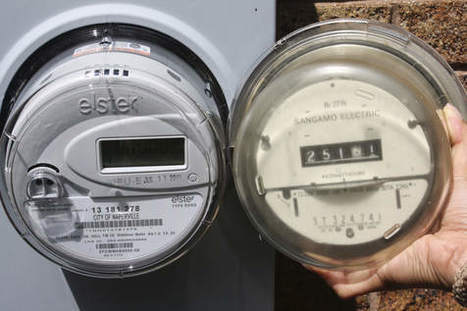
Brazilian power distributors will install about $670 million of smart meters a year from 2014 after the electricity regulator mandated the technology for all new installations.
Utilities will install about 4.5 million of the power gauges from 2014 to at least 2017, Maria Gabriela da Rocha Oliveira, a Sao Paulo-based analyst at Bloomberg New Energy Finance, said today in a telephone interview. Smart-meter makers expected the government to force utilities to substitute all 65 million of the nation’s meters with smart ones by 2020, New Energy Finance said in a report yesterday.
The requirement only applies to new installations, excluding low-income households, and some clients that request a replacement as of February 2014. So-called smart meters allow utilities to monitor clients’ power consumption remotely.
“It would have been better if it was mandatory to replace all meters,” Oliveira said. “This is a step in the right direction though” because the equipment will allow Brazilians to install solar panels and trade power back to the grid.
Businesses and homeowners with smart meters will also be able to adopt a new pricing mechanism for power which offers three tariffs that vary depending on national electricity demand, according to the report.
Battelle is leading the Pacific Northwest Smart Grid Demonstration Project which is the largest initiative of its kind in the United States. This project uses an incentive-based approach to facilitate the integration of renewable energy resources and improve system efficiency by relaying information about demand and cost of delivering energy to responsive assets in the power system. The volumes of data to be collected during this project call for a robust big data infrastructure that can handle two-way data flow of smart grid supply and demand data.
Join this webinar featuring Dr. Ronald Melton, Project Director, Pacific Northwest Smart Grid Demonstration Project to:
Click headline to read more and register for the webinar--
Recharging mobile devices without plugging them in is becoming more attractive as additional devices support wireless charging technology. On Tuesday, the Wireless Power Consortium (WPC) announced that 110 consumer electronic products are supported with a global installed base of 8.5 million. Ranging from phones to tablets to game controllers, the future of wireless charging looks bright as consumers use more devices but don’t want to deal with the hassle of plugging them all in on a regular basis.
According to the WPC, the 8.5 million Qi devices are comprised of 6 million in the U.S., 2 million in Japan, and another half million in Korea. Helping the WPC’s efforts is the Qi standard. Manufactures that integrate wireless charging via Qi specifications allow their devices to be recharged by placing the unit on any charging mat or pad that also uses the Qi standard. This alleviates the hassles of buying a different charging mat for each device, making the solution more attractive to consumers and hardware makers alike. Clearly, this is working because the number of Qi devices has doubled in the last 7 months alone.
For countless city governments, energy efficiency has become the cornerstone of their sustainability efforts. With municipal budgets across the country constrained or even in crisis, finding cost savings has become an imperative. Energy costs are a major component of city budgets, and across the country those costs are increasing every year. You’d be hard pressed to find a local government that hasn’t initiated a major energy efficiency project that saves them money, from insulating government buildings to upgrading HVAC equipment.
The City of Grand Rapids, Michigan, is among these local governments. But we’ve recognized that to achieve the biggest energy savings and to integrate this work into our larger sustainability goals, we must take a more systemic and strategic triple-bottom line approach to energy efficiency. Our nationally recognized success relies on four key actions: institutionalizing energy efficiency and sustainability thinking into our organizational culture; dedicating ourselves to detailed measurement and progress reporting; developing a long-term energy efficiency and conservation strategy to guide our work; and empowering our staff to innovate and pursue smart energy projects.
The damage wrought by Hurricane Isaac, coming on the seventh anniversary of the flooding that decimated New Orleans and stunned a nation, serves as a not-so-subtle reminder of how much infrastructure matters to our safety and our economy.
This time the levees held, thanks in part to the $14.5 billion a shamed federal government was forced to invest following the 2005 disaster. But for decades, America has scrimped on taking care of the public furniture, endangering people and weakening the economy as bridges rust, roads crumble, dams weaken, and water mains leak. The sudden collapse of an Interstate highway bridge in Minneapolis in 2007, killing 13, and the cracks that shut down the Sherman Minton Bridge connecting Indiana and Kentucky last year (it reopened in February) are warning signs of widespread, but hidden, dangers lurking all around us.
Even greater threats can be found among the decrepit corporate-owned infrastructure, including high-pressure oil and natural-gas pipelines that can explode without warning, electric power poles long past their replacement dates, and a telecommunications system that is far less reliable today than it was two decades ago—despite customers paying more than a half-trillion dollars for upgrades.
America’s infrastructure gets a grade of “D” from the American Society of Civil Engineers, which recommends that we spend $2.2 trillion on repairs and maintenance.
A troubling event in the July heat foreshadowed what we can expect from continued malign neglect. The electric grid serving more than half of India abruptly failed—twice. Pumps that supply New Delhi with drinking water shut down. Some 300 trains stopped, stranding thousands of passengers. People in elevators found themselves in pitch-black windowless cages with steadily rising temperatures, while 200 miners were trapped underground. Those rich enough to afford air conditioning steamed at the loss of the defining technology of modern life.
Missouri electric cooperatives Co-Mo Electric Cooperative (Co-Mo) and United Electric Cooperative (United) are using Calix's Unified Access portfolio to expand their traditional business models and bring fiber-to-the-premises (FTTP) to more than 27,000 homes and businesses.
As a natural extension of grid modernization initiatives underway at many electric cooperatives, existing utility poles and experienced outside plant staff can be readily leveraged to deliver broadband services over fiber.
The coops are deploying Calix's Ethernet service platform and optical network terminals, utilizing gigabit passive optical networking technology for high-speed data and voice services over their fiber access networks that are capable of delivering up to 1 gigabit per second -- faster than many large cities. Co-Mo hopes to continue to expand across its serving area throughout 2012, offering residential broadband packages with speeds up to 35 megabits per second and more advanced packages for business customers.
They may do a lot of things bigger in Texas, but the Pacific Northwest has bragging rights too. SGN reported in June on the Pacific Northwest Smart Grid Demonstration Project, the country's largest smart grid initiative. Now the region can boast about the country's largest solar highway and energy efficiency initiatives.
In Oregon, Portland General Electric (PGE) and partner the Oregon Department of Transportation (ODOT) have opened the Baldock Solar Station, a 1.75-megawatt 6,994 solar panel array that spreads over seven acres adjoining farm fields and the Baldock Safety Rest Area south of Wilsonville on Interstate 5. The project broke ground in January and a solar energy interpretive display opened this week to give travelers taking a break the opportunity to learn about solar power and the state's solar highway installations.
All project materials and services, including solar panels and inverters, consulting and construction were provided by Oregon companies. The $10 million solar highway project is the second undertaken by PGE and ODOT and is expected to provide the equivalent of 11% of ODOT's power needs within PGE's service area.
Vermont has been the recipient of $69 million in federal stimulus funds to modernize its electric transmission system to a smart grid. Vermont's investments have already begun to pay dividends.
Case in point: Vermont Electric Cooperative (VEC), which already has near-universal smart meter coverage, cut the outage response time in half after Tropical Storm Irene one year ago.
Vermont's near-universal smart meter coverage as part of the smart grid gives utilities a better idea of energy demand, so unnecessary power generation can be avoided.
Vermont has only begun to scratch the surface of the benefits smart grid has to offer.
While many smart grid innovations are technically complex, a renewable energy storage solution from Ontario-based HydroStor is brilliantly simple.
Imagine filling a child's balloon with air, trapping the air, then releasing it slowly and steadily when you need more air.
HydroStor's technology does essentially the same thing, only with energy. Instead of a child's balloon, imagine an array of large-scale marine bags tethered 80 meters underwater. On the surface, compressors driven by excess solar or wind energy fill the bags with air. When the energy is needed, the stored air is released, driving a turbine which returns the energy to the grid at a steady rate.
HydroStor will begin building the world's first 1 MW underwater Compressed Air Energy Storage System demonstration facility this summer in Lake Ontario, near Toronto.
"We think HydroStor has tremendous potential for urban areas where adding more generating and transmission infrastructure is tough," says HydroStor's President Cameron Lewis. "Cities can increase their local energy capacity with HydroStor technology that is low cost, easily scalable and has a low environmental impact. We estimate that 30 to 40 per cent of cities around the world have access to water that is deep enough to operate this efficiently."
The HydroStor solution is based on proven technologies, from marine bags to other components that have been adapted from offshore oil and gas rigs. To develop the system, HydroStor worked with researchers at the University of Windsor whose leading expertise in automotive technologies is being leveraged to explore innovations in underground compressed air systems and other green energy opportunities.
Grid-scale solutions are critical to answering the challenges faced by communities, but private citizens are also key players in the smart grid.
We are often beset by negative consumer stories – meter fires, consumer backlash, health scares, etc. So it's a pleasure to meet up with a utility that has its customers on its side. Or, to be more accurate, that has teamed with the community to create a consensus vision for the future.
I'm talking here about National Grid and its 15,000-customer pilot in the city of Worcester, MA. I believe it is one of the first times a major energy program has been co-created with customers and the community.
I recently spent time with National Grid executives Ed White, VP of Customer and Business Strategy, and Cheri Warren, VP of Asset Management. They told me the pilot will affect 11 feeders, 5 substations and roughly 15,000 customers. National Grid has made sure that the pilot will "touch all customer classes" says White. It will test smart meters, fault detection, dynamic rates, volt/VAR optimization, EV charging, energy storage, renewables and more.
They call their approach "listen, test and learn." Here are some of the learnings I gleaned during our conversation.
At Gharo-Jhimpir district Thatta, which is less than 100 miles from Karachi, a 50-MW project has been approved by the Sindh government. A Czech Republic company named Wikov Wind will supply the technology for the wind farm. It is a manufacturer and designer of wind turbines. A memorandum of understanding has been signed between the local government and the Czech company to go ahead with the wind farm development.
The agreement was signed by DG Sindh Board of Investment Muhammad Riazuddin and Wikov Wind’s Martin Wichterle, with witnesses such as Chief Minister Sindh Syed Qaim Ali Shah, Minister for Finance. Sindh was noted at the official ceremony to have huge wind power potential, and therefore also a good chance of attracting foreign investment. Construction on this particular 50-MW project will likely begin in January of 2013, but the total wind power potential for the region could be one thousands times larger.
Click headline to read more and access hot links--
New data from TeleGeography’s Global Internet Geography research reveal that international Internet capacity growth fell to the lowest pace in five years, decreasing from 68% in 2008 to 40% in 2012.
While the pace of growth is slowing, international Internet bandwidth continues to grow rapidly, more than doubling between 2010 and 2012, to 77Tbps.
Click headline to read more and access hot link to report summary--
In recent years, robust economic development and urbanization in Southeast Asia (SEA) has led to strong growth in electricity demand, in both sophisticated economies such as Singapore and less-developed nations such as Cambodia and Myanmar. Most Southeast Asian countries, however, are faced with low electrification levels, underdeveloped power grid infrastructure, and a lack of capital and technologies. In a region where simply providing sufficient electricity is challenging, governments and industries in SEA are struggling to keep pace with the new trends in global clean energy development. Nevertheless some emerging countries, such as Thailand, Malaysia, Indonesia, and the Philippines, have recently begun developing concrete national roadmaps to deploy smart grid technology so that they can manage power more efficiently and effectively.
Undoubtedly, while policy makers in the SEA nations agree that a smart grid program should be the ultimate goal for providing electricity, the smart grid has a long way to go in the region. Pike Research forecasts that smart grid revenue in the overall SEA market will experience steady growth across the forecast period, with a compound annual growth rate (CAGR) of just over 10%. SEA smart grid revenue generated by the investment in transmission, substation, and distribution upgrades (as well as smart meters) will grow from approximately $1.9 billion in 2011 to $4.5 billion in 2020.
This Pike Research report provides a view of the smart grid market in SEA and the related technologies and players. It also examines issues that are shaping the market in SEA – especially the challenges and opportunities linked to the development of power grid infrastructure for smart grid development in specific countries. Policy factors and market drivers influencing the spread of smart grid technology in the region are examined, and market forecasts are provided on a region-wide and country-by-country basis, through 2020. The report also features company profiles of 20 key industry players.
Reports of smart meters catching fire in the Chicago area have some Naperville Smart Grid opponents calling for a halt to the installation of the meters in the city.
City officials, however, said that the meters are safe.
The reaction comes after recent reports that three of ComEd’s new digital smart meters have overheated and caused fires in customer’s homes.
The announcement by ComEd came two weeks after a Philadelphia utility under the same ownership as ComEd stopped installing smart meters after one of them set fire to a home and 14 other devices overheated.
There’s a lot of talk about smart meters and how they can help communities use power more efficiently, conserving energy and thus reducing costs. However, some claim that smart meters are hazardous to human health, emitting dangerous high frequency radio waves that can cause illness and disease.
Unfortunately, all of this conflicting information can leave consumers very confused about whether they should embrace smart meters or avoid them at all costs (something that is nearly impossible as many utility companies have already made the switch). Before you start crafting your tinfoil hat, take some time to get the facts. The Smart Grid Consumer Collaborative (SGCC) recently released an informative video and fact sheet designed to help consumers refute the most commonly circulated myths about smart meters.
Modernizing the country's electricity system will take more than upgrading aging equipment, it will also involve engaging electricity consumers by providing services and products that can meet the demands of a modern, technologically-enabled home. This pressing issue will be a key theme at the SmartGrid Canada Conference to be held in Toronto on October 15and 16.
Anchoring the conference will be the release of new consumer research that will delve into the attitudes and behaviours of Canadians relating to smart grids -- digital electricity networks that integrate sensors, meters, digital controls and analytic tools to deliver a more sustainable and efficient electricity service.
Addressing the research findings and other consumer issues in smart grids will be a wide range of speakers from utilities, academia, manufacturers and start-ups who will discuss some of the key questions facing the smart grid sector: Are consumers ready for smart grids? What kinds of benefits do they expect to see from them? How should the industry respond to consumer needs? Speakers include:
Three-dimensional printers are popping up everywhere these days. Some are small enough to fit in a briefcase and others are large enough to build print houses, but scientists at the Vienna University of Technology are going for the microscopic. Earlier this year, the university built a 3D printer that uses lasers to operate on a tiny small scale. Now they're refining the technique to enable precise placement a selected molecule in a three-dimensional material. This process, called “3D-photografting,” can potentially be used to create a “lab on a chip” or artificially grow living tissue.
Developed by material sciences specialist Prof. Jürgen Stampfl macromolecular chemist Prof. Robert Liska, the 3D-photografting technique is based on a sort of super sponge called hydrogel. This is a network of polymer chains that trap water much in the way that proteins in cooked egg whites do. Hydrogels are over 99 percent water and some varieties look like little transparent blobs.
Hydrogels not only trap water, but any other molecules that scientists wish to introduce. If the polymers that make up the hydrogel can be made to coagulate under precise control, they can form a scaffolding for molecules and even living cells.
Click headline to read more and access hot links--
In this new RSA Animate, Manuel Lima, senior UX design lead at Microsoft Bing, explores the power of network visualisation to help navigate our complex modern world. Taken from a lecture given by Manuel Lima as part of the RSA's free public events programme.
Click headline to view this RSA Animate of the full talk--
This is an overview of the Obama Energy Plan released in March 2011 as a Blue Print for a Secure Energy Future. A year later, the White House released a progress report highlighting their accomplishments. My commentary is designed to compare and contrast President Obama’s stated energy strategy with the Romney Energy Plan.
Click headline to read Gary Hunt's analysis of the two energy plans--
Strategies of large power companies are being overtaken by events. National power grids are struggling to keep pace with all the innovations that are taking place in electricity generation and power management.
Expect rapid acceleration in green tech innovation, smart grids and related technologies. Here are some insights that I shared at events for clients such as General Electric, European Wind Energy Association, Flame (gas industry), Alstom, Danish Wind Energy Association and utility companies. They are based on core messages in the green technology book SustainAgility.
Expect the $40 trillion green tech boom over the next three decades to be driven by expectation of high energy prices, worries about global warming and concerns about energy security / national security.
When oil prices are above $100 a barrel, even the greatest climate change sceptics become converts to green tech – because it saves costs, and improves corporate image.
1 billion children alive today will soon be adults, and will help drive further pressures on all commodities including oil and gas. Hundreds of millions of their parents will become middle class consumers over the next two decades. 300 million will move from rural areas into cities in China in a decade, and a similar number will drift to cities in Africa. These city dwellers will gradually work their way up the economic ladder, becoming owners of property, cars and hundreds of millions of electrical devices. For all these reasons, expect average oil prices to be at least $130 a barrel over the next decade.
The future will be driven by emotion – how people feel about the science of global warming is more important to corporate strategies in the short term than whether the science is correct. Passions are growing and will continue to influence government policy.
Click headline to read more, access hot links and watch video interviews--
California on Wednesday stepped on the accelerator toward a futuristic highway filled with robot cars as the Legislature sent to Gov. Jerry Brown a bill that would allow driverless vehicles to hit the road later this decade.
If signed by Brown, the legislation would shift technology being mastered at places like Google and Stanford from test courses to public roads. Since 99 percent of all traffic and fatal accidents are caused by some form of human error or imperfection, supporters envision a world of computer-controlled cars that would zip around quickly and safely.
SB 1298 from Sen. Alex Padilla, D-Van Nuys, was passed unanimously by the Senate Wednesday night following the Assembly's 74-2 approval Tuesday. It's among dozens of bills under consideration during a flurry of activity as the Legislature wraps up its session this week.
The bill charges the DMV by January 2015 with determining standards for cars that would essentially operate on autopilot, since such technology is so new that the state's vehicle code never mentions driverless cars.
Automakers would have to get their vehicles approved by the state, and then licensed drivers would apply to become backup operators of approved autonomous cars. The driver would still need to sit behind the wheel in case the robotic functions of the car suddenly fail and a real driver is needed.
To get content containing either thought or leadership enter:
To get content containing both thought and leadership enter:
To get content containing the expression thought leadership enter:
You can enter several keywords and you can refine them whenever you want. Our suggestion engine uses more signals but entering a few keywords here will rapidly give you great content to curate.


 Your new post is loading...