Your new post is loading...
Over the next 13 years, 600 cities will account for nearly 65 percent of global GDP growth. Which of them will contribute the largest number of children or elderly to the world’s population? Which will rank among the top 25 cities by per capita GDP? How will regional patterns of growth differ? Explore these questions by browsing through this revised and updated interactive global map below, which contains city-specific highlights from the McKinsey Global Institute’s database of more than 2,600 metropolitan areas around the world. You’ll see why growth strategies focused at the country level may fall short in the future: with new hot spots emerging and household wealth surging in little-known urban centers, companies may have to adopt a much finer-grained approach to tap into the growth that lies ahead. Click headline to access hot link to interactive global map--
CATAAlliance will add interactive online broadcasting capabilities to its digital tool kit as the industry association seeks to strengthen the country’s tech community. The Canadian Advanced Technology Alliance (CATAAlliance) brings together technology innovators, commercializers, corporate executives, end users and more to support Canadian business development. CATA activities contribute to product, service and content commercialization, market research, and professional development nation-wide. The first broadcast is November 28. Using the online Google Hangout platform, CATAAlliance will conduct produce live streaming video interviews and panel discussions with different industry experts on topics affecting enterprise growth and innovation success. Click headline to read more and access hot links--
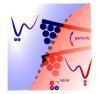
A team of researchers at the Freie Universität Berlin, co-ordinated by José Ignacio Pascual*, have developed a method that enables efficiently using the random movement of a molecule in order to make a macroscopic-scale lever oscillate. The research was published in Science. In nature, processes such as the movement of fluids, the intensity of electromagnetic signals, chemical compositions, etc., are subject to random fluctuations which normally are called 'noise'. This noise is a source of energy and its utilisation for undertaking a task is a paradigm that nature has shown to be possible in certain cases. Click headline to read more--
Bahrain’s eGovernment Authority, responsible for co-ordinating and executing e-government initiatives, has won the 'Public Sector Organization of the Year in the Middle East' award at a global ceremony held recently in Chiang Mai, Thailand. The 'FutureGov Award 2012' aims to honor the administrative excellence in government, education or healthcare institutions through benchmarking programs in the GCC region, beside Syria, Jordan, Egypt and Lebanon. Beside Bahrain, the winners’ list in other categories included Singapore, Indonesia, Malaysia, Thailand, Hong Kong, Australia, Sri Lanka, Brunei and New Zealand, said a statement from eGA. The award jury comprised internationally renowned professionals, senior officials in Public Service, as well as ICT and eGovernment experts. They shortlisted the winners from a total of 93 projects submitted by various intercontinental government organizations who qualified for the final round. Click headline to read more--
Last Friday the US Environmental Protection Agency (EPA) rejected the petitions of a bi-partisan group of state governors for a waiver of the federal ethanol mandate, resolving one of several energy-related issues that had been deferred beyond the presidential election. The waiver requests filed in August cited the harm that the Renewable Fuel Standard (RFS) is causing to the poultry, dairy and livestock sectors and related businesses--and by extension to consumers--by increasing competition for corn during a severe drought that has sharply constrained supply. The EPA's detailed response made frequent references to the "high statutory threshold of severe harm to the economy" required for a waiver of the RFS, and to the output of a model simulating the market for corn and ethanol. It also included the extraordinary assertion that, "the RFS volume requirements will have no impact on ethanol production volumes in the relevant time frame, and therefore will have no impact on corn, food, or fuel prices." If that were true, then it's not obvious why the mandate should exist at all. In rejecting pleas for relaxation of the ethanol standard, the EPA appears to be relying on two key facts. First, wholesale ethanol prices remain lower than wholesale gasoline prices, despite corn prices that are high enough to force many ethanol producers to cut back output. I'd attribute that mainly to weak US gasoline demand and the much-discussed impact of the "blend wall" in limiting ethanol to 10% of the gasoline pool, rather than as a sign of an unaffected market. The agency is also relying on the availability of "paper ethanol" in the form of Renewable Identification Number (RIN) credits from past over-blending of ethanol by refiners and other gasoline blenders. The EPA's estimate puts the number of available RINs at the equivalent of 2-3 billion gallons, or around 20% of this year's 13.2 billion gallon conventional ethanol requirement. As a result of these factors, EPA can claim with some justification that ethanol prices are not harming motorists at the gas pump at this time. That's small consolation to the petitioners. Click headline to read more and access hot links--
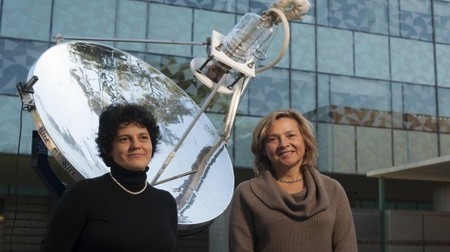
A team of researchers at Rice University has developed a new technology that uses light-absorbing nanoparticles to convert solar energy directly into steam. Even though it is already significantly more efficient than solar panels at producing electricity, the technology will likely find its first applications in low-cost sanitation, water purification and human waste treatment for the developing world. Approximately 90 percent of the world's electricity is produced from steam turbines. Most industrial steam is produced in large, expensive boilers, but because of its very small footprint and high efficiency, this new development promises to make steam economically viable on a much smaller scale. Sterilizing medical waste and surgical instruments, preparing food and purifying water could soon become within reach of a large chunk of the developing world, that doesn't have access to the electrical grid. The Rice technology relies on light-absorbing nanoparticles. When they are submerged and then illuminated, these particles can very quickly reach temperatures well above the boiling point of water. At this stage, they quickly dissipate heat through their very small surface area, which almost instantly results in 150°C (300°F) steam generated right at the surface of the particle. The system is so effective that it can even turn icy-cold water directly into vapor with ease. Click headline to read more and watch video demo--
The 18th annual conference of the United Nations Framework Convention on Climate Change (UNFCCC) will meet for the first time in the Gulf Region from the 26th of November till the 7th of December. On this occasion, the German Embassy in Riyadh, InterContinental Hotels Group (IHG), Green Gulf, and the German-Saudi Arabian Liaison Office for Economic Affairs in Riyadh (GESALO/AHK Saudi Arabia) are organizing an exhibition on renewal energy. The exhibition will provide an insight into the German renewable energy philosophy, as almost 20% of the electricity in Germany is now generated from renewable energy resources. According to the organizers, the exhibition will take place at InterContinental Hotel from the 26th-28th of November in Riyadh. The exhibition will then move to Al-Khobar from the 30th of November till the 2nd of December, and finally make it to Jeddah from the 5th-7th of December. Click headline to read more--
The South African Department of Energy has signed power purchase and project agreements with power producers to develop 28 renewable energy projects and bring an additional 1,400 megawatts to the country’s power grid. The contracts have been called a “historic” move for the country looking to boost renewable energy sources. “This day will go down in history as the day that our government delivered on its commitment to ensure that this nation grows its renewable energy component of our energy mix,” said Dipuo Peters, South Africa’s energy minister, according to a Renewables Energy Focus blog. The group of projects are the first round to be approved by the government under its Renewable Energy Independent Power Producer Programme, as Alive2Green stated. Click headline to read more and access hot links--
The 6th International Tidal Energy Summit and Awards Ceremony will take place on 28-29th November 2012 at London, UK. This summit on one of the renewable green energy sources, Tidal Energy, is an event which will bring this sector’s stakeholders, service providers, device manufacturers and tidal device developers, under one roof. The summit which will be a 2 day event with more than 35 sessions which will cover a spectrum of topics in the area of tidal energy and 6 keynote sessions which are expected with great interest from the 350 already registered executive level attendees. Click headline to read more and access hot links--
Renewable energy has become the most cost-effective way to generate electric power for hundreds of millions of people worldwide who are not on the grid, a new IRENA (the International Renewable Energy Agency) policy brief reveals. Renewable energy has also become the least-cost option for extending grid supply in areas with suitable resources, such as sun and wind. The findings serve as a wake-up call to policy-makers on the declining cost of renewables.
“A renewable revolution is underway,” says Dolf Gielen, IRENA’s Innovation Director. “Recent years have seen consistent, sometimes dramatic, falls in the cost of electricity from renewables – making it the cheapest option off-grid, and even on-grid in places with plentiful resources.” “The message is clear: renewable energy today is often the cheapest option to meet rising demand for electricity – even without subsidies. It is also healthier, and better for the environment. A renewable energy future is now bankable, and there are further cost reductions to come.” Highlights of the IRENA publication, “Renewable Power Generation Costs” include: Click headline to read more and access hot link to report--
Sweden will not respond to calls from wind-power developers to boost targets for alternative energy output, for fear of undermining investor confidence. “I know it is not always easy to be a wind-power entrepreneur, with low electricity certificate prices triggering calls for political intervention,” Anna-Karin Hatt, Swedish minister for information technology and energy, said today at a conference in Stockholm, according to an e-mailed copy of her speech. The Swedish Wind Energy Association wants the government to raise targets for renewable energy investments to secure higher revenue for wind-power producers, the earnings of which are affected by subdued prices for power and tradable electricity certificate subsidies. That may cause the country to fall short of official renewable energy goals, the association said on Oct. 23. “I’m genuinely concerned that such unplanned and rash changes would undermine the credibility of the system,” Hatt said, ruling out more stringent targets which would secure better viability for wind farms. Click headline to read more--
Is there such a thing as too much wind power? The small city of Summerside, located on Canada's Prince Edward Island, is home to approximately 15,000 people and 21 MW of wind energy. However, sometimes the city does not need all that power and is forced to sell the excess to neighboring regions. A novel pilot program using electric heating and smart grid solutions aims to keep the wind power - and its associated benefits - within the city. In 2003, the city's municipal government worked on a strategic plan to make its community greener, and the city ultimately decided to build and own its own wind power project. Aptly named the Summerside Wind Farm, the 12 MW project was commissioned in 2009 and comprises four Vestas 390 3 MW wind turbines. Under the city's general fund, the taxpayers own the wind farm and sell the power to the municipal utility, Summerside Electric, which services about 7,000 customers and is contracted to buy all of the project's energy. In addition, Summerside Electric purchases another 9 MW of wind power from West Cape Energy, a company located on Prince Edward Island, for local use. Combined, both sources give the utility 50% wind integration. But there is a problem: Summerside Electric has a peak load of 23 MW, a minimum load of 11 MW and an average load of 18 MW. With a wind capacity of 21 MW, the utility often has to sell surplus wind power to entities outside the city’s borders. So why build and purchase so much wind energy in Summerside? Greg Gaudet, director of municipal services for the City of Summerside, explains that it makes more sense for the utility and community to have a proactive, rather than reactive, approach to power needs. “When we looked forward, we said we’re not going to have this excess forever. Our load and community are going to grow,” Gaudet tells Renew Grid. “We could’ve either built just enough for what we currently need - which, in my opinion, means we would have been starting out already behind - or we could build for the future and have a little excess now. That will lead to more opportunities.” Click headline to read more and access hot links--
A Missouri appeals court has upheld polices developed by state utility regulators to implement a voter-approved law that requires greater use of renewable fuels. The Missouri Public Service Commission wrote administrative rules for the law passed in 2008. The statute forces investor-owned utilities to use increasing amounts of renewable resources to produce electricity. The administrative rules were challenged by an industry group for investor-owned utilities, power companies and an organization for industrial energy consumers. On Tuesday, a three-judge panel of the Missouri Court of Appeals' Western District rejected the legal challenge and upheld the administrative rules. Click headline to read more--
|
As the tech world recognises the opportunity that Africa presents as one of the few growth regions, IBM has made a strong move into the continent. As economies stagnate and shrinks across the world, Africa remains the one region that is characterised by economic growth almost across the continent. Analysts estimate the total InformationTechnology market opportunity across Africa to be worth more than $20 billion in 2012 alone. In recognition of the potential of the market, IBM is making a significant investment in Africa, ramping up its profile on the continent as part of its focus on emerging markets. IBM is already present in more than 20 African countries and growing fast, viewing the continent as the next major growth opportunity, and harnessing the company's Smarter Planet initiative to help both public and private sector clients do more with fewer resources. IBM has a broad program in place in Africa, covering the creation of new facilities, offices, training, staffing and recruitment, skills development, sales & marketing and corporate citizenship. The expansion program is part of a major business plan to increase IBM's presence in growth markets and support global strategy, strengthening our ability to provide high value solutions to our clients in the world's fastest growing markets. IBM’s growth markets are outpacing major markets in terms of revenue growth. The continent’s potential is undisputed, not only in the light of its abundant resources and fast-growing market opportunities, but in terms of its integration into the global business community and the ability to leapfrog legacy technology systems. Click headline to read more--
Computer Weekly has announced the third UKtech50, our annual definitive list of the real movers and shakers in UK IT - the CIOs, industry executives, public servants and business leaders driving the role of technology in the UK economy. Our aim was to once more identify the 50 most influential leaders in UK IT. An expert judging panel, representing every aspect of the IT profession, helped decide the results, along with a reader vote to determine who holds the most influence over the future of the UK IT sector in 2013 – and hence the future of IT professionals across the country. Here is the list of the 50 most influential people in UK IT. Click headline to read list--
Professors at Columbia University pressed lawmakers to take advantage of widespread public interest in global warming after the destruction of Hurricane Sandy before a lifeless economy and the “fiscal cliff” dominate the American political discussion again. At a panel discussion Monday night, experts said they want to see lawmakers push bold infrastructure projects aimed at preparing American communities for extreme weather and rising sea levels. Click headline to read more and access hot link--
For several years there have been increasing calls and a growing consensus among both activists and industry to reform the federal Toxic Substances Control Act (TSCA). This is the federal statute that allows the US Environmental Protection Agency (EPA) to review the safety of new chemicals before they are allowed to be commercially manufactured, and to restrict uses of existing chemicals in circumstances where they are found to present an unreasonable risk. TSCA has not been amended significantly in this respect since it was adopted in 1976. While TSCA was originally a model chemical control law for other nations, many other developed nations are now implementing more progressive chemical control regimes most notably the European Community under its REACH legislation. In the absence of federal action on chemicals, many states have undertaken action on their own to restrict uses of certain chemicals, or certain chemicals in particular products (e.g., a variety of metals in packaging inks and materials; BPA in children?s toys and reusable food containers; and PBDE flame retardants in many goods in excess of certain thresholds).? Short of direct regulation, several states have developed lists of particular chemicals that warrant action. Click headline to read more--
Energy security is one of the key questions challenging governments and utilities around the world as they seek to cut carbon emissions by integrating more intermittent renewable energy sources such as wind farms into the grid. Today, however, the Faroe Islands will demonstrate how the remote outpost may hold the answers to the challenges presented by intermittent energy renewable sources, with the unveiling of trailblazing smart grid technology. The country is to inaugurate a new "virtual power station", which uses an advanced IT system to balance the grid by shifting supply and demand across the islands in matter of seconds. Nestled between the Norwegian Sea and the North Atlantic Ocean, halfway between Norway and Iceland, the archipelago has considerable average wind speeds of 10 meters per second. The high and reliable winds combined with the country's remote location mean wind energy on the Faroe Islands is significantly cheaper than the existing thermal generation, with wind turbines on the islands working twice as well as they would onshore in Denmark. Click headline to read more and access hot links--
To celebrate World Toilet Day on November 19, researchers at Columbia University's Engineering School, working in Ghana with Waste Enterprisers Ltd., the Kwame Nkrumah University of Science and Technology (KNUST), and the Kumasi Metropolitan Assembly, are launching a pilot facility to convert fecal sludge into biodiesel fuel, thereby addressing a ubiquitous societal problem and concurrently producing renewable, cost-effective sustainable energy. The team is scaling up its research efforts initiated in a Columbia Engineering lab, and expects this working facility to become a revolutionary new model in sanitation. Click headline to read more--
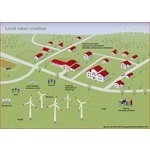
Yesterday, German energy cooperatives met for the first time to coordinate their interests in the country's energy transition. The meeting was the brainchild of conservative CSU politician Josef Göppel. Perhaps the biggest difference between the way Germany is switching to renewables and the way many other countries are doing so (China, the US, the UK, France, etc.) is the focus on citizen involvement. Not only does the German solar market consists of a large number of small roof arrays, but the biogas market also consists of a large number of relatively small facilities on individual farms, and small investors are even the driving force behind large wind turbines in "energy cooperatives." Yesterday, German energy cooperatives met in Berlin to establish a network that will give these groups a coordinated voice in the energy transition. As the organizers explain in their press release, more than 80,000 German citizens have come together in some 600 energy cooperatives. All parties support the energy transition in Germany, though they disagree on details. But there is no left-wing/right-wing divide for and against renewables in Germany. The meeting yesterday is a good example; conservative CSU politician Josef Göppel originally proposed to bring that Germany's energy cooperatives together. Click headline to read more and access hot links--
Wind is booming. With or without the embattled production tax credit (PTC)—which is currently allowing American wind producers to compete with fossil fuels and expand their market share—wind power will be integral to the world's future energy mix. The IEA concluded as much in its big energy outlook report earlier this week, and now, here comes another vote of confidence: The Global Wind Energy Council has just released a major forecast, and it predicts a few tough years ahead for the wind industry. But the longterm outlook is strong. In fact, the GWEC projects that in just under 10 years, wind could supply one tenth of the world's power. In 20, it could be twice that. Here's the Guardian: Click headline to read more and access hot links--
A report by the UN says global attempts to curb emissions of CO2 are falling well short of what is needed to stem dangerous climate change. The UN's Environment Programme says greenhouse gases are 14% above where they need to be in 2020 for temperature rises this century to remain below 2C. The authors say this target is still technically achievable. But the opportunity is likely to be lost without swift action by governments, they argue. Negotiators will meet in Doha, Qatar for the UN Climate Change Conference (COP18) next week to resume talks aimed at securing a global deal on climate by 2015. The Emissions Gap Report 2012 has been compiled by 55 scientists from 20 countries. It says that without action greenhouse gases in the atmosphere will be the equivalent 58 gigatonnes of carbon dioxide per year by 2020. That's around 14 gigatonnes above the level that scientists have said is needed to keep temperature rises this century below the targeted level of 2C. Even if the most ambitious pledges from countries to cut emissions are honoured, the gap is likely to be eight gigatonnes, an increase of two gigatonnes on last year's estimates. Click headline to read more and access hot links--
The American Council on Renewable Energy (ACORE) has released its 2012 Renewable Energy in the 50 States, an online, interactive resource. The report compiles updated financial data, resource potentials, market, and policy information for the renewable energy sector for all 50 U.S. states. In 2011, the total installed base of renewable electricity exceeded 145 GW in the United States, with more than 67 GW from non-hydropower sources, according to the report. Every region in the country experienced growth in the 2011-2012 period, from new wind farms in the Midwest, advanced biofuel facilities in the Southeast, solar farms in the West, to hydropower facility improvements in the Northeast. Washington, California and Texas led the way in cumulative renewable power capacity, while Iowa, Nebraska and Illinois were the leaders in renewable fuels capacity. According to the report, several market drivers of renewable energy included renewable energy targets in 29 states plus Washington, D.C., and several state production incentives. Legislation, along with incentives, have encourage manufactures, developers and end users to invest in and use renewable energy. Click headline to read more and access hot link to online report--
In the first-ever experiment of its kind, researchers have demonstrated that clean energy hydrogen can be produced from water splitting by using very small metal particles that are exposed to sunlight. In the article, "Outstanding activity of sub-nm Au clusters for photocatalytic hydrogen production," published in the journal Applied Catalysis B: Environmental, Alexander Orlov, PhD, an Assistant Professor of Materials Science & Engineering at Stony Brook University, and his colleagues from Stony Brook and Brookhaven National Laboratory, found that the use of gold particles smaller than one nanometer resulted in greater hydrogen production than other co-catalysts tested. Click headline to read more--
Environmental groups celebrated last fall when President Obama delayed the northern portion of the Keystone XL pipeline, a project that would pipe carbon-intensive tar sands crude from Canadian strip mines to refineries in Texas. Now that Obama is back in the White House for a second term, those same forces are banding together to encourage the president to kill the pipeline altogether. A new poll suggests that these groups have public opinion on their side. The polling outfit Zogby Analytics has just conducted a survey showing very strong support for renewable energy and minimal support for the Keystone pipeline among centrist voters. According to the poll, which was released by the National Wildlife Federation, independent voters say they would choose renewable energies like wind and solar over Keystone XL by a 4-1 margin. Only 12 percent chose Keystone as a priority. And among all voters surveyed across party lines, renewables received twice the support as fossil energies. Click headline to read more and access hot links--
|