Your new post is loading...
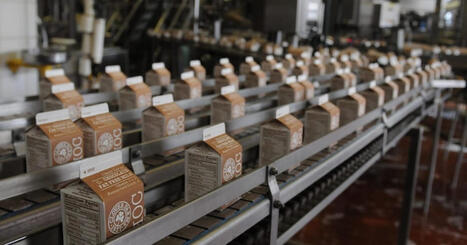
The U.S. industrial sector relies on gas-fired boilers to make heat. A new report shows how manufacturers can electrify and decarbonize, starting now. American factories use lots of hot water and steam to produce everyday goods like milk, cereal, beer, toilet paper, and bleach. Most facilities burn fossil fuels to get that heat, emitting huge amounts of planet-warming pollution in the process. Switching to electricity could significantly and immediately slash those emissions in many places, according to a new report by The 2035 Initiative at the University of California, Santa Barbara. Electric versions of industrial boilers, ovens, and dryers are already available, and newer models promise to boost factories’ efficiency and curb energy costs even further.
WASHINGTON (AP) — The Trump administration said Monday it is pausing leases for five large-scale offshore wind projects under construction in the East Coast due to unspecified national security risks identified by the Pentagon. The suspension, effective immediately, is the latest step by the administration to hobble offshore wind in its push against renewable energy sources. It comes two weeks after a federal judge struck down President Donald Trump’s executive order blocking wind energy projects, calling it unlawful. The administration said the pause will give the Interior Department, which oversees offshore wind, time to work with the Defense Department and other agencies to assess the possible ways to mitigate any security risks posed by the projects. The statement did not detail the national security risks. It called the move a pause, but did not specify an end date. The action comes two weeks after a federal judge struck down Trump's executive order blocking wind energy projects, saying the effort to halt virtually all leasing of wind farms on federal lands and waters was "arbitrary and capricious."
Three Democratic US senators announced on Tuesday that they are investigating whether big tech companies are passing the soaring utility costs of “energy-guzzling” data centers on to ordinary Americans. The trio sent letters to the heads of Google, Microsoft, Amazon and Meta as well as the data center operators CoreWeave, Digital Realty and Equinix asking for greater transparency, cost-sharing and accountability. Elizabeth Warren of Massachusetts, Chris Van Hollen of Maryland and Richard Blumenthal of Connecticut wrote that they were alarmed by reports that these data centers caused residential electricity bills to “skyrocket”.
These graphs tell an important story. On the left is how horses disappeared from cities once cars took off. On the right is the same kind of substitution curve - petrol and diesel powered cars giving way to EVs. Horses didn’t fade gently; they were replaced rapidly. And internal combustion engines aren't “phasing down” with polite applause either. They’re already being substituted - and the steep part of the curve is the part we’re entering. A new paper from the Centre for Net Zero explains what many of us can already see at the traffic lights: the global transition to electric vehicles has reached a tipping point. One in five new cars sold worldwide is now electric, and we’re approaching the steep, exponential phase of the S-curve.
As officials from around the world met in Brazil for the Cop30 climate summit last month, the US president was nowhere to be found, nor were any members of his cabinet. Instead, the most prominent American voice in Belém was that of the California governor, Gavin Newsom. During the five days he spent in Brazil, Newsom described Donald Trump as an “invasive species” and condemned his rollback of policies aimed at reducing emissions and expanding renewable energy. Newsom, long considered a presidential hopeful, argued that, as the US retreated, California would step up in its place as a “stable, reliable” climate leader and partner. Among the talking points he used to demonstrate California’s leadership was its progress on renewable energy – and the battery capacity needed to store that power.
Thwaites, the most studied glacier in the world, commands attention because it is not only the widest in the world at 80 miles but also the shakiest. And its nickname “The Doomsday Glacier” certainly sets it apart from the 500 other named glaciers in Antarctica. Based upon new research of 2024-25, polar scientists have been speaking out like never before, making public predictions about a rapidly deteriorating situation and insisting upon an end to burning fossil fuels, or else!
Canada's Rogers Communications has launched Rogers Satellite, a direct-to-device service that is initially connected to Starlink's LEO satellite constellation, with Lynk Global on deck. About six months after the start of beta trials, Rogers Communications has pushed ahead with the commercial launch of Rogers Satellite, a direct-to-device (D2D) service that is being marketed to Rogers' own mobile customers and consumers who get mobile services from other Canadian carriers. Rogers Satellite is initially connecting via Starlink's growing constellation of low-Earth orbit (LEO) satellites. Rogers is also partnered with Lynk Global for the D2D service but has not announced when that part will be activated.
Colorado officials are vowing to fight the Trump administration's attack on climate research at NCAR with every legal tool. Will dismantling this renowned scientific facility jeopardize our ability to predict severe weather events and protect lives? The decision is seen as blatantly retaliatory and a dangerous move against science.
Proponents of driverless cars often tout them as a safer alternative to cars with human drivers—but such claims don’t appear to be holding up so far in the case of Tesla’s Robotaxis. A Monday report from Elektrek found that Tesla Robotaxis are crashing much more frequently than cars driven by humans, as the company has now reported eight crashes of its driverless taxi fleet in Austin, Texas to the National Highway Traffic Safety Administration since July.
- A new study found that 75 streams in Alaska’s Brooks Range have turned orange due to thawing permafrost, which releases metals like iron, aluminum and cadmium that exceed U.S. Environmental Protection Agency safety thresholds for aquatic life.
- The contamination threatens fish populations, with aluminum concentrations at one location reaching nearly five times the safe limit, and the study suggests this may help explain recent crashes in chum salmon returns that Indigenous communities depend on for food and income.
- The pollution flows hundreds of miles downstream to coastal communities like Kivalina, where residents who rely on traditional fishing face threats to food security as some tributaries of rivers like the Wulik have begun turning orange.
- Scientists warn that this climate change impact is irreversible and spreading across the Arctic, with no cleanup options, as these remote watersheds contain hundreds of contamination sources.
-
See All Key Ideas The writer John McPhee once described Alaska’s Salmon River as having “the clearest, purest water” he’d ever seen. Today, that same river runs orange with toxic metals unleashed by thawing permafrost. “During the summer of 2019, the clear waters of the Salmon turned distinctly orange and have remained discolored and turbid since,” according to a new study published in the Proceedings of the National Academy of Sciences. The Salmon River’s transformation represents a much larger crisis. In Alaska’s Brooks Range,75 streams have “recently turned orange and turbid,” the study found. “This is what acid mine drainage looks like,” said Tim Lyons, a biogeochemist at the University of California, Riverside, and co-author of the study. “But here, there’s no mine. The permafrost is thawing and changing the chemistry of the landscape.”
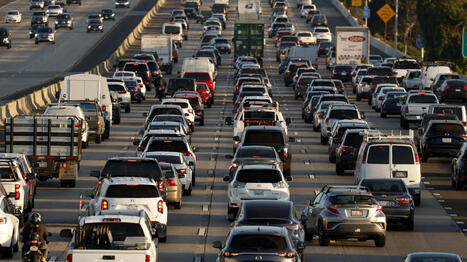
Most of the incentives and regulatory requirements that spurred carmakers to build more EVs are gone. But there are more EVs on American roads than ever.
The shifts in the automaker's electric vehicle strategy will cost the Detroit automaker up to $1.9 billion in expenses and write-downs.
The startup built a compact solar-battery combo that connects directly to key household appliances, is easy to plug in, and requires no special permits.
|
PALM BEACH, Florida/COPENHAGEN, Dec 22 (Reuters) - President Donald Trump reasserted on Monday that the United States needs Greenland for its national security and said a special envoy he appointed to the Arctic island would "lead the charge." Trump named Louisiana Governor Jeff Landry on Sunday as his special envoy to Greenland, drawing renewed criticism from Denmark and Greenland over Washington's interest in the mineral-rich Arctic island. Trump has advocated for Greenland, a self-governing Danish territory, to become part of the United States, citing its strategic importance and mineral resources. Landry, who took office as governor in January 2024, publicly supports the idea.
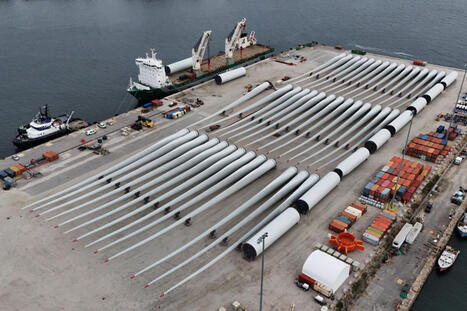
The Trump administration suspended leases on Monday for five large offshore wind projects that are under construction off the US East Coast over what it called national security concerns, sending shares of offshore wind companies plunging. The suspension was the latest blow for offshore wind developers that have faced repeated disruptions to their multi-billion-dollar projects under US President Donald Trump, who has said he finds wind turbines ugly, costly and inefficient. The US Department of the Interior said the move was the result of complaints by the Pentagon that the movement of huge turbine blades for offshore wind projects, as well as the highly reflective towers that hold them up, cause radar interference that can make it hard to identify and locate threats.
Animation showing changes in Antarctic ice mass since 2002 based on satellite data. The Antarctic ice sheet's mass has changed over the last decades. Research based on satellite data indicates that between 2002 and 2023, Antarctica shed an average of 150 billion metric tons of ice per year, adding to global sea level rise. These images, created from GRACE and GRACE-FO data, show changes in Antarctic ice mass since 2002. Orange and red shades indicate areas that lost ice mass, while light blue shades indicate areas that gained ice mass. White indicates areas where there has been very little or no change in ice mass since 2002. Areas in East Antarctica experienced modest amounts of mass gain due to increased snow accumulation. However, this gain is more than offset by significant ice mass loss on the West Antarctic Ice Sheet (dark red) over the 21-year period. Floating ice shelves whose mass change GRACE and GRACE-FO do not measure are colored gray.
When the billionaire chief executive of AI chipmaker Nvidia threw a party in central London for Donald Trump’s state visit in September, the power imbalance between Silicon Valley and British politicians was vividly exposed. Jensen Huang hastened to the stage after meetings at Chequers and rallied his hundreds of guests to cheer on the power of AI. In front of a huge Nvidia logo, he urged the venture capitalists before him to herald “a new industrial revolution”, announced billions of pounds in AI investments and, like Willy Wonka handing out golden tickets, singled out some lucky recipients in the room. “If you want to get rich, this is where you want to be,” he declared. But his biggest party trick was a surprise guest waiting in the wings. At Huang’s cue, the British prime minister, Keir Starmer, walked out as the crowd whooped at Huang’s pulling power.
The destruction of food supplies by crop pests is being supercharged by the climate crisis, with losses expected to surge, an analysis has concluded. Researchers said the world was lucky to have so far avoided a major shock and was living on borrowed time, with action needed to diversify crops and boost natural predators of pests. The key global crops, wheat, rice and maize, are expected to see the losses to pests increase by about 46%, 19% and 31% respectively when global heating reaches 2C, the scientists said.
Tuesday's lawsuit addresses the withholding of over $2 billion in funding for two electric vehicle charging programs.
Many Gulf Coast refiners have a stake in the future of Venezuelan oil exports, as they've spent billions to process the country's heavier crude.
Rising home insurance costs are making life unaffordable for both homeowners and renters. Robust climate policy and public disaster insurance could save many households’ finances.
Climate and human rights advocates are outraged by the European Parliament's approval of a deregulation package that weakens corporate sustainability rules.
The revisions raise questions about the quality of climate-related data and the efficacy of America’s voluntary reporting system. A large majority of S&P 500 companies revise their annual greenhouse gas emissions disclosures, raising serious questions about the quality of climate-related data and the efficacy of America’s voluntary reporting system. More than 135 million tons of emissions went unreported, more than the annual total for many countries. While there is no federal regulation in sight, states and foreign countries are pressing forward with their own rules, which threaten to create a patchwork regulatory environment for many of the world’s largest companies. Meanwhile, the market demand for emissions data is unlikely to subside.
Ford is ending production of the fully-electric F-150 Lightning as part of a broader companywide shakeup of its electric vehicle plans, the company announced Monday. In its place, Ford will sell what’s known as an “extended range electric vehicle” version of the truck, which adds a gas generator that can recharge the battery pack to power the motors for over 700 miles. The company did not share when the new F-150 Lightning will go on sale, or how much it will cost. The pivot will come with a substantial price tag for Ford.
Between now and the end of the century, climate change will trigger a cascade of rapid, irreversible environmental changes that will make it impossible for people to establish a sense of place, writes Frederick Hewett.
|