The game was developed in 2008, and in an updated version, students can embrace a set of values to motivate their choices - pursuing efficient government, for example, lowering taxes, safeguarding the environment or promoting national defense. Using data from the U.S. Congressional Budget Office, the game shows the real-life budget impact of every choice they make.
The college graduation gap between rich and poor has widened by nearly 50%. That makes it all the more difficult for students from lower-income families to get ahead.
Police arrested 95 Occupy protesters and students Wednesday who stormed into a downtown San Francisco bank and shouted slogans as they tried to set up camp in the lobby.
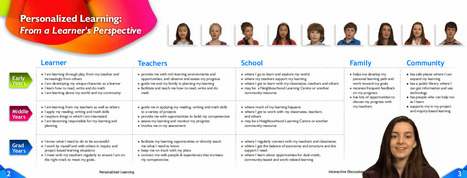
Mr. Harris engages in an extensive and detailed description and analysis of Personalized Learning, selecting it as the most important of the 8 emerging trends in educational technology - thus his choice of "All Roads Lead Here" as the title for this piece. He does an excellent job and provides extensive links for readers to investigate further. -JL
VSS2011 is the leading conference on virtual education and was held on Nov 10-11, 2011. This page is the schedule of conference events. Although the videos are not yet posted as of this date (Nov. 20, 2o11) iNACOL says they "are currently being processed and will be available...as soon as possible." Check beck often, there should be some gems here.
In this third post of the series from "Literacy Is Not Enough," Ian Jukes does an outstanding job of defining each of the 5 Fluencies and the actions that comprise their constituent parts. This is a wonderful piece of work. -JL
One of a series of guest posts on Tony Gurr's blog from "the guys at the 21st Century Fluency Project -- Ian Jukes, Andrew Churches. and Lee Crockett." The posts consist of abridged sections of their new book, "Literacy Is Not Enough."
In this post they talk about the new for completely new schools and the passion and commitment required to bring them into being.
A very graphic and informative examination of the 19 largest cities in the world, the growth, and their impact. In 1800, 3% of the world's population lived in cities. By 2050, it will be 67%. The ramifications are extraordinary. -JL
In the 21st century, the most perceptive educational thinkers recognize that something new is happening to learning. Models of providing an education that developed to meet the needs of students of the last two centuries, while not irrelevant, are increasingly being transformed and infiltrated by the introduction and integration of new tools and technologies, and novel approaches to work, many of which are now commonplace in business and consumer spheres. The emphasis on collaboration and critical thinking to solve problems, and the flattening of the world of commerce are challenging the fundamental assumptions of what an education must provide to its young people in order for them to succeed or even cope in a complex world.
Most City University of New York community college students drop out before graduating, squandering the system's resources as enrollment soars, according to a report set to be released on Monday.
The Digital Media and Learning Conference is shaping up to be a very thoughtful and interesting event. It will be held in San Francisco on March 1-3, 2012. This page contains 5 videos from members of the conference planning committee, talking about their current interests and their hopes for the meeting. Each one is interviewed by Howard Reingold: Mark Surman, Tracy Fullterton, Antero Garcia, Mitch Resnick, and Diana Rhoten.
Audrey Watters' freewheeling and attractive ramble on the current state of affairs with technology, education, and learning (not the same as education). She quotes, or refers to, The Matrix, the Wall Street Journal, Tom Vander Ark, Will Richardson, and Tayler Branch.
Lauren Wagner discusses the Self-Directed Learning Readiness Scale and how it may be used to both assess and build learner readiness to succeed in self-directed learning. -JL
Thoughtful prognistication from Steve Wheeler about what Web 3.0 learning might look like. Basically, he expresses the ideas the 3.0 will be characterized by multi-touch 3D user access and richer collaboration affordances. Wheeler also offers links to several other writers' work that has influenced his thinking. -JL
I first saw this video about 2 years ago and sent it to a number of my colleagues. Now that I'm on Scoop.it, it seemed like a good idea to share it this way as well.
Just a very impressive piece to view. If you ever need encouragement that tech facilitates learning when done well, just give this a re-look!
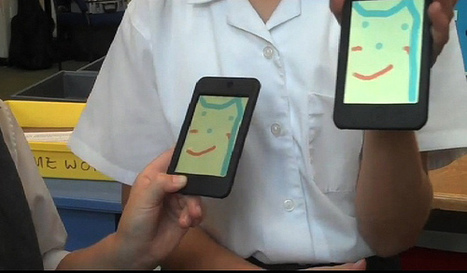
Pupils from Robin Hood primary school, Birmingham, worked with a film crew from the National College for School Leadership to express their desire to use the...
===> Gust MEES: this video is the BEST I ever have seen about 21st Century Learning and Teaching! <=== Please amplify it by forwarding it, thanks a lot to do so ;)
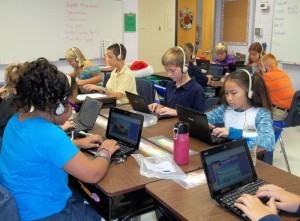
Our school is piloting a 1:1 netbook program this year, and our administration is interested in how the program is going and the different ways the netbooks are being incorporated into our curriculum. I started putting together a list, and even surprised myself at how much the availability of wifi-ready technology engages my students and supports instruction during the course of a regular school day.
Another “guest-post” from Lee Crockett, Ian Jukes and Andrew Churches – shared (with permission) from their new book “Literacy is NOT Enough”.
In this post, the authors explain the thinking behind the title of their book "Literacy Is Not Enough." Instead, they state, what is required in FLUENCY in 21st century skills.
To get content containing either thought or leadership enter:
To get content containing both thought and leadership enter:
To get content containing the expression thought leadership enter:
You can enter several keywords and you can refine them whenever you want. Our suggestion engine uses more signals but entering a few keywords here will rapidly give you great content to curate.


 Your new post is loading...