Your new post is loading...

|
Scooped by
dromius
September 24, 2017 7:00 AM
|
Sarno et al. 2017 Meiotic recombination shapes the genetic diversity transmitted upon sexual reproduction. However, its non-random distribution along the chromosomes constrains the landscape of potential genetic combinations. For a variety of purposes, it is desirable to expand the natural repertoire by changing the distribution of crossovers in a wide range of eukaryotes. Toward this end, we report the local stimulation of meiotic recombination at a number of chromosomal sites by tethering the natural Spo11 protein to various DNA-binding modules: full-length DNA binding proteins, zinc fingers (ZFs), transcription activator-like effector (TALE) modules, and the CRISPR-Cas9 system. In the yeast Saccharomyces cerevisiae, each strategy is able to stimulate crossover frequencies in naturally recombination-cold regions. The binding and cleavage efficiency of the targeting Spo11 fusions (TSF) are variable, being dependent on the chromosomal regions and potential competition with endogenous factors. TSF-mediated genome interrogation distinguishes naturally recombination-cold regions that are flexible and can be warmed-up (gene promoters and coding sequences), from those that remain refractory (gene terminators and centromeres). These results describe new generic experimental strategies to increase the genetic diversity of gametes, which should prove useful in plant breeding and other applications.
|
|
Scooped by
dromius
September 19, 2017 4:40 AM
|
Kim & Kini 2017 Engineered DNA-binding domains provide a powerful technology for numerous biomedical studies due to their ability to recognize specific DNA sequences. Zinc fingers (ZF) are one of the most common DNA-binding domains and have been extensively studied for a variety of applications, such as gene regulation, genome engineering and diagnostics. Another novel DNA-binding domain known as a transcriptional activator-like effector (TALE) has been more recently discovered, which has a previously undescribed DNA-binding mode. Due to their modular architecture and flexibility, TALEs have been rapidly developed into artificial gene targeting reagents. Here, we describe the methods used to design these DNA-binding proteins and their key applications in biomedical research.
|
|
Scooped by
dromius
September 18, 2017 3:50 AM
|
(via J. Boch, thx) Kannan et al, 2017 Sugarcane is the world's most efficient feedstock for commercial production of bioethanol due to its superior biomass production and accumulation of sucrose in stems. Integrating first and second generation ethanol conversion processes will enhance the biofuel yield per unit area by utilizing both sucrose as well as cell wall bound sugars for fermentation. RNAi suppression of the lignin biosynthetic gene caffeic acid O-methyltransferase (COMT) has been demonstrated to improve bioethanol production from lignocellulosic biomass. Genome editing has been used in a number of crops for creation of loss of function phenotypes but is very challenging in sugarcane due to its highly polyploid genome. In this study, a conserved region of COMT was targeted with a single Transcription Activator-Like Effector Nuclease (TALEN) pair for multi-allelic mutagenesis to modify lignin biosynthesis in sugarcane. Field grown TALEN mediated COMT mutants showed up to 19.7% lignin reduction and significantly decreased syringyl to guaiacyl (S/G) ratio resulting in an up to 43.8% improved saccharification efficiency. Biomass production of COMT mutant lines with superior saccharification efficiency did not differ significantly from the original cultivar under replicated field conditions. Sanger sequencing of cloned COMT amplicons (1351-1657 bp) revealed co-editing of 107 of the 109 unique COMT copies/alleles in vegetative progeny of line CB6 using a single TALEN pair. Line CB6 combined altered cell wall composition and drastically improved saccharification efficiency with good agronomic performance. These findings confirm the feasibility of co-mutagenesis of a very large number of target alleles/copies for improvement of crops with complex genomes.
|
|
Scooped by
dromius
August 31, 2017 12:01 PM
|
(via T. Lahaye, thx) Ruh et al, 2017 Common bacterial blight is a devastating bacterial disease of common bean (Phaseolus vulgaris) caused by Xanthomonas citri pv. fuscans and Xanthomonas phaseoli pv. phaseoli. These phylogenetically distant strains are able to cause similar symptoms on common bean, suggesting that they have acquired common genetic determinants of adaptation to common bean. Transcription Activator-Like (TAL) effectors are bacterial type III effectors that are able to induce the expression of host genes to promote infection or resistance. Their capacity to bind to a specific host DNA sequence suggests that they are potential candidates for host adaption.
To study the diversity of tal genes from Xanthomonas strains responsible for common bacterial blight of bean, whole genome sequences of 17 strains representing the diversity of X. citri pv. fuscans and X. phaseoli pv. phaseoli were obtained by single molecule real time sequencing. Analysis of these genomes revealed the existence of four tal genes named tal23A, tal20F, tal18G and tal18H, respectively. While tal20F and tal18G were chromosomic, tal23A and tal18H were carried on plasmids and shared between phylogenetically distant strains, therefore suggesting recent horizontal transfers of these genes between X. citri pv. fuscans and X. phaseoli pv. phaseoli strains. Strikingly, tal23A was present in all strains studied, suggesting that it played an important role in adaptation to common bean. In silico predictions of TAL effectors targets in the common bean genome suggested that TAL effectors shared by X. citri pv. fuscans and X. phaseoli pv. phaseoli strains target the promoters of genes of similar functions. This could be a trace of convergent evolution among TAL effectors from different phylogenetic groups, and comforts the hypothesis that TAL effectors have been implied in the adaptation to common bean.
Altogether, our results favour a model where plasmidic TAL effectors are able to contribute to host adaptation by being horizontally transferred between distant lineages.
|
|
Scooped by
dromius
August 26, 2017 4:53 AM
|
Clauss et al, 2017 Transcription comprises a highly regulated sequence of intrinsically stochastic processes, resulting in bursts of transcription intermitted by quiescence. In transcription activation or repression, a transcription factor binds dynamically to DNA, with a residence time unique to each factor. Whether the DNA residence time is important in the transcription process is unclear. Here, we designed a series of transcription repressors differing in their DNA residence time by utilizing the modular DNA binding domain of transcription activator-like effectors (TALEs) and varying the number of nucleotide-recognizing repeat domains. We characterized the DNA residence times of our repressors in living cells using single molecule tracking. The residence times depended non-linearly on the number of repeat domains and differed by more than a factor of six. The factors provoked a residence time-dependent decrease in transcript level of the glucocorticoid receptor-activated gene SGK1. Down regulation of transcription was due to a lower burst frequency in the presence of long binding repressors and is in accordance with a model of competitive inhibition of endogenous activator binding. Our single molecule experiments reveal transcription factor DNA residence time as a regulatory factor controlling transcription repression and establish TALE-DNA binding domains as tools for the temporal dissection of transcription regulation.
|
|
Scooped by
dromius
August 1, 2017 6:42 AM
|
Hochrein et al, 2017 Highly regulated induction systems enabling dose-dependent and reversible fine-tuning of protein expression output are beneficial for engineering complex biosynthetic pathways. To address this, we developed PhiReX, a novel red/far-red light-regulated protein expression system for use in Saccharomyces cerevisiae. PhiReX is based on the combination of a customizable synTALE DNA-binding domain, the VP64 activation domain and the light-sensitive dimerization of the photoreceptor PhyB and its interacting partner PIF3 from Arabidopsis thaliana. Robust gene expression and high protein levels are achieved by combining genome integrated red light-sensing components with an episomal high-copy reporter construct. The gene of interest as well as the synTALE DNA-binding domain can be easily exchanged, allowing the flexible regulation of any desired gene by targeting endogenous or heterologous promoter regions. To allow low-cost induction of gene expression for industrial fermentation processes, we engineered yeast to endogenously produce the chromophore required for the effective dimerization of PhyB and PIF3. Time course experiments demonstrate high-level induction over a period of at least 48 h.
|
|
Scooped by
dromius
July 13, 2017 8:36 AM
|
Schreiber & Tissier 2017 Transcription factors with programmable DNA-binding specificity constitute valuable tools for the design of orthogonal gene regulatory networks for synthetic biology. Transcription activator-like effectors (TALEs), as natural transcription regulators, were used to design, build, and test libraries of synthetic TALE-activated promoters (STAPs) that show a broad range of expression levels in plants. In this chapter, we present protocols for the construction of artificial TALEs and corresponding STAPs.
|
|
Scooped by
dromius
July 9, 2017 5:38 AM
|
Kamburova et al, 2017 The emergence of genome manipulation methods promises a real revolution in biotechnology and genetic engineering. Targeted editing of the genomes of living organisms not only permits investigations into the understanding of the fundamental basis of biological systems but also allows addressing a wide range of goals towards improving productivity and quality of crops. This includes the creation of plants with valuable compositional properties and with traits that confer resistance to various biotic and abiotic stresses. During the past few years, several novel genome editing systems have been developed; these include zinc finger nucleases (ZFNs), transcription activator-like effector nucleases (TALENs), and clustered regularly interspaced short palindromic repeats/Cas9 (CRISPR/Cas9). These exciting new methods, briefly reviewed herein, have proved themselves as effective and reliable tools for the genetic improvement of plants.
|
|
Scooped by
dromius
June 29, 2017 4:09 AM
|
(via T. Schreiber, thx) Luo et al, 2017 Integrating DNA delivery systems hold promise for many applications including treatment of diseases; however, targeted integration is needed for improved safety. The piggyBac (PB) transposon system is a highly active non-viral gene delivery system capable of integrating defined DNA segments into host chromosomes without requiring homologous recombination. We systematically compared four different engineered zinc finger proteins (ZFP), four transcription activator-like effector proteins (TALE), CRISPR associated protein 9 (SpCas9) and the catalytically inactive dSpCas9 protein fused to the amino-terminus of the transposase enzyme designed to target the hypoxanthine phosphoribosyltransferase (HPRT) gene located on human chromosome X. Chimeric transposases were evaluated for expression, transposition activity, chromatin immunoprecipitation at the target loci, and targeted knockout of the HPRT gene in human cells. One ZFP-PB and one TALE-PB chimera demonstrated notable HPRT gene targeting. In contrast, Cas9/dCas9-PB chimeras did not result in gene targeting. Instead, the HPRT locus appeared to be protected from transposon integration. Supplied separately, PB permitted highly efficient isolation of Cas9-mediated knockout of HPRT, with zero transposon integrations in HPRT by deep sequencing. In summary, these tools may allow isolation of ‘targeted-only’ cells, be utilized to protect a genomic locus from transposon integration, and enrich for Cas9-mutated cells.
|
|
Scooped by
dromius
June 20, 2017 8:05 PM
|
Erkes et al, 2017 Transcription activator-like effectors (TALEs) are secreted by plant-pathogenic Xanthomonas bacteria into plant cells where they act as transcriptional activators and, hence, are major drivers in reprogramming the plant for the benefit of the pathogen. TALEs possess a highly repetitive DNA-binding domain of typically 34 amino acid tandem repeats, where amino acid 12 and 13, termed repeat variable di-residue (RVD), determine target specificity. Different Xanthomonas strains possess different repertoires of TALEs. Here, we study the evolution of TALEs from the level of RVDs determining target specificity down to the level of DNA sequence with focus on rice-pathogenic Xanthomonasoryzae pv. oryzae (Xoo) and Xanthomonas oryzae pv. oryzicola (Xoc) strains. We observe that codon pairs coding for individual RVDs are conserved to a similar degree as the flanking repeat sequence. We find strong indications that TALEs may evolve i) by base substitutions in codon pairs coding for RVDs, ii) by recombination of N-terminal or C-terminal regions of existing TALEs, or iii) by deletion of individual TALE repeats, and we propose possible mechanisms. We find indications that the reassortment of TALE genes in clusters is mediated by an integron-like mechanism in Xoc. We finally study the effect of the presence/absence and evolutionary modifications of TALEs on transcriptional activation of putative target genes in rice, and find that even single RVD swaps may lead to considerable differences in activation. This correlation allowed a refined prediction of TALE targets, which is the crucial step to decipher their virulence activity.
|
|
Scooped by
dromius
May 30, 2017 7:09 AM
|
Bi & Yang 2017 Engineered, site-specific nucleases induce genomic double-strand DNA breaks and break repair processes enable genome editing in a plethora of eukaryotic genomes. TALENs (transcription activator-like effector nucleases) and CRISPR/Cas (clustered regularly interspaced short palindromic repeats and CRISPR-associated proteins) are potent biotechnological tools used for genome editing. In rice, species-tailored editing tools have proven to be efficient and easy to use. Both tools are capable of generating DNA double-strand breaks (DSBs) in vivo and such breaks can be repaired either by error-prone NHEJ (nonhomologous end joining) that leads to nucleotide insertions or deletions or by HDR (homology-directed repair) if an appropriate exogenous DNA template is provided. NHEJ repair often results in gene knockout, while HDR results in precise nucleotide sequence or gene replacement. In this review, we revisit the molecular mechanisms underlying DSB repair in eukaryotes and review the TALEN and CRISPR technologies (CRISPR/Cas9, CRISPR/Cpf1, and Base Editor) developed and utilized for genome editing by scientists in rice community.
|
|
Scooped by
dromius
May 20, 2017 7:36 AM
|
Cermak et al, 2017 We report a comprehensive toolkit that enables targeted, specific modification of monocot and dicot genomes using a variety of genome engineering approaches. Our reagents, based on TALENs and the CRISPR/Cas9 system, are systematized for fast, modular cloning and accommodate diverse regulatory sequences to drive reagent expression. Vectors are optimized to create either single or multiple gene knockouts and large chromosomal deletions. Moreover, integration of geminivirus-based vectors enables precise gene editing through homologous recombination. Regulation of transcription is also possible. A web-based tool greatly streamlines vector selection and construction. One advantage of our platform is the use of the Csy4 ribonuclease and tRNA processing enzymes to simultaneously express multiple guide RNAs (gRNAs). For example, we demonstrate targeted deletions in up to six genes by expressing twelve gRNAs from a single transcript. Csy4 and tRNA expression systems are almost twice as effective in inducing mutations as gRNAs expressed from individual RNA polymerase III (Pol III) promoters. Mutagenesis can be further enhanced 2.5-fold by incorporating the TREX2 exonuclease. Finally, we demonstrate that Cas9 nickases induce gene targeting at frequencies comparable to native Cas9 when they are delivered on geminivirus replicons. The reagents have been successfully validated in tomato, tobacco, Medicago, wheat and barley.
|
|
Scooped by
dromius
May 3, 2017 12:01 PM
|
(via T. Lahaye, thx) Rinaldi et al, 2017 Transcription activator-like effectors (TALEs) recognize their DNA targets via tandem repeats, each specifying a single nucleotide base in a one-to-one sequential arrangement. Due to this modularity and their ability to bind long DNA sequences with high specificity, TALEs have been used in many applications. Contributions of individual repeat-nucleotide associations to affinity and specificity have been characterized. Here, using in vitro binding assays, we examined the relationship between the number of repeats in a TALE and its affinity, for both target and non-target DNA. Each additional repeat provides extra binding energy for the target DNA, with the gain decaying exponentially such that binding energy saturates. Affinity for non-target DNA also increases non-linearly with the number of repeats, but with a slower decay of gain. The difference between the effect of length on affinity for target versus non-target DNA manifests in specificity increasing then diminishing with increasing TALE length, peaking between 15 and 19 repeats. Modeling across different hypothetical saturation levels and rates of gain decay, reflecting different repeat compositions, yielded a similar range of specificity optima. This range encompasses the mean and median length of native TALEs, suggesting that these proteins as a group have evolved for maximum specificity.
|
|
|
Scooped by
dromius
September 19, 2017 4:41 AM
|
Xiang et al, 2017 Genome editing (also known as targeted mutation) has promise for molecular breeding. Compared with the CRISPR/Cas9 system, the transcription activator-like effector nucleases (TALENs) have likely a lesser off-target rate in genome editing. Both a rapid test system for the functionality of designed TALENs and an effective delivery system for introducing the TALENs to plants are critical for successful target mutation. TALENs have usually been tested in protoplasts or introduced to plants with viral vectors. However, plant regeneration from protoplast culture can generate extensive somatic variation. Viral vectors are not always available, and plants edited by these vectors usually require virus elimination. Here, we used a non-viral, Agrobacterium-mediated transient expression approach, to serve both rapid test and effective delivery of TALENs into two vegetatively propagated potato cultivars, Solanum tuberosum Russet Burbank and Shepody. Two TALENs with different molecular weights (22 and 27 aa-repeat modules) were expressed to target two endogenous genes (starch branching enzyme and an acid invertase) by Agrobacterium-mediated infiltration (agroinfiltration) into leaves of potato plants. The infiltrated leaf DNA was analyzed using restriction site loss assay and subsequent DNA sequencing. Deep sequencing of these tetraploid cultivars was also conducted to determine the zygosity at the targeted chromosomal loci. TALENs, with different molecular weights, successfully agroinfiltrated and induced mutations at both targeted loci.
|
|
Scooped by
dromius
September 19, 2017 4:32 AM
|
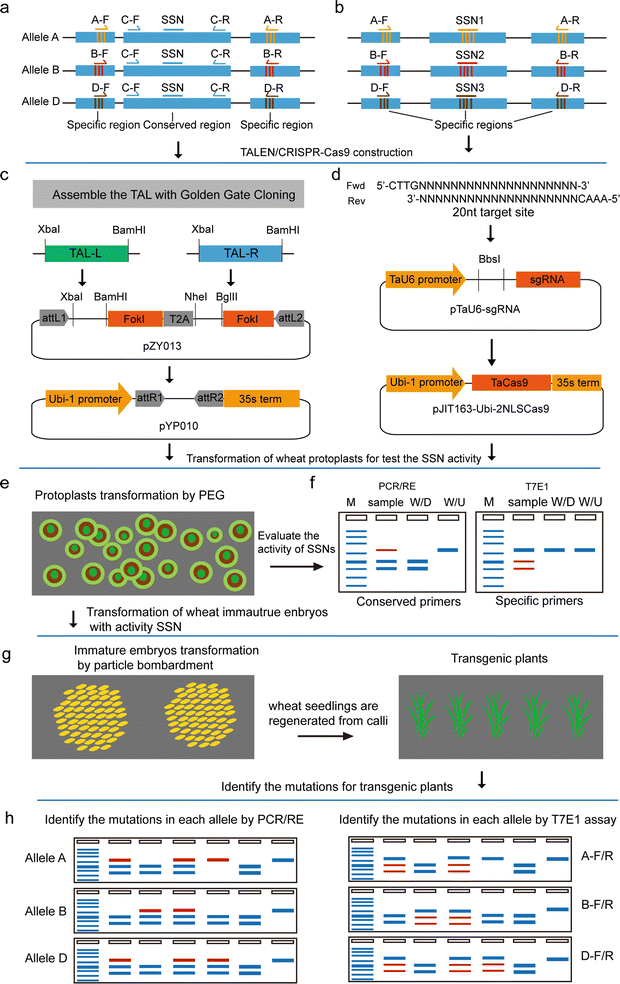
Wang et al, 2017 The use of sequence-specific transcription activator-like effector nucleases (TALENs) and the clustered regularly interspaced short palindromic repeats-associated system (CRISPR/Cas9) have provided powerful reverse genetic approaches to the targeted modification of genomes in numerous organisms. Both systems have been employed to generate loss-of-function alleles in bread wheat, by targeting multiple and single copies of genes. Here we present protocols for modifying the wheat genome using the two systems. The protocols include the design of TALEN and CRISPR/Cas9 target sites and their construction, evaluation of their activities in protoplasts, transformation of plants, and mutation screening.
|
|
Scooped by
dromius
September 15, 2017 4:10 AM
|
(via T. Lahaye, thx) Chen et al, 2017 Here we demonstrate an efficient methodology by applying transcription activator-like effector nucleases (TALENs) technology to generate Leptin receptor (Lepr) knockout rats on the Sprague Dawley (SD) genetic background. Through direct injection of in vitro transcribed mRNA of TALEN pairs into SD rat zygotes, somatic mutations were induced in two of three resulting pups. One of the founders carrying bi-allelic mutation exhibited early onset of obesity and infertility. The other founder carried a chimeric mutation which was efficiently transmitted to the progenies. Through phenotyping of the resulting three lines of rats bearing distinct mutations in the Lepr locus, we found that the strains with a frame-shifted or premature stop codon mutation led to obesity and metabolic disorders. However, no obvious defect was observed in a strain with an in-frame 57 bp deletion in the extracellular domain of Lepr. This suggests the deleted amino acids do not significantly affect Lepr structure and function. This is the first report of generating the Lepr mutant obese rat model in SD strain through a reverse genetic approach. This suggests that TALEN is an efficient and powerful gene editing technology for the generation of disease models.
|
|
Scooped by
dromius
August 28, 2017 5:34 PM
|
(via T. Lahaye, thx) De Lange et al, 2017 Designer transcription activator-like effectors (dTALEs) are programmable transcription factors used to regulate user-defined promoters. The TALE DNA-binding domain is a tandem series of amino acid repeats that each bind one DNA base. Each repeat is 33–35 amino acids long. A residue in the center of each repeat is responsible for defining DNA base specificity and is referred to as the base specificying residue (BSR). Other repeat residues are termed non-BSRs and can contribute to TALE DNA affinity in a non-base-specific manner. Previous dTALE engineering efforts have focused on BSRs. Non-BSRs have received less attention, perhaps because there is almost no non-BSR sequence diversity in natural TALEs. However, more sequence diverse, TALE-like proteins are found in diverse bacterial clades. Here, we show that natural non-BSR sequence diversity of TALEs and TALE-likes can be used to modify DNA-binding strength in a new form of dTALE repeat array that we term variable sequence TALEs (VarSeTALEs). We generated VarSeTALE repeat modules through random assembly of repeat sequences from different origins, while holding BSR composition, and thus base preference, constant. We used two different VarSeTALE design approaches combing either whole repeats from different TALE-like sources (inter-repeat VarSeTALEs) or repeat subunits corresponding to secondary structural elements (intra-repeat VarSeTALEs). VarSeTALE proteins were assayed in bacteria, plant protoplasts and leaf tissues. In each case, VarSeTALEs activated or repressed promoters with a range of activities. Our results indicate that natural non-BSR diversity can be used to diversify the binding strengths of dTALE repeat arrays while keeping target sequences constant.
|
|
Scooped by
dromius
August 14, 2017 10:08 PM
|
(via T Schreiber, thx) Cuculis & Schroeder 2017 Exciting new advances in genome engineering have unlocked the potential to radically alter the treatment of human disease. In this review, we discuss the application of single-molecule techniques to uncover the mechanisms behind two premier classes of genome editing proteins: transcription activator-like effector nucleases (TALENs) and the clustered regularly interspaced short palindromic repeats (CRISPR)/CRISPR-associated system (Cas). These technologies have facilitated a striking number of gene editing applications in a variety of organisms; however, we are only beginning to understand the molecular mechanisms governing the DNA editing properties of these systems. Here, we discuss the DNA search and recognition process for TALEs and Cas9 that have been revealed by recent single-molecule experiments.
|
|
Scooped by
dromius
July 31, 2017 5:17 PM
|
(via T. Lahaye, thx) Holme et al, 2017 In the present study, we utilized TALEN- and CRISPR/Cas9-induced mutations to analyze the promoter of the barley phytase gene HvPAPhy_a. The purpose of the study was dual, validation of the PAPhy_a enzyme as the main contributor of the mature grain phytase activity (MGPA), as well as validating the importance of a specific promoter region of the PAPhy_a gene which contains three overlapping cis-acting regulatory elements (GCN4, Skn1 and the RY-element) known to be involved in gene expression during grain filling. The results confirm that the barley PAPhy_a enzyme is the main contributor to the MGPA as grains of knock-out lines show very low MGPA. Additionally, the analysis of the HvPAPhy_a promoter region containing the GCN4/Skn1/RY motif highlights its importance for HvPAPhy_a expression as the MGPA in grains of plant lines with mutations within this motif is significantly reduced. Interestingly, lines with deletions located downstream of the motif show even lower MGPA levels, indicating that the GCN4/SKn1/RY motif is not the only element responsible for the level of PAPhy_a expression during grain maturation. Mutant grains with very low MPGA showed delayed germination as compared to grains of wild type barley. As grains with high levels of preformed phytases would provide more readily available phosphorous needed for a fast germination, this indicates that faster germination may be implicated in the positive selection of the ancient PAPhy gene duplication that lead to the creation of the PAPhy_a gene.
|
|
Scooped by
dromius
July 12, 2017 4:32 AM
|
(via T. Schreiber, thx) Cai et al, 2017 Xanthomonas oryzae pv. oryzicola (Xoc) and X. oryzae pv. oryzae (Xoo) cause bacterial leaf streak (BLS) and bacterial leaf blight (BLB) in rice, respectively. Unlike Xoo, endogenous avirulence-resistance (avr-R) gene interactions have not been identified in the Xoc-rice pathosystem; however, both pathogens possess transcription activator-like effectors (TALEs) that are known to modulate R or S genes in rice. The transfer of individual tal genes from Xoc RS105 (hypervirulent) into Xoc YNB0-17 (hypovirulent) led to the identification of tal7, which suppressed avrXa7-Xa7 mediated defense in rice containing an Xa7 R gene. Mobility shift and microscale thermophoresis assays showed that Tal7 bound two EBE sites in the promoters of two rice genes, Os09g29100 and Os12g42970, which encode predicted Cyclin-D4-1 and GATA zinc finger family protein, respectively. Assays using designer TALEs and a TALE-free strain of Xoo revealed that Os09g29100 was the biologically relevant target of Tal7. Tal7 activates the expression of rice gene Os09g29100 that suppresses avrXa7-Xa7 mediated defense in Rice. TALEN editing of the Tal7-binding site in the Os09g29100 gene promoter further enhanced resistance to the pathogen Xoc RS105. The suppression of effector-trigger immunity (ETI) is a phenomenon that may contribute to the scarcity of BLS resistant cultivars.
|
|
Scooped by
dromius
July 1, 2017 5:31 AM
|
Sakuma & Yamamoto 2017 Transcription activator-like effector (TALE) nuclease (TALEN) is the second-generation genome editing tool consisting of TALE protein containing customizable DNA-binding repeats and nuclease domain of FokI enzyme. Each DNA-binding repeat recognizes one base of double-strand DNA, and functional TALEN can be created by a simple modular assembly of these repeats. To easily and efficiently assemble the highly repetitive DNA-binding repeat arrays, various construction systems such as Golden Gate assembly, serial ligation, and ligation-independent cloning have been reported. In this chapter, we summarize the current situation of these systems and publically available reagents and protocols, enabling optimal selection of best suited systems for every researcher who wants to utilize TALENs in various research fields.
|
|
Scooped by
dromius
June 27, 2017 3:47 AM
|
(via T. Lahaye, thx) Chen et al, 2017 The laboratory rat is a valuable mammalian model organism for basic research and drug discovery. Here we demonstrate an efficient methodology by applying transcription activator-like effector nucleases (TALENs) technology to generate Leptin receptor (Lepr) knockout rats on the Sprague Dawley (SD) genetic background. Through direct injection of in vitro transcribed mRNA of TALEN pairs into SD rat zygotes, somatic mutations were induced in two of three resulting pups. One of the founders carrying bi-allelic mutation exhibited early onset of obesity and infertility. The other founder carried a chimeric mutation which was efficiently transmitted to the progenies.
Through phenotyping of the resulting three lines of rats bearing distinct mutations in the Lepr locus, we found that the strains
with a frame-shifted or premature stop codon mutation led to obesity and metabolic disorders. However, no obvious defect was observed in a strain with an in-frame 57 bp deletion in the extracellular domain of Lepr. This suggests the deleted amino acids do not significantly affect Lepr structure and function.
This is the first report of generating the Lepr mutant
obese rat model in SD strain through a reverse genetic approach. This suggests that TALEN is an efficient and powerful gene editing technology for the generation of disease models.
|
|
Scooped by
dromius
May 30, 2017 7:10 AM
|
Mueller et al, 2017 Genome editing using customizable nucleases has developed tremendously in the last years providing new breadth in different branches of life science and system biology. In particular, the use of these technologies has been instrumental to shed light on the correlation between genotype and phenotype for a plethora of inherited diseases for which cellular or animal models were lacking. The possibility to combine specific targeting with transcriptome or epigenome regulators further expands the range of application of these customizable tools. The facile modification of complex genomes combined with the opportunity to quickly regulate gene expression promise to be major players in future research and medicine.
|
|
Scooped by
dromius
May 24, 2017 2:25 PM
|
(via P. Carella, thx) Cox et al, 2017 Transcription activator-like (TAL) effectors from Xanthomonas citri subsp. malvacearum (Xcm) are essential for bacterial blight of cotton (BBC). Here, by combining transcriptome profiling with TAL effector-binding element (EBE) prediction, we show that GhSWEET10, encoding a functional sucrose transporter, is induced by Avrb6, a TAL effector determining Xcm pathogenicity. Activation of GhSWEET10 by designer TAL effectors (dTALEs) restores virulence of Xcm avrb6 deletion strains, whereas silencing of GhSWEET10 compromises cotton susceptibility to infections. A BBC-resistant line carrying an unknown recessive b6 gene bears the same EBE as the susceptible line, but Avrb6-mediated induction of GhSWEET10 is reduced, suggesting a unique mechanism underlying b6-mediated resistance. We show via an extensive survey of GhSWEET transcriptional responsiveness to different Xcm field isolates that additional GhSWEETs may also be involved in BBC. These findings advance our understanding of the disease and resistance in cotton and may facilitate the development cotton with improved resistance to BBC.
|
|
Scooped by
dromius
May 12, 2017 4:24 AM
|
(via T. Lahaye, thx) Flade et al, 2017 Transcription-activator-like effectors (TALEs) are programmable DNA binding proteins widely used for genome targeting. TALEs consist of multiple concatenated repeats, each selectively recognizing one nucleobase via a defined repeat variable diresidue (RVD). Effective use of TALEs requires knowledge about their binding ability to epigenetic and other modified nucleobases occurring in target DNA. However, aside from epigenetic cytosine-5 modifications, the binding ability of TALEs to modified DNA is unknown. We here study the binding of TALEs to the epigenetic nucleobase N6-methyladenine (6mA) found in prokaryotic and eukaryotic genomes. We find that the natural, adenine (A)-binding RVD NI is insensitive to 6mA. Model-assisted structure-function studies reveal accommodation of 6mA by RVDs with altered hydrophobic surfaces and abilities of hydrogen bonding to the N6-amino group or N7-atom of A. Surprisingly, this tolerance of N6-substitution was transferrable to bulky N6-alkynyl-substituents usable for click chemistry and even to a large rhodamine dye, establishing the N6 position of A as the first site of DNA that offers label introduction within TALE target sites without interference. These findings will guide future in vivo studies with TALEs and expand their applicability as DNA capture probes for analytical applications in vitro.
|