 Your new post is loading...

|
Scooped by
dromius
October 2, 2013 3:56 AM
|
Puchta & Fauser, 2013 By inducing double-strand breaks (DSB), it is possible to initiate DNA recombination. For a long time, it was not possible to use DSB induction for efficient genome engineering due to the lack of a way to target DSBs to specific sites. With the development of modified meganucleases and synthetic DNA binding domains, this limitation was overcome. Domains derived from zinc finger transcription factors or transcription activator-like effectors can be designed to recognise almost any DNA sequence. By fusing these domains to the endonuclease domains of a class II restriction enzyme, an active endonuclease dimer can be formed that introduces a site-specific DSB. Recent studies demonstrate that gene knock-outs via nonhomologous end joining or gene modification via homologous recombination are becoming routine in many plant species. By setting a single genomic DSB, the complete knock-out of a gene, the sequence-specific integration of foreign DNA, or the subtle modification of individual amino acids in a specific protein domain can be achieved. The induction of two or more DSBs allows for complex genomic rearrangements such as deletions, inversions, or the exchange of chromosome arms. The potential of controlled genome engineering in plants is tremendous. The recently discovered RNA-based CRISPR/Cas9 system as new tool to induce multiple DSBs or sophisticated technical applications, such as the in planta gene targeting system, are further steps in this development. At the moment, the focus still lies on the engineering of single genes; in the future, the engineering of whole genomes will become an option.
|
|
Scooped by
dromius
October 1, 2013 4:14 AM
|
(via T. Schreiber, thx) Aouida et al, 2013 TAL effectors fused to the catalytic domain of FokI endonuclease (TALENs) were used to generate site-specific double strand breaks (DSBs), the repair of which can be harnessed to dictate user-desired, genome-editing outcomes. To cleave DNA, FokI endonuclease must dimerize which can be achieved using a pair of TALENs that bind to the DNA targeted in a tail-to-tail orientation with proper spacing allowing the dimer formation. Because TALENs binding to DNA are dependent on their repeat sequences and nucleotides binding specificities, homodimers and heterodimers binding can be formed. In the present study, we used several TALEN monomers with increased repeats binding degeneracy to allow homodimer formation at increased number of genomic loci. We assessed their binding specificities and genome modification activities. Our results indicate that homodimeric TALENs could be used to modify the yeast genome in a site-specific manner and their binding to the promoter regions might modulate the expression of target genes. Taken together, our data indicate that homodimeric TALENs could be used to achieve different engineering possibilities of biotechnological applications and that their transcriptional modulations need to be considered when analyzing their phenotypic effects.
|
|
Scooped by
dromius
September 28, 2013 3:55 PM
|
|
|
Scooped by
dromius
September 17, 2013 4:29 AM
|
(via T. Lahaye, thx) Smidler et al, 2013
Anopheles gambiae, the main mosquito vector of human malaria, is a challenging organism to manipulate genetically. As a consequence, reverse genetics studies in this disease vector have been largely limited to RNA interference experiments. Here, we report the targeted disruption of the immunity gene TEP1 using transgenic expression of Transcription-Activator Like Effector Nucleases (TALENs), and the isolation of several TEP1 mutant A. gambiae lines. These mutations inhibited protein production and rendered TEP1 mutants hypersusceptible to Plasmodium berghei. The TALEN technology opens up new avenues for genetic analysis in this disease vector and may offer novel biotechnology-based approaches for malaria control.
|
|
Scooped by
dromius
September 8, 2013 3:24 PM
|
(via T. Lahaye, thx!) Mendenhall et al, 2013 Mammalian gene regulation is dependent on tissue-specific enhancers that can act across large distances to influence transcriptional activity1, 2, 3. Mapping experiments have identified hundreds of thousands of putative enhancers whose functionality is supported by cell type–specific chromatin signatures and striking enrichments for disease-associated sequence variants4, 5, 6, 7, 8, 9, 10, 11. However, these studies did not address the in vivo functions of the putative elements or their chromatin states and did not determine which genes, if any, a given enhancer regulates. Here we present a strategy to investigate endogenous regulatory elements by selectively altering their chromatin state using programmable reagents. Transcription activator–like (TAL) effector repeat domains fused to the LSD1 histone demethylase efficiently remove enhancer-associated chromatin modifications from target loci, without affecting control regions. We find that inactivation of enhancer chromatin by these fusion proteins frequently causes downregulation of proximal genes, revealing enhancer target genes. Our study demonstrates the potential of epigenome editing tools to characterize an important class of functional genomic elements.
|
|
Scooped by
dromius
August 29, 2013 9:00 AM
|
(via T. Schreiber, thx) Christian et al, 2013 Here, we used TALENs to modify the genome of the model plant, Arabidopsis thaliana. We engineered seven TALENs targeting five Arabidopsis genes, namely ADH1, TT4, MAPKKK1, DSK2B and NATA2. In pooled seedlings expressing the TALENs, we observed somatic mutagenesis frequencies ranging from 2%-15% at the intended targets for all seven TALENs. Somatic mutagenesis frequencies as high as 41%-73% were observed in individual transgenic plant lines expressing the TALENs. Additionally, a TALEN pair targeting a tandemly duplicated gene induced a 4.4 kb deletion in somatic cells. For the most active TALEN pairs, namely those targeting ADH1 and NATA2, we found that TALEN-induced mutations were transmitted to the next generation at frequencies of 1.5-12%. Our work demonstrates that TALENs are useful reagents for achieving targeted mutagenesis in this important plant model.
|
|
Scooped by
dromius
August 27, 2013 5:36 PM
|
(via T. Schreiber, thx) Noël et al., 2013 During the co-evolution process, bacteria have selected a TAL repertoire to adapt to the diversity of natural hosts and the selection of novel crop species by humans. The latter might be the reason why some strains of the rice pathogens Xoo and Xoc have so many TALs (up to 26) (Schornack et al., 2013). Therefore, the choice of the right host plant genotype to find the genuine TAL targets is critical. One will always find a target for a TAL in any plant or even animal genome. The experimental validation of target gene induction or direct TAL-binding to the promoter still does not indicate that the right biological system was studied. If the tal gene studied contributes significantly to the pathogenicity on the selected plant genotype, one has the chance to find important S genes. Yet, in nature, the contribution of many TAL effectors to disease development will be subtle and dependent on the plant genotype. This means that in the future, Xanthomonas and diseased hosts should be sampled together in epidemics to advance in the identification of genuine TAL targets and in our understanding of Xanthomonas virulence strategies. Combining pathosystems isolated from natural epidemics with in silico, genomic and transcriptomic approaches are certainly the way to go in the next decade. These approaches should yield a large number of targets which contribute quantitatively to susceptibility and resistance for marker-assisted breeding in important crop species.
|
|
Scooped by
dromius
August 6, 2013 10:50 AM
|
(via Tom Schreiber, thx) Owens et al, 2013 Insertional therapies have shown great potential for combating genetic disease and safer methods would undoubtedly broaden the variety of possible illness that can be treated. A major challenge that remains is reducing the risk of insertional mutagenesis due to random insertion by both viral and non-viral vectors. Targetable nucleases are capable of inducing double-stranded breaks to enhance homologous recombination for the introduction of transgenes at specific sequences. However, off-target DNA cleavages at unknown sites can lead to mutations that are difficult to detect. Alternatively, the piggyBac transposase is able perform all of the steps required for integration; therefore, cells confirmed to contain a single copy of a targeted transposon, for which its location is known, are likely to be devoid of aberrant genomic modifications. We aimed to retarget transposon insertions by comparing a series of novel hyperactive piggyBac constructs tethered to a custom transcription activator like effector DNA-binding domain designed to bind the first intron of the human CCR5 gene. Multiple targeting strategies were evaluated using combinations of both plasmid-DNA and transposase-protein relocalization to the target sequence. We demonstrated user-defined directed transposition to the CCR5 genomic safe harbor and isolated single-copy clones harboring targeted integrations.
|
|
Scooped by
dromius
August 2, 2013 10:03 AM
|
(via T. Lahaye, thx) Mali et al (2013) As a genome editing tool TAL effector–FokI dimers are usually used, and for genome regulation TAL effector–VP64 fusions have been shown to be highly effective. We used the latter as ... this format also reveals the specificity profile of individual TAL-effectors. Examining the TAL effector off-targeting data ... reveals that 18-mer TAL effectors can potentially tolerate 1 or 2 mutations in their target sequences, but fail to activate a large majority of three-base mismatch variants in their targets. They are also particularly sensitive to mismatches nearer
the 5ʹ end of their target sequences. Notably, certain mutations in the middle of the target lead to greater TAL effector activity, an aspect that needs further evaluation. We confirmed a subset of the above results through targeted experiments in a nuclease assay ... We also observed that shorter TAL effectors (14-mer and 10-mer) are progressively less tolerant of mismatches but also reduced in activity by an order of magnitude...
To decouple the role of individual repeat-variable di-residues (RVDs), we confirmed that choice of RVDs does contribute to base specificity but TAL effector specificity is also a function of the binding energy of the protein as a whole ... our data imply that engineering shorter TAL effectors or TAL effectors bearing a judicious composition of high- and low-affinity monomers can potentially yield higher specificity in genome engineering applications, and the requirement for FokI dimerization in nuclease applications enables a further dramatic reduction in off-target effects especially when using the shorter TAL effectors.
|
|
Scooped by
dromius
August 1, 2013 7:57 AM
|
(via T. Lahaye) Yang et al, 2013 Efficient strategies for precise genome editing in human-induced pluripotent cells (hiPSCs) will enable sophisticated genome engineering for research and clinical purposes. The development of programmable sequence-specific nucleases such as Transcription Activator-Like Effectors Nucleases (TALENs) and Cas9-gRNA allows genetic modifications to be made more efficiently at targeted sites of interest. However, many opportunities remain to optimize these tools and to enlarge their spheres of application. We present several improvements: First, we developed functional re-coded TALEs (reTALEs), which not only enable simple one-pot TALE synthesis but also allow TALE-based applications to be performed using lentiviral vectors. We then compared genome-editing efficiencies in hiPSCs mediated by 15 pairs of reTALENs and Cas9-gRNA targeting CCR5 and optimized ssODN design in conjunction with both methods for introducing specific mutations. We found Cas9-gRNA achieved 7–8× higher non-homologous end joining efficiencies (3%) than reTALENs (0.4%) and moderately superior homology-directed repair efficiencies (1.0 versus 0.6%) when combined with ssODN donors in hiPSCs. Using the optimal design, we demonstrated a streamlined process to generated seamlessly genome corrected hiPSCs within 3 weeks.
|
|
Scooped by
dromius
July 27, 2013 8:41 AM
|
(via T. Lahaye) Konermann et al. 2013 Here we describe the development of light-inducible transcriptional effectors (LITEs), an optogenetic two-hybrid system integrating the customizable TALE DNA-binding domain12, 13, 14 with the light-sensitive cryptochrome 2 protein and its interacting partner CIB1 from Arabidopsis thaliana. LITEs do not require additional exogenous chemical cofactors, are easily customized to target many endogenous genomic loci, and can be activated within minutes with reversibility6, 15. LITEs can be packaged into viral vectors and genetically targeted to probe specific cell populations. We have applied this system in primary mouse neurons, as well as in the brain of freely behaving mice in vivo to mediate reversible modulation of mammalian endogenous gene expression as well as targeted epigenetic chromatin modifications. The LITE system establishes a novel mode of optogenetic control of endogenous cellular processes and enables direct testing of the causal roles of genetic and epigenetic regulation in normal biological processes and disease states.
|
|
Scooped by
dromius
July 23, 2013 2:43 AM
|
Swiss based PolyGene offers services based on Transcription Activator-Like Effector Nuclease (TALEN) technology for the speedy generation of constitutive knockout mice, as well as rats and rabbits.
|
|
Scooped by
dromius
July 16, 2013 2:33 PM
|
(via T. Lahaye, thx) Nuclease-based gene targeting (NBGT) represents a significant breakthrough in targeted genome editing since it is applicable from single-celled protozoa to human, including a number of species of economic importance. Along with the fast progress in NBGT and the increasing availability of customized nucleases, more data are available about off-target effects associated with the use of this approach. We discuss how NBGT may offer a new perspective for genetic modification, we address some aspects crucial for a safety improvement of the corresponding techniques and we also briefly relate the use of NBGT applications and products to the regulatory oversight.
|
|
|
Scooped by
dromius
October 2, 2013 3:47 AM
|
Wang et al, 2013 In the silkworm Bombyx mori, TALEN has been successfully used to knockout an endogenous Bombyx gene, and shown the huge potential in functional genes research and improvement of the economical characteristics of silkworm. Thus, there is an urgent need to develop an applicable system that permits the efficient construction of customized TALEN with high activity that could efficiently induce the hereditable mutagenesis in the silkworm. In this study, we constructed an efficient assembly and evaluation system of the customized TALEN especiallly for silkworm genome editing by combination of a modified Golden Gate ligation strategy, a luciferase (LUC) reporter system in insect cell culture for binding activity and a surveyor nuclease assay system in silkworm embryos for cleavage efficiency. We showed the reliability of this system by assembling a pair of TALENs targeting a silkworm genome locus and assaying their binding and cleavage activities. The assembly strategy was convenient and efficient which allows the rapid construction of customized TALEN in less than 1 week, and the evaluation system was reliable and necessary for screening of the customized TALEN pair with high binding and cleavage activities. The results showed this system is a reliable and efficient tool for the construction of customized TALEN with high activity for gene targeting of silkworm, and will contribute to the wide application of TALEN technology in the functional gene research of silkworm.
|
|
Scooped by
dromius
September 29, 2013 10:05 AM
|
(via T. Lahaye, thx) Yang et al, 2013 Engineered TAL-effector nucleases (TALENs) and TALE-based constructs have become powerful tools for eukaryotic genome editing. Although many methods have been reported, it remains a challenge for the assembly of designer-based TALE repeats in a fast, precise and cost-effective manner. We present an ULtiMATE (USER-based Ligation Mediated Assembly of TAL Effector) system for speedy and accurate assembly of customized TALE constructs. This method takes advantage of uracil-specific excision reagent (USER) to create multiple distinct sticky ends between any neighboring DNA fragments for specific ligation. With pre-assembled templates, multiple TALE DNA-binding domains could be efficiently assembled in order within hours with minimal manual operation. This system has been demonstrated to produce both functional TALENs for effective gene knockout and TALE-mediated gene-specific transcription activation (TALE-TA). The feature of both ease-of-operation and high efficiency of ULtiMATE system makes it not only an ideal method for biologic labs, but also an approach well suited for large-scale assembly of TALENs and any other TALE-based constructions.
|
|
Scooped by
dromius
September 17, 2013 4:32 AM
|
(via T. Lahaye, thx) Chen et al, 2013 The hepatitis B virus (HBV) is a DNA virus that can cause chronic hepatitis B (CHB) in humans. Current therapies for CHB infection are limited in efficacy and do not target the pre-existing viral genomic DNA, which present in the nucleus as a covalently closed circular DNA (cccDNA) form. The transcription activator-like (TAL) effector nucleases (TALENs) are newly developed enzymes that can cleave sequence-specific DNA targets. Here, TALENs targeting the conserved regions of the viral genomic DNA among different HBV genotypes were constructed. The expression of TALENs in Huh7 cells transfected with monomeric linear full-length HBV DNA significantly reduced the viral production of HBeAg, HBsAg, HBcAg and pgRNA and resulted in a decreased cccDNA level and misrepaired cccDNAs without apparent cytotoxic effects. The anti-HBV effect of TALENs was further demonstrated in a hydrodynamic injection-based mouse model. In addition, an enhanced antiviral effect with combinations of TALENs and interferon-α (IFN-α) treatment was observed and expression of TALENs restored HBV suppressed IFN-stimulated response element (ISRE)-directed transcription. Taken together, these data indicate that TALENs can specifically target and successfully inactivate the HBV genome and are potently synergistic with IFN-α, thus providing a potential therapeutic strategy for treating CHB infection.Molecular Therapy (2013); doi:10.1038/mt.2013.212.
|
|
Scooped by
dromius
September 12, 2013 4:25 AM
|
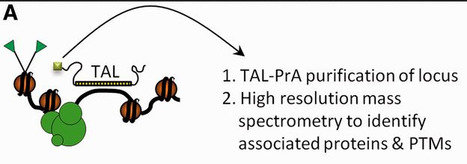
(via T. Schreiber. thx!) Byrum et al., 2013 Here, we describe an approach to isolate native chromatin sections without genomic engineering for label-free proteomic identification of associated proteins and histone post-translational modifications. A transcription activator-like (TAL) protein A fusion protein was designed to recognize a unique site in the yeast GAL1 promoter. The TAL-PrA fusion enabled chromatin affinity purification (ChAP) of a small section of native chromatin upstream from the GAL1 locus, permitting mass spectrometric (MS) identification of proteins and histone post-translational modifications regulating galactose-induced transcription. This TAL-ChAP-MS approach allows the biochemical isolation of a specific native genomic locus for proteomic studies and will provide for unprecedented objective insight into protein and epigenetic mechanisms regulating site-specific chromosome metabolism.
|
|
Scooped by
dromius
September 4, 2013 3:47 AM
|
(via T. Strauss, thanks!) Stella et al., 2013 Here, the crystal structure of AvrBs3 (residues 152-895, molecular mass 82 kDa) in complex with its target DNA sequence is presented, revealing a new mode of interaction with the initial thymine of the target sequence, together with an analysis of both the binding specificity and the thermodynamic properties of AvrBs3. This study quantifies the affinity and the specificity between AvrBs3 and its target DNA. Moreover, in vitro and in vivo analyses reveal that AvrBs3 does not show a strict nucleotide-binding preference for the nucleotide at the zero position of the DNA, widening the number of possible sequences that could be targeted by this scaffold.
|
|
Scooped by
dromius
August 28, 2013 9:34 AM
|
|
|
Scooped by
dromius
August 27, 2013 4:43 AM
|
(via T. Schreiber, thx!) Lamb et al., 2013 General guidelines for design of TALE DNA-binding domains suggest that the 5′-most base of the DNA sequence bound by the TALE (the N0 base) should be a thymine. We quantified the N0 requirement by analysis of the activities of TALE transcription factors (TALE-TF), TALE recombinases (TALE-R) and TALE nucleases (TALENs) with each DNA base at this position. In the absence of a 5′ T, we observed decreases in TALE activity up to >1000-fold in TALE-TF activity, up to 100-fold in TALE-R activity and up to 10-fold reduction in TALEN activity compared with target sequences containing a 5′ T. To develop TALE architectures that recognize all possible N0 bases, we used structure-guided library design coupled with TALE-R activity selections to evolve novel TALE N-terminal domains to accommodate any N0 base. A G-selective domain and broadly reactive domains were isolated and characterized. The engineered TALE domains selected in the TALE-R format demonstrated modularity and were active in TALE-TF and TALEN architectures. Evolved N-terminal domains provide effective and unconstrained TALE-based targeting of any DNA sequence as TALE binding proteins and designer enzymes.
|
|
Scooped by
dromius
August 5, 2013 5:05 AM
|
(via T. Schreiber, thx) Bacman et al, 2013 Mitochondrial diseases are commonly caused by mutated mitochondrial DNA (mtDNA), which in most cases coexists with wild-type mtDNA, resulting in mtDNA heteroplasmy. We have engineered transcription activator-like effector nucleases (TALENs) to localize to mitochondria and cleave different classes of pathogenic mtDNA mutations. Mitochondria-targeted TALEN (mitoTALEN) expression led to permanent reductions in deletion or point-mutant mtDNA in patient-derived cells, raising the possibility that these mitochondrial nucleases can be therapeutic for some mitochondrial diseases.
|
|
Scooped by
dromius
August 2, 2013 3:03 AM
|
Transcription activator-like (TAL) effectors from Xanthomonas pathogens act as transcription factors in plant cells; however, how TAL effectors activate host transcription is unknown. We found previously that TAL effectors of the citrus canker pathogen Xanthomonas citri, known as PthAs, bind the C-terminal domain of the citrus RNA polymerase II (CTD) and inhibit the activity of CsCYP, a CTD-associated cyclophilin that functions as a negative regulator of cell growth. Here we show that PthA4 specifically interacted with the citrus MAF1 (CsMAF1) protein, an RNA Pol III repressor that controls ribosome biogenesis and cell growth in yeast and humans. CsMAF1 bound the human RNA Pol III and rescued the yeast MAF1 mutant by repressing the tRNAHis transcription. Expression of PthA4 in the MAF1 mutant slightly restored the tRNAHis synthesis, indicating that PthA4 counteracts CsMAF1 activity. In addition, we show that sweet orange RNAi plants with reduced CsMAF1 levels displayed a dramatic increase in tRNA transcription and a marked phenotype of cell proliferation during canker formation. Conversely, CsMAF1 overexpression was detrimental to seedling growth, inhibited tRNA synthesis and attenuated canker development. Furthermore, we found that PthA4 is required to elicit cankers in sweet orange leaves and that depletion of CsMAF1 in X. citri-infected tissues correlates with the development of hyperplastic lesions and presence of PthA4. Considering that CsMAF1 and CsCYP function as canker suppressors in sweet orange, our data indicate that TAL effectors from X. citri target negative regulators of RNA Pol II and III to coordinately increase transcriptional of host genes involved in ribosome biogenesis and cell proliferation.
|
|
Scooped by
dromius
August 1, 2013 7:53 AM
|
(via T. Lahaye, thx) Xu et al, 2013 Myostatin (MSTN) is a negative regulator of skeletal muscle mass. Strategies to block myostatin signaling pathway have been extensively pursued to increase muscle mass in various disease settings including muscular dystrophy. Here, we report a new class of reagents based on transcription activator-like effector nucleases (TALENs) to disrupt myostatin expression at the genome level. We designed a pair of MSTN TALENs to target a highly conserved sequence in the coding region of the myostatin gene. We demonstrate that codelivery of these MSTN TALENs induce highly specific and efficient gene disruption in a variety of human, cattle, and mouse cells. Based upon sequence analysis, this pair of TALENs is expected to be functional in many other mammalian species. Moreover, we demonstrate that these MSTN TALENs can facilitate targeted integration of a mCherry expression cassette or a larger muscular dystrophy gene (dysferlin) expression cassette into the MSTN locus in mouse or human cells. Therefore, targeted editing of the myostatin gene using our highly specific and efficient TALEN pair would facilitate cell engineering, allowing potential use in translational research for cell-based therapy.

|
Suggested by
Tom Schreiber
July 24, 2013 11:48 AM
|
Streubel et al, 2013 Only a few plant target genes of TAL effectors have been identified, so far. Three plant SWEET genes encoding
putative sugar transporters are known to be induced by TAL effectors from rice-pathogenic Xanthomonas oryzae pv. oryzae (Xoo).
We predict and validate that expression of OsSWEET14 is induced by a novel TAL effector, Tal5, from an African Xoo strain. Artificial TAL effectors (ArtTALs) were constructed to individually target 20 SWEET orthologs in rice. They were used as designer virulence factors to study which rice SWEET genes can support Xoo virulence.
The Tal5 target box differs from those of the already known TAL effectors TalC, AvrXa7 and PthXo3, which also induce expression of OsSWEET14, suggesting evolutionary convergence on key targets. ArtTALs efficiently complemented an Xoo talC mutant, demonstrating that specific induction of OsSWEET14 is the key target of TalC. ArtTALs that specifically target
individual members of the rice SWEET family revealed three known and two novel SWEET genes to support bacterial virulence.
Our results demonstrate that five phylogenetically close SWEET proteins, which presumably act as sucrose transporters, can support Xoo virulence.
|
|
Scooped by
dromius
July 22, 2013 10:57 AM
|
(via T. Lahaye) Katsuyama et al, 2013 In reverse genetics, a gene’s function is elucidated through targeted modifications in the coding region or associated DNA cis-regulatory elements. To this purpose, recently developed customizable transcription activator-like effector nucleases (TALENs) have proven an invaluable tool, allowing introduction of double-strand breaks at predetermined sites in the genome. Here we describe a practical and efficient method for the targeted genome engineering in Drosophila. We demonstrate TALEN-mediated targeted gene integration and efficient identification of mutant flies using a traceable marker phenotype. Furthermore, we developed an easy TALEN assembly (easyT) method relying on simultaneous reactions of DNA Bae I digestion and ligation, enabling construction of complete TALENs from a monomer unit library in a single day. Taken together, our strategy with easyT and TALEN-plasmid microinjection simplifies mutant generation and enables isolation of desired mutant fly lines in the F1 generation.
|









I've just recently started working in the field (no pun intended) of plant genetic engineering and things are not quite so rosy as this makes out; plants are far more likely to repair dsDNA damage by a process called non-homologous end joining (NHEJ) than by homologous recombination (HR); the former process just sticks broken ends together, virtually willy-nilly, while the latter substitutes like-for-like, as determined by DNA sequence homology.
The ratio between NHEJ and HR in yeast, which does HR very effectively by all estimates, is probably about 1:1 - 50% of events are by HR. In plants, the ratio is more like 100:1 - ~1% of events are repaired by HR. The dreaded and annoying off-target effects in plants, therefore, are a far, far higher proportion of the total, so even a highly effective and very specifically targeting dsDNA break promoter like the Cas9/CRISPR system won't be able to prevent NHEJ from swamping the HR events. All is not lost, however, as there are ways to make the proetome of any organism dance to one's own tune, if one has the right instrument...