Your new post is loading...

|
Scooped by
dromius
May 6, 2015 5:54 AM
|
(via T. Lahaye, thx) Zhu et al, 2015 In this study, for exploring the mechanism of forkhead box O3(Foxo3) participating in regulation of the activation of primordial oocytes, Foxo3-targeted mice were generated by injection of mRNAs encoding transcription activator-like effector nucleases (TALENs) into mouse zygotes. The TALEN sites were designed with high conservative homologous region among pig, bovine, buffalo and mouse by commercial bio-companies. The TALENs mutagenic non-homologous end-joining (NHEJ) repair activity were determined to be 31.3% in human embryonic kidney 293T (HEK-293T) cells by dual luciferase reporter assay system. Then, we firstly injected TALEN-mRNAs into the cytoplasm of mouse zygotes by micromanipulation, and four of 48 mouse blastocysts were identified as mutation by sequencing. Subsequently, by the method of TALEN-mRNAs injected into the zygotes with pronucleus micromanipulation technique, we obtained seven Foxo3 mutants of 20 FVB/NJ backgrounds mice which were Foxo3-independent alleles with frameshift and deletion mutations. It was very interesting that all seven were heterozygous mutants (Foxo3−/+), and the gene mutagenesis rates of the mice reached 35%. The five Foxo3 mutant females were all infertile in the following 6 months after birth. The histological examination results showed that there were rare primordial follicles and primary follicles in the ovary of Foxo3 mutant compared to that of wide-type female mice. Moreover, one of two mutant males was subfertile and another was fertile normally. Those results suggested that the mutant of Foxo3 severely affected the fertile ability of female and perhaps male in some degree; furthermore, an even more efficient TALENs-based gene mutation method has been established to be poised to revolutionize the study of mouse and other species genetics
|
|
Scooped by
dromius
April 28, 2015 2:41 AM
|
Christian & Voytas 2015 Transcription activator-like (TAL) effectors are proteins produced by plant pathogens of the genus Xanthomonas. They are delivered to plant cells during infection and bind to specific plant gene promoters to activate transcription and promote bacterial infection. DNA binding by TAL effectors is mediated by an array of typically 14–24 repeats; each repeat is 34 amino acids in length and folds into a hairpin-like structure that contacts a single base in the target DNA. The TAL effector DNA-binding motif has proven highly modular, and custom TAL effector arrays can be made to recognize virtually any site in a plant genome, thereby providing a valuable reagent for genome manipulation. In particular, when TAL effector arrays are fused to a nuclease, they can create targeted double-strand breaks at a locus of interest. The repair of the breaks can be directed to achieve a variety of targeted genome modifications, with applications ranging from understanding plant gene function to creating novel traits in agronomically important crop species.
|
|
Scooped by
dromius
April 28, 2015 2:38 AM
|
Nicholson et al. 2015 Liver diseases are one of the leading causes of mortality in the world. The hepatic illnesses, which include inherited metabolic disorders, hemophilias and viral hepatitides, are complex and currently difficult to treat. The maturation of gene therapy has heralded new avenues for developing effective intervention for these diseases. DNA modification using gene therapy is now possible and available technology may be exploited to achieve long term therapeutic benefit. The ability to edit DNA sequences specifically is of paramount importance to advance gene therapy for application to liver diseases. Recent development of technologies that allow for this has resulted in rapid advancement of gene therapy to treat several chronic illnesses. Improvements in application of derivatives of zinc finger proteins (ZFPs), transcription activator-like effectors (TALEs), homing endonucleases (HEs) and clustered regularly interspaced palindromic repeats (CRISPR) and CRISPR associated (Cas) systems have been particularly important. These sequence-specific technologies may be used to modify genes permanently and also to alter gene transcription for therapeutic purposes. This review describes progress in development of ZFPs, TALEs, HEs and CRISPR/Cas for application to treating liver diseases.
|
|
Scooped by
dromius
April 21, 2015 8:33 AM
|
(via T. Lahaye, thx) Yu et al, 2014 Fatty acid derivatives, such as hydroxy fatty acids, fatty alcohols, fatty acid methyl/ethyl esters and fatty alka(e)nes, have a wide range of industrial applications including plastics, lubricants and fuels. Currently, these chemicals are obtained mainly through chemical synthesis, which is complex and costly, and their availability from natural biological sources is extremely limited. Metabolic engineering of microorganisms has provided a platform for effective production of these valuable biochemicals. Notably, synthetic biology-based metabolic engineering strategies have been extensively applied to refactor microorganisms for improved biochemical production. Here, we reviewed (i) the current status of metabolic engineering of microbes that produce fatty acid-derived valuable chemicals, and (ii) the recent progress of synthetic biology approaches that assist metabolic engineering, such as mRNA secondary structure engineering, sensor-regulator system, regulatable expression system, ultrasensitive input/output control system, and computer science-based design of complex gene circuits. Furthermore, key challenges and strategies were discussed. Finally, we concluded that synthetic biology provides useful metabolic engineering strategies for economically viable production of fatty acid-derived valuable chemicals in engineered microbes.
|
|
Scooped by
dromius
April 10, 2015 1:08 PM
|
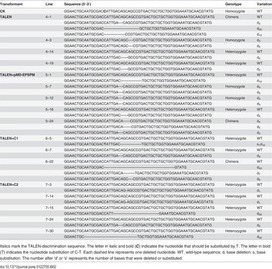
ALENto date, gene targeting (GT) in plants remains a formidable challenge. In the present study, we attempted to substitute a single base in situ on the rice OsEPSPS gene by co-transformation of TALEN with chimeric RNA/DNA oligonucleotides (COs), including different strand composition such as RNA/DNA (C1) or DNA/RNA (C2) but contained the same target base to be substituted. In contrast to zero GT event obtained by the co-transformation of TALEN with homologous recombination plasmid (HRP), we obtained one mutant showing target base substitution although accompanied by undesired deletion of 12 bases downstream the target site from the co-transformation of TALEN and C1. In addition to this typical event, we also obtained 16 mutants with different length of base deletions around the target site among 105 calli lines derived from transformation of TALEN alone (4/19) as well as co-transformation of TELAN with either HRP (5/30) or C1 (2/25) or C2 (5/31). Further analysis demonstrated that the homozygous gene-edited mutants without foreign gene insertion could be obtained in one generation. The induced mutations in transgenic generation were also capable to pass to the next generation stably. However, the genotypes of mutants did not segregate normally in T1 population, probably due to lethal mutations. Phenotypic assessments in T1 generation showed that the heterozygous plants with either one or three bases deletion on target sequence, called d1 and d3, were more sensitive to glyphosate and the heterozygous d1 plants had significantly lower seed-setting rate than wild-type.
|
|
Scooped by
dromius
April 7, 2015 4:01 AM
|
Kurata and Lin 2015 Dysregulation of microRNA-21 (miR-21) is associated with many types of cancer as well as with kidney and cardiovascular diseases. Aberrant expression of miR-21 leads to multiple phenotypic alterations including cellular proliferation, invasiveness, apoptosis, and fibrosis. We recently used transcription activator-like effector nucleases to engineer human cell lines with miR-21 null mutations. As expected, loss of miR-21 resulted in decrease cell proliferation and reduced transforming activity in culture and in xenografts. Besides an increase of apoptotic gene expression, miR-21 knockout cells also had significantly increased expression of genes involved in extracellular matrix interaction. Results from small RNA sequencing suggest that miR-21 deletion changed the microRNA expression profile. These results raise intriguing possibilities that loss of miR-21 expression may influence cellular interactions and that cells with long term miR-21 deficiency may compensate for the loss of this highly expressed microRNA by changing the abundance of alternate microRNAs or the AGO2 protein in order to maintain the microRNA-AGO2 homeostasis. Further characterization and utilization of miR-21 knockout human cells will shed new light on this pathologically important microRNA.
|
|
Scooped by
dromius
April 2, 2015 9:32 AM
|
(via T. Lahaye, thx) Miller et al, 2015 Transcription activator–like effector (TALE) proteins have gained broad appeal as a platform for targeted DNA recognition, largely owing to their simple rules for design. These rules relate the base specified by a single TALE repeat to the identity of two key residues (the repeat variable diresidue, or RVD) and enable design for new sequence targets via modular shuffling of these units. A key limitation of these rules is that their simplicity precludes options for improving designs that are insufficiently active or specific. Here we address this limitation by developing an expanded set of RVDs and applying them to improve the performance of previously described TALEs. As an extreme example, total conversion of a TALE nuclease to new RVDs substantially reduced off-target cleavage in cellular studies. By providing new RVDs and design strategies, these studies establish options for developing improved TALEs for broader application across medicine and biotechnology. This study extends the natural code by which transcription activation-like effector nucleases (TALENs) recognize DNA and uses the resulting expanded repertoire of repeat divariable residues (RVDs) to improve TALEN performance.
|
|
Scooped by
dromius
April 1, 2015 3:49 AM
|
(via T. Schreiber, thx) Forner et al, 2015 Transcription activator–like effector nucleases (TALENs) are custom-made bi-partite endonucleases that have recently been developed and applied for genome engineering in a wide variety of organisms. However, they have been only scarcely used in plants, especially for germline-modification. Here we report the efficient creation of small, germline-transmitted deletions in Arabidopsis thaliana via TALENs that were delivered by stably integrated transgenes. Using meristem specific promoters to drive expression of two TALEN arms directed at the CLV3 coding sequence, we observed very high phenotype frequencies in the T2 generation. In some instances, full CLV3 loss-of-function was already observed in the T1 generation, suggesting that transgenic delivery of TALENs can cause highly efficient genome modification. In contrast, constitutive TALEN expression in the shoot apical meristem (SAM) did not cause additional phenotypes and genome re-sequencing confirmed little off-target effects, demonstrating exquisite target specificity.
|
|
Scooped by
dromius
March 28, 2015 4:11 AM
|
Gao et al, 2015 The CO2 concentrating mechanism (CCM) is a key component of the carbon assimilation strategy of aquatic microalgae. Induced by limiting CO2 and tightly regulated, the CCM enables these microalgae to respond rapidly to varying environmental CO2 supplies and to perform photosynthetic CO2 assimilation in a cost-effective way. A functional CCM in eukaryotic algae requires Rubisco sequestration, rapid interconversion between CO2 and catalyzed by carbonic anhydrases (CAs), and active inorganic carbon (Ci) uptake. In the model microalga Chlamydomonas reinhardtii, a membrane protein HLA3 is proposed to be involved in active Ci uptake across the plasma membrane. In this study, we use an artificially designed transcription activator-like effector (dTALE) to activate the expression of HLA3. The successful activation of HLA3 expression demonstrates dTALE as a promising tool for gene-specific activation and investigation of gene function in Chlamydomonas. Activation of HLA3 expression in high CO2 acclimated cells, where HLA3 is not expressed, resulted in increased Ci accumulation and Ci-dependent photosynthetic O2 evolution specifically in very low CO2 concentrations, which confirms that HLA3 is indeed involved in Ci uptake, and suggests it is mainly associated with transport in very low CO2 concentrations, conditions in which active CO2 uptake is highly limited.
|
|
Scooped by
dromius
March 21, 2015 12:12 PM
|
Araki & Ishii 2015 Although genome-editing technologies facilitate efficient plant breeding without introducing a transgene, it is creating indistinct boundaries in the regulation of genetically modified organisms (GMOs). Rapid advances in plant breeding by genome-editing require the establishment of a new global policy for the new biotechnology, while filling the gap between process-based and product-based GMO regulations. In this Opinion article we review recent developments in producing major crops using genome-editing, and we propose a regulatory model that takes into account the various methodologies to achieve genetic modifications as well as the resulting types of mutation. Moreover, we discuss the future integration of genome-editing crops into society, specifically a possible response to the ‘Right to Know’ movement which demands labeling of food that contains genetically engineered ingredients.
|
|
Scooped by
dromius
March 19, 2015 4:17 AM
|
(via T. Schreiber, thx) Naitou et al, 2015 Transcription activator-like effector nucleases (TALENs) are artificial nucleases harboring a customizable DNA-binding domain and a FokI nuclease domain. The high specificity of the DNA-binding domain and the ease of design have enabled researchers to use TALENs for targeted mutagenesis in various organisms. Here, we report the development of TALEN-dependent targeted gene disruption in the crustacean Daphnia magna, the emerging model for ecological and toxicological genomics. First, a reporter transgene DsRed2 (EF1α-1::DsRed2) was targeted. Using the Golden Gate method with a GoldyTALEN scaffold, we constructed homodimeric and heterodimeric TALENs containing wild-type and ELD/KKR FokI domains. mRNAs that coded for either the customized homodimeric or heterodimeric TALENs were injected into one-cell-stage embryos. The high mortality of embryos injected with homodimeric TALEN mRNAs prevented us from detecting mutations. In contrast, embryos injected with heterodimeric TALEN mRNAs survived and 78%–87% of the adults lost DsRed2 fluorescence in a large portion of cells throughout the body. In addition, these adults produced non-fluorescent progenies, all of which carried mutations at the dsRed2 locus. We also tested heterodimeric TALENs targeted for the endogenous eyeless gene and found that biallelic mutations could be transmitted through germ line cells at a rate of up to 22%. Both somatic and heritable mutagenesis efficiencies of TALENs were higher than those of the CRISPR/Cas9 system that we recently developed. These results suggest that the TALEN system may efficiently induce heritable mutations into the target genes, which will further contribute to the progress of functional genomics in D. magna.
|
|
Scooped by
dromius
March 18, 2015 4:09 AM
|
(via T. Schreiber, thx) Ebina et al, 2015 DNA-editing technology has made it possible to rewrite genetic information in living cells. Human immunodeficiency virus (HIV) provirus, an integrated form of viral complementary DNA in host chromosomes, could be a potential target for this technology. We recently reported that HIV proviral DNA could be excised from the chromosomal DNA of HIV-based lentiviral DNA-transduced T cells after multiple introductions of a clustered regularly interspaced short palindromic repeat (CRISPR)/Cas9 endonuclease system targeting HIV long terminal repeats (LTR). Here, we generated a more efficient strategy that enables the excision of HIV proviral DNA using customized transcription activator-like effector nucleases (TALENs) targeting the same HIV LTR site. A single transfection of TALEN-encoding mRNA, prepared from in vitro transcription, resulted in more than 80% of lentiviral vector DNA being successfully removed from the T cell lines. Furthermore, we developed a lentiviral vector system that takes advantage of the efficient proviral excision with TALENs and permits the simple selection of gene-transduced and excised cells in T cell lines.
|
|
Scooped by
dromius
March 13, 2015 5:46 AM
|
(via T. Schreiber, thx) Martinez et al, 2015 Isogenic pluripotent stem cells are critical tools for studying human neurological diseases by allowing one to study the effects of a mutation in a fixed genetic background. Of particular interest are the spectrum of autism disorders, some of which are monogenic such as Timothy syndrome (TS); others are multigenic such as the microdeletion and microduplication syndromes of the 16p11.2 chromosomal locus. Here, we report engineered human embryonic stem cell (hESC) lines for modeling these two disorders using locus-specific endonucleases to increase the efficiency of homology-directed repair (HDR). We developed a system to: (1) computationally identify unique transcription activator-like effector nuclease (TALEN) binding sites in the genome using a new software program, TALENSeek, (2) assemble the TALEN genes by combining golden gate cloning with modified constructs from the FLASH protocol, and (3) test the TALEN pairs in an amplification-based HDR assay that is more sensitive than the typical non-homologous end joining assay. We applied these methods to identify, construct, and test TALENs that were used with HDR donors in hESCs to generate an isogenic TS cell line in a scarless manner and to model the 16p11.2 copy number disorder without modifying genomic loci with high sequence similarity.
|
|
|
Scooped by
dromius
May 6, 2015 5:52 AM
|
(via T. Lahaye, thx) Corrigan-Curray et al, 2015 Recently developed genome editing technologies such as zinc finger nucleases (ZFNs), transcription activator-like effector nucleases (TALENs), meganucleases, and clustered regularly interspaced short palindromic repeats (CRISPR) are being investigated as promising tools for human gene therapy. ZFNs are the first class of nucleases to have reached the clinic in phase I trials for HIV.2 One key issue that will have to be addressed as these technologies move into clinical trials is whether technology-specific preclinical evaluations are available that can establish safety. Although these are targeted editing tools, their precision, and specifically the degree to which there are off-target actions and the clinical implications of such activity are important questions for the field.
|
|
Scooped by
dromius
April 28, 2015 2:40 AM
|
Niu et al, 2015 Bacillus nematocida B16 is able to dominate in the intestines of the worm Caenorhabditis elegans in ‘Trojan horse’ pathogenic mechanism. The adp is one candidate gene which potentially play a vital role in the colonization from our previous random mutagenesis screening results. To analyse the functional role of this gene, we constructed the adp knockout mutant through customized transcription activator-like effectors nucleases (TALEN), which has been successfully used in yeasts, nematodes, zebrafish and human pluripotent cells. Here, we first time report this knockout method in bacteria on this paper. Bioassay experiments demonstrated that the adp knockout mutant of B16 showed considerably lower colonization activity, reduced numbers of intestines and less than 80% nematocidal activity compared with the wild-type strain when infected for 48 h. However, no obvious change on proteolytic activity was observed in the mutant. Conversely, the complementation of adp gene restored most of the above deficient phenotypes. These results indicated that the adp gene was involved in surface adhesion and played a comparatively important role in colonizing host nematodes. Moreover, TALENs successfully disrupt target genes in bacteria.
|
|
Scooped by
dromius
April 25, 2015 3:32 AM
|
Kubik & Summerer 2015 Epigenetic modification at the 5-position of cytosine is a key regulatory element of mammalian gene expression with important roles in genome stability, development, and disease. The repertoire of cytosine modifications has long been confined to only 5-methylcytosine (mC), but has recently been expanded by the discovery of 5-hydroxymethyl-, 5-formyl-, and 5-carboxylcytosine. These are key intermediates of active mC demethylation, but may additionally represent new epigenetic marks with distinct biological roles. This leap in chemical complexity of epigenetic cytosine modifications has not only created a pressing need for analytical approaches that enable to unravel their functions, it has also created new challenges for such analyses with respect to sensitivity and selectivity. The crucial step of any such approach that defines its analytic potential is the strategy used for the actual differentiation of the cytosine 5-modifications from one another, and this selectivity can in principle be provided either by chemoselective conversions or by selective, molecular recognition events. While the former strategy has been particularly successful for accurate genomic profiling of cytosine modifications in vitro, the latter strategy provides interesting perspectives for simplified profiling of natural, untreated DNA, as well as for emerging applications such as single cell analysis and the monitoring of cytosine modification in vivo. We here review analytical techniques for the deciphering of epigenetic cytosine modifications with an emphasis on approaches that are based on the direct molecular recognition of these modifications in DNA.
|
|
Scooped by
dromius
April 17, 2015 4:20 AM
|
Zhang et al, 2015 CRISPR/Cas9 and TALEN are currently the two systems of choice for genome editing. We have studied the efficiency of the TALEN system in rice as well as the nature and inheritability of TALEN-induced mutations and found important features of this technology. The N287C230 TALEN backbone resulted in low mutation rates (0–6.6%), but truncations in its C-terminal domain dramatically increased efficiency to 25%. In most transgenic T0 plants, TALEN produced a single prevalent mutation accompanied by a variety of low-frequency mutations. For each independent T0 plant, the prevalent mutation was present in most tissues within a single tiller as well as in all tillers examined, suggesting that TALEN-induced mutations occurred very early in the development of the shoot apical meristem. Multigenerational analysis showed that TALEN-induced mutations were stably transmitted to the T1 and T2 populations in a normal Mendelian fashion. In our study, the vast majority of TALEN-induced mutations (~81%) affected multiple bases and ~70% of them were deletions. Our results contrast with published reports for the CRISPR/Cas9 system in rice, in which the predominant mutations affected single bases and deletions accounted for only 3.3% of the overall mutations.
|
|
Scooped by
dromius
April 9, 2015 9:15 AM
|
(via T. Schreiber, thx) Brueckner et al, 2015
A library of synthetic promoters containing the binding site of a single designer Transcription Activator-Like Effector (dTALE) was constructed. The promoters contain a constant sequence, consisting of an eighteen base long dTALE-binding site and a TATA box, flanked by degenerate sequences of forty-nine bases downstream and nineteen bases upstream. Forty-three of these promoters were sequenced and tested in transient assays in Nicotiana benthamiana using a GUS reporter gene. The strength of expression of the promoters ranged from around 5% to almost 100% of the viral 35S promoter activity. We then demonstrated the utility of these promoters for metabolic engineering by transiently expressing three genes for the production of a plant diterpenoid in N. benthamiana. The simplicity of the promoter structure shows great promise for the development of genetic circuits, with wide application potential in plant synthetic biology and metabolic engineering. Search String Keywords: - synthetic promoters;
- transcription activator-like effectors;
- orthogonality;
- metabolic engineering, transient assays, Nicotiana benthamiana, terpenoid, synthetic biology;
- plants
Abstract A library of synthetic promoters containing the binding site of a single designer Transcription Activator-Like Effector (dTALE) was constructed. The promoters contain a constant sequence, consisting of an eighteen base long dTALE-binding site and a TATA box, flanked by degenerate sequences of forty-nine bases downstream and nineteen bases upstream. Forty-three of these promoters were sequenced and tested in transient assays in Nicotiana benthamiana using a GUS reporter gene. The strength of expression of the promoters ranged from around 5% to almost 100% of the viral 35S promoter activity. We then demonstrated the utility of these promoters for metabolic engineering by transiently expressing three genes for the production of a plant diterpenoid in N. benthamiana. The simplicity of the promoter structure shows great promise for the development of genetic circuits, with wide application potential in plant synthetic biology and metabolic engineering.
|
|
Scooped by
dromius
April 2, 2015 9:47 AM
|
(via T. Schreiber, thx) Wang et al, 2015 HIV latency is the foremost barrier to clearing HIV infection from patients. Reactivation of latent HIV-1 represents a promising strategy to deplete these viral reservoirs. Here, we report a novel approach to reactivate latent HIV-1 provirus using artificially designed transcription activator-like effector (TALE) fusion proteins containing a DNA-binding domain specifically targeting the HIV-1 promoter and the herpes simplex virus-based transcriptional activator VP64 domain. We engineered four TALE genes (TALE1–4) encoding TALE proteins, each specifically targeting different 20-bp DNA sequences within the HIV-1 promoter, and we constructed four TALE-VP64 expression vectors corresponding to TALE1–4. We found that TALE1-VP64 effectively reactivated HIV-1 gene expression in latently infected C11 and A10.6 cells. We further confirmed that TALE1-VP64 reactivated latent HIV-1 via specific binding to the HIV-LTR promoter. Moreover, we also found that TALE1-VP64 did not affect cell proliferation or cell cycle distribution. Taken together, our data demonstrated that TALE1-VP64 can specifically and effectively reactivate latent HIV-1 transcription, suggesting that this strategy may provide a novel approach for anti-HIV-1 latency therapy in the future.
|
|
Scooped by
dromius
April 2, 2015 4:52 AM
|
(via T. Schreiber, thx) Bacterial blight of rice is caused by the γ-proteobacterium Xanthomonas oryzae pv. oryzae, which utilizes a group of type III TAL (transcription activator-like) effectors to induce host gene expression and condition host susceptibility. Five SWEET genes are functionally redundant to support bacterial disease, but only two were experimentally proven targets of natural TAL effectors. Here, we report the identification of the sucrose transporter gene OsSWEET13 as the disease susceptibility gene for PthXo2 and the existence of cryptic recessive resistance to PthXo2-dependent X. oryzae pv. oryzae due to promoter variations of OsSWEET13 in japonica rice. PthXo2-containing strains induce OsSWEET13 in indica rice IR24 due to the presence of an unpredicted and undescribed effector binding site not present in the alleles in japonica rice Nipponbare and Kitaake. The specificity of effector-associated gene induction and disease susceptibility is attributable to a single nucleotide polymorphism (SNP), which is also found in a polymorphic allele of OsSWEET13 known as the recessive resistance gene xa25 from the rice cultivar Minghui 63. The mutation of OsSWEET13 with CRISPR/Cas9 technology further corroborates the requirement of OsSWEET13 expression for the state of PthXo2-dependent disease susceptibility to X. oryzae pv. oryzae. Gene profiling of a collection of 104 strains revealed OsSWEET13 induction by 42 isolates of X. oryzae pv. oryzae. Heterologous expression of OsSWEET13 in Nicotiana benthamiana leaf cells elevates sucrose concentrations in the apoplasm. The results corroborate a model whereby X. oryzae pv. oryzae enhances the release of sucrose from host cells in order to exploit the host resources.
|
|
Scooped by
dromius
April 1, 2015 3:44 AM
|
(via T. Schreiber, thx) Basu et al, 2015 Conventional control strategies for mosquito-borne pathogens such as malaria and dengue are now being complemented by the development of transgenic mosquito strains reprogrammed to generate beneficial phenotypes such as conditional sterility or pathogen resistance. The widespread success of site-specific nucleases such as transcription activator-like effector nucleases (TALENs) and clustered regularly interspaced short palindromic repeats (CRISPR)/Cas9 in model organisms also suggests that reprogrammable gene drive systems based on these nucleases may be capable of spreading such beneficial phenotypes in wild mosquito populations. Using the mosquito Aedes aegypti, we determined that mutations in the FokI domain used in TALENs to generate obligate heterodimeric complexes substantially and significantly reduce gene editing rates. We found that CRISPR/Cas9-based editing in the mosquito Ae. aegypti is also highly variable, with the majority of guide RNAs unable to generate detectable editing. By first evaluating candidate guide RNAs using a transient embryo assay, we were able to rapidly identify highly effective guide RNAs; focusing germ line-based experiments only on this cohort resulted in consistently high editing rates of 24–90%. Microinjection of double-stranded RNAs targeting ku70 or lig4, both essential components of the end-joining response, increased recombination-based repair in early embryos as determined by plasmid-based reporters. RNAi-based suppression of Ku70 concurrent with embryonic microinjection of site-specific nucleases yielded consistent gene insertion frequencies of 2–3%, similar to traditional transposon- or ΦC31-based integration methods but without the requirement for an initial docking step. These studies should greatly accelerate investigations into mosquito biology, streamline development of transgenic strains for field releases, and simplify the evaluation of novel Cas9-based gene drive systems.
|
|
Scooped by
dromius
March 24, 2015 3:21 AM
|
Zhu et al, 2015 In this study, for exploring the mechanism of forkhead box O3(Foxo3) participating in regulation of the activation of primordial oocytes, Foxo3-targeted mice were generated by injection of mRNAs encoding transcription activator-like effector nucleases (TALENs) into mouse zygotes. The TALEN sites were designed with high conservative homologous region among pig, bovine, buffalo and mouse by commercial bio-companies. The TALENs mutagenic non-homologous end-joining (NHEJ) repair activity were determined to be 31.3% in human embryonic kidney 293T (HEK-293T) cells by dual luciferase reporter assay system. Then, we firstly injected TALEN-mRNAs into the cytoplasm of mouse zygotes by micromanipulation, and four of 48 mouse blastocysts were identified as mutation by sequencing. Subsequently, by the method of TALEN-mRNAs injected into the zygotes with pronucleus micromanipulation technique, we obtained seven Foxo3 mutants of 20 FVB/NJ backgrounds mice which were Foxo3-independent alleles with frameshift and deletion mutations. It was very interesting that all seven were heterozygous mutants (Foxo3−/+), and the gene mutagenesis rates of the mice reached 35%. The five Foxo3 mutant females were all infertile in the following 6 months after birth. The histological examination results showed that there were rare primordial follicles and primary follicles in the ovary of Foxo3 mutant compared to that of wide-type female mice. Moreover, one of two mutant males was subfertile and another was fertile normally. Those results suggested that the mutant of Foxo3 severely affected the fertile ability of female and perhaps male in some degree; furthermore, an even more efficient TALENs-based gene mutation method has been established to be poised to revolutionize the study of mouse and other species genetics.
|
|
Scooped by
dromius
March 19, 2015 7:01 PM
|
Schreiber et al, 2015 AvrBs3, the archetype of the family of transcription activator-like (TAL) effectors from phytopathogenic Xanthomonas bacteria, is translocated by the type III secretion system into the plant cell. AvrBs3 localizes to the plant cell nucleus and activates the transcription of target genes. Crucial for this is the central AvrBs3 region of 17.5 34-amino acid repeats that functions as a DNA-binding domain mediating recognition in a “one-repeat-to-one base pair” manner. Although AvrBs3 forms homodi
|
|
Scooped by
dromius
March 18, 2015 4:10 AM
|
(via T. Schreiber, thx) Tokuda & Furuse 2015 Tight junctions (TJs) regulate the movements of substances through the paracellular pathway, and claudins are major determinants of TJ permeability. Claudin-2 forms high conductive cation pores in TJs. The suppression of claudin-2 expression by RNA interference in Madin-Darby canine kidney (MDCK) II cells (a low-resistance strain of MDCK cells) was shown to induce a three-fold increase in transepithelial electrical resistance (TER), which, however, was still lower than in high-resistance strain
|
|
Scooped by
dromius
March 15, 2015 7:45 PM
|
Yang et al, 2015 The nuclease-based gene editing tools are rapidly transforming capabilities for altering the genome of cells and organisms with great precision and in high throughput studies. A major limitation in application of precise gene editing lies in lack of sensitive and fast methods to detect and characterize the induced DNA changes. Precise gene editing induces double-stranded DNA breaks that are repaired by error-prone non-homologous end joining leading to introduction of insertions and deletions (indels) at the target site. These indels are often small and difficult and laborious to detect by traditional methods. Here we present a method for fast, sensitive and simple indel detection that accurately defines indel sizes down to ±1 bp. The method coined IDAA for Indel Detection by Amplicon Analysis is based on tri-primer amplicon labelling and DNA capillary electrophoresis detection, and IDAA is amenable for high throughput analysis.
|