Your new post is loading...

|
Scooped by
dromius
August 3, 2015 5:51 AM
|
(via T. Lahaye, thx) Zhang et al, 2015 Transcription activation-like (TAL) effectors are bacterial type III secretion proteins that function as transcription factors in plants during Xanthomonas/plant interactions, conditioning either host susceptibility and/or host resistance. Three types of TAL effector associated resistance (R) genes have been characterized - recessive, dominant non-transcriptional and dominant TAL effector-dependent transcriptional based resistance. Here, we discuss the last type of R genes, whose functions are dependent on direct TAL effector binding to discrete effector binding elements in the promoters. Only five of the so-called executor R genes have been cloned, and commonalities are not clear. We have placed the protein products in two groups for conceptual purposes. Group 1 consists solely of the protein from pepper, BS3, which is predicted to have catalytic function on the basis of homology to a large conserved protein family. Group 2 consists of BS4C-R, XA27, XA10, and XA23, all of which are relatively short proteins from pepper or rice with multiple potential transmembrane domains. Group 2 members have low sequence similarity to proteins of unknown function in closely related species. Firm predictions await further experimentation on these interesting new members to the R gene repertoire, which have potential broad application in new strategies for disease resistance.
|
|
Scooped by
dromius
July 24, 2015 5:10 AM
|
(via T. Lahaye, thx) Budhagatapalli et al, 2015 Transcription activator-like effector nucleases (TALENs) open up new opportunities for targeted mutagenesis in eukaryotic genomes. Similar to zinc-finger nucleases, sequence-specific DNA-binding domains can be fused with effector domains like the nucleolytically active part of FokI in order to induce double strand breaks (DSBs) and thereby modify the host genome on a predefined target site via non-homologous end joining. More sophisticated applications of programmable endonucleases involve the use of a DNA repair template facilitating homology-directed repair (HDR) so as to create predefined rather than random DNA sequence modifications. The aim of this study was to demonstrate the feasibility of editing the barley genome by precisely modifying a defined target DNA sequence resulting in a predicted alteration of gene function. We used gfp-specific TALENs along with a repair template that, via HDR, facilitates conversion of gfp into yfp which is associated with a single amino acid exchange in the gene product. As a result of co-bombardment of leaf epidermis, we detected YFP accumulation in about 3 out of 100 mutated cells. The creation of a functional yfp gene via HDR was unambiguously confirmed by sequencing of the respective genomic site. Predictable genetic modifications comprising only a few genomic base pairs rather than entire genes are of particular practical relevance, because they might not fall under the European regulation of genetically engineered organisms. In addition to the allele conversion accomplished in planta, a readily screenable marker system is introduced that might be useful for optimization approaches in the field of genome editing.
|
|
Scooped by
dromius
July 18, 2015 8:08 PM
|
Perez-Quintero et al 2015 Transcription Activator-Like (TAL) effectors from Xanthomonas plant pathogenic bacteria can bind to the promoter region of plant genes and induce their expression. DNA-binding specificity is governed by a central domain made of nearly identical repeats, each determining the recognition of one base pair via two amino acid residues (a.k.a. Repeat Variable Di-residue, or RVD). Knowing how TAL effectors differ from each other within and between strains would be useful to infer functional and evolutionary relations, but their repetitive nature precludes reliable use of traditional alignment methods. The suite QueTAL was therefore developed to offer tailored tools for comparison of TAL effector genes. The program DisTAL considers each repeat as a unit, transforms a TAL effector sequence into a sequence of coded repeats and makes pair-wise alignments between these coded sequences to construct trees. The program FuncTAL is aimed at finding TAL effectors with similar DNA-binding capabilities. It calculates correlations between position weight matrices obtained from the RVD sequence, and builds trees based on these correlations. The programs accurately represented phylogenetic and functional relations between TAL effectors using either simulated or literature-curated data. When using the programs on a large set of TAL effector sequences, the DisTAL tree largely reflected the expected species phylogeny. In contrast, FuncTAL showed that TAL effectors with similar binding capabilities can be found between phylogenetically distant taxa. This suite will help users to rapidly analyse any TAL effector genes of interest and compare them to other available TAL genes and should improve our understanding of TAL effectors evolution. It is available at http://bioinfo-web.mpl.ird.fr/cgi-bin2/quetal/quetal.cgi.
|
|
Scooped by
dromius
July 14, 2015 5:29 AM
|
Hutin et al. 2015 Many plant-pathogenic xanthomonads rely on Transcription Activator-Like (TAL) effectors to colonize their host. This particular family of type III effectors functions as specific plant transcription factors via a programmable DNA-binding domain. Upon binding to the promoters of plant disease susceptibility genes in a sequence-specific manner, the expression of these host genes is induced. However, plants have evolved specific strategies to counter the action of TAL effectors and confer resistance. One mechanism is to avoid the binding of TAL effectors by mutations of their DNA binding sites, resulting in resistance by loss-of-susceptibility. This article reviews our current knowledge of the susceptibility hubs targeted by Xanthomonas TAL effectors, possible evolutionary scenarios for plants to combat the pathogen with loss-of-function alleles, and how this knowledge can be used overall to develop new pathogen-informed breeding strategies and improve crop resistance.
|
|
Scooped by
dromius
June 30, 2015 5:59 AM
|
(via T. Lahaye, thx) Xu & O'Brochta 2015 Genetic technologies based on transposon-mediated transgenesis along with several recently developed genome-editing technologies have become the preferred methods of choice for genetically manipulating many organisms. The silkworm, Bombyx mori, is a Lepidopteran insect of great economic importance because of its use in silk production and because it is a valuable model insect that has greatly enhanced our understanding of the biology of insects, including many agricultural pests. In the past 10 years, great advances have been achieved in the development of genetic technologies in B. mori, including transposon-based technologies that rely on piggyBac-mediated transgenesis and genome-editing technologies that rely on protein- or RNA-guided modification of chromosomes. The successful development and application of these technologies has not only facilitated a better understanding of B. mori and its use as a silk production system, but also provided valuable experiences that have contributed to the development of similar technologies in non-model insects. This review summarizes the technologies currently available for use in B. mori, their application to the study of gene function and their use in genetically modifying B. mori for biotechnology applications. The challenges, solutions and future prospects associated with the development and application of genetic technologies in B. mori are also discussed.
|
|
Scooped by
dromius
June 16, 2015 5:48 AM
|
Rogers et al, 2015 Transcription activator-like effector (TALE) proteins recognize DNA using a seemingly simple DNA-binding code, which makes them attractive for use in genome engineering technologies that require precise targeting. Although this code is used successfully to design TALEs to target specific sequences, off-target binding has been observed and is difficult to predict. Here we explore TALE–DNA interactions comprehensively by quantitatively assaying the DNA-binding specificities of 21 representative TALEs to ~5,000–20,000 unique DNA sequences per protein using custom-designed protein-binding microarrays (PBMs). We find that protein context features exert significant influences on binding. Thus, the canonical recognition code does not fully capture the complexity of TALE–DNA binding. We used the PBM data to develop a computational model, Specificity Inference For TAL-Effector Design (SIFTED), to predict the DNA-binding specificity of any TALE. We provide SIFTED as a publicly available web tool that predicts potential genomic off-target sites for improved TALE design.
|
|
Scooped by
dromius
May 29, 2015 10:35 AM
|
(via T. Schreiber, thx) Rai et al, 2015 A limiting factor in synthetic gene circuit design is the number of independent control elements that can be combined together in a single system. Here, we present RiboTALEs, a new class of inducible repressors that combine the specificity of TALEs with the ability of riboswitches to recognize exogenous signals and differentially control protein abundance. We demonstrate the capacity of RiboTALEs, constructed through different combinations of TALE proteins and riboswitches, to rapidly and reproducibly control the expression of downstream targets with a dynamic range of 243.7 ± 17.6-fold, which is adequate for many biotechnological applications.
|
|
Scooped by
dromius
May 27, 2015 4:08 AM
|
(via T. Lahaye, thx) Van Nieuwenhuysen et al, 2015 Truncating mutations in the tumor suppressor gene adenomatous polyposis coli (APC) are the initiating step in the vast majority of sporadic colorectal cancers, and they underlie familial adenomatous polyposis (FAP) syndromes. Modeling of APC-driven tumor formation in the mouse has contributed substantially to our mechanistic understanding of the associated disease, but additional models are needed to explore therapeutic opportunities and overcome current limitations of mouse models. We report on a novel and penetrant genetic cancer model in Xenopus tropicalis, an aquatic tetrapod vertebrate with external development, diploid genome and short life cycle. Tadpoles and froglets derived from embryos injected with TAL effector nucleases targeting the apc gene rapidly developed intestinal hyperplasia and other neoplasms observed in FAP patients, including desmoid tumors and medulloblastomas. Bi-allelic apc mutations causing frame shifts were detected in the tumors, which displayed activation of the Wnt/β-catenin pathway and showed increased cellular proliferation. We further demonstrate that simultaneous double bi-allelic mutation of apc and a non-relevant gene is possible in the neoplasias, opening the door for identification and characterization of effector or modifier genes in tumors expressing truncated apc. Our results demonstrate the power of modeling human cancer in Xenopus tropicalis using mosaic TALEN-mediated bi-allelic gene disruption.
|
|
Scooped by
dromius
May 22, 2015 4:24 AM
|
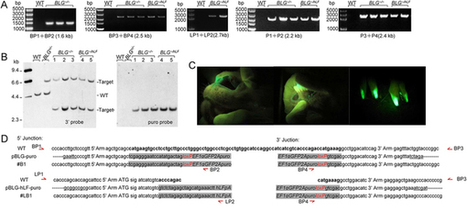
(via T. Schreiber. thx) Cui et al, 2015 β-Lactoglobulin (BLG) is a major goat’s milk allergen that is absent in human milk. Engineered endonucleases, including transcription activator-like effector nucleases (TALENs) and zinc-finger nucleases, enable targeted genetic modification in livestock. In this study, TALEN-mediated gene knockout followed by gene knock-in were used to generate BLG knockout goats as mammary gland bioreactors for large-scale production of human lactoferrin (hLF). We introduced precise genetic modifications in the goat genome at frequencies of approximately 13.6% and 6.09% for the first and second sequential targeting, respectively, by using targeting vectors that underwent TALEN-induced homologous recombination (HR). Analysis of milk from the cloned goats revealed large-scale hLF expression or/and decreased BLG levels in milk from heterozygous goats as well as the absence of BLG in milk from homozygous goats. Furthermore, the TALEN-mediated targeting events in somatic cells can be transmitted through the germline after SCNT. Our result suggests that gene targeting via TALEN-induced HR may expedite the production of genetically engineered livestock for agriculture and biomedicine.
|
|
Scooped by
dromius
May 21, 2015 4:16 AM
|
Luo et al, 2015 Genetically modified pigs are becoming an invaluable animal model for agricultural, pharmaceutical, and biomedical applications. Unlike traditional transgenesis, which is accomplished by randomly inserting an exogenous transgene cassette into the natural chromosomal context, targeted genome editing confers precisely editing (e.g., mutations or indels) or insertion of a functional transgenic cassette to user-designed loci. Techniques for targeted genome engineering are growing dramatically and include, e.g., zinc-finger nucleases (ZFNs), transcription activator-like effector nucleases (TALENs), and clustered regularly interspaced short palindromic repeats (CRISPR)/CRISPR-associated (Cas) systems. These systems provide enormous potential applications. In this chapter, we review the use of TALENs for targeted genome editing with focus on their application in pigs. In addition, a brief protocol, including construction of sequence-specific TALENs, delivery of TALENs into primary porcine fibroblasts, and detection of TALEN-mediated cleavage, is described. This chapter is useful for scientists who are inexperienced with TALEN engineering of porcine cells as well as of other large animals.
|
|
Scooped by
dromius
May 19, 2015 2:24 AM
|
(via T. Lahaye, thx) Mock et al, 2015 Homozygosity for a natural deletion variant of the HIV-coreceptor molecule CCR5, CCR5Δ32, confers resistance toward HIV infection. Allogeneic stem cell transplantation from a CCR5Δ32-homozygous donor has resulted in the first cure from HIV (‘Berlin patient’). Based thereon, genetic disruption of CCR5 using designer nucleases was proposed as a promising HIV gene-therapy approach. Here we introduce a novel TAL-effector nuclease, CCR5-Uco-TALEN that can be efficiently delivered into T cells by mRNA electroporation, a gentle and truly transient gene-transfer technique. CCR5-Uco-TALEN mediated high-rate CCR5 knockout (>90% in PM1 and >50% in primary T cells) combined with low off-target activity, as assessed by flow cytometry, next-generation sequencing and a newly devised, very convenient gene-editing frequency digital-PCR (GEF-dPCR). GEF-dPCR facilitates simultaneous detection of wild-type and gene-edited alleles with remarkable sensitivity and accuracy as shown for the CCR5 on-target and CCR2 off-target loci. CCR5-edited cells were protected from infection with HIV-derived lentiviral vectors, but also with the wild-type CCR5-tropic HIV-1BaL strain. Long-term exposure to HIV-1BaL resulted in almost complete suppression of viral replication and selection of CCR5-gene edited T cells. In conclusion, we have developed a novel TALEN for the targeted, high-efficiency knockout of CCR5 and a useful dPCR-based gene-editing detection method.
|
|
Scooped by
dromius
May 8, 2015 5:59 AM
|
Mueller et al, 2015 In Arabidopsis thaliana a number of defense-related metabolites are synthesized via indole-3-acetonitrile (IAN), including camalexin and indole-3-carboxylic acid (ICOOH) derivatives. CYP71A13 is a key enzyme for camalexin biosynthesis and catalyzes the conversion of indole-3-acetaldoxime (IAOx) to IAN. The CYP71A13 gene is located in tandem with its close homolog CYP71A12, also encoding an IAOx dehydratase. However, for CYP71A12 indole-3-carbaldehyde (ICHO) and cyanide were identified as major reaction products. To clarify CYP71A12 function in vivo and to better understand the IAN metabolism, we generated two cyp71a12 cyp71a13 double knockout mutant lines. CYP71A12-specific Transcription Activator-Like Effector nucleases (TALENs) were introduced into the cyp71a13 background and very efficient somatic mutagenesis was achieved. We observed stable transmission of the cyp71a12 mutation to the following generations, which is a major challenge for targeted mutagenesis in Arabidopsis. In contrast to cyp71a13 plants, in which camalexin accumulation is partially reduced, double mutants synthesized only traces of camalexin, demonstrating that CYP71A12 contributes to camalexin biosynthesis in leaf tissue. A major role of CYP71A12 was identified for inducible biosynthesis of ICOOH. Specifically, the ICOOH methyl ester was reduced to 12% of wild type level in AgNO3 challenged cyp71a12 leaves. In contrast, ICHO derivatives apparently are synthesized via alternative pathways, such as degradation of indole glucosinolates. Based on these results we present a model for this surprisingly complex metabolic network with multiple IAN sources and channeling of IAOx-derived IAN into camalexin biosynthesis. In conclusion, TALEN-mediated mutation is a powerful tool for functional analysis of tandem genes in secondary metabolism.
|
|
Scooped by
dromius
May 6, 2015 5:59 AM
|
(via T. Lahaye, thx) Ul Ain et al, 2015 Gene therapy by engineered nucleases is a genetic intervention being investigated for curing the hereditary disorders by targeting selected genes with specific nucleotides for establishment, suppression, abolishment of a function or correction of mutation. Here, we review the fast developing technology of targeted genome engineering using site specific programmable nucleases zinc finger nucleases (ZFNs), transcription activator like nucleases (TALENs) and cluster regulatory interspaced short palindromic repeat/CRISPR associated proteins (CRISPR/Cas) based RNA-guided DNA endonucleases (RGENs) and their different characteristics including pros and cons of genome modifications by these nucleases. We have further discussed different types of delivery methods to induce gene editing, novel development in genetic engineering other than nucleases and future prospects.
|
|
|
Scooped by
dromius
July 24, 2015 5:12 AM
|
(via T. Schreiber, thx) Vasileva et al, 2015 Human pluripotent stem cells provide a versatile platform for regenerative studies, drug testing and disease modeling. That the expression of only four transcription factors, Oct4, Klf4, Sox2 and c-Myc (OKSM), is sufficient for generation of induced pluripotent stem cells (iPSCs) from differentiated somatic cells has revolutionized the field and also highlighted the importance of OKSM as targets for genome editing. A number of novel genome-editing systems have been developed recently. In this review, we focus on successful applications of several such systems for generation of iPSCs. In particular, we discuss genome-editing systems based on zinc-finger fusion proteins (ZFs), transcription activator-like effectors (TALEs) and an RNA-guided DNA-specific nuclease, Cas9, derived from the bacterial defense system against viruses that utilizes clustered regularly interspaced short palindromic repeats (CRISPR).
|
|
Scooped by
dromius
July 22, 2015 1:58 AM
|
Lee et al. 2015 Genome engineering, or alternatively called ‘genome editing,’ has been one of the rapidly growing fields of biotechnology for the last few decades. Scientists are now making targeted modifications of genome in any organism of choice with improved precision. In this mini review, we provide basic, fundamental theory and mechanisms of the well-known genome editing technologies such as zinc-finger nucleases (ZFNs), transcription activator-like effector nucleases (TALENs) and clustered regulatory interspaced short palindromic repeats (CRISPR)/Cas9 system. We also discuss its role in the field of genetic research and highlight its therapeutic potential as an indispensable tool for the development of personalized medicine to come in near future.
|
|
Scooped by
dromius
July 16, 2015 1:38 PM
|
Boettcher & McManus 2015 The most widely used approach for defining gene function is to reduce or completely disrupt its normal expression. For over a decade, RNAi has ruled the lab, offering a magic bullet to disrupt gene expression in many organisms. However, new biotechnological tools—specifically CRISPR-based technologies—have become available and are squeezing out RNAi dominance in mammalian cell studies. These seemingly competing technologies leave research investigators with the question: “Which technology should I use in my experiment?” This review offers a practical resource to compare and contrast these technologies, guiding the investigator when and where to use this fantastic array of powerful tools.

|
Suggested by
Nick Booher
July 3, 2015 2:32 AM
|
(via Nick Booher, thx) Wilkins et al 2015 Xanthomonas oryzae pv. oryzicola (Xoc) causes the increasingly important disease bacterial leaf streak of rice (BLS) in part by type III delivery of repeat-rich transcription activator-like (TAL) effectors to upregulate host susceptibility genes. By pathogen whole genome, single molecule, real-time sequencing and host RNA sequencing, we compared TAL effector content and rice transcriptional responses across 10 geographically diverse Xoc strains. TAL effector content is surprisingly conserved overall, yet distinguishes Asian from African isolates. Five TAL effectors are conserved across all strains. In a prior laboratory assay in rice cv. Nipponbare, only two contributed to virulence in strain BLS256 but the strict conservation indicates all five may be important, in different rice genotypes or in the field. Concatenated and aligned, TAL effector content across strains largely reflects relationships based on housekeeping genes, suggesting predominantly vertical transmission. Rice transcriptional responses did not reflect these relationships, and on average, only 28% of genes upregulated and 22% of genes downregulated by a strain are up- and downregulated (respectively) by all strains. However, when only known TAL effector targets were considered, the relationships resembled those of the TAL effectors. Toward identifying new targets, we used the TAL effector-DNA recognition code to predict effector binding elements in promoters of genes upregulated by each strain, but found that for every strain, all upregulated genes had at least one. Filtering with a classifier we developed previously decreases the number of predicted binding elements across the genome, suggesting that it may reduce false positives among upregulated genes. Applying this filter and eliminating genes for which upregulation did not strictly correlate with presence of the corresponding TAL effector, we generated testable numbers of candidate targets for four of the five strictly conserved TAL effectors.
|
|
Scooped by
dromius
June 16, 2015 10:19 AM
|
(via T. Lahaye, thx) Kim et al, 2015 Group O D-negative blood cells are universal donors in transfusion medicine and methods for converting other blood groups into this universal donor group have been researched. However, conversion of D-positive cells into D-negative is yet to be achieved, although conversion of group A or B cells into O cells has been reported. The Rh D blood group is determined by the RHD gene, which encodes a 12-transmembrane domain protein. Here we convert Rh D-positive erythroid progenitor cells into D-negative cells using RHD-targeting transcription activator-like effector nucleases (TALENs). After transfection of TALEN-encoding plasmids, RHD-knockout clones are obtained. Erythroid-lineage cells differentiated from these knockout erythroid progenitor cells do not agglutinate in the presence of anti-D reagents and do not express D antigen, as assessed using flow cytometry. Our programmable nuclease-induced blood group conversion opens new avenues for compatible donor cell generation in transfusion medicine.
|
|
Scooped by
dromius
June 1, 2015 9:08 AM
|
(via T. Schreiber, thx) Cuculis et al, 2015 Transcription activator-like effector (TALE) proteins are a class of programmable DNA-binding proteins for which the fundamental mechanisms governing the search process are not fully understood. Here we use single-molecule techniques to directly observe TALE search dynamics along DNA templates. We find that TALE proteins are capable of rapid diffusion along DNA using a combination of sliding and hopping behaviour, which suggests that the TALE search process is governed in part by facilitated diffusion. We also observe that TALE proteins exhibit two distinct modes of action during the search process—a search state and a recognition state—facilitated by different subdomains in monomeric TALE proteins. Using TALE truncation mutants, we further demonstrate that the N-terminal region of TALEs is required for the initial non-specific binding and subsequent rapid search along DNA, whereas the central repeat domain is required for transitioning into the site-specific recognition state.
|
|
Scooped by
dromius
May 28, 2015 6:10 PM
|
(via T. Lahaye, thx) Li et al, 2015 Biopharmaceutical glycoproteins produced in plants carry N-glycans with plant-specific residues core α(1,3)-fucose and β(1,2)-xylose, which can significantly impact the activity, stability and immunogenicity of biopharmaceuticals. In this study, we have employed sequence-specific transcription activator-like effector nucleases (TALENs) to knock out two α(1,3)-fucosyltransferase (FucT) and the two β(1,2)-xylosyltransferase (XylT) genes within Nicotiana benthamiana to generate plants with improved capacity to produce glycoproteins devoid of plant-specific residues. Among plants regenerated from N. benthamiana protoplasts transformed with TALENs targeting either the FucT or XylT genes, 50% (80 of 160) and 73% (94 of 129) had mutations in at least one FucT or XylT allele, respectively. Among plants regenerated from protoplasts transformed with both TALEN pairs, 17% (18 of 105) had mutations in all four gene targets, and 3% (3 of 105) plants had mutations in all eight alleles comprising both gene families; these mutations were transmitted to the next generation. Endogenous proteins expressed in the complete knockout line had N-glycans that lacked β(1,2)-xylose and had a significant reduction in core α(1,3)-fucose levels (40% of wild type). A similar phenotype was observed in the N-glycans of a recombinant rituximab antibody transiently expressed in the homozygous mutant plants. More importantly, the most desirable glycoform, one lacking both core α(1,3)-fucose and β(1,2)-xylose residues, increased in the antibody from 2% when produced in the wild-type line to 55% in the mutant line. These results demonstrate the power of TALENs for multiplexed gene editing. Furthermore, the mutant N. benthamiana lines provide a valuable platform for producing highly potent biopharmaceutical products.
|
|
Scooped by
dromius
May 27, 2015 4:06 AM
|
(via T. Schreiber, thx) Li et al, 2015 An important goal of synthetic biology is the rational design and predictable implementation of synthetic gene circuits using standardized and interchangeable parts. However, engineering of complex circuits in mammalian cells is currently limited by the availability of well-characterized and orthogonal transcriptional repressors. Here, we introduce a library of 26 reversible transcription activator–like effector repressors (TALERs) that bind newly designed hybrid promoters and exert transcriptional repression through steric hindrance of key transcriptional initiation elements. We demonstrate that using the input-output transfer curves of our TALERs enables accurate prediction of the behavior of modularly assembled TALER cascade and switch circuits. We also show that TALER switches using feedback regulation exhibit improved accuracy for microRNA-based HeLa cancer cell classification versus HEK293 cells. Our TALER library is a valuable toolkit for modular engineering of synthetic circuits, enabling programmable manipulation of mammalian cells and helping elucidate design principles of coupled transcriptional and microRNA-mediated post-transcriptional regulation.
|
|
Scooped by
dromius
May 21, 2015 4:17 AM
|
Chen & Gao 2015 Recent advances in genome engineering provide plant biologists with an important tool for understanding gene function and developing new traits. Three powerful techniques, including zinc-finger nucleases (ZFNs), transcription activator-like effector nucleases (TALENs), and RNA-guided endonucleases (RGENs), have been developed for targeted DNA sequence modifications. These sequence-specific nucleases create double-strand breaks (DSBs) in the genomic target sites that are primarily repaired by the nonhomologous end-joining (NHEJ) or homologous recombination (HR) pathways, which can be employed to achieve targeted genome modifications such as gene mutations, insertions, replacements, or chromosome rearrangements. Considerable efforts have been made to understand the mechanisms governing gene targeting and establish an efficient DNA delivery system to achieve precise gene targeting in plants.
|
|
Scooped by
dromius
May 19, 2015 2:25 AM
|
(via T. Lahaye, thx) Wienert et al, 2015 Genetic disorders resulting from defects in the adult globin genes are among the most common inherited diseases. Symptoms worsen from birth as fetal γ-globin expression is silenced. Genome editing could permit the introduction of beneficial single-nucleotide variants to ameliorate symptoms. Here, as proof of concept, we introduce the naturally occurring Hereditary Persistance of Fetal Haemoglobin (HPFH) −175T>C point mutation associated with elevated fetal γ-globin into erythroid cell lines. We show that this mutation increases fetal globin expression through de novo recruitment of the activator TAL1 to promote chromatin looping of distal enhancers to the modified γ-globin promoter.
|
|
Scooped by
dromius
May 12, 2015 2:30 AM
|
Pu et al, 2015 The capability to modify the genome precisely and efficiently offers an extremely useful tool for biomedical research. Recent developments in genome editing technologies such as transcription activator-like effector nuclease and the clustered regularly interspaced short palindromic repeats system have made genome modification available for a number of organisms with relative ease. Here, we introduce these genome editing techniques, compare and contrast each technical approach and discuss their potential to study the underlying mechanisms of human disease using patient-derived induced pluripotent stem cells.
|
|
Scooped by
dromius
May 7, 2015 2:51 PM
|
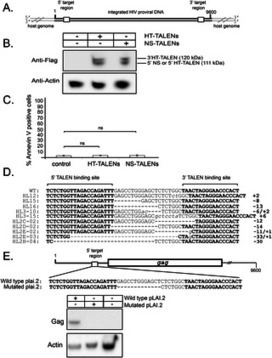
(via T. Schreiber, thx) Strong et al. 2015 HIV-1 integrates its proviral DNA genome into the host genome, presenting barriers for virus eradication. Several new gene-editing technologies have emerged that could potentially be used to damage integrated proviral DNA. In this study, we use transcription activator-like effector nucleases (TALENs) to target a highly conserved sequence in the transactivation response element (TAR) of the HIV-1 proviral DNA. We demonstrated that TALENs cleave a DNA template with the HIV-1 proviral target site
|