


SynBioFromLeukipposInstitute
130.0K views |
+2 today
 Your new post is loading...
 Scoop.it!
Gerd Moe-Behrens's insight:
by In an interview earlier this year with the India Times, Kowalski was asked what innovations excited him the most. The software company CTO's answer: I have a lot of choices, but if I had to pick one that I think is really provocative -- and it's in the really early stages -- I have to say that it is design for synthetic biology. And I think so because it touches everything. It has the potential for changing everything from agriculture to medicine. It is literally reprogramming cells to do fundamentally different things in the way they were naturally created. That probably shocks some people who would have gone all-in betting 3-D printing would be his answer, but Kowalski was fond of synthetic biology well before that interview. Investors can thank the great visionary Andrew Hessel, now a distinguished researcher at Autodesk, for infecting Kowalski just over two years ago and for keeping the momentum rolling since with Autodesk's Bio/Nano/Programmable Matter Group. What makes designing with biology so powerful, and its potential so limitless? Why might investors want to focus more on synthetic biology than 3-D printing for long-term growth at Autodesk? Allow one very biased author to explain. 3-D printing vs. synthetic biology Autodesk software for 3-D printing applications certainly represents a major growth area for the company. While not all goods can be produced with additive manufacturing, the opportunity is massive: 3D Systems didn't grow revenue 221% from 2010 to 2013 by mistake or chance. Manufacturing represents roughly $1.6 trillion, or 12%, of American gross domestic product. By comparison, the bioeconomy (biotech crops, biopharmaceuticals, and industrial biotech) represented an estimated $350 billion, or 2.5%, of American GDP in 2012. So why is Autodesk more excited about designing with biology than 3-D printing? In terms of markets that can be disrupted, synthetic biology has a far greater reach than additive manufacturing. Whether it's agriculture or novel biopesticides, specialty or commodity chemicals, fuels or animal feed, spider silk or algal oils, flavors (traditionally produced from petrochemicals) or fragrances (sourced from unsustainable agricultural practices), or numerous others areas, synthetic biology could have an answer. ..."

Scoop.it!

Wyss Institute at Harvard (Rational design: best route for synthetic biology?
Scoop.it!
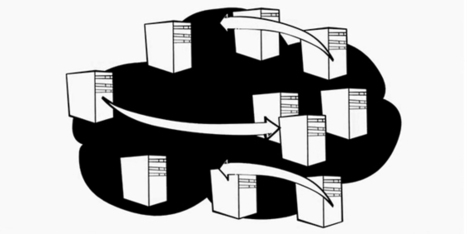
A Canadian software developer is fusing two of the most interesting open source projects of the 21st century: Git and bitcoin. Yurii Rashkovskii calls his project Gitchain, and it's now backed by about $10,000 raised on the popular crowdfunding site Kickstarter.
Gerd Moe-Behrens's insight:
An awesome project worth your support. The merge of bit coin and GitHub!
Scoop.it!
Gerd Moe-Behrens's insight:
by
Scoop.it!

POST is best viewed in Chrome. Close extra browser windows and focus.
Scoop.it!
Gerd Moe-Behrens's insight:
by
Scoop.it!

Experts weigh in on the biggest obstacles in synthetic biology — from names to knowledge gaps — and what it will take to overcome them.
Scoop.it!

Of Americans who know enough about net neutrality to have an opinion, a slim majority support the regulation. Most don't know enough to offer an opinion (57%), but knowledgeable respondents favor n...
Gerd Moe-Behrens's insight:
Scoop.it!
Gerd Moe-Behrens's insight:
by anonymous Browse Global Synthetic Biology Market Report with Full TOC: http://www.transparencymarketresearch.com/synthetic-biology-market.html. Synthetic biology is a process where artificial biological devices and systems are produced with the utilization of genetic engineering and biology. It plays an important role in the production of improved nutrition or cost effective medicines. Increasing number of scientific research coupled with rising participation of government and private organizations for the development of synthetic biology helps the growth of this market globally. In addition, new product development by key market players in collaboration with other companies will further drive the growth of this market during the study period. Rising global marine pollution will also act as a growth driver for the market owing to the fact that synthetic biology helps develop engineered microorganisms that can help curb oil spills and can turn plastics into reusable microplastics. The depleting prices of DNA sequencing act as a growth driver for the market as DNA sequencing is a technology used for developing core products such as synthetic genes and synthetic DNAs. Major market factors restraining the growth of synthetic biology market are ethical issues pertaining to the utilization of synthetic biology products. Synthetic biology market is mainly segmented by products, by technologies and by applications. The product segment of synthetic biology is further classified as core products and enabling products. Core products market is segmented as synthetic DNA, synthetic genes, synthetic cells, XNA and chassis organisms. While enabling products are segmented as DNA synthesis and oligonucleotide synthesis products.Compared with synthetic biology enabling products, the core products (synthetic genes, cell's DNA and XNA) are widely used and hence in 2012, core product segment covered major market share.Synthetic biology, by technologies segment is divided into genome engineering, DNA sequencing, bioinformatics and biological components and integrated systems. In 2012, synthetic biology genome engineering technology held major market share, owing to its ability to modify specific area of DNA that helps to offer better reproducibility. Application segment of synthetic biology market is classified as healthcare, chemicals, agriculture and others. Synthetic biology has continued to prove its efficiency in the development and production of various inexpensive healthcare products such as vaccines and drugs. Also, commercial availability of synthetic DNA and synthetic genes supports the growth of the healthcare application in the synthetic biology market. Thus, all the above mentioned factors collectively drive the growth of synthetic biology in healthcare application market. Europe is expected to dominate the synthetic biology market during the forecast period.Increasing efforts of European government and private organizations towards the development of this field is the major driving factor for the growth of synthetic biology market in Europe.North America contributed the second largest share of the total market in 2012. Introduction of novel technologies by domiciled key players which expand the scope for the development of this field will help the growth of this market in North America.In addition, one key factor driving the growth of synthetic biology market in developed countries (North America and Europe) is the initiative and funding by the government and universities. For example, SynBERC and TESSY are the initiatives of North American and Europe government, respectively, for the development of synthetic biology sector. The main goal of these organizations is to stimulate the growth of synthetic biology field by promoting awareness in respective countries. Related & Recently Published Reports by Transparency Market Research Mixed Tocopherols Market: http://www.transparencymarketresearch.com/mixed-tocopherols-market.html OLED Displays Market: http://www.transparencymarketresearch.com/oled-displays.html DuPont, Inc., Amyris, Inc. Bayer AG, Royal DSM, Ginkgo Bio works and Life Technologies Corporation (Thermo Fisher Scientific) are the key players having maximum presence in the global synthetic biology market. The global synthetic biology market is segmented as follows: Synthetic Biology Market, by Products Synthetic Biology Market, by Technologies Genome Engineering DNA Sequencing Bioinformatics Biological Components and Integrated Systems Synthetic Biology Market, by Applications Healthcare Chemicals (Including Bio-Fuels) Agriculture Others (Biosecurity, R&D, Energy and Environment) Synthetic Biology Market, by Geography North America Europe Asia-Pacific Rest of the World (RoW)
..."
Scoop.it!
Synthetic Biology : A Lab Manual [Josefine Liljeruhm, Erik Gullberg, Anthony C Forster] on Amazon.com. *FREE* shipping on qualifying offers.
Scoop.it!
Gerd Moe-Behrens's insight:
by RESULTS: We have implemented a novel algorithm, RiboMaker, aimed at the computational, automated design of bacterial riboregulation. RiboMaker reads the sequence and structure specifications, which codify for a gene regulatory behavior, and optimizes the sequences of a small regulatory RNA and a 5' untranslated region for an efficient intermolecular interaction. To this end, it implements an evolutionary design strategy, where random mutations are selected according to a physicochemical model based on free energies. The resulting sequences can then be tested experimentally, providing a new tool for synthetic biology, and also for investigating the riboregulation principles in natural systems. Availability: Web server is available at http://ribomaker.jaramillolab.org/ Source code, instructions, and examples are freely available for download at
http://sourceforge.net/projects/ribomaker/ CONTACT: Guillermo.Rodrigo@issb.genopole.fr Alfonso.Jaramillo@warwick.ac.uk. .."
|
Scoop.it!
Andrew Hessel is a Distinguished Researcher with Autodesk's Bio/Nano Programmable Matter group, which is developing advanced software tools for designing liv...
Scoop.it!
|





|
Scooped by
Gerd Moe-Behrens
May 26, 2014 4:33 PM
|
Scoop.it!

Gerd Moe-Behrens's insight:
by
Colm Gorey
"With the SynBio axlr8r programme getting under way, Siliconrepublic.com spoke to Keira Havens of Revolution Bioengineering who, with her business partner, want to turn plants into a multicoloured spectacle.
Following the Synthetic Biology Future event held last March in Cork, a number of companies, scientific research groups and individuals from around the world reached out to take part in the accelerator aimed at bringing the rapidly developing field of synthetic biology to the wider world.
One such pairing was Keira Havens and Nikolai Braun of Revolution Bioengineering, whose research is aimed at developing plants that can be bio-engineered into changing colours depending entirely on what they, or whoever they design the plant for, want.
But also, the pair are attempting to make the field of synthetic biology a much more attractive and, frankly, less fear-inducing science that many of the general public think when it comes to the concept of tinkering with the very fabric of nature and genetic modification.
Fulfilling a dream
Just a matter of hours before the deadline for applications for the SynBio axlr8r, both Havens and Braun were facing the prospect of their colour-changing flower being doomed to literally never see the light of day.
Despite putting forward their research proposals to a number of scientific bodies in the US, the pair were facing the possibility that the prohibitive cost of proof-of-concept reports needed, particularly in plant science, as well as the day-to-day living of working their day jobs, would be just too much for the project to continue.
As any scientist may say, rarely is scientific research a part-time job and with the added competition of well-published laboratories and traditional government grants, the pair were almost ready to call it quits.
Thankfully, for both of them, Hawaii-native Havens stumbled across the SynBio axlr8r website and more so on a whim and for practice, decided to apply for this relatively small accelerator programme based in University College Cork (UCC).
Just two weeks later, Havens and Braun received the news they had been accepted to the accelerator and now faced the challenge of leaving everything in the US behind them and establishing themselves in Ireland, a place where neither of them had been before.
“Being able to devote resources and our full attention is an incredible opportunity on its own and we were about to give up,” says Havens, “but we probably wouldn’t be here if it wasn’t for the (SynBio) accelerator.”
The science
So how do you turn a regular green-leaved plant into a unique blue plant with a person’s name genetically coded into its leaves?
As Haven stresses, the science behind actually creating their goal is still very much in development but the basic scientific theses are there to be worked on.
In fact, the concept of a flower changing colours is not as science fiction as it may sound.
In nature, there already exists plants that change colour, depending on their environment. For example, hydrangeas will turn a reddish colour if the soil is particularly acidic, but will also turn bluer if the soil is more basic.
The biology behind this is the result of small molecules known as anthocyanins. Revolution Bioengineering plans to change the environment of these molecules by connecting certain genes to the plant’s internal clock used to benefit from photosynthesis.
This, they hope, will give them a flower that can change colour throughout the day and create unique designs that can see it turn from red to blue and back again.
It is their hope that once they have developed the science, they will be able to remove the stigma attached to what the plant would be, a genetically modified organism (GMO).
With examples in the news of engineered crops causing havoc with ecosystems and supposed negative effects on human health, the term GMO has almost become an acronym to fear in some circles.
For Havens and Braun, however, they believe if they can show the beautiful side of science, their flowers could prove a watershed moment in pushing forward some other significant syn-bio advances that could greatly benefit the world.
“This is a beautiful physical representation of how science can transform our world, and it is also accessible to everybody for their inspection and enjoyment,” says Havens.
“It's a product that the public can touch and interact with on their own terms, and it is a powerful way to demonstrate what plant molecular technologies can bring to the planet for the benefit of everybody.”
Science vs business
The only question remains as to how to most successfully balance scientific research and endeavour with a sound business strategy.
Traditionally never going hand-in-hand, there has always been the somewhat conflicting ideals of pursuing scientific research for purely scientific benefits and the actual need to make it a viable product, especially when it comes to something like a colour-changing plant aimed at appealing to the public.
“Running a business is very, very different from being a scientist, so different it’s not even funny,” says Havens.
“Having Bill (Bill Liao of SOSventures, which is behind the SynBio axlr8r) to talk to about the process and hear from their perspective in how they made that transition and maintain your scientific credibility without sacrificing a successful business has been great. Business wants to sell anything and science wants to strive for knowledge and pure ideals and they conflict at times. We’re slowly learning that we may have to make sacrifices at times to balance.”
Right now however, they’re still firmly focused on getting the research done to create their colour-changing plant, but in the meantime, they still wish to engage with the Irish public, and those around the world, about the potential for synthetic molecular biology.
“We have been delighted to be able to talk to the public about something that is controversial and frightening. People aren’t too comfortable talking to large companies about it because they feel they’ve vested interests in it and sometimes it’s difficult to have conversations about it. We want to be a part of that conversation.”"
|
|
Scooped by
Gerd Moe-Behrens
May 25, 2014 12:51 PM
|
Scoop.it!
Gerd Moe-Behrens's insight:
by
Robin A Sorg , Oscar P. Kuipers , and Jan-Willem Veening
"The human pathogen Streptococcus pneumoniae (pneumococcus) is a bacterium that owes its success to complex gene expression regulation patterns on both the cellular and the population level. Expression of virulence factors enables a mostly hazard-free presence of the commensal, in balance with the host and niche competitors. Under specific circumstances, changes in this expression can result in a more aggressive behavior and the reversion to the invasive form as pathogen. These triggering conditions are very difficult to study due to the fact that environmental cues are often unknown or barely possible to simulate outside the host (in vitro). An alternative way of investigating expression patterns is found in synthetic biology approaches of reconstructing regulatory networks that mimic an observed behavior with orthogonal components. Here, we created a genetic platform suitable for synthetic biology approaches in S. pneumoniae and characterized a set of standardized promoters and reporters. We show that our system allows for fast and easy cloning with the BglBrick system and that reliable and robust gene expression after integration into the S. pneumoniae genome is achieved. In addition, a standard gene expression measuring protocol utilizing firefly luciferase was established. Finally, the cloning system was extended to allow for direct linker-based assembly of ribosome binding sites, peptide tags and fusion proteins and we called this new generally-applicable standard “BglFusion”. The gene expression platform and the methods described in this study pave the way for employing synthetic biology approaches in S. pneumoniae."
http://bit.ly/1jkqLFD
|
|
Scooped by
Gerd Moe-Behrens
May 25, 2014 12:35 PM
|
Scoop.it!

Gerd Moe-Behrens's insight:
by
phys.org
"The ability to construct biological matter from the molecule up holds promise for technologies that are set to shape our future. Synthetic biology, regenerative medicine and advanced materials are just a few of such technologies highlighted by the UK government as the 'eight great technologies' for development and investment.
This promise is matched by a challenge which goes beyond the search for a better understanding of how biology works, focusing instead on how it can be replicated using synthetic and highly amenable strategies - moreover, replicated at will and for a desired function at precise time and space.
A solution to this challenge can be provided by synthetic biology approaches that are becoming essential for a variety of applications, in particular for modern medicine where novel biomolecular devices that control biology in the way as nature are in steady demand.
In response to this, a research team from NPL has engineered an artificial protein of about 3 nm in size, which spontaneously self-knits in water into intricate sub-millimetre nets from the molecule up.
The new research, published in Journal of American Chemical Society, explains that these nets serve as extracellular matrices that are able to discriminate one class of live cells against another. Specifically, the matrices stimulated the growth and propagation of human cells while resisting bacterial colonisation and biofilm formation.
The protein itself cannot support a single cell, which is tens of microns in diameter; nor does it have any bacteria-fighting properties. Only after assembling into architecturally distinctive microscopic nets does it become a highly specialised biological material.
NPL's Nilofar Faruqui, who worked on the project, said:
"These assembled nets remain active over a week. This would be sufficient to support healing processes in tissue and at the same time deter biofilm formation which is most critical during the first days of healing."
The invention offers an exploitable rationale of structure-activity relationships, which may be useful for designing biofilm-resistant and cell-supporting 3D tissue scaffolds or 2D surface coatings.
Explore further: New biological scaffold offers promising foundation for engineered tissues
More information: The report, "Differentially Instructive Extracellular Protein Micro-nets," is available online: pubs.acs.org/doi/abs/10.1021/ja411325c
Journal reference: Journal of the American Chemical Society"
|
|
Scooped by
Gerd Moe-Behrens
May 23, 2014 3:24 PM
|
Scoop.it!

Gerd Moe-Behrens's insight:
by
Haifeng Yea, Martin Fussenegger
"In the emerging field of synthetic biology, scientists are focusing on designing and creating functional devices, systems, and organisms with novel functions by engineering and assembling standardised biological building blocks. The progress of synthetic biology has significantly advanced the design of functional gene networks that can reprogram metabolic activities in mammalian cells and provide new therapeutic opportunities for future gene- and cell-based therapies. In this review, we describe the most recent advances in synthetic mammalian gene networks designed for biomedical applications, including how these synthetic therapeutic gene circuits can be assembled to control signalling networks and applied to treat metabolic disorders, cancer, and immune diseases. We conclude by discussing the various challenges and future prospects of using mammalian gene networks for disease therapy."
http://bit.ly/1vToXNm
|
|
Scooped by
Gerd Moe-Behrens
May 21, 2014 4:10 PM
|
Scoop.it!

Gerd Moe-Behrens's insight:
by
Darren J. Burgess
"Microorganisms with engineered genetic circuits hold promise for diverse applications, including for drug synthesis or as biological sensors. Simple engineered genetic modules, such as negative-feedback transcriptional loops that result in oscillating gene expression, are well established. However, the integration of multiple modules into controllable, more complex bionetworks is a major challenge. A new study uses com…"
http://bit.ly/Skk68M
|
|
Scooped by
Gerd Moe-Behrens
May 20, 2014 5:43 PM
|
Scoop.it!
Living Architecture: How Synthetic Biology Can Remake Our Cities and Reshape Our Lives (Kindle Single) (TED Books) eBook: Rachel Armstrong: Amazon.co.uk: Kindle Store
|
|
Scooped by
Gerd Moe-Behrens
May 20, 2014 5:31 PM
|
Scoop.it!

Gerd Moe-Behrens's insight:
by
Nissim L, Perli SD, Fridkin A, Perez-Pinera P, Lu TK
"Highlights
•Multiplexed CRISPR/Cas guide RNAs are expressed from single compact transcripts
•Guide RNAs are generated from RNA polymerase II promoters with three strategies
•Multistage cascades and gene circuits are created with CRISPR-TFs and microRNAs
•Csy4-based RNA processing enables synchronized circuit rewiring at the RNA level
Summary
RNA-based regulation and CRISPR/Cas transcription factors (CRISPR-TFs) have the potential to be integrated for the tunable modulation of gene networks. A major limitation of this methodology is that guide RNAs (gRNAs) for CRISPR-TFs can only be expressed from RNA polymerase III promoters in human cells, limiting their use for conditional gene regulation. We present new strategies that enable expression of functional gRNAs from RNA polymerase II promoters and multiplexed production of proteins and gRNAs from a single transcript in human cells. We use multiple RNA regulatory strategies, including RNA-triple-helix structures, introns, microRNAs, and ribozymes, with Cas9-based CRISPR-TFs and Cas6/Csy4-based RNA processing. Using these tools, we efficiently modulate endogenous promoters and implement tunable synthetic circuits, including multistage cascades and RNA-dependent networks that can be rewired with Csy4 to achieve complex behaviors. This toolkit can be used for programming scalable gene circuits and perturbing endogenous networks for biology, therapeutic, and synthetic biology applications."
|
|
Scooped by
Gerd Moe-Behrens
May 19, 2014 2:01 PM
|
Scoop.it!

Alok Jha meets scientists and artists working at the cutting edge of the rapidly growing field of synthetic biology, which aims to reshape the very fabric of life
|
|
Scooped by
Gerd Moe-Behrens
May 19, 2014 1:51 PM
|
Scoop.it!
The Synthetic Biology Project spoke with Rob Carlson of Biodesic at SynBioBeta in November 2012.
Gerd Moe-Behrens's insight:
Rob Carlson: Patents are dysfunctional for synthetic biology startups http://bit.ly/1n9Fds2
|
|
Scooped by
Gerd Moe-Behrens
May 17, 2014 1:05 PM
|
Scoop.it!

Gerd Moe-Behrens's insight:
by
iordano Rampioni, Fabio Mavelli, Luisa Damiano, Francesca D’Angelo, Marco Messina, Livia Leoni, Pasquale Stano
"In this article we present novel aspects of the impact that synthetic biology (SB) can express in a field traditionally based on computer science: information and communication technologies (ICTs), an area that we will consider taking into account also possible implications for artificial intelligence (AI) research. In the first part of this article we will shortly introduce some recent theoretical and experimental issues related to our approach in SB, discussing their relevance and potentiality in the field. Next, we define an original SB research programme that aims at contributing to the development of bio-chem-ICTs and AI based on chemical communication between natural and synthetic cells. In particular we present (i) a mathematical model that allows us to simulate the main features of the system under construction; and (ii) preliminary wet-lab experiments showing the feasibility of our research programme. Based on the bottom-up construction of synthetic cells, the traits of this novel approach and their connections with recent conceptual and technological trends are finally discussed."





BY BRANDON KEIM
"In the space between order and chaos, a zone usually described with the mathematics of impending avalanches and crystallizing liquids, scientists are finding new rules for life.
http://wrd.cm/1pkG3SJ