SynBioFromLeukipposInstitute
130.0K views | +2 today
SynBioFromLeukipposInstitute
Your new post is loading...
Scooped by Gerd Moe-Behrens
May 16, 2014 1:02 PM
Scoop.it!

Synthetic biology still in uncharted waters of public opinion

Synthetic biology still in uncharted waters of public opinion | SynBioFromLeukipposInstitute | Scoop.it
Gerd Moe-Behrens's insight:

by anonymous

"The Synthetic Biology Project at the Woodrow Wilson International Center for Scholars is releasing the results of a new set of focus groups, which find continued low awareness of synthetic biology among the general public.

The focus groups also sought opinions on the emerging field of neural engineering.
The focus group results support the findings of a quantitative national poll conducted by Hart Research Associates in January 2013, which found just 23 percent of respondents reported they had heard a lot (6 percent) or some (17 percent) about synthetic biology.
The focus group discussions also reinforce earlier findings that specific applications impact people's hopes and anxieties around synthetic biology. For example, medical applications including disease cures gained the most support in the focus groups, while the biological production of chemicals and food additives received little to no support.
Participants focused their concern on unforeseen, unintended consequences that might occur from synthetic biology. There was a clear and strong desire to study and monitor the potential risks of synthetic biology, which may require a variety of organizations...."


 http://bit.ly/1k8Mc0M

No comment yet.
Scooped by Gerd Moe-Behrens
May 16, 2014 12:39 PM
Scoop.it!

Biofabrication course a world first

Gerd Moe-Behrens's insight:

By Life Scientist Staff  

"The world’s first international masters in biofabrication is being offered by the Queensland University of Technology (QUT), the University of Wollongong, the University Medical Center Utrecht in the Netherlands and the University of Würzburg in Germany.

The four universities are all world leaders in biofabrication research and have joined forces to offer a two-year, two-degree masters program whereby graduates will hold a masters degree from an Australian university in addition to a masters degree from a European university.
Biofabrication involves the use of 3D printing to regrow and replace most types of human tissue. The tissues are created in intricate layers using different types of biomaterials to generate individualised structures.
These tailor-made structures are then implanted into the body to act as scaffolds on which new tissue can grow, and as the tissue grows the scaffold dissolves into the body. For example, biofabrication is successfully being used successfully to repair broken and missing bone.
“Each of the four universities has established a track record in key areas of biofabrication, including polymer chemistry, cell biology and clinical implants,” said Professor Dietmar W Hutmacher, who leads QUT’s biofabrication research.
“Biofabrication can be used to repair cartilage, bone, muscles, nerves and skin that have been damaged by trauma, disease or cancer. It is even predicted that entire organs will be biofabricated within a few decades.”
Each of the four universities will admit 10 students to the degree. Australian students will spend nine to 12 months studying at one of the European universities and European students would also study at one of the Australian universities.
Professor Gordon Wallace, director of the University of Wollongong’s ARC Centre of Excellence for Electromaterials Science, said graduates of the masters program would be in high demand.
Professor Hutmacher said biofabrication is a multidisciplinary area of research that required an understanding of chemistry, physics, biology, medicine, robotics and computer science, and welcomed graduates in these fields to apply for the masters degree.
The masters in biofabrication is supported by the Australian Government and the European Union."


 http://bit.ly/1jQrjI5

No comment yet.
Scooped by Gerd Moe-Behrens
May 15, 2014 11:49 AM
Scoop.it!

A semi-synthetic organism with an expanded genetic alphabet

A semi-synthetic organism with an expanded genetic alphabet | SynBioFromLeukipposInstitute | Scoop.it
Gerd Moe-Behrens's insight:

by
Denis A. Malyshev, Kirandeep Dhami, Thomas Lavergne, Tingjian Chen, Nan Dai, Jeremy M. Foster, Ivan R. Corrêa & Floyd E. Romesberg

"Organisms are defined by the information encoded in their genomes, and since the origin of life this information has been encoded using a two-base-pair genetic alphabet (A–T and G–C). In vitro, the alphabet has been expanded to include several unnatural base pairs (UBPs)1, 2, 3. We have developed a class of UBPs formed between nucleotides bearing hydrophobic nucleobases, exemplified by the pair formed between d5SICS and dNaM (d5SICS–dNaM), which is efficiently PCR-amplified1 and transcribed4, 5 in vitro, and whose unique mechanism of replication has been characterized6, 7. However, expansion of an organism’s genetic alphabet presents new and unprecedented challenges: the unnatural nucleoside triphosphates must be available inside the cell; endogenous polymerases must be able to use the unnatural triphosphates to faithfully replicate DNA containing the UBP within the complex cellular milieu; and finally, the UBP must be stable in the presence of pathways that maintain the integrity of DNA. Here we show that an exogenously expressed algal nucleotide triphosphate transporter efficiently imports the triphosphates of both d5SICS and dNaM (d5SICSTP and dNaMTP) into Escherichia coli, and that the endogenous replication machinery uses them to accurately replicate a plasmid containing d5SICS–dNaM. Neither the presence of the unnatural triphosphates nor the replication of the UBP introduces a notable growth burden. Lastly, we find that the UBP is not efficiently excised by DNA repair pathways. Thus, the resulting bacterium is the first organism to propagate stably an expanded genetic alphabet."

http://bit.ly/1mY9fyV

Comment:

*Synthetic biology: New letters for life's alphabet*

by
Ross Thyer & Jared Ellefson

"The five bases found in nucleic acids define the 'alphabet' used to encode life on Earth. The construction of an organism that stably propagates an unnatural DNA base pair redefines this fundamental feature of life."


http://bit.ly/1n11dRA

No comment yet.
Scooped by Gerd Moe-Behrens
April 23, 2014 6:23 PM
Scoop.it!

The New Synthetic Biology: Who Gains? by Richard C. Lewontin

The New Synthetic Biology: Who Gains?<br/><br/> by Richard C. Lewontin | SynBioFromLeukipposInstitute | Scoop.it
The possibility of the deliberate creation of living organisms from elementary materials that are not themselves alive has engaged the human imagination for a very long time. Putting aside Genesis I, which is singularly lacking in any physical details on the bringing forth of life from the waters and the dust, we think immediately of the classical Greek story of the sculptor Pygmalion. Enamored of the unresponsive goddess Aphrodite, he ...
No comment yet.
Scooped by Gerd Moe-Behrens
April 23, 2014 5:23 PM
Scoop.it!

Research and Markets: Global Synthetic Biology Market 2013-2019 - Genome Engineering, DNA Sequencing, Bioinformatics & Biological Components and Integrated Systems

Research and Markets: Global Synthetic Biology Market 2013-2019 - Genome Engineering, DNA Sequencing, Bioinformatics & Biological Components and Integrated Systems | SynBioFromLeukipposInstitute | Scoop.it
Research and Markets (http://www.researchandmarkets.com/research/bvkmgr/synthetic_biology) has announced the addition of the "Synthetic Biology M
No comment yet.
Scooped by Gerd Moe-Behrens
April 22, 2014 5:37 PM
Scoop.it!

A Simple and Effective Method for Construction of Escherichia coli Strains Proficient for Genome Engineering

A Simple and Effective Method for Construction of Escherichia coli Strains Proficient for Genome Engineering | SynBioFromLeukipposInstitute | Scoop.it
No comment yet.
Scooped by Gerd Moe-Behrens
April 22, 2014 5:25 PM
Scoop.it!

Integrating reductive and synthetic approaches in biology using man-made cell-like compartments

Gerd Moe-Behrens's insight:

by
Aoki W, Saito M, Manabe R3 Mori H4, Yamaguchi Y2 Tamiya E2

"We propose 'integrated synthetic genetics' as a novel methodology that integrates reductive and synthetic approaches used in life science research. Integrated synthetic genetics enables determinations of sets of genes required for the functioning of any biological subsystem. This method utilizes artificial cell-like compartments, including a randomly introduced whole gene library, strictly defined components for in vitro transcription and translation and a reporter that fluoresces 'only when a particular function of a target biological subsystem is active.' The set of genes necessary for the target biological subsystem can be identified by isolating fluorescent artificial cells and multiplex next-generation sequencing of genes included in these cells. The importance of this methodology is that screening for the set of genes involved in a subsystem and reconstructing the entire subsystem can be done simultaneously. This methodology can be applied to any biological subsystem of any species and may remarkably accelerate life science research."


http://1.usa.gov/1hm4GWi

No comment yet.
Scooped by Gerd Moe-Behrens
April 17, 2014 5:10 PM
Scoop.it!

Synthetic biology: Building a designer yeast genome

Gerd Moe-Behrens's insight:

by
Christina Tobin Kåhrström

"An international team of researchers has embarked on the creation of a synthetic eukaryotic genome and now report the synthesis of a redesigned Saccharomyces cerevisiae chromosome. Boeke and colleagues built a fully functional chromosome III (which they term synIII) that contained hundreds of alterations, including the removal of introns, transposons…"


 http://bit.ly/1gMYXgc

No comment yet.
Scooped by Gerd Moe-Behrens
April 17, 2014 4:51 PM
Scoop.it!

House Panel Votes to Halt Obama's Internet Power Transfer

House Panel Votes to Halt Obama's Internet Power Transfer | SynBioFromLeukipposInstitute | Scoop.it
Republicans worry Russia or China could seize control of the Internet.
Gerd Moe-Behrens's insight:

http://bit.ly/1lcYd3J

I hope the internet will stay under US control. If I think about  the alternatives, the US will be the most likely guardian for a free internet, despite the recent surveillance scandals. 
Science need a free internet.

No comment yet.
Scooped by Gerd Moe-Behrens
April 17, 2014 4:35 PM
Scoop.it!

Functionalized Amphipols: A Versatile Toolbox Suitable for Applications of Membrane Proteins in Synthetic Biology

Functionalized Amphipols: A Versatile Toolbox Suitable for Applications of Membrane Proteins in Synthetic Biology | SynBioFromLeukipposInstitute | Scoop.it
No comment yet.
Scooped by Gerd Moe-Behrens
April 16, 2014 4:52 PM
Scoop.it!

The World's Leading Tire Manufacturers Are Turning to Synthetic Biology -- But Not for the Reason You May Think

The World's Leading Tire Manufacturers Are Turning to Synthetic Biology -- But Not for the Reason You May Think | SynBioFromLeukipposInstitute | Scoop.it
Forget sustainability -- 13 of the world's leading tire manufacturers are eyeing Amyris' synthetic biology platform for a completely different reason. - Maxx Chatsko - Energy
No comment yet.
Scooped by Gerd Moe-Behrens
April 15, 2014 3:46 PM
Scoop.it!

Heuristic for Maximizing DNA Reuse in Synthetic DNA Library Assembly

Heuristic for Maximizing DNA Reuse in Synthetic DNA Library Assembly | SynBioFromLeukipposInstitute | Scoop.it
No comment yet.
Scooped by Gerd Moe-Behrens
April 14, 2014 3:27 PM
Scoop.it!

Open Biomedical Initiative

Nonprofit Organization for LOW COST, OPEN SOURCE, 3D PRINTABLE Biomedical Technologies
No comment yet.
Scooped by Gerd Moe-Behrens
May 16, 2014 12:53 PM
Scoop.it!

Co-culture systems and technologies: taking synthetic biology to the next level

Co-culture systems and technologies: taking synthetic biology to the next level | SynBioFromLeukipposInstitute | Scoop.it
Gerd Moe-Behrens's insight:

by
Goers L, Freemont P, Polizzi KM

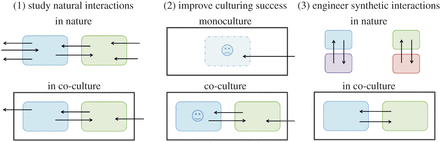
"Co-culture techniques find myriad applications in biology for studying natural or synthetic interactions between cell populations. Such techniques are of great importance in synthetic biology, as multi-species cell consortia and other natural or synthetic ecology systems are widely seen to hold enormous potential for foundational research as well as novel industrial, medical and environmental applications with many proof-of-principle studies in recent years. What is needed for co-cultures to fulfil their potential? Cell-cell interactions in co-cultures are strongly influenced by the extracellular environment, which is determined by the experimental set-up, which therefore needs to be given careful consideration. An overview of existing experimental and theoretical co-culture set-ups in synthetic biology and adjacent fields is given here, and challenges and opportunities involved in such experiments are discussed. Greater focus on foundational technology developments for co-cultures is needed for many synthetic biology systems to realize their potential in both applications and answering biological questions."


 http://bit.ly/1n4ys6w

No comment yet.
Scooped by Gerd Moe-Behrens
May 15, 2014 11:54 AM
Scoop.it!

MAMMALIAN SYNTHETIC BIOLOGY: FROM PARTS TO MODULES TO THERAPEUTIC SYSTEMS

-

Gerd Moe-Behrens's insight:

by
Ron Weiss

"Synthetic biology is revolutionizing how we conceptualize and approach the engineering of biological systems. Recent advances in the field are allowing us to expand beyond the construction and analysis of small gene networks towards the implementation of complex multicellular systems with a variety of applications. In this talk I will describe our integrated computational / experimental approach to engineering complex behavior in mammalian cells. In our research, we appropriate design principles from electrical engineering and other established fields. These principles include abstraction, standardization, modularity, and computer aided design. But we also spend considerable effort towards understanding what makes synthetic biology different from all other existing engineering disciplines and discovering new design and construction rules that are effective for this unique discipline. We will briefly describe the implementation of genetic circuits and modules with finely-tuned digital and analog behavior and the use of artificial cell-cell communication to coordinate the behavior of cell populations. The first system to be presented is a genetic circuit that can detect and destroy specific cancer cells based on the presence or absence or specific biomarkers in the cell. We will also discuss preliminary experimental results for obtaining precise spatiotemporal control over stem cell differentiation for tissue engineering applications. We will conclude by discussing the design and preliminary results for creating an artificial tissue homeostasis system where genetically engineered stem cells maintain indefinitely a desired level of pancreatic beta cells despite attacks by the autoimmune response, relevant for diabetes."


http://bit.ly/1jiYaG9

No comment yet.
Scooped by Gerd Moe-Behrens
April 23, 2014 6:38 PM
Scoop.it!

Nanocrafter

Nanocrafter | SynBioFromLeukipposInstitute | Scoop.it
Gerd Moe-Behrens's insight:

SynBio game NanoCrafter http://bit.ly/1iaiFU1

No comment yet.
Scooped by Gerd Moe-Behrens
April 23, 2014 6:19 PM
Scoop.it!

Stepping into DIYbio and Synthetic Biology at ScienceHack by Heather McGaw

Stepping into DIYbio and Synthetic Biology at ScienceHack by Heather McGaw | SynBioFromLeukipposInstitute | Scoop.it
No comment yet.
Scooped by Gerd Moe-Behrens
April 23, 2014 3:37 PM
Scoop.it!

MACROSTRUCTURE

Inspired by science and video games, Macrostructure is the first episode in a micro-series and story world entitled "What If You Created Artificial Life And It Started…
No comment yet.
Scooped by Gerd Moe-Behrens
April 22, 2014 5:29 PM
Scoop.it!

An integrative genome-scale E. coli model and target experimentation methodology for systems and synthetic biology

-

Gerd Moe-Behrens's insight:

 http://bit.ly/1nFd34p

No comment yet.
Scooped by Gerd Moe-Behrens
April 22, 2014 5:20 PM
Scoop.it!

Building 'smart' cell-based therapies

Building 'smart' cell-based therapies | SynBioFromLeukipposInstitute | Scoop.it
Synthetic biologists have developed a technology for engineering human cells as therapies that become activated only in diseased tissues.
No comment yet.
Scooped by Gerd Moe-Behrens
April 17, 2014 5:01 PM
Scoop.it!

Biotechnological domestication of pseudomonads using synthetic biology

Biotechnological domestication of pseudomonads using synthetic biology | SynBioFromLeukipposInstitute | Scoop.it
Gerd Moe-Behrens's insight:

by
Pablo I. Nikel, Esteban Martínez-García & Víctor de Lorenzo

"Much of contemporary synthetic biology research relies on the use of bacterial chassis for plugging-in and plugging-out genetic circuits and new-to-nature functionalities. However, the microorganisms that are the easiest to manipulate in the laboratory are often suboptimal for downstream industrial applications, which can involve physicochemical stress and harsh operating conditions. In this Review, we advocate the use of environmental Pseudomonas strains as model organisms that are pre-endowed with the metabolic, physiological and stress-endurance traits that are demanded by current and future synthetic biology and biotechnological needs."

 http://bit.ly/1tfATI1

No comment yet.
Scooped by Gerd Moe-Behrens
April 17, 2014 4:45 PM
Scoop.it!

Wireless 'tattoo' patch tracks health 24/7 - Futurity

Wireless 'tattoo' patch tracks health 24/7 - Futurity | SynBioFromLeukipposInstitute | Scoop.it
A soft stick-on patch that stretches and moves with the skin can continuously track health and wirelessly send updates to your cellphone or computer.
No comment yet.
Scooped by Gerd Moe-Behrens
April 16, 2014 5:08 PM
Scoop.it!

Methods for the Preparation of Large Quantities of Complex Single-Stranded Oligonucleotide Libraries

Methods for the Preparation of Large Quantities of Complex Single-Stranded Oligonucleotide Libraries | SynBioFromLeukipposInstitute | Scoop.it
Gerd Moe-Behrens's insight:

by

Yusuf E. Murgha, Jean-Marie Rouillard, Erdogan Gulari


"Custom-defined oligonucleotide collections have a broad range of applications in fields of synthetic biology, targeted sequencing, and cytogenetics. Also, they are used to encode information for technologies like RNA interference, protein engineering and DNA-encoded libraries. High-throughput parallel DNA synthesis technologies developed for the manufacture of DNA microarrays can produce libraries of large numbers of different oligonucleotides, but in very limited amounts. Here, we compare three approaches to prepare large quantities of single-stranded oligonucleotide libraries derived from microarray synthesized collections. The first approach, alkaline melting of double-stranded PCR amplified libraries with a biotinylated strand captured on streptavidin coated magnetic beads results in little or no non-biotinylated ssDNA. The second method wherein the phosphorylated strand of PCR amplified libraries is nucleolyticaly hydrolyzed is recommended when small amounts of libraries are needed. The third method combining in vitro transcription of PCR amplified libraries to reverse transcription of the RNA product into single-stranded cDNA is our recommended method to produce large amounts of oligonucleotide libraries. Finally, we propose a method to remove any primer binding sequences introduced during library amplification."

http://bit.ly/1m8jlvN

No comment yet.
Scooped by Gerd Moe-Behrens
April 15, 2014 3:49 PM
Scoop.it!

BNL Newsroom | 'Life Redesigned: The Emergence of Synthetic Biology' Lecture on Wednesday, April 30

BNL Newsroom | 'Life Redesigned: The Emergence of Synthetic Biology' Lecture on Wednesday, April 30 | SynBioFromLeukipposInstitute | Scoop.it
Biomedical engineer James Collins of Boston and Harvard universities and the Howard Hughes Medical Institute, will give a BSA Distinguished Lecture, titled "Life Redesigned: The Emergence of Synthetic Biology," at the U.S. Department of Energy's Brookhaven National Laboratory on Wednesday, April 30.
No comment yet.
Scooped by Gerd Moe-Behrens
April 15, 2014 2:52 PM
Scoop.it!

Functionalized Amphipols: A Versatile Toolbox Suitable for Applications of Membrane Proteins in Synthetic Biology

Gerd Moe-Behrens's insight:

by
Eduardo Antonio Della Pia, Randi Westh Hansen, Manuela Zoonens, Karen L. Martinez

"Amphipols are amphipathic polymers that stabilize membrane proteins isolated from their native membrane. They have been functionalized with various chemical groups in the past years for protein labeling and protein immobilization. This large toolbox of functionalized amphipols combined with their interesting physico-chemical properties give opportunities to selectively add multiple functionalities to membrane proteins and to tune them according to the needs. This unique combination of properties makes them one of the most versatile strategies available today for exploiting membrane proteins onto surfaces for various applications in synthetic biology. This review summarizes the properties of functionalized amphipols suitable for synthetic biology approaches."
http://bit.ly/1h0r7QB


No comment yet.