To optimize your website for on-page SEO, you need to make sure that your content is high-quality, engaging search results.
On-Page SEO Guide for Beginners (Canada Edition)
If you have a website or blog in Canada and want to rank higher on Google, start with On-Page SEO — the process of optimizing your webpages to improve visibility in search engines.
how to get free backlinks todayhow to get free backlinks today `how to get free backlinks today how to get free backlinks todayhow to get free backlinks todayhow to get free backlinks today
how to get free backlinks todayhow to get free backlinks today `how to get free backlinks today how to get free backlinks todayhow to get free backlinks todayhow to get free backlinks today
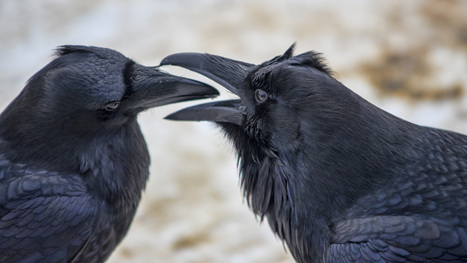
“Emotional contagion, which refers to emotional state matching between individuals, is a powerful mechanism for information sharing and, as a consequence, an increased defense against predation and the facilitation of group living,” Adriaense and her colleagues wrote in the paper.
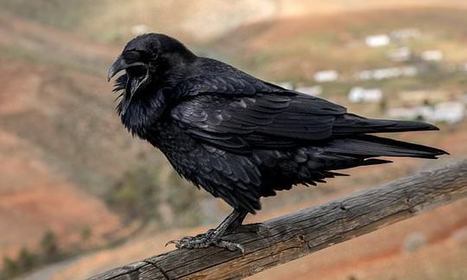
Ravens are already well-known for their advanced cognitive skills, and are often cast as intelligent spirits in cross-cultural myths and folklore. But in addition to inspiring admiration from humans, the new study reveals that ravens are clearly in tune with each others’ feelings—especially when they are miffed.
Showing that non-human animals have empathy—the ability to understand and share the feelings of others—is no easy task. A big part of the challenge is obvious: Researchers can’t ask their subjects how they’re feeling, says Stephanie Preston, a neuroscientist studying emotion and behavior at the University of Michigan who was not involved in the study.
But some researchers argue that empathy can be broken down and tested through its more manageable components. For instance, you can’t have empathy without emotional contagion, or the tendency of the feelings and behaviors of an emotional reaction to hop from individual to individual even in the absence of what triggered them. Emotional contagion is, in a sense, a way to experience by proxy—and it can come with serious perks.
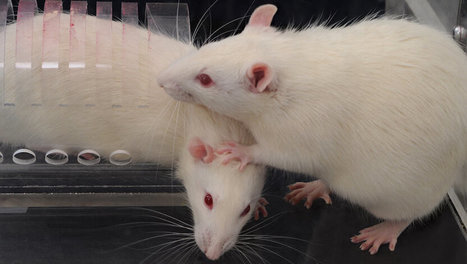
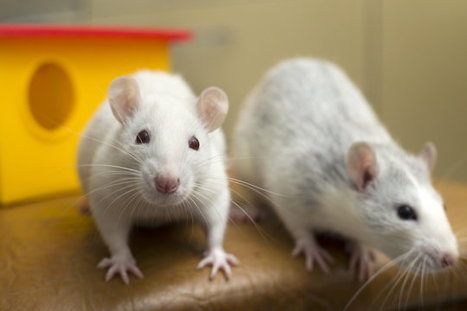
Rats were forced to watch as other rodents were electrocuted in front of them Analysis of how they responded revealed details about the origin of empathy Found the key reason for feeling another's pain is actually self-preservation
Seattle Aquarium is hiring three full-time empathy fellows to join the community engagement (CE) team. Empathy fellows will have opportunities to learn about local marine life and conservation efforts, develop personal and professional goals, and become effective educators, facilitators and advocates for marine conservation, empathy and their communities. Fellows will culturally and linguistically reflect the community in which they will be working.
Throughout the course of a year, as part of the grant-funded Expanding Empathy for our Marine Environment program, the empathy fellows will research, implement and present on individual empathy community action projects (ECAPs) in order to apply all that they have learned to a real-world marine-conservation-related issue that impacts themselves and their community.
Empathy fellows will also support the marine education outreach programming the Community Engagement team provides to our Connections partners in the role of outreach educators, delivering empathy-based marine conservation programming within historically marginalized communities in the Salish Sea region. The empathy fellowship will begin in 2020 and follow a one-year cohort model with up to three fellows per year, with each fellow providing empathy programming within their communities.
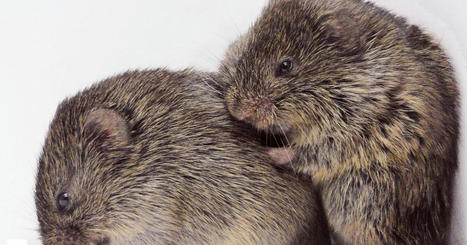
Until now, consolation has only been observed in relatively large brained animals—apes, elephants, dogs, and some large birds. This study shows for the first time, however, that animals as small as rodents are capable of empathetic behaviors that extend beyond just ensuring their offspring survive, to actually helping others around them that are in need.
“Consolation might be present in many more animal species than was previously thought,” says James Burkett, a neuroscientist at Emory University and lead author of the study.
Did you know that teaching children empathy skills early in life can increase their confidence and help them better handle stressful situations?
Empathy is critical to success throughout life and is a necessary component to developing positive relationships and building rewarding careers. Empathy leads to stronger relationships with people and animals, and helps prevent animal cruelty and neglect, as well as bullying in schools.
Through guidance, children can develop the steps necessary for empathy: recognize human and animal emotions, share emotions, and regulate emotions.
Animals are a wonderful medium for helping to teach children how to be empathetic. Not only are companion animals non-judgmental, they offer unconditional love and affection, and are a great support system.
A few months back, as part of a training on core values, a member of our team shared with the group that while they wanted to be seen as someone with a high degree of empathy, they very much disliked sympathy.
Their comment made me reflect introspectively on the difference between sympathy and empathy. While I had always thought of them as closely related, I’ve come to realize that is not the case.
Sympathy is most often experienced when we feel bad for someone else, viewing the situation from our own distant perspective. Sympathy isn’t always received positively; this is especially true if the person you are sympathizing with feels you are looking down on them, or taking pity on them. While sympathy is often used in good faith, it can have a negative impact when the person needs you to relate to them, rather than be detached.
Fiverr freelancer will provide E-Commerce Marketing services and sales boosting ecommerce shopify promotion marketing SEO sales traffic including Online Store Promotion within 2 days...
SEO & SEM service that works for you. Request a free SEO consultation call today.Deck 7 helps you bring high-quality SEO, SEM strategy that delivers impressive ROI, leads...
how to get free backlinks todayhow to get free backlinks today `how to get free backlinks today how to get free backlinks todayhow to get free backlinks todayhow to get free backlinks today
Summary: Study reports the anterior cingulate cortex of rats contain mirror neurons that respond to pain experienced by and observations of others.
Why is it that we can get sad when we see someone else crying? Why is it that we wince when a friend cuts his finger? Researchers from the Netherlands Institute for Neuroscience have found that the rat brain activates the same cells when they observe the pain of others as when they experience pain themselves.
In addition, without the activity of these “mirror neurons”, the animals no longer share the pain of others. As many psychiatric disorders are characterized by a lack of empathy, finding the neural basis for sharing the emotions of others, and being able to modify how much an animal shares the emotions of others, is an exciting step towards understanding empathy and these disorders.
The findings will be published in the leading journal Current Biology on April 11th.
Raven observers show emotional contagion with raven demonstrators experiencing an unpleasant affect"
To effectively navigate the social world, we need information about each other’s emotions. Emotional contagion has been suggested to facilitate such information transmission, constituting a basic building block of empathy that could also be present in non-human animals. Most animal studies have faced difficulties in measuring the emotional valence in contagion.
A collaboration between cognitive biologists and social neuroscientists at University of Vienna solves this problem by integrating behavioral and psychological methods. They show that ravens observing a conspecific in a negative emotional state subsequently perform in a pessimistic manner on a judgment task. The results of this study have been published in the scientific journal Proceedings of the National Academy of Sciences of the United States of America.
Studies show that ravens possess empathy and process emotional reactions to their peers, much like humans and primates do. Researchers conducted a number of tests to study the reactions of neutral stimuli to make this determination such as denying one raven food to study the reactions of others and testing for stress hormones in droppings. I find these studies to not be surprising at all and would not be surprised to find that more animals are found to display empathetic behaviors within their groups.
A sense of empathy for animals can also affect our empathy for one another.
"There's a little bit of information out there, with some of it showing that when children feel empathy for animals it can have positive effects for empathy with others," Burke said.
Burke is looking to recruit at least 1,000 participants in total across two studies, including one that looks at parents' and children's attitudes towards animals and another that surveys young adults about their childhood pets and human relationships.
Empathy is the ability to understand someone else's emotional experiences. Typically, we think of empathy as a noble quality that we relate to compassion.
However, a new study from the Netherlands Institute for Neuroscience in Amsterdam suggests that for rats, being able to detect another's feelings may be a vital survival tool.
"What our data suggest is that an observer shares the emotions of others because it enables the observer to prepare for danger. It's not about helping the victim but about avoiding [becoming] a victim yourself."
The study started in 2011, when Peggy Mason, professor of neurobiology, found that rats consistently free their trapped companions, even giving up on a bit of chocolate for them. The empathy of rats has been demonstrated in several later studies, and it’s already a well established phenomenon.
But Mason also found that when rats are treated with anti-anxiety medication, they are less likely to free a trapped peer because they are less likely to feel its anxiety. In another study, researchers found that rats were hesitant to save strangers, and only freed trapped rats they were familiar with. Rat empathy is remarkably similar to human empathy, maybe in more ways than we’d like to admit.
"Priming a common group membership may be a more powerful driver for inducing pro-social motivation than increasing empathy," said study lead author Inbal Ben-Ami Bartal, an assistant professor of psychobiology at Tel-Aviv University in Israel.
Bartal launched the study in 2014 as a postdoctoral Miller fellow in Kaufer's laboratory at UC Berkeley. Bartal, Kaufer and UC Berkeley psychology professor Dacher Keltner led a research team that sought to identify the brain networks activated in rats in response to empathy, and whether they are mirrored in humans. The results suggest they are.
Animals can teach children empathy. Did you know that teaching children empathy skills early in life can increase their confidence and help them better handle stressful situations?
Empathy is critical to success throughout life and is a necessary component to developing positive relationships and building rewarding careers.;
Empathy leads to stronger relationships with people and animals, and helps prevent animal cruelty and neglect, as well as bullying in schools.
To get content containing either thought or leadership enter:
To get content containing both thought and leadership enter:
To get content containing the expression thought leadership enter:
You can enter several keywords and you can refine them whenever you want. Our suggestion engine uses more signals but entering a few keywords here will rapidly give you great content to curate.

 Your new post is loading...









![Free Keyword Research 2022 No Need for Ahref Semrush [Video] – | steroidify | Scoop.it](https://img.scoop.it/KV6SFjFoZXcoQDapUtZKDjl72eJkfbmt4t8yenImKBVvK0kTmF0xjctABnaLJIm9)





























https://ammoways.com/product/hornady-handgun-hunter-9mm/
https://ammoways.com/product/sellier-and-bellot-9mm-124gr/
https://ammoways.com/product/pf940c-frame/
https://ammoways.com/product/federal-hydra-shok-9mm-135-gr-jhp-20rds/
https://ammoways.com/product/winchester-nato-9mm-luger-124-grain-fmj-1000-rounds-ammo-can/
https://ammoways.com/product/9mm-124gr-elite-v-crown-jhp/
https://ammoways.com/product/buy-cci-ammunition-blazer-brass-full-metal-jacket-round-nose-124grain/
https://ammoways.com/product/ppu-mil-spec-brass/
https://ammoways.com/product/winchester-silvertip-9mm-luger-147-grain-ammunition-20-rounds/
https://ammoways.com/product/remington-range-brass-9mm-115-grain-500-rounds-fmj/
https://ammoways.com/product/blazer-brass-9mm-500-rounds-blazer-9mm-500/
https://ammoways.com/product/glock-19-gen-5/
https://ammoways.com/product/glock-19-x-19x-glock/