Here I present an album of early 20th century photographs of the Russian Imperial Yacht "Standart". Music - "Variation No 4." by Risky-Korskov. The vessel se...
-------------------------------------------------------------------------------------------- Subscribe my channel NOW ► https://www.youtube.com/docuhdengsubt...
How do the Palestinian and Israeli (Arab and Jewish) education systems teach the history of their nations? The film follows several Israeli and Palestinian teachers over one academic year. Observing their exchanges and confrontations with students, debates with the ministries curriculum and its restrictions, the viewers obtain an intimate glimpse into the profound and long lasting effect that the Israeli/Palestinian conflict transmits onto the next generation.
The teaching of history is often very political. You can not separate history from politics. The majority of history class end up focusing on some form of political history. History is all about interpretation. There is no one exact way to interpret an event. This opens up the discipline to being used to foster certain political ideals. Every leader of a nation will try to justify his or hers actions by finding an historical precedent. The history taught in Israeli schools, is going to be pro Israeli. The same is true for the Palestinians. Each side is looking to justify their current polices by telling an historical narrative from their own point of view. Each successive generation will learn the history the government wants them to know.
It's very interesting to see what the Palestinian perceive as peace/freedom as and what the Israelis vice versa. The education systems in both nation influence their beliefs on this idea of freedom. The Israelis see freedom as not having the constant fear of being harmed by their neighboring country. On the other hand, the Palestinian see freedom as claiming back their land and driving the Jews away from it. It is truly sad to know that there is a very little chance that peace will exist in this region.
this is an interesting example of how the teachings of a certain group can influence the perception of the world around you, especially when you are young.
Foldpass is a creative game where you write haikus with your friends. Write a line, invite friends to finish it. Make a nifty poster out of the completed work.
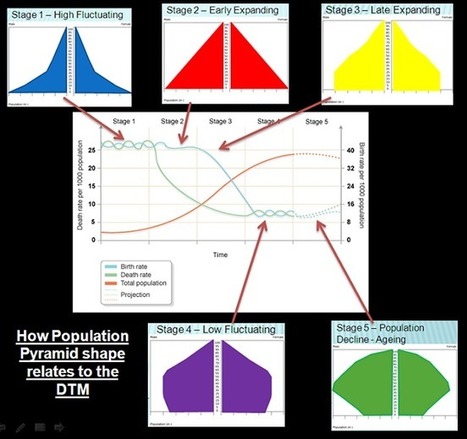
http://skunkbear.tumblr.com It was just over two centuries ago that the global population was 1 billion — in 1804. But better medicine and improved agricultu...
Liam Dutton nails pronouncing Llanfairpwllgwyngyllgogerychwyrndrobwllllantysiliogogogoch
Known as Llanfairpwllgwyngyll, Llanfair PG and Llanfairpwll, the small community of 3,000 on the island of Anglesey has the longest single word toponym (place name) in Europe. The name means "Saint Mary's Church in a hollow of white hazel near the swirling whirlpool of the church of Saint Tysilio with a red cave."
The longest toponym in the world is a New Zealand hill named Taumatawhakatangihangakoauauotamateapokaiwhenuakitanatahu.
The influx of Syrian refuges has caused a major controversy in Europe. The crises has ripped open the hotly debated topic of immigration into Europe. Many nations are refusing to take the refuges in. Hungary and Slovenia have been two of the most vocal opponents of letting migrants and refuges into Europe. They are continuing to hold to their closed borders policy. Both nations have become angered by the Croatian governments recent decision to reverse course and allow refuges into their country. This topic will continue to be debated in Europe. In the United States the issue of Syrian refuges has also become a political issue. President Obamas decision to take in some refuges has caused a political controversy to erupt. Some on the right, including Donald Trump have come out against opening American borders to the refuges.
Croatia has reversed it's policy on the current migrant problem in Europe and the middle east. This is just a deplorable situation that seems to have no end in sight. While I understand the argument that other Islamic countries should be willing to take them, the current status quo simply can't be allowed to continue any longer.
of course Croatia has decided to let people through. they can only suffer if they try to stop migrants at their border, especially when the migrants are trying to get to countries to the north. if we compare the cost of trying and failing to keep out migrants and the cost of busing them to the northern boarder, we may find that the cost is smaller when they simply bus the migrants to the boarder and forget about them.
In which John Green teaches you about population. So, how many people can reasonably live on the Earth? Thomas Malthus got it totally wrong in the 19th centu...
For nearly 200 years Tsarskoye Selo had been a summer residence of the Russian Royal Family. Many of the significant state affairs were conducted here. The m...
We sometimes describe this mingling as ‘‘cross-pollination’’ or ‘‘cross-fertilization’’ — benign, bucolic metaphors that obscure the force of these encounters. When we wish to speak more plainly, we talk of ‘‘appropriation’’ — a word now associated with the white Western world’s co-opting of minority cultures.
"French is currently ranked sixth among world languages, after Mandarin Chinese, English, Spanish, Hindi and Arabic. But it is gaining speakers quickly and, the study reports, will be spoken by 750 million in 2050, up from 220 million today. A demographic boom in French-speaking African states could bump the percentage of global French speakers from 3 percent to 8 percent by 2050, but some skeptics think the predictions are overrated."
An eight-part series on representations of perception and sensation. "The world is given to me only once, not one existing and one perceived. Subject and object…
china - 30 story etage building build in 15 days - prefabricated houses - skyscraper for in development countries, cities 1 story food aid 1 story kitchen 2 ...
The United States is no longer the world’s only global naval power.
Why would China go to the trouble and expense of mounting an expedition to the northern climes in the Western Hemisphere? Because it sees value in staging a presence in distant waters. And because it can: Beijing no longer depends completely on its oceangoing battle fleet to ward off threats in China’s seas. It can now rain long-range precision firepower on enemy fleets from land. Ergo, the People’s Liberation Army Navy (PLAN) fleet can cruise the far reaches of the Pacific and Indian oceans or even beyond, without forfeiting China’s interests in waters close to home. For China, the upsides of far-ranging maritime strategy are many and compelling, the downsides fewer and fewer.
Tags: geopolitics, political, water, China, East Asia.
The nation that controls the seas, controls the world. Throughout history the leading Naval powers have always been the worlds most dominate nations. The greatest land forces, are no match for the supremacy of the seas. Not even Napoleon could beet back the power of a supreme navy( The British Royal Navy). Since the end of the Second World War, The United States navy has dominated the seas. That domination has made the U.S the worlds greatest nation over the course of the past 75 years. For China to displace the U.S atop the nations hierarchy, they most out due us on the seas. China is ware of this history, and that is why they are heavily investing in their naval technology. The key to the future, as it has been in the past, will be what nation can dominate the worlds seas.
the growing strength of the Chinese navy is worrying from a military perspective, as during the cold war one of the main reasons they were not considered as big a threat as the Russians was because of their inability to project force beyond mainland china. with their navel improvements this is no longer the case. what this will hold for the future, we can only wait and see.
"Globalisation was supposed to tear down barriers, but security fears and a widespread refusal to help migrants and refugees have fuelled a new spate of wall-building across the world, even if experts doubt their long-term effectiveness. When the Berlin Wall was torn down a quarter-century ago, there were 16 border fences around the world. Today, there are 65 either completed or under construction, according to Quebec University expert Elisabeth Vallet."
How much do you know about the world? Hans Rosling, with his famous charts of global population, health and income data (and an extra-extra-long pointer), demonstrates that you have a high statistical chance of being quite wrong about what you think you know. Play along with his audience quiz — then, from Hans’ son Ola, learn 4 ways to quickly get less ignorant.
To get content containing either thought or leadership enter:
To get content containing both thought and leadership enter:
To get content containing the expression thought leadership enter:
You can enter several keywords and you can refine them whenever you want. Our suggestion engine uses more signals but entering a few keywords here will rapidly give you great content to curate.


 Your new post is loading...


 Scoop.it!