How do the Palestinian and Israeli (Arab and Jewish) education systems teach the history of their nations? The film follows several Israeli and Palestinian teachers over one academic year. Observing their exchanges and confrontations with students, debates with the ministries curriculum and its restrictions, the viewers obtain an intimate glimpse into the profound and long lasting effect that the Israeli/Palestinian conflict transmits onto the next generation.
The teaching of history is often very political. You can not separate history from politics. The majority of history class end up focusing on some form of political history. History is all about interpretation. There is no one exact way to interpret an event. This opens up the discipline to being used to foster certain political ideals. Every leader of a nation will try to justify his or hers actions by finding an historical precedent. The history taught in Israeli schools, is going to be pro Israeli. The same is true for the Palestinians. Each side is looking to justify their current polices by telling an historical narrative from their own point of view. Each successive generation will learn the history the government wants them to know.
It's very interesting to see what the Palestinian perceive as peace/freedom as and what the Israelis vice versa. The education systems in both nation influence their beliefs on this idea of freedom. The Israelis see freedom as not having the constant fear of being harmed by their neighboring country. On the other hand, the Palestinian see freedom as claiming back their land and driving the Jews away from it. It is truly sad to know that there is a very little chance that peace will exist in this region.
this is an interesting example of how the teachings of a certain group can influence the perception of the world around you, especially when you are young.
This is a great site that lets learners explore open access TV from around the world. https://tvexplorer.live/ Great for developing language skills and exploring different pronunciations from different regions.
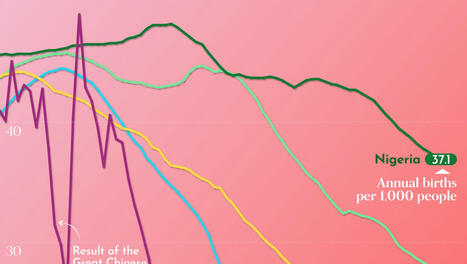
"Lack of choice, not desire" is reason for global fertility crisis, say UN in a new report, after a massive new global survey. The Sky News data and forensics team breaks down the key details.
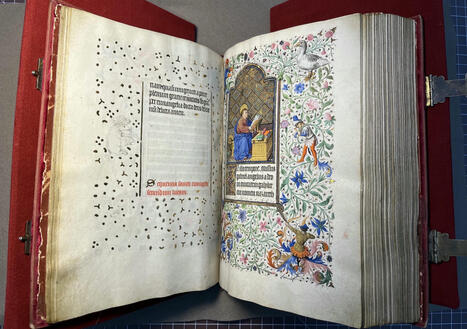
At the Morgan Library in New York, an unfinished manuscript from 1400s France can teach us how Medieval artists crafted their exquisitely detailed works.
This is a free web based app that enables young children to make and share stories together. It’s very colourful and easy to use. The stories can be written(with or without the help of AI) recorded using voice or webcam. Something kids will love.
Restricting the volume of high-emitting vehicles roaming city streets carries many benefits, from clearing the air to quieting the urban din and beyond. Recognition of this simple fact has led to the proliferation of clean air zones, designated regions within a city where vehicles must meet strict pollution standards or pay a fee to operate […]
Hitler invaded much of Europe during World War II, but one country remained untouched—Switzerland. Discover the military strategy, geography, and defensive preparations that made invading Switzerland a risky decision. This short explains one of the most fascinating stories from WWII history. #worldwar2 #hitler #militaryhistory #war #historyfacts #warstories #shorts
Passenger Seat is a friendly travel companion for the car. As you drive, it tells you about the history, landmarks, and towns you would otherwise pass right by, hands free.
Learn how to create history reconstructions here: beacons.ai/majesticaistudio
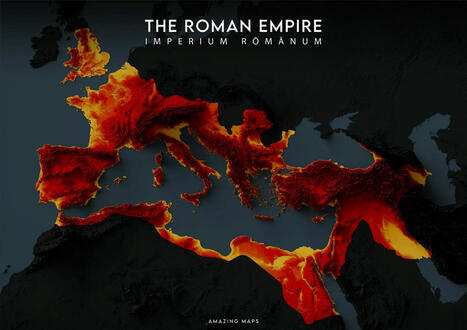
From a small collection of villages on the banks of the Tiber to the greatest empire the ancient world had ever seen — and then the long, extraordinary unravelling of it all. In 44 minutes, we cover the full sweep of Roman history: the founding myths, the Republic, the brutal beauty of the Roman army, the assassination of Caesar, the rise of Augustus, the emperors who built it and the emperors who nearly destroyed it, the gladiators, the aqueducts, the roads that still exist today, and the slow collapse of a civilisation that shaped virtually everything about the world we live in. This is Rome — all of it — told the way it deserves to be told.
The Persian Qanat: Ancient Desert Engineering. Discover the incredible engineering feat of the Persian Qanat, an ancient system dating back 3,000 years. These remarkable tunnels, found in the deserts of Iran, have provided a reliable water supply for centuries. Learn about the meticulous construction process, the annual maintenance required, and how this technology spread across the world through trade and conquest.
When William of Normandy invaded England in 1066, it began a transformation of the Old English language. The Norman conquerors replaced the Anglo-Saxon ruling class, bringing with them their Anglo-Norman language, which was based on Old French. Over time, the two languages blended. Old English grammar became simpler, and the English vocabulary expanded with the addition of French words. The result was a new stage of the English language: Middle English, spoken around 1100 to 1500. During this time, Geoffrey Chaucer wrote The Canterbury Tales, one of the most famous examples of Middle English literature. Chaucer’s writing — and the English language in general — was not uniform at this time. Spellings varied and were often phonetic, and pronunciation differed by region; Chaucer often used whichever version of a word fit his rhyme. There were some differences between the Middle English alphabet and our ...Read More
Amid warnings from the WTO that world merchandise trade could slip into outright decline this year and with Red‑Sea shipping lanes still only partly restore…
What we’re showing This chart shows annual births per 1,000 people across the world’s six most populous countries, based on UN data. Key takeaway Birth…
To get content containing either thought or leadership enter:
To get content containing both thought and leadership enter:
To get content containing the expression thought leadership enter:
You can enter several keywords and you can refine them whenever you want. Our suggestion engine uses more signals but entering a few keywords here will rapidly give you great content to curate.


 Your new post is loading...





















The teaching of history is often very political. You can not separate history from politics. The majority of history class end up focusing on some form of political history. History is all about interpretation. There is no one exact way to interpret an event. This opens up the discipline to being used to foster certain political ideals. Every leader of a nation will try to justify his or hers actions by finding an historical precedent. The history taught in Israeli schools, is going to be pro Israeli. The same is true for the Palestinians. Each side is looking to justify their current polices by telling an historical narrative from their own point of view. Each successive generation will learn the history the government wants them to know.
It's very interesting to see what the Palestinian perceive as peace/freedom as and what the Israelis vice versa. The education systems in both nation influence their beliefs on this idea of freedom. The Israelis see freedom as not having the constant fear of being harmed by their neighboring country. On the other hand, the Palestinian see freedom as claiming back their land and driving the Jews away from it. It is truly sad to know that there is a very little chance that peace will exist in this region.
this is an interesting example of how the teachings of a certain group can influence the perception of the world around you, especially when you are young.