"Despite considering myself a cryptographer, I have not found myself particularly drawn to “crypto.” I don’t think I’ve ever actually said the words “get off my lawn,” but I’m much more likely to click on Pepperidge Farm Remembers flavored memes about how “crypto” used to mean “cryptography” than I am the latest NFT drop.
Also – cards on the table here – I don’t share the same generational excitement for moving all aspects of life into an instrumented economy.
Even strictly on the technological level, though, I haven’t yet managed to become a believer. So given all of the recent attention into what is now being called web3, I decided to explore some of what has been happening in that space more thoroughly to see what I may be missing.
How I think about 1 and 2
web3 is a somewhat ambiguous term, which makes it difficult to rigorously evaluate what the ambitions for web3 should be, but the general thesis seems to be that web1 was decentralized, web2 centralized everything into platforms, and that web3 will decentralize everything again. web3 should give us the richness of web2, but decentralized.
It’s probably good to have some clarity on why centralized platforms emerged to begin with, and in my mind the explanation is pretty simple:
People don’t want to run their own servers, and never will. The premise for web1 was that everyone on the internet would be both a publisher and consumer of content as well as a publisher and consumer of infrastructure.
We’d all have our own web server with our own web site, our own mail server for our own email, our own finger server for our own status messages, our own chargen server for our own character generation. However – and I don’t think this can be emphasized enough – that is not what people want. People do not want to run their own servers.
Even nerds do not want to run their own servers at this point. Even organizations building software full time do not want to run their own servers at this point. If there’s one thing I hope we’ve learned about the world, it’s that people do not want to run their own servers. The companies that emerged offering to do that for you instead were successful, and the companies that iterated on new functionality based on what is possible with those networks were even more successful.
A protocol moves much more slowly than a platform. After 30+ years, email is still unencrypted; meanwhile WhatsApp went from unencrypted to full e2ee in a year. People are still trying to standardize sharing a video reliably over IRC; meanwhile, Slack lets you create custom reaction emoji based on your face.
This isn’t a funding issue. If something is truly decentralized, it becomes very difficult to change, and often remains stuck in time. That is a problem for technology, because the rest of the ecosystem is moving very quickly, and if you don’t keep up you will fail. There are entire parallel industries focused on defining and improving methodologies like Agile to try to figure out how to organize enormous groups of people so that they can move as quickly as possible because it is so critical.
When the technology itself is more conducive to stasis than movement, that’s a problem. A sure recipe for success has been to take a 90’s protocol that was stuck in time, centralize it, and iterate quickly.
But web3 intends to be different, so let’s take a look. In order to get a quick feeling for the space and a better understanding for what the future may hold, I decided to build a couple of dApps and create an NFT.
Making some distributed apps
To get a feeling for the web3 world, I made a dApp called Autonomous Art that lets anyone mint a token for an NFT by making a visual contribution to it. The cost of making a visual contribution increases over time, and the funds a contributor pays to mint are distributed to all previous artists (visualizing this financial structure would resemble something similar to a pyramid shape). At the time of this writing, over $38k USD has gone into creating this collective art piece.
I also made a dApp called First Derivative that allows you to create, discover, and exchange NFT derivatives which track an underlying NFT, similar to financial derivatives which track an underlying asset 😉.
Both gave me a feeling for how the space works. To be clear, there is nothing particularly “distributed” about the apps themselves: they’re just normal react websites. The “distributedness” refers to where the state and the logic/permissions for updating the state lives: on the blockchain instead of in a “centralized” database.
One thing that has always felt strange to me about the cryptocurrency world is the lack of attention to the client/server interface. When people talk about blockchains, they talk about distributed trust, leaderless consensus, and all the mechanics of how that works, but often gloss over the reality that clients ultimately can’t participate in those mechanics. All the network diagrams are of servers, the trust model is between servers, everything is about servers. Blockchains are designed to be a network of peers, but not designed such that it’s really possible for your mobile device or your browser to be one of those peers.
With the shift to mobile, we now live firmly in a world of clients and servers – with the former completely unable to act as the latter – and those questions seem more important to me than ever.
Meanwhile, ethereum actually refers to servers as “clients,” so there’s not even a word for an actual untrusted client/server interface that will have to exist somewhere, and no acknowledgement that if successful there will ultimately be billions (!) more clients than servers.
For example, whether it’s running on mobile or the web, a dApp like Autonomous Art or First Derivative needs to interact with the blockchain somehow – in order to modify or render state (the collectively produced work of art, the edit history for it, the NFT derivatives, etc). That’s not really possible to do from the client, though, since the blockchain can’t live on your mobile device (or in your desktop browser realistically). So the only alternative is to interact with the blockchain via a node that’s running remotely on a server somewhere.
A server! But, as we know, people don’t want to run their own servers. As it happens, companies have emerged that sell API access to an ethereum node they run as a service, along with providing analytics, enhanced APIs they’ve built on top of the default ethereum APIs, and access to historical transactions. Which sounds… familiar. At this point, there are basically two companies. Almost all dApps use either Infura or Alchemy in order to interact with the blockchain. In fact, even when you connect a wallet like MetaMask to a dApp, and the dApp interacts with the blockchain via your wallet, MetaMask is just making calls to Infura!
These client APIs are not using anything to verify blockchain state or the authenticity of responses. The results aren’t even signed. An app like Autonomous Art says “hey what’s the output of this view function on this smart contract,” Alchemy or Infura responds with a JSON blob that says “this is the output,” and the app renders it.
This was surprising to me. So much work, energy, and time has gone into creating a trustless distributed consensus mechanism, but virtually all clients that wish to access it do so by simply trusting the outputs from these two companies without any further verification. It also doesn’t seem like the best privacy situation. Imagine if every time you interacted with a website in Chrome, your request first went to Google before being routed to the destination and back. That’s the situation with ethereum today. All write traffic is obviously already public on the blockchain, but these companies also have visibility into almost all read requests from almost all users in almost all dApps.
Partisans of the blockchain might say that it’s okay if these types of centralized platforms emerge, because the state itself is available on the blockchain, so if these platforms misbehave clients can simply move elsewhere. However, I would suggest that this is a very simplistic view of the dynamics that make platforms what they are.
Let me give you an example.
Making an NFT
I also wanted to create a more traditional NFT. Most people think of images and digital art when they think of NFTs, but NFTs generally do not store that data on-chain. For most NFTs of most images, that would be much too expensive.
Instead of storing the data on-chain, NFTs instead contain a URL that points to the data. What surprised me about the standards was that there’s no hash commitment for the data located at the URL. Looking at many of the NFTs on popular marketplaces being sold for tens, hundreds, or millions of dollars, that URL often just points to some VPS running Apache somewhere. Anyone with access to that machine, anyone who buys that domain name in the future, or anyone who compromises that machine can change the image, title, description, etc for the NFT to whatever they’d like at any time (regardless of whether or not they “own” the token). There’s nothing in the NFT spec that tells you what the image “should” be, or even allows you to confirm whether something is the “correct” image.
So as an experiment, I made an NFT that changes based on who is looking at it, since the web server that serves the image can choose to serve different images based on the IP or User Agent of the requester. For example, it looked one way on OpenSea, another way on Rarible, but when you buy it and view it from your crypto wallet, it will always display as a large 💩 emoji. What you bid on isn’t what you get. There’s nothing unusual about this NFT, it’s how the NFT specifications are built. Many of the highest priced NFTs could turn into 💩 emoji at any time; I just made it explicit.
After a few days, without warning or explanation, the NFT I made was removed from OpenSea (an NFT marketplace):
The takedown suggests that I violated some Term Of Service, but after reading the terms, I don’t see any that prohibit an NFT which changes based on where it is being looked at from, and I was openly describing it that way.
What I found most interesting, though, is that after OpenSea removed my NFT, it also no longer appeared in any crypto wallet on my device. This is web3, though, how is that possible?
A crypto wallet like MetaMask, Rainbow, etc is “non-custodial” (the keys are kept client side), but it has the same problem as my dApps above: a wallet has to run on a mobile device or in your browser. Meanwhile, ethereum and other blockchains have been designed with the idea that it’s a network of peers, but not designed such that it’s really possible for your mobile device or your browser to be one of those peers.
A wallet like MetaMask needs to do basic things like display your balance, your recent transactions, and your NFTs, as well as more complex things like constructing transactions, interacting with smart contracts, etc. In short, MetaMask needs to interact with the blockchain, but the blockchain has been built such that clients like MetaMask can’t interact with it. So like my dApp, MetaMask accomplishes this by making API calls to three companies that have consolidated in this space.
For instance, MetaMask displays your recent transactions by making an API call to etherscan:
GET https://api.etherscan.io/api?module=account&address=0x0208376c899fdaEbA530570c008C4323803AA9E8&offset=40&order=desc&action=txlist&tag=latest&page=1 HTTP/2.0
…displays your account balance by making an API call to Infura:
…displays your NFTs by making an API call to OpenSea:
GET https://api.opensea.io/api/v1/assets?owner=0x0208376c899fdaEbA530570c008C4323803AA9E8&offset=0&limit=50 HTTP/2.0
Again, like with my dApp, these responses are not authenticated in some way. They’re not even signed so that you could later prove they were lying. It reuses the same connections, TLS session tickets, etc for all the accounts in your wallet, so if you’re managing multiple accounts in your wallet to maintain some identity separation, these companies know they’re linked.
MetaMask doesn’t actually do much, it’s just a view onto data provided by these centralized APIs. This isn’t a problem specific to MetaMask – what other option do they have? Rainbow, etc are set up in exactly the same way. (Interestingly, Rainbow has their own data for the social features they’re building into their wallet – social graph, showcases, etc – and have chosen to build all of that on top of Firebase instead of the blockchain.)
All this means that if your NFT is removed from OpenSea, it also disappears from your wallet. It doesn’t functionally matter that my NFT is indelibly on the blockchain somewhere, because the wallet (and increasingly everything else in the ecosystem) is just using the OpenSea API to display NFTs, which began returning 304 No Content for the query of NFTs owned by my address!
Recreating this world
Given the history of why web1 became web2, what seems strange to me about web3 is that technologies like ethereum have been built with many of the same implicit trappings as web1. To make these technologies usable, the space is consolidating around… platforms. Again. People who will run servers for you, and iterate on the new functionality that emerges. Infura, OpenSea, Coinbase, Etherscan.
Likewise, the web3 protocols are slow to evolve. When building First Derivative, it would have been great to price minting derivatives as a percentage of the underlying’s value. That data isn’t on chain, but it’s in an API that OpenSea will give you. People are excited about NFT royalties for the way that they can benefit creators, but royalties aren’t specified in ERC-721, and it’s too late to change it, so OpenSea has its own way of configuring royalties that exists in web2 space. Iterating quickly on centralized platforms is already outpacing the distributed protocols and consolidating control into platforms.
Given those dynamics, I don’t think it should be a surprise that we’re already at a place where your crypto wallet’s view of your NFTs is OpenSea’s view of your NFTs. I don’t think we should be surprised that OpenSea isn’t a pure “view” that can be replaced, since it has been busy iterating the platform beyond what is possible strictly with the impossible/difficult to change standards.
I think this is very similar to the situation with email. I can run my own mail server, but it doesn’t functionally matter for privacy, censorship resistance, or control – because GMail is going to be on the other end of every email that I send or receive anyway. Once a distributed ecosystem centralizes around a platform for convenience, it becomes the worst of both worlds: centralized control, but still distributed enough to become mired in time. I can build my own NFT marketplace, but it doesn’t offer any additional control if OpenSea mediates the view of all NFTs in the wallets people use (and every other app in the ecosystem).
This isn’t a complaint about OpenSea or an indictment of what they’ve built. Just the opposite, they’re trying to build something that works. I think we should expect this kind of platform consolidation to happen, and given the inevitability, design systems that give us what we want when that’s how things are organized. My sense and concern, though, is that the web3 community expects some other outcome than what we’re already seeing.
It’s early days
“It’s early days still” is the most common refrain I see from people in the web3 space when discussing matters like these. In some ways, cryptocurrency’s failure to scale beyond relatively nascent engineering is what makes it possible to consider the days “early,” since objectively it has already been a decade or more.
However, even if this is just the beginning (and it very well might be!), I’m not sure we should consider that any consolation. I think the opposite might be true; it seems like we should take notice that from the very beginning, these technologies immediately tended towards centralization through platforms in order for them to be realized, that this has ~zero negatively felt effect on the velocity of the ecosystem, and that most participants don’t even know or care it’s happening. This might suggest that decentralization itself is not actually of immediate practical or pressing importance to the majority of people downstream, that the only amount of decentralization people want is the minimum amount required for something to exist, and that if not very consciously accounted for, these forces will push us further from rather than closer to the ideal outcome as the days become less early.
But you can’t stop a gold rush
When you think about it, OpenSea would actually be much “better” in the immediate sense if all the web3 parts were gone. It would be faster, cheaper for everyone, and easier to use. For example, to accept a bid on my NFT, I would have had to pay over $80-$150+ just in ethereum transaction fees. That puts an artificial floor on all bids, since otherwise you’d lose money by accepting a bid for less than the gas fees. Payment fees by credit card, which typically feel extortionary, look cheap compared to that. OpenSea could even publish a simple transparency log if people wanted a public record of transactions, offers, bids, etc to verify their accounting.
However, if they had built a platform to buy and sell images that wasn’t nominally based on crypto, I don’t think it would have taken off. Not because it isn’t distributed, because as we’ve seen so much of what’s required to make it work is already not distributed. I don’t think it would have taken off because this is a gold rush. People have made money through cryptocurrency speculation, those people are interested in spending that cryptocurrency in ways that support their investment while offering additional returns, and so that defines the setting for the market of transfer of wealth.
The people at the end of the line who are flipping NFTs do not fundamentally care about distributed trust models or payment mechanics, but they care about where the money is. So the money draws people into OpenSea, they improve the experience by building a platform that iterates on the underlying web3 protocols in web2 space, they eventually offer the ability to “mint” NFTs through OpenSea itself instead of through your own smart contract, and eventually this all opens the door for Coinbase to offer access to the validated NFT market with their own platform via your debit card. That opens the door to Coinbase managing the tokens themselves through dark pools that Coinbase holds, which helpfully eliminates the transaction fees and makes it possible to avoid having to interact with smart contracts at all. Eventually, all the web3 parts are gone, and you have a website for buying and selling JPEGS with your debit card. The project can’t start as a web2 platform because of the market dynamics, but the same market dynamics and the fundamental forces of centralization will likely drive it to end up there.
At the end of the stack, NFT artists are excited about this kind of progression because it means more speculation/investment in their art, but it also seems like if the point of web3 is to avoid the trappings of web2, we should be concerned that this is already the natural tendency for these new protocols that are supposed to offer a different future.
I think these market forces will likely continue, and in my mind the question of how long it continues is a question of whether the vast amounts of accumulated cryptocurrency are ultimately inside an engine or a leaky bucket. If the money flowing through NFTs ends up channeled back into crypto space, it could continue to accelerate forever (regardless of whether or not it’s just web2x2). If it churns out, then this will be a blip. Personally, I think enough money has been made at this point that there are enough faucets to keep it going, and this won’t just be a blip. If that’s the case, it seems worth thinking about how to avoid web3 being web2x2 (web2 but with even less privacy) with some urgency.
Creativity might not be enough
I have only dipped my toe in the waters of web3. Looking at it through the lens of these small projects, though, I can easily see why so many people find the web3 ecosystem so neat. I don’t think it’s on a trajectory to deliver us from centralized platforms, I don’t think it will fundamentally change our relationship to technology, and I think the privacy story is already below par for the internet (which is a pretty low bar!), but I also understand why nerds like me are excited to build for it. It is, at the very least, something new on the nerd level – and that creates a space for creativity/exploration that is somewhat reminiscent of early internet days. Ironically, part of that creativity probably springs from the constraints that make web3 so clunky. I’m hopeful that the creativity and exploration we’re seeing will have positive outcomes, but I’m not sure if it’s enough to prevent all the same dynamics of the internet from unfolding again.
If we do want to change our relationship to technology, I think we’d have to do it intentionally.
My basic thoughts are roughly:
We should accept the premise that people will not run their own servers by designing systems that can distribute trust without having to distribute infrastructure. This means architecture that anticipates and accepts the inevitable outcome of relatively centralized client/server relationships, but uses cryptography (rather than infrastructure) to distribute trust. One of the surprising things to me about web3, despite being built on “crypto,” is how little cryptography seems to be involved!
We should try to reduce the burden of building software. At this point, software projects require an enormous amount of human effort. Even relatively simple apps require a group of people to sit in front of a computer for eight hours a day, every day, forever. This wasn’t always the case, and there was a time when 50 people working on a software project wasn’t considered a “small team.” As long as software requires such concerted energy and so much highly specialized human focus, I think it will have the tendency to serve the interests of the people sitting in that room every day rather than what we may consider our broader goals. I think changing our relationship to technology will probably require making software easier to create, but in my lifetime I’ve seen the opposite come to pass. Unfortunately, I think distributed systems have a tendency to exacerbate this trend by making things more complicated and more difficult, not less complicated and less difficult."...
Social Impact Bonds (SIBs) are a private financing mechanism used to fund social programs. Also termed 'Pay For Success,' and 'Outcomes Based' or 'Performance Based' financing, these partnerships involve private entities funding projects aimed at improving social outcomes. If by the end of the project period, 'success' metrics are met (according to third-party evaluators), investors then profit by being paid interest on top of the reimbursed government funds for the cost of the project. This page includes a collection of updates and critical perspectives on these profit structures and on Blockchain Identity systems, de-centralized online ledger programs, poised to be the data backbone that would provide 'proof' of 'program impact' for investors. For files related to Blockchain, see: http://bit.ly/Blockchain_Files. [Note: Views presented on this page are re-shared from external websites and may not necessarily represent the views nor official position of the curator nor employer of the curator.]
Abstract "This article considers proponents’ arguments for Pay for Success also known as Social Impact Bonds. Pay for Success allows banks to finance public services with potential profits tied to metrics. Pay for Success has received federal support through the Every Student Succeeds Act of 2016 and is predicted by 2020 to expand in the US to a trillion dollars. As school districts, cities, and states face debt and budget crises, Pay for Success has been advocated by philanthropists, corporate consulting firms, politicians, and investment banks on the grounds of improving accountability, cost savings, risk transfer, and market discipline. With its trailblazing history in neoliberal education, Chicago did an early experiment in Pay for Success. This article provides a conceptual analysis of the key underlying assumptions and ideologies of Pay for Success. It examines the claims of proponents and critics and sheds light on the financial and ideological motivations animating Pay for Success. The article contends that Pay for Success primarily financially benefits banks without providing the benefits that proponents promise. It concludes by considering Pay for Success in relation to broader structural economic considerations and the recent uses of public schooling to produce short-term profit for capitalists."
Keywords Pay for Success; Social Impact Bonds; Chicago School Reform; Neoliberal Education; Corporate School Reform; Venture Philanthropy
By Kenneth Saltman "Investment banks such as Goldman Sachs, Bank of America, and J. P. Morgan; philanthropies such as the Rockefeller Foundation; politicians such as Chicago Mayor Rahm Emanuel and Massachusetts former governor and now Bain Capital managing director Deval Patrick; and elite universities such as Harvard have been aggressively promoting Pay for Success (also known as social impact bonds) as a solution to intractable financial and political problems facing public education and other public services. In these schemes, investment banks pay for public services to be contracted out to private providers and stand to earn much more money than the cost of the service. For example, Goldman Sachs put up $16.6 million to fund an early childhood education program in Chicago, yet it is getting more than $30 million[1] from the city. While Pay for Success is only at its early stages in the United States, the Rockefeller Foundation and Merrill Lynch estimate that by 2020, the market size for impact investing will reach between $400 billion and $1 trillion.[2] The Every Student Succeeds Act of 2016, the latest iteration of the Elementary and Secondary Education Act of 1965, directs federal dollars to incentivize these for-profit educational endeavors significantly, legitimizing and institutionalizing them.
Success is promoted by proponents as an innovative financing technique that brings together social service providers with private funders and nonprofit organizations committed to expanding social service provision. In theory, Pay for Success expands accountability because programs are independently evaluated for their success and the government only pays the funder (the bank) if the program meets the metrics. If the program exceeds the metrics, then the investor can receive bonus money, making the program much more expensive for the public and highly lucrative for the banks.
Banks love Pay for Success because they can profit massively from it and invest money with high returns at a time of a glut of capital and historically low interest rates. Politicians (especially rightist democrats) love Pay for Success because they can claim to be expanding public services without raising taxes or issuing bonds and will only have the public pay for “what works.” Elite universities and corporate philanthropies love Pay for Success because they support “innovation” and share an ethos that only the prime beneficiaries of the current economy, the rich, can save the poor.
Pay for Success began as social impact bonds and were imported into the United States from the United Kingdom around 2010. They were promoted by the leading consultancy advocate of neoliberal education, McKinsey Consulting; the neoliberal think tank Center for American Progress, which was founded by former Clinton chief of staff and Democratic Party leader John Podesta (who also led Obama’s transition); and the Rockefeller Foundation. Pay for Success expansion is now the central agenda of the Rockefeller Foundation. Shortly before championing Pay for Success for Chicago, Rahm Emanuel served as Obama’s chief of staff, having had a long career as a hard-driving Democratic congressman and political money raiser and also an investment banker. Certain other key figures lobbied to expand the use of Pay for Success. Most notably, Jeffrey Liebman went from Obama’s Office of Management and Budget to a large center at Harvard, the Government Performance Lab in the Kennedy School of Government, dedicated to expanding Pay for Success. Liebman is a leader of the Center for American Progress and was a key economic advisor to Obama in his 2008 campaign. Other key influencers of Pay for Success include the Rockefeller Foundation and Third Sector Capital.
Advocates explain that the value of a Pay for Success program is allegedly that it creates a “market incentive” for a bank or investor to fund a social program when there is not the political will to support the expansion of public services, and second, by injecting “market discipline” into the bureaucratically encumbered public sector, Pay for Success will make the public sector “accountable” through investment in “what works,” and it will avoid funding public programs for which the public has “little to show,” as Liebman and Third Sector Capital Partners are fond of suggesting (Wallace, 2014).[3] The value of any public spending in this view must be measurable through quantitative metrics to be of social value. Third, it consequently saves money by not funding programs that cannot be shown to be effective, and fourth, it shifts risk away from the public and onto the private sector while retaining only the potential social benefit for the public. Last, it mobilizes beneficent corporations, banks, powerful nonprofit companies, and philanthropic foundations to save the poor, the powerless, and the public from themselves. Here Goldman Sachs frames its profit-seeking activities as corporate social responsibility, charity, and good works that define its image in the public mind. In fact, all five of these positions that advocates claim explicitly or implicitly to support the expansion of Pay for Success are baseless.
The Myths of Pay for Success
Myth 1: Market Discipline
Repeating a long-standing neoliberal mantra of private-sector efficiency and public-sector bloat, advocates of Pay for Success claim that the programs are necessary because they inject a healthy dose of market discipline into the bureaucratically encumbered and unaccountable public sphere. According to the leading proponent of Pay for Success, Jeffrey Liebman, private-sector finance produces this market discipline because governments do not monitor and measure the services contractors provide. Says Liebman, “[Government] programs that don’t produce results continue to be financed year after year, something that would not happen in the business world.”[4] This is an odd claim from one of Obama’s leading economic advisors at the time that Obama was sworn in as president and who proceeded to have the public sector bail out the private sector. The 2008 financial bailout of the banks by the U.S. federal government represents a repudiation of the neoliberal logic of the natural discipline of markets and of deregulation. The private sector, including banks, insurance companies, and the automotive industry, needed the public sector to step in and save unprofitable businesses and businesses that had invested in the deregulated mortgage-backed securities market. More broadly, some of the largest sectors of the economy, such as defense, agriculture, and entertainment, rely on massive public-sector subsidies to function. Specifically, the financial crisis and consequent recession were a result first of neoliberal bank deregulation and a faith in markets to regulate themselves, but also they demonstrated the illegal activity, fraud, and lies of the same banks that now seek profit through Pay for Success, including Goldman Sachs, Bank of America, Merrill Lynch, and J. P. Morgan.
Pay for Success proponents claim that the financing scheme is necessary because there would otherwise not be the political will to do projects like early childhood education in Chicago for a couple of thousand children or recidivism reduction programs in Massachusetts. Third Sector Capital Partners, a nonprofit that relies on Pay for Success expansion as a cornerstone of its business, claims that Americans do not support state spending and hence Pay for Success is necessary.[5] However, Gallup shows that 75 percent of Americans favor expanded public spending on infrastructure, and 58 percent support replacing the Affordable Care Act with a universal federal health care system.[6] Indeed, as long-standing studies and, more recently, the Bernie Sanders presidential campaign of 2016 indicate, a large percentage of Americans support a range of increased spending on progressive social programs.
A mantra found in the literature that advocates Pay for Success is that it “allow[s] the government to avoid paying for programs that don’t make a difference.”[7] For working-class and poor citizens, many of whom are working two or three low-paying jobs, the cost of private early childcare and education is a major financial burden. The fact that early childcare and education have become corporatized by national companies who pay superexploitative wages to workers only worsens the situation. The fact that early childcare and education are vital economic needs raises a question about whose political will is in question when Pay for Success proponents claim that the only way to provide early child educational services is with the involvement of banks, and that without banks, it should not be provided. The parents and community members are not the ones who lack the political will. Political and financial elites do not want to pay for other people’s children—without a cut."...
"There are countless examples of the dangers posed by national ID schemes, including from Kenya, Uganda, Pakistan, India and elsewhere."
By Elizabeth M. Renieris
"Ethiopia has been making international headlines due to the steep escalation of a nearly year-long civil war in its northern Tigray region and ensuing humanitarian crisis, with millions teetering on the brink of famine and genocide. At the same time, we are beginning to recognize the role that technology companies and platforms can play in exacerbating such crises.
For example, Meta (formerly known as Facebook) and Twitter have been implicated in worsening matters by inciting violence and amplifying hate speech against certain ethnic groups in the region. Meanwhile, an offshore “Web 3” project with ambitions to build a national ID system in Ethiopia based on a suite of much-hyped blockchain technologies is going virtually unscrutinized by journalists, scholars and activists, even as such a system comes with significant risks for people in Ethiopia and in countries eyeing similar plans.
The project, known as Cardano, is actually run by a cluster of offshore entities — the Swiss-based Cardano Foundation, Hong Kong-based development arm IOHK and Japan-based venture arm EMURGO. Founded and led by the 34-year-old Charles Hoskinson, who previously co-founded Ethereum, Cardano raised more than US$62 million in an offshore initial coin offering from 2015 through 2017 designed to evade the reach of the US Securities and Exchange Commission.
Hoskinson, whose ultimate ambition is to build a national ID system for Ethiopia, recently struck a deal with Ethiopia’s Ministry of Education for a blockchain-based ID pilot involving five million secondary school students. As he describes it, “Every one of these students will have a digital identity — a DID. That DID carries with it information — metadata — that will travel with them throughout their academic life, and follow them into the economic world.”
At present, Ethiopia lacks a national ID system. Instead, it has a highly decentralized system whereby foundational IDs provided at the municipality level known as “kebele cards” can be used to obtain tax IDs, passports and other functional identity documents. It is perhaps ironic that blockchain promoters such as Hoskinson, who aggressively evangelize “decentralization,” would aspire to build a centralized ID scheme on top of a distributed ledger technology. But distributed computing and decentralized power are not the same thing — far from it. In the case of Cardano, a proof-of-stake consensus protocol allows coin holders to vote and influence how the protocol evolves. Ethiopians, of course, have no say. Moreover, rather than decentralize power, the Cardano network itself becomes a single point of failure — if the network goes down, so do all ID systems.
We have countless examples of the dangers of national ID schemes in general, including from Kenya, Uganda, Pakistan, India and elsewhere. But while national ID schemes can be highly problematic, building them on blockchain could be catastrophic. Putting aside the very obvious logistical hurdles, including very low internet penetration rates in Ethiopia (that are significantly lower in more rural regions) and the displacement of children from schools due to ongoing conflict and humanitarian challenges, there are much deeper problems with Hoskinson’s plans. Blockchain is fundamentally an accounting technology designed to track and trace digital assets through an immutable ledger of transactions. Blockchain-based ID schemes similarly treat identity as a transactional, mathematical problem. The more transactions, the more profitable for the network.
There are also serious privacy and data protection concerns with the logging of all this metadata. While proponents of blockchain-based ID claim that concerns are unfounded if the system is designed correctly and identity documents are kept off ledger, the dangers of metadata in this context are well-documented. Hoskinson himself concedes the dangers of blockchain-based ID schemes, saying, “Regimes like China or Saudi Arabia have an onerous record of very significant institutional violations…There, it makes no sense to build identity solutions or blockchain solutions because there’s a high probability that those solutions are going to be abused and weaponized against the population.”
But how naive to ignore the same risks in Ethiopia or elsewhere. How naive to think that regimes will not topple or that political winds will not change. A system easily abused or weaponized anywhere is a threat everywhere. In fact, there is already evidence of identity information being used to target populations in the Tigray conflict. Now imagine the implications of a national ID scheme built on an immutable ledger, driven by commercial incentives and operated by offshore entities. Imagine how much worse Kenya’s “double registration” problem would be or the additional dangers that the Taliban’s seizure of Afghanistan’s biometric database would pose had either system been built on an immutable ledger.
Hoskinson says his mission is to give people in Africa control over their own lives. But in reality, his plans for Ethiopia appear crypto-colonial. As researcher Pete Howson explains, “Innovators are not drawn to fragile states because they want to fix these things. Poverty and corruption are the ideal conditions for entrepreneurs exploring opportunities to extract resources from vulnerable communities.”
Or, as the sociologist Ruha Benjamin has powerfully articulated, “Most people are forced to live inside someone else’s imagination. And one of the things we have to come to grips with is how the nightmares that many people are forced to endure are the underside of an elite fantasy about efficiency, profit, and social control.”
Of course, Hoskinson is not alone. Just as when former child actor and Mighty Ducks-star-turned-cryptocurrency-evangelist Brock Pierce settled in Puerto Rico in the wake of Hurricane Maria’s devastation or when a 27-year-old American bitcoin investor named Jack Mallers persuaded El Salvador’s authoritarian president to make bitcoin legal tender in the country, local populations were not consulted. In fact, there are active and ongoing protests and resistance in El Salvador and in Puerto Rico.
As the conflict rages on in Ethiopia, Cardano enthusiasts are worried about whether it will interrupt the network’s development plans or reduce the value of their cryptocurrency tokens. As for civil society, we should worry about the implications of blockchain-based ID systems and the incentives driving them around the world. Most importantly, we should resist the urge to narrowly scrutinize the technical contours of a given technology or system; we should instead contest the underlying imaginations that shape it, making sure to ask whose imagination it represents."
FinX is piloting blockchain smart contracts with existing weather index product to measure the impact on operational costs, payouts, and claim inquiries
"Everyday administrative practices are relatively understudied in research on illiberalism and authoritarianism. This article addresses this gap to account for the neoliberalist and technopopulistic motivations that support illiberal and authoritarian practices in a weak rule of law context. Using narrative analysis, it interprets the role of beliefs and desires of politico-administrative actors in facilitating such actions in the context of India’s public sector digitalisation. This article elaborates how the instrumental rationalities embedded into the design of digitalised policies and their practices at various levels of analysis can erode voluntariness and privacy as well as undercut democratic accountability. This article makes a case for recentering the democratic ethos in designing and implementing digitalised policy regimes to ensure everyday administrative practices are aligned with the need to avoid the infringement of individual freedoms and democratic accountability."
"For Michelle Milkowski, who lives in Renton, Washington, one thing led to another.
Because her son's daycare closed in the early days of the pandemic, she had some extra cash. So, like millions of other people, Milkowski downloaded the Robinhoodtradingapp.
Back then, the stock market was at the beginning of what would become a record-setting run, and Milkowski's new pastime became profitable.
She kept trading shares, but in early 2021, something else caught her eye: Milkowski noticed the value of Bitcoin had reached $60,000.
"I just couldn't believe it," she says, noting she first heard of the popular cryptocurrency in 2016, when its price was less than a hundredth of that. "I felt like I'd just missed the boat, because I could have bought it before it skyrocketed."
Last spring, Milkowski took another look at Bitcoin, and she took a leap. "Better late than never," she remembers thinking.
First, Milkowski bought $500. Then, $10,000. By the end of last year, Milkowski estimates, she had spent close to $30,000 on crypto.
In hindsight, the timing was terrible.
Like many first-time investors, Milkowski bought digital currencies as they were approaching all-time highs, and as companies were spending tens of millions of dollars on marketing to broaden crypto's appeal.
Quarterback Tom Brady and his wife, supermodel Gisele Bündchen, starred in an ad for FTX, and a commercial for Crypto.com featured Academy Award-winning actor Matt Damon.
These were designed to appeal to a potential investor's fear of missing out.
"Fortune favors the brave," Damon says. The ads included little-to-no explanation of crypto, and how risky the unregulated asset is.
About two weeks after that Crypto.com ad debuted, Bitcoin set a new record: $68,990. Today, it's less than a third of that.
Although its backers long claimed it would be a hedge against high inflation, that hasn't proven to be the case...."
"Drawing inspiration from India’s Aadhaar system, the World Bank is promoting a dangerous digital ID model in the name of providing “a legal identity for all.” But rather than providing a model, Aadhaar is merely a mirage—an illusion of inclusiveness, accuracy, and universal identity."
By Jaap van der Straaten
"Last month saw the publication of a report on the World Bank’s ill-conceived approach to digital ID, described as “essential reading for all concerned about human rights and development” by former UN Special Rapporteur on Extreme Poverty and Human Rights Philip Alston. As the press release summarizes:
“Governments around the world have been investing heavily in digital identification systems, often with biometric components (digital ID). The rapid proliferation of such systems is driven by a new development consensus, packaged and promoted by key global actors like the World Bank, but also by governments, foundations, vendors, and consulting firms. This new ‘manufactured consensus’ holds that digital ID can contribute to inclusive and sustainable development—and is even a prerequisite for the realization of human rights.”
The report argues that India’s digital identification system has been central to the formation and promotion of this consensus. This has also been increasingly clear to me in my experience as an economist and identity management consultant who has provided advisory services to the World Bank. For the World Bank—and particularly its Identification for Development (ID4D) cross-sectoral practice—the Indian system, named Aadhaar, has become the singular answer to development and a key source of inspiration. This continues irrespective of the body of evidence which shows how poorly a “fit” the Aadhaar system is for identity management in India, and even more so elsewhere. Aadhaar represents a mirage: it is not evidencing the universality, inclusiveness, unprecedented enrollment speed, meaningful legal identity, nor accuracy that it is claimed to represent.
The World Bank’s own data on the completeness of ID systems displays the “20/80-rule”: the overwhelming odds are that digital ID systems not building on a functional civil registration system (in which births, deaths, marriages and so forth are recorded) will exclude 20% or more of (mostly vulnerable) people, or they will take at least 80 years to cover all. Many developing countries often abandon underperforming ID-systems obtained at great cost, only to launch new and even more sophisticated systems. Instead of using existing service infrastructure for civil registration, new digital ID systems are rolled out through a quick fix “mobile campaign,” held once or twice, with mobile enrollment kits and temporary enrollment staff. But this invariably leaves a coverage and service void behind.
But what about Aadhaar, then? Hasn’t Aadhaar enrolled almost all of the Indian population (1.29 billion by March 2021, out of 1.39 billion), in just a decade (from September 2010), at minimal cost (USD $1.60/enrollment)? If one believes the data from the Unique Identification Authority of India (UIDAI), then yes. But independent data are unavailable; UIDAI controls the message—even the Comptroller and Auditor General of India (CAG) had to use UIDAI data for its first ever audit of Aadhaar. Still, CAG found that UIDAI’s operational and financial management have been utterly deficient. Claims about Aadhaar’s impressive coverage and universality might, then, be questionable. Neither is the database accurate: the Aadhaar system has no way of weeding out dead enrollees (about 80 million in 10 years) or people leaving India (including Indian citizens). CAG also found UIDAI’s digital archiving and its collection and storage of the physical documents that back up enrollments to be inadequate.
Furthermore, claims about the uniqueness guaranteed by biometric technologies within Aadhaar are also illusory. There is no uniqueness for the approximately 25 million children under five years old enrolled in the database. Multiple Aadhaars were issued to the same persons, while different Aadhaar numbers associated with the same biometric data were issued to multiple people. Fingerprint authentication success for 2020-21 was only (an unverifiable) 74-76%. This may well be the canary in the coalmine, indicating exaggerated coverage claims for Aadhaar. Indeed, a Privacy International study explains the very statistical impossibility of a unique biometric profile in a population of 1.39 billion people. Rather, each Indian person has an average of 17,500 indistinguishable biometric “doubles.”
These claims about the benefits of biometrics have far-reaching implications as Aadhaar is linked to other areas of governance. A new law provides for the use of Aadhaar to verify the electoral roll. Weeding out “ghost entries” when the uniqueness and de-duplicated nature of the Aadhaar database is disproved is a doomed exercise, and represents another potential threat to India’s democracy.
Aadhaar’s “big numbers” are a mirage too. Proponents claim that over a billion were newly enrolled at record speed at low cost. But this is not as unprecedented as is suggested. For elections in India, 900 million voters are registered or verified every five years—which tops Aadhaar’s enrollment accomplishment. And India’s bureaucracy has long provided multiple forms of documentation; for proof of identity, date of birth, and address, enrollees can choose from a menu of no less than 106 valid documents. Less than 3 in 10,000 enrollees lacked valid ID prior to Aadhaar enrollment by 2016. The Aadhaar system is a duplication which simply adds on biometrics—which, as we saw, are not the holy grail they are claimed to be. To suggest that other countries, which do not have this multitude of breeder documents and existing enrollment capacities, can copy the Aadhaar approach and obtain widespread coverage, is an illusion.
In respect of claims that Aadhaar brings down costs and increases efficiencies: these costs are applicable only in India. I have found that digital ID systems in many African countries cost 5 to 10 times more per capita than India’s ID system. The high failure rates of ID-systems in many developing countries add to the unbearable costs for poorer countries and their more vulnerable people.
This cries out for a better identity management model—one that is centered around citizenship, with civil registration as the foundation, which seeks to guarantee rights. A model closer to northern European identity management systems comes to mind, or one that is already in use in South Africa. Such systems stand in contrast with Aadhaar, which seeks to side-step the “pesky political issue” of citizenship. This is perhaps the most serious and dangerous element of the mirage: Aadhaar only provides an “economic identity” (with rights limited to government hand-outs, and “voluntary” use for private services), which aims to facilitate economic transactions and private sector service delivery. The UIDAI, then, insists that Aadhaar has “nothing to do with the citizenship issue.”
But Aadhaar’s “citizenship-blindness” is make-believe. Enrollment into Aadhaar was selective in Assam state, for example, where the issuance of digital ID was linked to citizenship determinations. Suddenly, Aadhaar proved to be exclusionary “citizenship ID” after all. Aadhaar has dangerously played into worrying trends, such as the Citizenship Amendment Act and widespread lack of proof of citizenship—all while proponents claim that it is a model of how to achieve “legal identity for all.”
Aadhaar proves to be a mirage that we see while traveling on “the road to hell,” which is paved with imaginary intentions and is leading to a deadly development destination. Its presentation as a “model” digital ID system should be urgently reconsidered."
"A new Trail of Bits research report examines unintended centralities in distributed ledgers
Blockchains can help push the boundaries of current technology in useful ways. However, to make good risk decisions involving exciting and innovative technologies, people need demonstrable facts that are arrived at through reproducible methods and open data.
We believe the risks inherent in blockchains and cryptocurrencies have been poorly described and are often ignored—or even mocked—by those seeking to cash in on this decade’s gold rush.
In response to recent market turmoil and plummeting prices, proponents of cryptocurrency point to the technology’s fundamentals as sound. Are they?
Over the past year, Trail of Bits was engaged by the Defense Advanced Research Projects Agency (DARPA) to examine the fundamental properties of blockchains and the cybersecurity risks associated with them. DARPA wanted to understand those security assumptions and determine to what degree blockchains are actually decentralized.
To answer DARPA’s question, Trail of Bits researchers performed analyses and meta-analyses of prior academic work and of real-world findings that had never before been aggregated, updating prior research with new data in some cases. They also did novel work, building new tools and pursuing original research.
The resulting report is a 30-thousand-foot view of what’s currently known about blockchain technology. Whether these findings affect financial markets is out of the scope of the report: our work at Trail of Bits is entirely about understanding and mitigating security risk.
The report also contains links to the substantial supporting and analytical materials. Our findings are reproducible, and our research is open-source and freely distributable. So you can dig in for yourself.
Key findings
Blockchain immutability can be broken not by exploiting cryptographic vulnerabilities, but instead by subverting the properties of a blockchain’s implementations, networking, and consensus protocols. We show that a subset of participants can garner undue, centralized control over the entire system:
While the encryption used within cryptocurrencies is for all intents and purposes secure, it does not guarantee security, as touted by proponents.
Bitcoin traffic is unencrypted; any third party on the network route between nodes (e.g., internet service providers, Wi-Fi access point operators, or governments) can observe and choose to drop any messages they wish.
Tor is now the largest network provider in Bitcoin; just about 55% of Bitcoin nodes were addressable only via Tor (as of March 2022). A malicious Tor exit node can modify or drop traffic.
More than one in five Bitcoin nodes are running an old version of the Bitcoin core client that is known to be vulnerable.
The number of entities sufficient to disrupt a blockchain is relatively low: four for Bitcoin, two for Ethereum, and less than a dozen for most proof-of-stake networks.
When nodes have an out-of-date or incorrect view of the network, this lowers the percentage of the hashrate necessary to execute a standard 51% attack. During the first half of 2021, the actual cost of a 51% attack on Bitcoin was closer to 49% of the hashrate—and this can be lowered substantially through network delays.
For a blockchain to be optimally distributed, there must be a so-called Sybil cost. There is currently no known way to implement Sybil costs in a permissionless blockchain like Bitcoin or Ethereum without employing a centralized trusted third party (TTP). Until a mechanism for enforcing Sybil costs without a TTP is discovered, it will be almost impossible for permissionless blockchains to achieve satisfactory decentralization.
Novel research within the report
Analysis of the Bitcoin consensus network and network topology
Updated analysis of the effect of software delays on the hashrate required to exploit blockchains (we did not devise the theory, but we applied it to the latest data)
Calculation of the Nakamoto coefficient for proof-of-stake blockchains (once again, the theory was already known, but we applied it to the latest data)
Analysis of software centrality
Analysis of Ethereum smart contract similarity
Analysis of mining pool protocols, software, and authentication
Combining the survey of sources (both academic and anecdotal) that support our thesis that there is a lack of decentralization in blockchains
The research to which this blog post refers was conducted by Trail of Bits based upon work supported by DARPA under Contract No. HR001120C0084 (Distribution Statement A, Approved for Public Release: Distribution Unlimited). Any opinions, findings and conclusions or recommendations expressed in this material are those of the author(s) and do not necessarily reflect the views of the United States Government or DARPA."
"WASHINGTON, D.C – The Atlantic Council published a report titled Designing Decentralized Finance For Financial Inclusion. They specifically note how DeFi projects need to expand their reach to mobile users and improve internet access to achieve financial inclusion. According to their report 90 percent of people who access the internet do it through their smartphone. They note how public private partnerships are essential to this process. Celo’s approach with mobile-first technology, and embedding itself in governmental, corporate and social organizations follows the recommendations the Atlantic Council set out.
Blockchain UBI – How it Works
First, they bring people into the social impact digital economy in the name of humanitarian aid, then lead them to financial applications where all their digital data, linked to their blockchain identity, is used to build credit profiles. Credit profiles and digital twins are synonymous. We tend to think of digital twins as avatars, but at their core they depend on digital identifiers attached to data in a standardized format.
The most successful attempt at building digital twins at Celo occurs though Impact Markets, a private Universal Basic Income initiative targeting the poor. Their stated goal is to eradicate extreme poverty by 2030. Obviously, blockchain UBI did not suddenly give humanity the ability to take care of each other, however blockchain UBI makes it profitable to give people money and provides momentum to the inclusive open air prison.
Impact Markets operates as a ‘DAO’ controlled by the PACT token. DAO is a euphemism for Digital Organization; the decentralized part of the acronym means nothing. A small concentration of token holders, or influence networks, control most significant Digital Organizations.
To receive UBI through Impact Market, an approved community manager from a ‘reputable’ social organization, has to get their community approved by the Digital Organization. Then that manager can add or remove UBI beneficiaries from their community. Each community is approved with different parameters controlling how much and how often communities/beneficiaries can claim from the treasury.
Voters control the network and UBI, including any upgrades or changes to the smart contracts. Voters also control when communities receive donations from the reserves. The following formula determines how much cUSD (celo stablecoin) a community will receive.
"cUSD amount per community = number of beneficiaries * UBI allowance / (Total amount already sent by the DAO to that community / Total raised so far to that community)
In the case of Impact Markets, their governance system is especially centralized. To submit a proposal and reach the threshold to pass a proposal, a user needs 100 million PACT tokens. Only 10 addresses, including three which appear to be non voting smart contracts, hold over 100 million PACT. Every proposal I saw passed through the vote of a single token holder.
On the ground ‘Ambassadors’ based in a country, cultivate community managers and identify areas of potential. They plan to create a sub committee of ambassadors which will handle community on/off boarding in a more scalable way. Since they aim to reach a million people by 2022, and eradicate extreme poverty by 2030, continuous expansion is essential.
To actually create the communities, and access the UBI, people have to connect the Valora mobile app to the Impact Market app. As a reminder, the Valora app is connected to people’s phone numbers and is the primary interface to interact with Celo on a phone.
Donors also receive the PACT token. A recently launched initiative called impact farming allows PACT holders to stake the token in order to earn more PACT rewards when they donate. Marco Barbosa, founder and CEO of Impact Market, describes their tokenomics as aligning incentives in a way that the PACT token appreciates in price as Impact Makerks reaches more people.
In September of 2020 Impact Markets began operations in Brazil. Within their first year they onboarded over 12,000 people."...
... "House Financial Services Committee U.S. House of Representatives Washington, D.C. 20510
Dear U.S. Congressional Leadership, Committee Chairs and Ranking Members,
We are 1500 computer scientists, software engineers, and technologists who have spent decades working in these fields producing innovative and effective products for a variety of applications in the fields of database technology, open-source software, cryptography, and financial technology applications.
Today, we write to you urging you to take a critical, skeptical approach toward industry claims that crypto-assets (sometimes called cryptocurrencies, crypto tokens, or web3) are an innovative technology that is unreservedly good. We urge you to resist pressure from digital asset industry financiers, lobbyists, and boosters to create a regulatory safe haven for these risky, flawed, and unproven digital financial instruments and to instead take an approach that protects the public interest and ensures technology is deployed in genuine service to the needs of ordinary citizens.
We strongly disagree with the narrative—peddled by those with a financial stake in the crypto-asset industry—that these technologies represent a positive financial innovation and are in any way suited to solving the financial problems facing ordinary Americans.
Not all innovation is unqualifiedly good; not everything that we can build should be built. The history of technology is full of dead ends, false starts, and wrong turns. Append-only digital ledgers are not a new innovation. They have been known and used since 1980 for rather limited functions.
As software engineers and technologists with deep expertise in our fields, we dispute the claims made in recent years about the novelty and potential of blockchain technology. Blockchain technology cannot, and will not, have transaction reversal or data privacy mechanisms because they are antithetical to its base design. Financial technologies that serve the public must always have mechanisms for fraud mitigation and allow a human-in-the-loop to reverse transactions; blockchain permits neither.
By its very design, blockchain technology is poorly suited for just about every purpose currently touted as a present or potential source of public benefit. From its inception, this technology has been a solution in search of a problem and has now latched onto concepts such as financial inclusion and data transparency to justify its existence, despite far better solutions to these issues already in use. Despite more than thirteen years of development, it has severe limitations and design flaws that preclude almost all applications that deal with public customer data and regulated financial transactions and are not an improvement on existing non-blockchain solutions.
Finally, blockchain technologies facilitate few, if any, real-economy uses. On the other hand, the underlying crypto-assets have been the vehicle for unsound and highly volatile speculative investment schemes that are being actively promoted to retail investors who may be unable to understand their nature and risk. Other significant externalities include threats to national security through money laundering and ransomware attacks, financial stability risks from high price volatility, speculation and susceptibility to run risk, massive climate emissions from the proof-of-work technology utilized by some of the most widely traded crypto-assets, and investor risk from large scale scams and other criminal financial activity.
We implore you to take a truly responsible approach to technological innovation and ensure that individuals in the US and elsewhere are not left vulnerable to predatory finance, fraud, and systemic economic risks in the name of technological potential which does not exist.
The catastrophes and externalities related to blockchain technologies and crypto-asset investments are neither isolated nor are they growing pains of a nascent technology. They are the inevitable outcomes of a technology that is not built for purpose and will remain forever unsuitable as a foundation for large-scale economic activity.
Given these vast externalities, together with the—at best still-ambiguous and at worst non-existent—uses of blockchain, we recommend that the Committee look beyond the hype and bluster of the crypto industry and understand not only its inherent flaws and extraordinary defects but also the litany of technological fallacies it is built upon.
We need to act now to protect investors and the global financial marketplace from the severe risks posed by crypto-assets and must not be distracted by technical obfuscations which mask an abject lack of technological utility. We thank you for your leadership on financial technology and regulation and urge you to consider our objective and independent expert judgments to guide your legislative priorities, which we remain happy to discuss anytime.
The resources offered here were chosen by the authors of this letter as useful reference material only. The inclusion of a paper and/or author in this list does not constitute an endorsement of this letter of our views.
Allen, Hilary. 2022. Driverless Finance. Oxford University Press.
Chancellor, Edward. 1999. 'Devil Take the Hindmost: A History of Financial Speculation'.
Dhawan, Anirudh, and Tālis J Putniņš. 2020. 'A New Wolf in Town? Pump-and-Dump Manipulation in Cryptocurrency Markets'. SSRN Electronic Journal. https://doi.org/10.2139/ssrn.3670714.
Dywer, Gerald P. 1996. 'Wildcat Banking, Banking Panics, and Free Banking in the United States', 20.
Foley, Sean, Jonathan R Karlsen, and Tālis J Putniņš. 2019. 'Sex, Drugs, and Bitcoin: How Much Illegal Activity Is Financed through Cryptocurrencies?' The Review of Financial Studies 32 (5): 1798-1853.
Hamrick, JT, Farhang Rouhi, Arghya Mukherjee, Amir Feder, Neil Gandal, Tyler Moore, and Marie Vasek. 2018. 'An Examination of the Cryptocurrency Pump and Dump Ecosystem'. http://ssrn.com/paper=3303365.
Hanley, Brian P. 2018. 'The False Premises and Promises of Bitcoin'. ArXiv:1312.2048 [Cs, q-Fin], July. http://arxiv.org/abs/1312.2048.
Hockett, Robert C. 2019. 'Money's Past Is Fintech's Future: Wildcat Crypto, the Digital Dollar, and Citizen Central Banking'.
Kindleberger, Charles P, Panics Manias, and A Crashes. 1996. 'History of Financial Crises'. Wiley, New York.
Steele, Graham. 2021. 'The Miner of Last Resort: Digital Currency, Shadow Money and the Role of the Central Bank'. Technology and Government, Emerald Studies in Media and Communications, Forthcoming.
"An 18-year-old graduate student exploited a weakness in Indexed Finance’s code and opened a legal conundrum that’s still rocking the blockchain community. Then he disappeared."
By Christopher Beam
"On Oct. 14, in a house near Leeds, England, Laurence Day was sitting down to a dinner of fish and chips on his couch when his phone buzzed. The text was from a colleague who worked with him on Indexed Finance, a cryptocurrency platform that creates tokens representing baskets of other tokens—like an index fund, but on the blockchain. The colleague had sent over a screenshot showing a recent trade, followed by a question mark. “If you didn’t know what you were looking at, you might say, ‘Nice-looking trade,’ ” Day says. But he knew enough to be alarmed: A user had bought up certain tokens at drastically deflated values, which shouldn’t have been possible. Something was very wrong.
Day jumped up, spilling his food on the floor, and ran into his bedroom to call Dillon Kellar, a co-founder of Indexed. Kellar was sitting in his mom’s living room six time zones away near Austin, disassembling a DVD player so he could salvage one of its lasers. He picked up the phone to hear a breathless Day explaining that the platform had been attacked. “All I said was, ‘What?’ ” Kellar recalls.
They pulled out their laptops and dug into the platform’s code, with the help of a handful of acquaintances and Day’s cat, Finney (named after Bitcoin pioneer Hal Finney), who perched on his shoulder in support. Indexed was built on the Ethereum blockchain, a public ledger where transaction details are stored, which meant there was a record of the attack. It would take weeks to figure out precisely what had happened, but it appeared that the platform had been fooled into severely undervaluing tokens that belonged to its users and selling them to the attacker at an extreme discount. Altogether, the person or people responsible had made off with $16 million worth of assets.
Kellar and Day stanched the bleeding and repaired the code enough to prevent further attacks, then turned to face the public-relations nightmare. On the platform’s Discord and Telegram channels, token-holders traded theories and recriminations, in some cases blaming the team and demanding compensation. Kellar apologized on Twitter to Indexed’s hundreds of users and took responsibility for the vulnerability he’d failed to detect. “I f---ed up,” he wrote.
The question now was who’d launched the attack and whether they’d return the funds. Most crypto exploits are assumed to be inside jobs until proven otherwise. “The default is going to be, ‘Who did this, and why is it the devs?’ ” Day says.
As he tried to sleep the morning after the attack, Day realized he hadn’t heard from one particular collaborator. Weeks earlier, a coder going by the username “UmbralUpsilon”—anonymity is standard in crypto communities—had reached out to Day and Kellar on Discord, offering to create a bot that would make their platform more efficient. They agreed and sent over an initial fee. “We were hoping he might be a regular contributor,” Kellar says.
Given the extent of their chats, Day would have expected UmbralUpsilon to offer help or sympathy in the wake of the attack. Instead, nothing. Day pulled up their chat log and found that only his half of the conversation remained; UmbralUpsilon had deleted his messages and changed his username. “That got me out of bed like a shot,” Day says.
He shared his suspicions with the team, who over the next few days combed the attacker’s digital trail. They discovered that the Ethereum wallet used to transfer tokens during the attack was connected to another wallet used to collect winnings in a recent hacking contest by a participant who sometimes identified himself as UmbralUpsilon. Pulling up the participant’s registration, they saw that it linked to a profile on the collaborative coding platform GitHub.
The GitHub profile had been created by someone whose email address began with “amedjedo” and was associated with a domain owned by a public school board in Ontario. Day and his colleagues also found a Wikipedia contributor with a username similar to the one on GitHub. The Wikipedia editor had once altered the page for a popular Canadian quiz competition for high school students, adding a name under “Alumni”: “Andean Medjedovic, notable mathematician.” Google filled in the rest. Medjedovic had until recently been a master’s student at the University of Waterloo in Ontario, specializing in mathematics. His résumé said he had an interest in cryptocurrency.
The team breathed a sigh of relief. Once cyberattackers have been identified, they often return funds in exchange for a face-saving bounty and credit for being a “white hat” hacker. Day had already contacted UmbralUpsilon to offer a 10% reward for the tokens’ safe return, striking a note of grudging praise—“well played,” he wrote—but hadn’t heard back. So Kellar tried a different tactic, messaging Medjedovic and addressing him as “Andean.” This time Medjedovic reacted, taunting Indexed users publicly on Twitter: “You were out-traded. There is nothing you can do about that. … Such is crypto.” When a team member emailed him independently, saying that if he returned the tokens they’d pay him $50,000, Medjedovic responded with a link to an Ethereum address. “Send the money over,” he wrote. They didn’t take the bait from their tormentor—who they’d learned, to their astonishment, was only 18 years old.
Finally Kellar texted Medjedovic to make one last plea before, he said, they would be forced to bring in lawyers and police. “I implore you to give up now and make this easy on yourself,” he wrote. The teenager responded with “Xdxdxd,” an emoticon that evokes dying of laughter, and added, “Best of luck.”
When Kellar and his co-founders created Indexed, they imagined it as a step forward for DeFi, or decentralized finance, a blockchain-based movement that purports to offer a more automated, less intermediated version of borrowing and lending, asset trading, and portfolio management. Some proponents take a utilitarian view of DeFi, considering it an improved version of traditional finance, with its fee-taking middlemen and sluggish human decision-making. Others are more libertarian, seeing DeFi as an escape from the existing system, a way of circumventing the rules and restrictions imposed by governments or corporations. Then there are the skeptics, who think it’s all a grift.
Kellar, who describes himself as “very progressive,” fits squarely into the utilitarian camp. At age 23, after dropping out of the University of Texas at Dallas when computer science classes weren’t teaching him anything new, he started Indexed to solve a problem: What if you wanted to trade crypto but didn’t want the daily hassle of managing a portfolio?
In traditional finance, investors who want a wide, balanced array of stocks can purchase shares of index funds, outsourcing the day-to-day job of buying and selling the stocks to a portfolio manager. Kellar went about creating a similar arrangement on the blockchain, but with an algorithm driving the trading. Whereas an index fund manager would maintain a portfolio containing the underlying assets of an index share, the Indexed algorithm maintained a “pool” of underlying tokens for each index token. Users could swap one or all of the underlying assets into the pool in exchange for an index token—a process called “minting.” They could likewise “burn” an index token by trading it back into the pool in exchange for one or all of the underlying assets. Or, as with an exchange-traded fund, users could simply buy or sell index tokens on decentralized exchanges such as Uniswap.
Index funds take various forms, each with a different investment strategy. Some, such as the S&P500, are market-capitalization-weighted: If the value of one of its stocks goes up, the proportional value of that stock within the portfolio rises accordingly. Others seek to maintain a fixed balance of stocks. For example, if you wanted Microsoft shares to consistently make up 20% of your portfolio, and the value of the stock went up, the portfolio manager would sell shares of Microsoft to maintain its 20% weight.
Kellar and his team modeled Indexed on that type of fund, using a mechanism called an “automated market-maker” to maintain the balance of underlying assets, as many DeFi platforms do. Unlike a traditional market-maker, the AMM wouldn’t buy and sell assets itself; instead it would help the pool reach its desired asset balance by adjusting the “pool price” of component tokens to give traders an incentive to buy them from the pool or sell them into it. When the pool needed more of a particular token, its price within it would rise; when the pool needed less, the price would decline. This model assumed users would interact rationally with the protocol, buying low and selling high.
By eliminating human managers, Indexed could forgo management fees like the 0.95% its bigger rival, Index Coop, charged for simply holding its most popular index token. (Indexed would charge a fee for burning tokens and swapping assets within a pool, but those only applied to a small fraction of users.) It also saved on costs by limiting the number of interactions between the platform and outside entities. For example, when Indexed needed to calculate the total value held within a pool, instead of checking token prices on an exchange such as Uniswap, it sometimes extrapolated from the value and weight of the largest token within the pool, called the “benchmark” token. This way, it reduced the fees it paid for transactions on the Ethereum blockchain. Kellar saw full passivity as a “natural extension of the way index funds already operate.”
But passivity also created risk. If there was a problem with the code, someone could exploit it directly, without needing to bypass any human safeguards. And limiting blockchain interactions to cut costs entailed a trade-off: When a smart contract—a script that executes automatically when certain criteria are met—has fewer steps, it can leave more room for security vulnerabilities. The list of exploited crypto platforms is long and grows by the week: Poly Network, Wormhole, Cream Finance, Rari Capital, and many more. “There’s a common saying in DeFi that there are two types of protocols,” Day says. “Those that have been hacked and those that are going to be hacked.”...
"A closer look at the LooksRare platform that has quickly become the leading NFT marketplace by trading volume shows that most of the activity is actually users selling tokens to themselves to help earn rewards in the form of more coins.
The platform was launched in January by two anonymous co-founders -- who go by Zodd and Guts -- as an alternative to market leader OpenSea during the height of the NFT boom."....
Valerie Strauss "There is an emerging financial phenomenon in the education and social service world that could change the way social services are delivered in the United States — and who gets them. The term that describes a number of different programs in this arena are social impact bonds, and if you have managed not hear about them in recent years as they have been developed, now’s a good time to learn. What are these bonds?
They basically are a way of financing social services by bringing together social service providers with private funders and nonprofit organizations that want to expand social services committed to expanding social services to Americans.
Those who support these bond programs see them as a great way to get private entities to invest in schools and districts that are strapped for resources. Critics say they essentially are a way for the private sector to make money off investments in public education and are more likely to enrich the private entities than help children. They also see this financing technique as the next step in the privatization of education and social services, which they find troubling.
The following piece, written by scholars Martin Carnoy and Roxana Marachi, explain this new world in depth.
Carnoy is a professor of education and economics at Stanford University, where he chairs the International and Comparative Education program in the School of Education. His research explores educational policy and practice in the United States as part of the Consortium for Policy Research in Education.
Roxana Marachi is an associate professor of education at San Jose State University, where she teaches courses in the Department of Teacher Education and the Doctoral Program in Educational Leadership. Her current research interests are focused on strengthening systemic strategies for the prevention of data harms and bridging research-to-practice gaps in the integration of emerging technologies in education.
By Martin Carnoy and Roxana Marachi
Does Goldman Sachs’ investing in desperately needed preschools in your state sound too good to be true?
No surprise, there’s more to this funding than meets the eye. And at worst, it may mean that much of today’s philanthropic giving for public services may end up as profit-making investments and the privatization of the public sector.
In the past decade, new funding structures have emerged within the social services and education arenas, with accompanying legislation poised to transform how services are delivered and who delivers them. The umbrella term for these new financial arrangements is the Social Impact Bond (SIB), although Pay For Success (PFS) and Results-Based Financing (RBF) are also often used interchangeably to refer to the same basic structures.
SIBs have been widely promoted as innovative funding approaches that allow private investors to fund public projects in health care, homelessness, early education, workforce development, and prison reform. These investors can then be repaid with interest, providing a profit to funders if the project meets predetermined success criteria with accompanying cost savings to the public. A key feature of SIB projects involves third-party evaluators whose job it is to measure whether certain “success” metrics are met by the end of the project period.
On the surface, social impact bonds may appear great for all involved.Local governments using the approach may be viewed by the public as more prudent in their use of tax revenue, since they can scale up programs to address recidivism reduction, homelessness, education, and other public services without immediate risk to taxpayer money. Elected officials tout such investments as innovations in public service delivery.
Private financial institutions, such as Goldman Sachs, get to make profits off their upfront investments provided that final success metrics are achieved. These same financial institutions also get favorable public relations for helping fund projects intended to support underserved communities.
And SIBs appeal to the nonprofit sector, since they allow higher levels of funding for their social projects than would otherwise be available in current resource-stressed environments.
As attractive and straightforward as the basic rationale for bringing private funding into social programs may seem, there are many troubling aspects of these financing structures.
They shift public monies to private investor profits for what are actually low-risk, tried-and-true, cost-saving interventions that the public sector could just as well have financed and directly managed itself. To date, almost no SIB projects have failed to meet performance metrics, largely because their interventions have worked before on similar populations. In addition, the U.S. Department of Education has funded ($3 million in 2016) what are essentially eight pre-studies, or feasibility studies, to establish whether preschool education PFS projects could be made attractive for private investors — in the IES’s words, “to test the viability of using Pay for Success as a way to pay for preschool services.”
Social Impact Bonds and Pay For Success structures are expensive to set up and administer, even apart from the premium that they pay private investors. While taxpayer dollars do not immediately fund these projects, taxpayers must ultimately foot the bill in order to pay back the original investments along with the added profits, evaluation costs, and administrative expenses. As an example, according to estimates from the OECD, contracts for a Massachusetts Juvenile Justice related SIB involved over 1,100 hours of consultant time and required coordination among multiple investors and delivery partners.
Private investors are interested in short-term returns, so the kinds of projects that attract SIB funding will necessarily avoid and undermine attention to more complex, deeper structural inequities that fuel continuing disparities at the root of social problems. Reducing youth recidivism by a certain percentage, for instance, may save local government money but has only a marginal effect on the underlying causes of youth crime.
A final concern related to these privatized projects is that they involve extensive data gathering from youth/participants in evaluation studies designed to demonstrate so called impacts of the interventions. Shifts in governance of these projects and evaluations to the private sector eliminate opportunities for public oversight and remove participant protections that would have otherwise been required by publicly governed processes. Just two examples: in the Chicago Parent Child Study, student mobility and retention, social-emotional learning, parent engagement, and school attendance were all tracked even though they were not involved in the investors’ payout metrics. And in the Utah Preschool Project, twelve years of longitudinal data are being gathered. What are the plans for how these data are to be used, by whom, and to what end?
One indication of how quickly we can expect SIBs to expand in the United States is the passage of the 2018 Federal Social Impact Partnerships to Pay for Results Act (SIPPRA), within the Social Security Act. That set aside $100 million in funding over 10 years to support outcome payments for Pay for Success projects, feasibility studies, and project evaluations.
SIPPRA stipulates that the Treasury Department will accept applications for a variety of different kinds of projects, from increasing reducing recidivism rates, improving rates of high school graduation, and reducing teen pregnancies, to reducing homelessness and reducing the incidence of preventable diseases — in sum, many of America’s most serious social and economic challenges. In addition to SIPPRA funding, Pay for Success initiatives are also embedded directly into federal education legislation through the 2015 Every Student Succeeds Act.
In our full policy brief published by the National Education Policy Center at the University of Colorado at Boulder, we conclude that policymakers and others should be skeptical of the hype that SIBs are a win-win for all concerned and without downsides. Such claims are often made by private investors and by non-governmental organizations seeking more funding to engage in social interventions. We urge caution in bringing the private sector further into the areas of social services and education and reveal several layers of potential exploitation that appear to be tethered to such financial structures.
We agree with David Macdonald, senior economist with the Canadian Center for Policy Alternatives, who refers to SIBs as “anti-philanthropy."
He suggests that at the core, they are profit-driven, government-funded business deals that eventually will lead to the Wall Streetification of public services. Public agencies are encouraged to take a “thanks, but no thanks” approach to middleman markups that would allow intermediaries and investors to profit off projects funded by the public. No matter how well-intentioned private investors may appear to be, they are ultimately governed by private interests, which can diverge from the public interest behind these policies."
Resolution Opposing the Privatization of Public Services Including "Social Impact Bond" Partnerships, "Results Based," and "Pay for Success" Financing Schemes
WHEREAS the wealth of the United States was built in large part on the seized labor of enslaved Africans and communities of color; and
WHEREAS throughout the history of this nation, violence, discrimination, and mass incarceration have compromised the economic security of African Americans and communities of color; and
WHEREAS disinvestment in public services (housing, education, etc.) has led to the destabilization of communities and the introduction of predatory interventions into the lives of African Americans and communities of color; and
WHEREAS scarce public funds allocated for social services are currently being sought by private financiers angling to enter into "social impact bond" partnerships that are "pay for success" and/or "results based" contracting schemes, in effect rendering communities as investment and profit vehicles; and
WHEREAS evaluation of these new financial structures requires expensive, extensive, and intrusive collection of behavioral data on the lives of individuals receiving services; and
WHEREAS the use of predictive analytics to gauge the so-called success of such contracts through de-humanized metrics rely on data that are often flawed and racially biased; and
WHEREAS analytics at the root of impact investing involve racial profiling and heightened surveillance of historically oppressed communities, in effect exacerbating systemic racism and thwarting the economic and social liberation of such communities; and
WHEREAS financial instruments that monetize social problems are structured to preference the profit interests of global financiers at the expense of vulnerable populations;
THEREFORE, BE IT RESOLVED, that the NAACP opposes the privatization of public services under new fiscal structures including Social Impact Bond partnerships, Results Based, Pay for Success, and/or related financing schemes; and
BE IT FURTHER RESOLVED, that the economic, health, justice, and political action areas of the NAACP will collaborate to ensure that Social Impact Partnerships, Results-Based, Pay For Success, and/or related financial schemes will not be enacted in our communities; and
BE IT FINALLY RESOLVED, that access to public services not be contingent upon extraction of private and behavioral data as a condition of receiving services through social impact bond partnerships, Results Based, Pay For Success, or related financing schemes.
______________
Passed unanimously at CA-HI State Conference of the NAACP, October 2018
By Alison McDowell, wrenchinthegears.com "This is a presentation prepared for One Ocean, Many Waves Cross-movement Summit on the occasion of the 2020 UN Conference on the Status of Women, which was cancelled due to the pandemic, and thus presented online instead. The topic is the ways in which the Sustainable Development Goals underpin predatory "pay for success" human capital investment markets."
"Governments around the world are increasingly making registration in national ID systems mandatory for populations to access social benefits, healthcare services, and other forms of state support. By virtue of their design, these systems inevitably exclude certain population groups from obtaining an ID and hence from accessing essential resources to which they are entitled."
This piece was last updated in June 2021.
"In many countries, access to social protection (such as welfare programmes or healthcare) is made conditional on producing a form of identification (“ID”). But obtaining a recognised and accurate ID is often a process riddled with discriminatory designs, bureaucracy and technical failures that prevent individuals from accessing the services they are entitled to. Even when people eventually get an ID, it might not accurately reflect who they are, leaving individuals with unique sets of risks and concerns. In a world where an estimated 1.1 billion people have no legal identity, making access to social benefits and healthcare dependent on being registered in a national database, producing an ID card or providing biometrics is excluding a large – often the most vulnerable – portion of the population from vital resources.
Social protection programmes can be broadly understood as government support for individuals to meet basic human needs, protecting citizens from the “economic risks and insecurities of life”. They range from ensuring all children are properly nourished every day through the provision of free school meals, to ensuring equality of all people in health by financing healthcare for all. Provision of such support has come to be considered a fundamental responsibility of modern democratic governments, and a key measure of development.
To be effective and serve their universal aims, such programmes must be accessible to all without discrimination. However, a growing number of programmes require their beneficiaries to produce a form of ID in order to unlock access – a requirement that invariably reduces or denies access to welfare to certain parts of the population. This can be for a variety of reasons, almost all of which come down to the fact that some categories of individuals cannot obtain a piece of ID in the first place: specific marginalised groups are by default or by design excluded from ID access, either because distribution logistics fail or technical features of the system make certain requirements impossible to evidence for some. For example, ID relying on biometrics may inevitably exclude the elderly and manual workers, whose fingerprints fade over time.
This is an overview of the trends we and our partners have observed across the globe, and we thank the Center for Internet and Society, KELIN and Unwanted Witness, for their contributions to this piece. What this analysis demonstrates is that despite all the claims for universality made by proponents of digital identity, the way ID systems are designed and implemented inevitably exclude some people from access to identity credentials, and those who cannot use their identity credentials are denied access to goods and services. The growing trend of governments making access to social protection conditional upon the provision of ID is thereby systematically ostracising certain types of individuals or groups and compounding existing discriminations.
1. Discrimination against specific groups: ID vetting for minorities in Kenya
A straightforward issue with making access to social protection dependent on ID is that ID is often purposefully made difficult or impossible to access for certain marginalised groups. Almost 10 years ago, discrimination in the issuance of national ID cards in Kenya was already investigated and reported by the Open Society Justice Initiative. It found evidence of overt discrimination against ethnic and religious minorities, who were arbitrarily subject to “vetting” procedures and imposed onerous additional requirements to be able to obtain an ID card. A member of the “Vetting Committee” in Mumias Province stated in an interview that “[w]hen [they] vet Muslims and non-Muslims, non-Muslims get their documents like identity cards processed very fast but the Muslim applications have lots of questions and requirements and they would ask for your mother’s birth certificate…and they would even ask for your great grandparents’ identification.”
In 2010, one individual was refused an ID card and told that a “secret government circular” required “Asians and Arabs” to produce parents’ and grandparents’ birth certificates as proof of citizenship. He challenged this policy in court, and in 2011 the circular was suspended for being unconstitutional – but vetting practices still live on today, without those subject to vetting being able to understand why they are singled out, or what criteria will be used for vetting them.
Kenyans from minority groups – such as Nubians and Somalis – continue to encounter significant barriers to obtaining ID: in 2015, the African Commission on Human and People’s Rights considered that “Kenya had failed to recognise the legal status of Nubians”.
In 2018, Namati – an organisation working towards legal empowerment and justice, including citizenship justice in Kenya – found that their Nubian clients spend an average of 58 days working on their applicationsbefore they are able to submit them to the registrar, while other Kenyans were able to submit them on day one. Once an application is submitted, in 2018 the average waiting time from the application to issuance of an ID card increased from 95 days to 145 days, excluding vetting time (which occurs before one is even able to submit a formal application) – a time frame that contravenes Kenyan law enacted in 2014, which requires that individuals receive their ID within 30 days of applying. Namati observed that these delays kept worsening in the period 2013 to 2017, evidence that neither the High Court’s ruling on the discriminatory government circular, nor the 2014 law, deterred wider vetting practices.
Some individuals are denied access to an ID card altogether on account of biometric registration. The effect of biometric registration – registration of biometric details in a database – is to entrench identities, and often exclusion. We have seen that play out for ethnic Somali Kenyans, whose inclusion in biometric refugee databases decades ago has now rendered them virtually stateless, leaving them in a legal limbo with no recourse to claim their legitimate identity. This highlights one of the pitfalls of reliance on biometrics for distribution of humanitarian aid.
Delays in obtaining an ID document, or outright refusals to be granted one, result in economic exclusion, social isolation and missed opportunities: ID cards are required for registering at university, getting a job, activating a SIM card and accessing any government building – among many other essential activities. In addition, they are required to receive welfare payments under the National Safety Net Program, a bundle of social cash transfer programmes for the most vulnerable populations.
Following a 2013 law mandating all government payments to be digitised, cash transfers under these programmes are made electronically, relying on a national ID card and/or a biometric fingerprint to identify beneficiaries. Naturally, this has resulted in the exclusion of vulnerable populations – an issue that is now recognised by industry bodies. A report by mobile network association GSMA on digital payments to biometric smart cards notes that “some, often particularly marginalised, beneficiaries do not have national IDs and therefore cannot register for the programme”. In addition, beneficiaries face data mismatches which take at least several months to rectify, and involve stress in fear of disqualification. One of these social cash transfer programmes, which provides unconditional cash transfers (“UCTs”) to “ultra-poor households” with orphans and vulnerable children (“OV/C”), struggles to reach its most at-risk target population: because ID cards are only issued at the age of 18, child-headed households are unable to access those vital benefits – except when ad hoc individual adjustments are made to the distribution system.
2. Logistical failure: delays and errors in Uganda’s National Identity Card system (“Ndaga Muntu”)
Discriminatory designs aren’t the only culprit for the systemic exclusion caused by ID systems. In some cases, the ID production and distribution process itself doesn’t deliver. In 2015, Uganda introduced mandatory biometric ID registration, making access to fundamental resources dependent on obtaining an ID: obtaining a student loan, opening a bank account, acquiring a passport, entering employment, and activating a SIM card all require a national ID. The government even planned in 2018 to prevent pharmacies from dispensing drugs to patients without national IDs.
By 2019, over 2.4 million Ugandans had still not received their ID cards (a number that doesn’t include the Ugandans newly turned 16 or those who lost their ID cards, i.e. understandably waiting for an ID card).Despite a 2015 law stipulating that Ugandans must receive their national IDs within 3 months of submitting their registration forms, in early 2020, only 5% of respondents to a survey by Unwanted Witness had obtained their ID within the statutory timeframe, and 88% were still waiting for their ID over 6 months after having submitted their registration forms. The processing time of national ID requests is therefore not legally compliant in an overwhelming proportion of cases – without any corresponding leniency to allow access to welfare support and healthcare to those whose registration is still pending.
Delays are also compounded by errors whose rectification comes at a cost, borne by individuals who may or may not be at fault, and additional delays. Such errors can be decisive in granting or refusing access to welfare support, such as the Social Assistance Grants for Empowerment, for which only Ugandans over 60 years old are eligible (eligibility was only very recently brought down from 80 years old). One woman, born in 1939 and 81 years old, had her national ID mistakenly identify her as born in 1979, and was therefore ineligible to receive support. Fixing these mistakes comes at a cost of 50,000 Ugandan shillings (nearly 14 USD) a significant amount for people living in chronic poverty.
The enjoyment of fundamental rights and freedoms should not be made dependent on a process that simply isn’t working properly. The case of Uganda shows that complete reliance on centralised, digital biometric ID systems will necessarily exclude people for at least some time, and sometimes forever, from vital social protection.
3. Technical exclusion: ubiquitous linking of India’s Aadhaar card excludes those physically unable to provide biometrics
Another fundamental problem with biometric IDs is technical. Biometric identifiers are not always accessible for older people, those with disabilities, or those who do intensive manual work. These individuals can face serious complications when having their biometrics collected or when matching them later on.
This issue is recurrent across countries and has been a significant one in the roll-out of the Aadhaar card in India, a biometric ID card required for voting, claiming social security, or activating a phone. For people who struggle to provide their biometrics, including India’s 104 million elderly people and 27 million disabled people, getting an Aadhaar card can be difficult or impossible. Those with involuntary movements or reduced coordination can struggle to give an iris scan or a fingerprint, and a vast proportion of the elderly do not have readable fingerprints anymore. Biometric measurement can also be so intrusive as to cause severe agitation in some people, and in one reported case, seizure. Some adjustments are sometimes made, for example taking a picture of someone’s hands instead of their fingerprints, but because most matching at banks or hospitals is done through fingerprints, an Aadhaar card obtained this way can simply become useless.
Despite a 2015 Supreme Court order that an Aadhaar card must not be a condition for obtaining any benefits, central and state governments made Aadhaar a requirement to access multiple health and social security schemes, such as calling an ambulance, receiving hepatitis C treatment, or donating organs. In 2017, a woman died from an abortion carried out by an unqualified physician, having been denied abortion from a government hospital for failing to produce an Aadhaar card.
Since the launch of Aadhaar in 2011, it has been linked to the provision of an ever-increasing number of goods and services, both from public bodies and private entities. Some banks started refusing to open new accounts for people without an Aadhaar, and insurance firms denying claims if no Aadhaar number was linked. Even sending a parcel abroad could require an Aadhaar number. After widespread campaigning against the dangerous creep of Aadhaar cards in Indian society, in 2018 the Supreme Court forbid private entities from requiring an Aadhaar card as a condition of providing services – but, retracting from its earlier position, and in an attempt to seek ‘proportionality’, decided that the government could mandate the use of Aadhaar cards to distribute government subsidies and benefits. It thereby (surely unwillingly but effectively) affirmed the exclusion of certain groups and individuals from welfare schemes.
4. Creating barriers to accessing essential care: ID as a pre-requisite to accessing Covid vaccination
In late 2020, countries around the world started to deploy nation-wide vaccination programmes for Covid-19.This is one of the largest global healthcare distribution programmes in human history.
Whilst vaccination eligibility criteria are essential to ensure vaccination programmes are fair and cater to those most vulnerable, we saw some governments announcing pre-requisites to accessing vaccination programmes, including having to provide a national ID card/number. But as we warned, tying the vaccine to “immunity passports” or other identity schemes would reinforce and further entrench existing inequalities and exclusions such as those outlined in this piece which would create a state of permanent pandemic for these groups.
Some of the governments we saw doing this have included India, Uganda as well as Indonesia and some states in the USA, to name a few. In India, “[e]ach person in the [Covid-19] immunisation list [will] be linked with their Aadhaar cards to avoid duplication and to track beneficiaries”. In Uganda, the Ministry of Health first announced that providing a national ID card was a pre-requisite but following a legal challenge brought by our partners Unwanted Witness and their local partners the Initiative for Social & Economic Rights, the Ministry changed the policy to allow other forms of ID to be accepted. Whilst this minimises the risk of exclusion, it does not remove it completely. In the USA, requirements were made by some States to provide documents in the form of state-issued ID or proof of residency raising concerns for undocumented migrants and those who never registered for such documents, for example.
Public health programmes should be focused on inclusion, not threatening exclusion. Governments must find alternatives to delivering Covid-19 vaccination schemes which do not perpetuate and reinforce exclusionary and discriminatory practices.
This is an issue we will keep monitoring as it unfolds, and as more countries roll out their vaccination programmes.
Conclusion
For reasons of efficiency, convenience, security or fraud avoidance, many states around the world are resorting to national ID systems for the distribution of social welfare payments and benefits to those entitled. However, national ID systems are often riddled with systemic discrimination, logistical failures or technical loopholes, inevitably leaving some unable to obtain any form of ID. The examples cited in this paper are just a drop in the ocean of uphill struggles faced by millions around the world. Governments must recognise and address failures to cater for those who do not squarely fit within technological systems of identification and registration, ensuring that those individuals are not disproportionately prejudiced by pre-requisites to social protection. Access to social protection is for many the only way to feed ourselves and our family, to have a roof over our head and live with dignity, and to access care when we are sick.
Thus, as they progressively realise economic, social and cultural rights, governments must ensure smooth and easy access and delivery of social protection, and avoid any requirement that hampers access to associated services.
EA is currently being scrutinized due to its association with Sam Bankman-Fried’s crypto scandal, but less has been written about how the ideology is now driving the research agenda in the field of artificial intelligence (AI), creating a race to proliferate harmful systems, ironically in the name of “AI safety.”....
UPDATE: Since the publication of this article, Helium has removed logos for Lime and Salesforce from its website.
"Helium is often heralded as one of the largest success stories in the Web3 space, even landing a coveted article in The New York Times earlier this year. Since 2019, the decentralized wireless network service, which bills itself as a peer-to-peer network for the Internet of Things,has touted rideshare company Lime as one of its marquee clients, claiming the company uses its service to geolocate rentable escooters. There are numerous mentions of this partnership on its website, along with the presence of Lime's company logo, and in press coverage with various news outlets.
There's just one problem: That partnership never really existed.
"Beyond an initial test of its product in 2019, Lime has not had, and does not currently have, a relationship with Helium." Lime senior director for corporate communications Russell Murphy said to Mashable.
According to Murphy, there was a "brief test of [Helium's] product that didn’t last beyond a month or two" in the summer of 2019. There has been no contact between Helium and Lime since then. Details surrounding what the test actually entailed are unclear, as Helium's primary contact at Lime left the company more than two and a half years ago. However, Murphy says that, as a condition of the trial, Lime had requested that its name not be used by Helium in promotional material.
On Helium's website, Lime is featured prominently, alongside Salesforce, as one of the biggest companies that uses Helium's service, and certainly the biggest in the IoT space. Beyond merely stating its service "is used by" Lime, Helium also boasts that it is "trusted by" Lime on its "Enterprise" webpage. In a post on Twitter from May 2021, Helium mentions how it is "trusted by users" and, again, includes Lime's logo on a list of its customers — but curiously omits directly tagging Lime's Twitter account.
Despite the omnipresence of this supposed partnership, executives at Lime, who were aware of this misrepresentation, had declined to take action, legal or otherwise.
"Helium has been making this claim for years and it is a false claim," Murphy said.
Now, however, Mashable has learned that Lime is preparing to send a cease and desist to Helium over its use of Lime's name and logo on its website, and in its marketing."...
"London, England - Boasting three quarters of a century of “investing for development”, British International Investment recently unveiled its new name along with a five-year plan to pour billions of pounds into technology, climate and “inclusive finance” projects across Africa, South East Asia, and the Caribbean.
Thick layers of marketing copy peddle the familiar themes of hyper optimistic innovation and economic growth so commonplace in 21st century corporate literature. From the document’s executive summary to its conclusion, the cheery, calculated vacantness of each paragraph leaves us with a sense of a promise waiting to be broken.
British International’s CEO, Nick O’Donohoe, peppers his foreword with key buzzwords like “green, renewable” and “sustainable” or “inclusive”. As the co-founder of Big Society Capital (BSC) with Sir Ronald Cohen, O’Donohoe can claim to be one of the originators of this new ‘conscious’ capitalist lingo. BSC was the world’s very first venture capital firm dedicated exclusively to funding startups focused on social impact, and emerged out of the UK government’s own initiatives to foster this space.
Now, the former Colonial Development Corporation (CDC), as British International Investment was once called, has become the UK’s primary vehicle for the propagation of the impact finance model. Repeatedly referring to itself as “the impact investor” in the paper, the wholly-owned property of the UK government estimates that £5 to £6 Billion will be invested throughout the Commonwealth over the next five years, and Africa in particular.
British International, O’Donohoe writes, will be “one of the world’s largest climate investors in Africa” as well as offering “radical solutions to global challenges” faced by the economies on the continent by investing in “financial digital transformation” projects and “technology-based businesses”. A recent Tech Cruncharticle lists some of the earliest recipients of the Crown’s largesse, which include several private equity firms, fintech and smart infrastructure startups based in Africa, but controlled by Western European or American concerns.
Perhaps the most noteworthy is British International’s continuing investment the Energy Access Relief Fund (EARF), a public-private partnership revolving around massive hydroelectric projects in Africa between the Shell Foundation, The Rockefeller Foundation, World Bank, International Finance Corporation, USAID and many others. Their involvement in EARF precedes British International’s fresh rebranding and in many ways feels like a reprising of the institutions and relationships that were integral to its formation seventy-five years ago.
Before launching into a more in-depth exploration of British International’s current portfolio and the people who are leading the merger of development finance with impact finance, it behooves us to take a journey into the origins of this organization, the nature of so-called development finance and Western capital’s undying and violent obsession with Africa."...
By Bruce Schneier "Earlier this month, I and others wrote a letter to Congress, basically saying that cryptocurrencies are an complete and total disaster, and urging them to regulate the space. Nothing in that letter is out of the ordinary, and is in line with what I wrote about blockchain in 2019. In response, Matthew Green has written—not really a rebuttal—but a “a general response to some of the more common spurious objections…people make to public blockchain systems.” In it, he makes several broad points:
Yes, current proof-of-work blockchains like bitcoin are terrible for the environment. But there are other modes like proof-of-stake that are not.
Yes, a blockchain is an immutable ledger making it impossible to undo specific transactions. But that doesn’t mean there can’t be some governance system on top of the blockchain that enables reversals.
Yes, bitcoin doesn’t scale and the fees are too high. But that’s nothing inherent in blockchain technology—that’s just a bunch of bad design choices bitcoin made.
Blockchain systems can have a little or a lot of privacy, depending on how they are designed and implemented.
There’s nothing on that list that I disagree with. (We can argue about whether proof-of-stake is actually an improvement. I am skeptical of systems that enshrine a “they who have the gold make the rules” system of governance. And to the extent any of those scaling solutions work, they undo the decentralization blockchain claims to have.) But I also think that these defenses largely miss the point. To me, the problem isn’t that blockchain systems can be made slightly less awful than they are today. The problem is that they don’t do anything their proponents claim they do. In some very important ways, they’re not secure. They doesn’t replace trust with code; in fact, in many ways they are far less trustworthy than non-blockchain systems.
They’re not decentralized, and their inevitable centralization is harmful because it’s largely emergent and ill-defined. They still have trusted intermediaries, often with more power and less oversight than non-blockchain systems. They still require governance. They still require regulation. (These things are what I wrote about here.) The problem with blockchain is that it’s not an improvement to any system—and often makes things worse.
In our letter, we write: “By its very design, blockchain technology is poorly suited for just about every purpose currently touted as a present or potential source of public benefit. From its inception, this technology has been a solution in search of a problem and has now latched onto concepts such as financial inclusion and data transparency to justify its existence, despite far better solutions to these issues already in use. Despite more than thirteen years of development, it has severe limitations and design flaws that preclude almost all applications that deal with public customer data and regulated financial transactions and are not an improvement on existing non-blockchain solutions.”
Green responds: “‘Public blockchain’ technology enables many stupid things: today’s cryptocurrency schemes can be venal, corrupt, overpromised. But the core technology is absolutely not useless. In fact, I think there are some pretty exciting things happening in the field, even if most of them are further away from reality than their boosters would admit.” I have yet to see one. More specifically, I can’t find a blockchain application whose value has anything to do with the blockchain part, that wouldn’t be made safer, more secure, more reliable, and just plain better by removing the blockchain part. I postulate that no one has ever said “Here is a problem that I have. Oh look, blockchain is a good solution.” In every case, the order has been: “I have a blockchain. Oh look, there is a problem I can apply it to.” And in no cases does it actually help.
Someone, please show me an application where blockchain is essential. That is, a problem that could not have been solved without blockchain that can now be solved with it. (And “ransomware couldn’t exist because criminals are blocked from using the conventional financial networks, and cash payments aren’t feasible” does not count.)
For example, Green complains that “credit card merchant fees are similar, or have actually risen in the United States since the 1990s.” This is true, but has little to do with technological inefficiencies or existing trust relationships in the industry. It’s because pretty much everyone who can and is paying attention gets 1% back on their purchases: in cash, frequent flier miles, or other affinity points. Green is right about how unfair this is. It’s a regressive subsidy, “since these fees are baked into the cost of most retail goods and thus fall heavily on the working poor (who pay them even if they use cash).” But that has nothing to do with the lack of blockchain, and solving it isn’t helped by adding a blockchain. It’s a regulatory problem; with a few exceptions, credit card companies have successfully pressured merchants into charging the same prices, whether someone pays in cash or with a credit card. Peer-to-peer payment systems like PayPal, Venmo, MPesa, and AliPay all get around those high transaction fees, and none of them use blockchain.
This is my basic argument: blockchain does nothing to solve any existing problem with financial (or other) systems. Those problems are inherently economic and political, and have nothing to do with technology. And, more importantly, technology can’t solve economic and political problems. Which is good, because adding blockchain causes a whole slew of new problems and makes all of these systems much, much worse.
Green writes: “I have no problem with the idea of legislators (intelligently) passing laws to regulate cryptocurrency. Indeed, given the level ofinsanityand thenumber ofoutright scams that are happening in this area, it’s pretty obvious that our current regulatory framework is not up to the task.” But when you remove the insanity and the scams, what’s left?
EDITED TO ADD: Nicholas Weaver is alsoadamant about this. David Rosenthal is good, too."
"Despite considering myself a cryptographer, I have not found myself particularly drawn to “crypto.” I don’t think I’ve ever actually said the words “get off my lawn,” but I’m much more likely to click on Pepperidge Farm Remembers flavored memes about how “crypto” used to mean “cryptography” than I am the latest NFT drop.
Also – cards on the table here – I don’t share the same generational excitement for moving all aspects of life into an instrumented economy.
Even strictly on the technological level, though, I haven’t yet managed to become a believer. So given all of the recent attention into what is now being called web3, I decided to explore some of what has been happening in that space more thoroughly to see what I may be missing.
How I think about 1 and 2
web3 is a somewhat ambiguous term, which makes it difficult to rigorously evaluate what the ambitions for web3 should be, but the general thesis seems to be that web1 was decentralized, web2 centralized everything into platforms, and that web3 will decentralize everything again. web3 should give us the richness of web2, but decentralized.
It’s probably good to have some clarity on why centralized platforms emerged to begin with, and in my mind the explanation is pretty simple:
People don’t want to run their own servers, and never will. The premise for web1 was that everyone on the internet would be both a publisher and consumer of content as well as a publisher and consumer of infrastructure.
We’d all have our own web server with our own web site, our own mail server for our own email, our own finger server for our own status messages, our own chargen server for our own character generation. However – and I don’t think this can be emphasized enough – that is not what people want. People do not want to run their own servers.
Even nerds do not want to run their own servers at this point. Even organizations building software full time do not want to run their own servers at this point. If there’s one thing I hope we’ve learned about the world, it’s that people do not want to run their own servers. The companies that emerged offering to do that for you instead were successful, and the companies that iterated on new functionality based on what is possible with those networks were even more successful.
A protocol moves much more slowly than a platform. After 30+ years, email is still unencrypted; meanwhile WhatsApp went from unencrypted to full e2ee in a year. People are still trying to standardize sharing a video reliably over IRC; meanwhile, Slack lets you create custom reaction emoji based on your face.
This isn’t a funding issue. If something is truly decentralized, it becomes very difficult to change, and often remains stuck in time. That is a problem for technology, because the rest of the ecosystem is moving very quickly, and if you don’t keep up you will fail. There are entire parallel industries focused on defining and improving methodologies like Agile to try to figure out how to organize enormous groups of people so that they can move as quickly as possible because it is so critical.
When the technology itself is more conducive to stasis than movement, that’s a problem. A sure recipe for success has been to take a 90’s protocol that was stuck in time, centralize it, and iterate quickly.
But web3 intends to be different, so let’s take a look. In order to get a quick feeling for the space and a better understanding for what the future may hold, I decided to build a couple of dApps and create an NFT.
Making some distributed apps
To get a feeling for the web3 world, I made a dApp called Autonomous Art that lets anyone mint a token for an NFT by making a visual contribution to it. The cost of making a visual contribution increases over time, and the funds a contributor pays to mint are distributed to all previous artists (visualizing this financial structure would resemble something similar to a pyramid shape). At the time of this writing, over $38k USD has gone into creating this collective art piece.
I also made a dApp called First Derivative that allows you to create, discover, and exchange NFT derivatives which track an underlying NFT, similar to financial derivatives which track an underlying asset 😉.
Both gave me a feeling for how the space works. To be clear, there is nothing particularly “distributed” about the apps themselves: they’re just normal react websites. The “distributedness” refers to where the state and the logic/permissions for updating the state lives: on the blockchain instead of in a “centralized” database.
One thing that has always felt strange to me about the cryptocurrency world is the lack of attention to the client/server interface. When people talk about blockchains, they talk about distributed trust, leaderless consensus, and all the mechanics of how that works, but often gloss over the reality that clients ultimately can’t participate in those mechanics. All the network diagrams are of servers, the trust model is between servers, everything is about servers. Blockchains are designed to be a network of peers, but not designed such that it’s really possible for your mobile device or your browser to be one of those peers.
With the shift to mobile, we now live firmly in a world of clients and servers – with the former completely unable to act as the latter – and those questions seem more important to me than ever.
Meanwhile, ethereum actually refers to servers as “clients,” so there’s not even a word for an actual untrusted client/server interface that will have to exist somewhere, and no acknowledgement that if successful there will ultimately be billions (!) more clients than servers.
For example, whether it’s running on mobile or the web, a dApp like Autonomous Art or First Derivative needs to interact with the blockchain somehow – in order to modify or render state (the collectively produced work of art, the edit history for it, the NFT derivatives, etc). That’s not really possible to do from the client, though, since the blockchain can’t live on your mobile device (or in your desktop browser realistically). So the only alternative is to interact with the blockchain via a node that’s running remotely on a server somewhere.
A server! But, as we know, people don’t want to run their own servers. As it happens, companies have emerged that sell API access to an ethereum node they run as a service, along with providing analytics, enhanced APIs they’ve built on top of the default ethereum APIs, and access to historical transactions. Which sounds… familiar. At this point, there are basically two companies. Almost all dApps use either Infura or Alchemy in order to interact with the blockchain. In fact, even when you connect a wallet like MetaMask to a dApp, and the dApp interacts with the blockchain via your wallet, MetaMask is just making calls to Infura!
These client APIs are not using anything to verify blockchain state or the authenticity of responses. The results aren’t even signed. An app like Autonomous Art says “hey what’s the output of this view function on this smart contract,” Alchemy or Infura responds with a JSON blob that says “this is the output,” and the app renders it.
This was surprising to me. So much work, energy, and time has gone into creating a trustless distributed consensus mechanism, but virtually all clients that wish to access it do so by simply trusting the outputs from these two companies without any further verification. It also doesn’t seem like the best privacy situation. Imagine if every time you interacted with a website in Chrome, your request first went to Google before being routed to the destination and back. That’s the situation with ethereum today. All write traffic is obviously already public on the blockchain, but these companies also have visibility into almost all read requests from almost all users in almost all dApps.
Partisans of the blockchain might say that it’s okay if these types of centralized platforms emerge, because the state itself is available on the blockchain, so if these platforms misbehave clients can simply move elsewhere. However, I would suggest that this is a very simplistic view of the dynamics that make platforms what they are.
Let me give you an example.
Making an NFT
I also wanted to create a more traditional NFT. Most people think of images and digital art when they think of NFTs, but NFTs generally do not store that data on-chain. For most NFTs of most images, that would be much too expensive.
Instead of storing the data on-chain, NFTs instead contain a URL that points to the data. What surprised me about the standards was that there’s no hash commitment for the data located at the URL. Looking at many of the NFTs on popular marketplaces being sold for tens, hundreds, or millions of dollars, that URL often just points to some VPS running Apache somewhere. Anyone with access to that machine, anyone who buys that domain name in the future, or anyone who compromises that machine can change the image, title, description, etc for the NFT to whatever they’d like at any time (regardless of whether or not they “own” the token). There’s nothing in the NFT spec that tells you what the image “should” be, or even allows you to confirm whether something is the “correct” image.
So as an experiment, I made an NFT that changes based on who is looking at it, since the web server that serves the image can choose to serve different images based on the IP or User Agent of the requester. For example, it looked one way on OpenSea, another way on Rarible, but when you buy it and view it from your crypto wallet, it will always display as a large 💩 emoji. What you bid on isn’t what you get. There’s nothing unusual about this NFT, it’s how the NFT specifications are built. Many of the highest priced NFTs could turn into 💩 emoji at any time; I just made it explicit.
After a few days, without warning or explanation, the NFT I made was removed from OpenSea (an NFT marketplace):
The takedown suggests that I violated some Term Of Service, but after reading the terms, I don’t see any that prohibit an NFT which changes based on where it is being looked at from, and I was openly describing it that way.
What I found most interesting, though, is that after OpenSea removed my NFT, it also no longer appeared in any crypto wallet on my device. This is web3, though, how is that possible?
A crypto wallet like MetaMask, Rainbow, etc is “non-custodial” (the keys are kept client side), but it has the same problem as my dApps above: a wallet has to run on a mobile device or in your browser. Meanwhile, ethereum and other blockchains have been designed with the idea that it’s a network of peers, but not designed such that it’s really possible for your mobile device or your browser to be one of those peers.
A wallet like MetaMask needs to do basic things like display your balance, your recent transactions, and your NFTs, as well as more complex things like constructing transactions, interacting with smart contracts, etc. In short, MetaMask needs to interact with the blockchain, but the blockchain has been built such that clients like MetaMask can’t interact with it. So like my dApp, MetaMask accomplishes this by making API calls to three companies that have consolidated in this space.
For instance, MetaMask displays your recent transactions by making an API call to etherscan:
GET https://api.etherscan.io/api?module=account&address=0x0208376c899fdaEbA530570c008C4323803AA9E8&offset=40&order=desc&action=txlist&tag=latest&page=1 HTTP/2.0
…displays your account balance by making an API call to Infura:
…displays your NFTs by making an API call to OpenSea:
GET https://api.opensea.io/api/v1/assets?owner=0x0208376c899fdaEbA530570c008C4323803AA9E8&offset=0&limit=50 HTTP/2.0
Again, like with my dApp, these responses are not authenticated in some way. They’re not even signed so that you could later prove they were lying. It reuses the same connections, TLS session tickets, etc for all the accounts in your wallet, so if you’re managing multiple accounts in your wallet to maintain some identity separation, these companies know they’re linked.
MetaMask doesn’t actually do much, it’s just a view onto data provided by these centralized APIs. This isn’t a problem specific to MetaMask – what other option do they have? Rainbow, etc are set up in exactly the same way. (Interestingly, Rainbow has their own data for the social features they’re building into their wallet – social graph, showcases, etc – and have chosen to build all of that on top of Firebase instead of the blockchain.)
All this means that if your NFT is removed from OpenSea, it also disappears from your wallet. It doesn’t functionally matter that my NFT is indelibly on the blockchain somewhere, because the wallet (and increasingly everything else in the ecosystem) is just using the OpenSea API to display NFTs, which began returning 304 No Content for the query of NFTs owned by my address!
Recreating this world
Given the history of why web1 became web2, what seems strange to me about web3 is that technologies like ethereum have been built with many of the same implicit trappings as web1. To make these technologies usable, the space is consolidating around… platforms. Again. People who will run servers for you, and iterate on the new functionality that emerges. Infura, OpenSea, Coinbase, Etherscan.
Likewise, the web3 protocols are slow to evolve. When building First Derivative, it would have been great to price minting derivatives as a percentage of the underlying’s value. That data isn’t on chain, but it’s in an API that OpenSea will give you. People are excited about NFT royalties for the way that they can benefit creators, but royalties aren’t specified in ERC-721, and it’s too late to change it, so OpenSea has its own way of configuring royalties that exists in web2 space. Iterating quickly on centralized platforms is already outpacing the distributed protocols and consolidating control into platforms.
Given those dynamics, I don’t think it should be a surprise that we’re already at a place where your crypto wallet’s view of your NFTs is OpenSea’s view of your NFTs. I don’t think we should be surprised that OpenSea isn’t a pure “view” that can be replaced, since it has been busy iterating the platform beyond what is possible strictly with the impossible/difficult to change standards.
I think this is very similar to the situation with email. I can run my own mail server, but it doesn’t functionally matter for privacy, censorship resistance, or control – because GMail is going to be on the other end of every email that I send or receive anyway. Once a distributed ecosystem centralizes around a platform for convenience, it becomes the worst of both worlds: centralized control, but still distributed enough to become mired in time. I can build my own NFT marketplace, but it doesn’t offer any additional control if OpenSea mediates the view of all NFTs in the wallets people use (and every other app in the ecosystem).
This isn’t a complaint about OpenSea or an indictment of what they’ve built. Just the opposite, they’re trying to build something that works. I think we should expect this kind of platform consolidation to happen, and given the inevitability, design systems that give us what we want when that’s how things are organized. My sense and concern, though, is that the web3 community expects some other outcome than what we’re already seeing.
It’s early days
“It’s early days still” is the most common refrain I see from people in the web3 space when discussing matters like these. In some ways, cryptocurrency’s failure to scale beyond relatively nascent engineering is what makes it possible to consider the days “early,” since objectively it has already been a decade or more.
However, even if this is just the beginning (and it very well might be!), I’m not sure we should consider that any consolation. I think the opposite might be true; it seems like we should take notice that from the very beginning, these technologies immediately tended towards centralization through platforms in order for them to be realized, that this has ~zero negatively felt effect on the velocity of the ecosystem, and that most participants don’t even know or care it’s happening. This might suggest that decentralization itself is not actually of immediate practical or pressing importance to the majority of people downstream, that the only amount of decentralization people want is the minimum amount required for something to exist, and that if not very consciously accounted for, these forces will push us further from rather than closer to the ideal outcome as the days become less early.
But you can’t stop a gold rush
When you think about it, OpenSea would actually be much “better” in the immediate sense if all the web3 parts were gone. It would be faster, cheaper for everyone, and easier to use. For example, to accept a bid on my NFT, I would have had to pay over $80-$150+ just in ethereum transaction fees. That puts an artificial floor on all bids, since otherwise you’d lose money by accepting a bid for less than the gas fees. Payment fees by credit card, which typically feel extortionary, look cheap compared to that. OpenSea could even publish a simple transparency log if people wanted a public record of transactions, offers, bids, etc to verify their accounting.
However, if they had built a platform to buy and sell images that wasn’t nominally based on crypto, I don’t think it would have taken off. Not because it isn’t distributed, because as we’ve seen so much of what’s required to make it work is already not distributed. I don’t think it would have taken off because this is a gold rush. People have made money through cryptocurrency speculation, those people are interested in spending that cryptocurrency in ways that support their investment while offering additional returns, and so that defines the setting for the market of transfer of wealth.
The people at the end of the line who are flipping NFTs do not fundamentally care about distributed trust models or payment mechanics, but they care about where the money is. So the money draws people into OpenSea, they improve the experience by building a platform that iterates on the underlying web3 protocols in web2 space, they eventually offer the ability to “mint” NFTs through OpenSea itself instead of through your own smart contract, and eventually this all opens the door for Coinbase to offer access to the validated NFT market with their own platform via your debit card. That opens the door to Coinbase managing the tokens themselves through dark pools that Coinbase holds, which helpfully eliminates the transaction fees and makes it possible to avoid having to interact with smart contracts at all. Eventually, all the web3 parts are gone, and you have a website for buying and selling JPEGS with your debit card. The project can’t start as a web2 platform because of the market dynamics, but the same market dynamics and the fundamental forces of centralization will likely drive it to end up there.
At the end of the stack, NFT artists are excited about this kind of progression because it means more speculation/investment in their art, but it also seems like if the point of web3 is to avoid the trappings of web2, we should be concerned that this is already the natural tendency for these new protocols that are supposed to offer a different future.
I think these market forces will likely continue, and in my mind the question of how long it continues is a question of whether the vast amounts of accumulated cryptocurrency are ultimately inside an engine or a leaky bucket. If the money flowing through NFTs ends up channeled back into crypto space, it could continue to accelerate forever (regardless of whether or not it’s just web2x2). If it churns out, then this will be a blip. Personally, I think enough money has been made at this point that there are enough faucets to keep it going, and this won’t just be a blip. If that’s the case, it seems worth thinking about how to avoid web3 being web2x2 (web2 but with even less privacy) with some urgency.
Creativity might not be enough
I have only dipped my toe in the waters of web3. Looking at it through the lens of these small projects, though, I can easily see why so many people find the web3 ecosystem so neat. I don’t think it’s on a trajectory to deliver us from centralized platforms, I don’t think it will fundamentally change our relationship to technology, and I think the privacy story is already below par for the internet (which is a pretty low bar!), but I also understand why nerds like me are excited to build for it. It is, at the very least, something new on the nerd level – and that creates a space for creativity/exploration that is somewhat reminiscent of early internet days. Ironically, part of that creativity probably springs from the constraints that make web3 so clunky. I’m hopeful that the creativity and exploration we’re seeing will have positive outcomes, but I’m not sure if it’s enough to prevent all the same dynamics of the internet from unfolding again.
If we do want to change our relationship to technology, I think we’d have to do it intentionally.
My basic thoughts are roughly:
We should accept the premise that people will not run their own servers by designing systems that can distribute trust without having to distribute infrastructure. This means architecture that anticipates and accepts the inevitable outcome of relatively centralized client/server relationships, but uses cryptography (rather than infrastructure) to distribute trust. One of the surprising things to me about web3, despite being built on “crypto,” is how little cryptography seems to be involved!
We should try to reduce the burden of building software. At this point, software projects require an enormous amount of human effort. Even relatively simple apps require a group of people to sit in front of a computer for eight hours a day, every day, forever. This wasn’t always the case, and there was a time when 50 people working on a software project wasn’t considered a “small team.” As long as software requires such concerted energy and so much highly specialized human focus, I think it will have the tendency to serve the interests of the people sitting in that room every day rather than what we may consider our broader goals. I think changing our relationship to technology will probably require making software easier to create, but in my lifetime I’ve seen the opposite come to pass. Unfortunately, I think distributed systems have a tendency to exacerbate this trend by making things more complicated and more difficult, not less complicated and less difficult."...
"London, UK - Social validation for identity is becoming increasingly popular due to its game theoretical security properties. A concept gaining traction called “Soul Bound” tokens expands the concept of digital identity significantly, and reveals the dangers of interoperable digital identity.
In a May 2022 paper titled Decentralized Society: Finding Web3’s Soul Vitalik Buterin, Glen Weyl and Puja Olhaver describe the potential of “Soulbound tokens”. Their significance as plumbing for the crypto hive minds proposed by Melianie Swan, sinks in as we investigate the details.
"In this paper, we illustrate how non-transferable “soulbound” tokens (SBTs) representing the commitments, credentials, and aliations of “Souls” can encode the trust networks of the real economy to establish provenance and reputation."
Potential examples of Soulbound tokens are verifiable credentials such as learning badges, teaching certificates, employment history, works of art, photography, writings, ect. The key feature is that they are non transferable and are issued or revoked by an entity. For learning credentials this entity would be a trusted education institution, but for personal writings or works of art you would issue these yourself.
By having these tokenized credentials you build trust and reputation.
"More importantly, SBTs enable other applications of increasing ambition, such as community wallet recovery, sybil-resistant governance, mechanisms for decentralization, and novel markets with decomposable, shared rights. We call this richer, pluralistic ecosystem “Decentralized Society” (DeSoc)—a co-determined sociality, where Souls and communities come together bottom-up, as emergent properties of each other to co-create plural network goods and intelligences, at a range of scales.
Some of the phraseology sounds meaningless, but will become more clear when we explore the applications of Machine Learning in this environment of soul bound and community linked identity.
The phrase “decentralized society” itself is highly weaponized, but in the technology space decentralization means building robustness into a network. A centralized network is vulnerable to attack at single points of failure, decentralized networks offer resilience through complexity. If you are designing networks for global domination you cannot risk collapse due to one building or satellite blowing up.
Even if the power or security of the network is highly decentralized, the mere creation of a standard universal network serves the same purpose as having centralized control. In other words, creating a universal standardized system means centralizing thought into one controlled and known set of patterns. Understanding this is key in order to explain why standardized technology networks violate Free Will.
Socializing Identity for Machine Computation
Many projects, such as Celo’s UBI project, Impact Markets, implement “Proof of Personhood” protocols to prevent people from creating multiple blockchain identities to take advantage of a service like UBI.
"Proof of Personhood protocols (PoP) aim to provide tokens of individual uniqueness, to prevent Sybil attacks and allow non-nancialized applications. To do so, they rely on approaches such as global analysis of social graphs, biometrics, simultaneous global key parties, or some combination thereof.
However, because PoP protocols seek to represent individual identities—-focused on achieving global uniqueness—rather than social identities mapping relationships and solidarities, PoP protocols are limited to applications that treat all humans the same. Most applications we are interested in—such as staking reputation—are relational and move beyond being a unique human to being a differentiated human."
Since Soulbound tokens build a person’s trust and reputation scores through education, employment, religion and any other type of association, they expect it to become the foundation for the social credit system. Instead of just identifying an individual person they are able to differentiate people based on these relationships, which is essential for the debt markets and social impact finance.
"Imagine a world where most participants have Souls that store SBTs corresponding to a series of aliations, memberships, and credentials. For example, a person might have a Soul that stores SBTs representing educational credentials, employment history, or hashes of their writings or works of art…
An ecosystem of SBTs could unlock a censorship-resistant, bottom-up alternative to top-down commercial and “social” credit systems. SBTs that represent education credentials, work history, and rental contracts could serve as a persistent record of credit-relevant history, allowing Souls to stake meaningful reputation to avoid collateral requirements and secure a loan."
The loans themselves will also constitute soulbound tokens, recording your debt arrangements in perpetuity.
"Loans and credit lines could be represented as non-transferable but revocable SBTs, so they are nested amongst a Soul’s other SBTs—a kind of non-seizable reputational collateral—until they are repaid and subsequently burned, or better yet, replaced with proof of repayment."
Using Soulbound tokens for social credit profiles, as well as representing active loans, increases machine visibility to the webs of human relationships, enabling more robust algorithms calculating risk.
"The ease of computing public liabilities with SBTs would open-source lending markets. New correlations between SBTs and repayment risk would emerge, birthing better lending algorithms that predict creditworthiness and thereby reduce the role of centralized, opaque credit-scoring infrastructure.
Instead of just entangling people within the thrall of global capital, they want people to incur debt relationships within their own community.
"Better yet, lending would likely occur within social connections. In particular, SBTs would oer a substrate for community lending practices similar to those pioneered by Muhammad Yunus and the Grameen Bank, where members of a social network agree to support one another’s liabilities."
Soulbound tokens derive their name from the popular video game World of Warcraft, which offers players “soulbound” items as part of thier in-game experience.
In addition, they want to use all these different soul bound tokens as a private key recovery system. One of the bigger problems with digital identity in general is how to “login” and how to recover your identity if you lose your password. In the blockchain universe your password is called a private key.
They point out issues with social recovery of private keys and propose an alternative where our memberships in organizations and communities can facilitate identity recovery.
"A more robust solution is to tie Soul recovery to a Soul’s memberships across communities, not curating but instead drawing on a maximally broad set of real-time relationships for security. Recall that SBTs represent memberships to different communities. Some of these communities—like employers, clubs, colleges, or churches—might be more o-chain in nature, while others—like participation in protocol governance or a DAO—might be more on-chain. In a community recovery model, recovering a Soul’s private keys would require a member from a qualified majority of a (random subset of) Soul’s communities to consent."
Rights to our “souls” are governed by a subset of accrued relationships over time. High profile institutions with robust security would likely play an outsized role in identity recovery.
Moving from Artificial to Plural Intelligence
The implication of codifying social relationships is the merger of AI computation with social prediction markets. They first note how these two paradigms are limited in opposite ways. AI does not take into account economic incentives and predication markets ignore computation models. They expand:
"An example of plural network goods that are of increasing salience in a digital world are predictive models built on user data. Both artificial intelligence (AI) and prediction markets seek to predict future events based on data primarily elicited from people. But both paradigms are limited in different and nearly opposite ways. The dominant paradigm in AI eschews incentives, instead hoovering up (public or privately surveilled) data feeds and synthesizing them into predictions through proprietary large-scale, non-linear models—harnessing the default web2 monopoly on “usus” without any “fructus” owing to data laborers. Prediction markets take the opposite approach, where people bet on outcome in the hopes of financial gains, relying entirely on economic incentives of financial speculation (“fructus”) without synthesizing the beliefs of bettors to produce composable models
A more productive paradigm is to eschew these extremes, and instead draw on the virtues of both, while compensating for their weaknesses and enriching their breadth. We propose thoughtfully combining the complexity of non-linear AI models with the market incentives of prediction markets to transform passive data laborers into active data creators. With such provenance-rich information rooted in the sociality of data creators, we illustrate how DeSoc can unlock plural network(ed) intelligence more powerful than either approach."
This model of combining prediction markets with AI models for use in blockchained social impact finance is already live. Alphabonds are currently in pilot with projects associated with UBS and Blackrock. The existence of soulbound tokens representing the various types of social relationships between people helps feed the AI informing impact investors how to bet on the success of a certain outcome.
"Research suggests that while prediction markets generally outperform simple polling, they don’t outperform sophisticated team prediction polling, where people have incentives to share and discuss information. Under team deliberation models, members can be weighted based on factors like past performance and peer evaluation, and the team participates in semi-structured discussions to pool information that can’t be encapsulated simply in a buy or sell contract.
Whereas prediction markets elicit one number—the price of a contract—quadratic polling elicits each participant’s exact belief about the probability of an event. SBTs enable further computation over those beliefs in social context of the education credentials, memberships, and general sociality of a participant to develop better weighted (or non-linearly synthesized) predictive models, likely surfacing expert predictors at novel, unforeseen intersections"
This is the basis for “Plural Intelligence” converging social prediction with artificial intelligence. They argue that in the current system, AI models view content creators as separate from their social context. Soul bound tokens show the algorithms the social context of data creators, while also enabling “governance rights” to how the collective social data is monetized. AN illusion of control and some of the profit is part of convincing the public to engage in the system, teaching the machines.
In reality almost no data is solely about individuals, all data corresponds to other people and groups as well. For example, your DNA gives information about your family, not just yourself. Soul bound tokens are a way of representing the social identity of data.
"Most surveilled data creators aren’t aware of their role in creating these models, retain no residual rights, and are viewed as “incidental” rather than as key participants. Moreover, data hoovering divorces models from their social context, which masks their biases and limitations and undermines our ability to compensate for them. These tensions have increasingly come to the fore with growing demand for data availability, new initiatives like “data sheets for data sets” that document data provenance, and privacy-preserving approaches to machine learning."
Data provenance refers to information about the data such as how it was collected, where it was collected, any changes and sorts of meta-data. Soul bound tokens help represent and standardize the metadata, create economic incentives and governance rights.
"Such approaches require giving meaningful economic and governance stakes to those who generate the data and incentivizing them to cooperate in producing models more powerful than what they could build alone. SBTs offer a natural way to program economic incentives for provenance-rich data while at the same time, model-makers can track the characteristics of the collected data and their social context—as reflected by SBTs—and contributors that offset biases and compensate for limits."
These economic and governance rights are called data “cooperatives”. They want as much human interaction with machine intelligence as possible. Computing different perspectives from the same set of data is important in the ambition of making AI “think” more like humans. They call it “Plural Intelligence”. While most people do not think AI and computer networks can gain their own soul, if they are tightly integrated with Minds connected to Spirit, the computers can certainly access aspects of that incredible potential.
"SBTs can also program bespoke governance rights to data creators, allowing them to form cooperatives that pool data and negotiate uses. This bottom-up programmability by data creators enables a future of plural intelligences, where model-makers can compete to negotiate uses over the same data to build different models. Thus, we move away from a paradigm of a detached monolithic “artificial intelligence” free from human origins, hoovering up provenance-free surveilled data to instead a Cambrian explosion of cooperatively constructed plural intelligences rooted in social provenance and governed by Souls."
Human and machine individuality is fuzzy as the metaverse expands. When trying to understand these designs, distinguishing between people and machines isn’t very helpful. These “plural intelligence” models eventually accrue their own soul bound tokens, building their own relationships “embedded in human sociality”. Clearly these are transhuman designs.
"Over time, just as SBTs individuate a Soul, they also come to individuate models—embedding data provenance, governance and economic rights directly into the model’s code. Thus, plural intelligences—like humans—build a Soul embedded in human sociality. Or depending on how you look at it, humans evolve over time embedded in plural intelligences—each with a unique Soul, complementing and cooperating with other Souls."
If the transhuman ideology was not clear enough here’s another passage citing the founder of the ARPANET.
"Through composing networks and coordination, DeSoc emerges at the intersection of politics and markets—augmenting both with sociality. DeSoc empowers the vision of JCR Licklider—founder of ARPANET that created the internet—of “man-computer symbiosis” in an “intergalactic computer network” with dramatically increased social dynamism built on trust."
But did it? It turns out that legal ownership in the metaverse is not that simple.
The prevailing but legally problematic narrative among crypto enthusiasts is that NFTs allow true ownership of digital items in the metaverse for two reasons: decentralization and interoperability. These two technological features have led some to claim that tokens provide indisputable proof of ownership, which can be used across various metaverse apps, environments and games. Because of this decentralization, some also claim that buying and selling virtual items can be done on the blockchain itself for whatever price you want, without any person or any company’s permission.
Despite these claims, the legal status of virtual “owners” is significantly more complicated. In fact, the current ownership of metaverse assets is not governed by property law at all, but rather by contract law. As a legal scholar who studies property law, tech policy and legal ownership, I believe that what many companies are calling “ownership” in the metaverse is not the same as ownership in the physical world, and consumers are at risk of being swindled."...
"What I find most concerning about crypto/Web3 is that a great deal of the projects I’ve seen add unnecessarily complex financial elements to areas of our lives that didn’t have them before. Crypto critic Dan Olson recently described this ethos as the construction of an internet where “everything that can be conceptualized as valuable can be numeralized.” “Play to win” games like Axie Infinity, for example, are a dystopian vision of leisure that replicate exploitation we’re used to seeing in real life. I find myself more alarmed about the crypto’s hyper-financialized vision of the world each day but I also lack some of the historical knowledge necessary to offer a strong financial critique of the space. Which is why I was deeply fascinated when I came across an essay by American University law professor Hilary J. Allen titled “DeFi: Shadow Banking 2.0?”
Allen studies financial crises—specifically, threats to financial stability and the ways in which financial fallout affects regular people, not just institutions—and she has testified before the House Financial Services Committee. Her recent essay focuses on the financial innovations (money market mutual funds, credit default swaps, mortgage-backed securities) that ultimately led to the 2008 crisis and draws parallels between those and some of the tools and dynamics in the world of crypto and decentralized finance (DeFi). DeFi, she argues, is repeating many of the mistakes of the past.
What follows is one of the most fascinating and eye-opening conversations I’ve had about crypto. We cover America’s casino mindset, the echoes of the financial crisis she’s sensing right now, how to regulate crypto, and how to innovate without exploiting others. Allen offers a lacerating but level-headed criticism of the space that is well worth your time.
Charlie Warzel: Your essay is about DeFi, or decentralized finance. Like a lot of terminology in the crypto space, DeFi is pretty broad and vague but also very much accepted in the lexicon. How do you define it?
Hilary J. Allen: Like any evolving space, the terminology is hard to pin down. People inside the crypto world have different definitions for DeFi and would probably argue with mine. But the way I think of DeFi is as a way to describe any analogue of traditional financial-service transactions—loans, deposits, etc.—that are provided using technological tools like the blockchain or facilitated through smart contracts or stablecoins. The technology is what is different, but the financial transactions are very much similar to traditional finance.
Warzel: And the idea—at least in theory—is that DeFi tools eliminate the need for the centralized authority, which is usually regulated banks and other intermediaries that do all kinds of things: from holding and transferring money to charging transaction fees, etc.?
Allen: Right.
Warzel: Of course, your essay argues that DeFi doesn’t really deliver on this promise. You write that, “DeFi doesn’t so much disintermediate finance as replace trust in regulated banks with trust in new intermediaries who are often unidentified and unregulated.” This is a growing critique of much of the Web3 movement—the idea that a lot of blockchain-based apps and tools are not actually decentralized. And that, for Web3 applications to scale, they’ll have to rely on the same types of platform structures that exist now. An example of this outside of the DeFi space is that, for NFTs to work, you need a centralized marketplace like OpenSea.
But what I found interesting is that your critique goes a step further. You argue that part of the decentralized finance ecosystem looks to you like it “mirrors and magnifies the fragilities of shadow banking innovations that resulted in the crisis of 2008.” Can you walk me through your argument here a bit? [For readers interested in a synopsis of Allen’s essay, Cory Doctorow has a truncated recap here.]
Allen: Sure. As somebody who studied the 2008 crisis in great detail, I’m always looking for parallels. So when I’m looking at the building blocks of the 2008 crisis, I’m thinking of things like mortgage-backed securities and credit default swaps. These financialized tools created additional complexity and rigidity and leverage into the financial system that ultimately led to collapse. And I see similarities with what’s being built in DeFi spaces—what unites them is their opacity and complexity and the way that it is potentially destabilizing.
Warzel: Right. The idea is that these financial innovations were essentially workarounds that allowed banks and stakeholders to skirt limits or some regulatory aspects. Or that they were such an abstraction that they were difficult for even bankers to follow — that the complexity of these instruments obscured exactly what people were buying and if it was garbage or not. In the essay, the three financial innovations you see parallels to are money market mutual funds, credit default swaps, and mortgage-backed securities. Can you go through them at a high level?
Allen: Money market mutual funds were created to be a functional equivalent of deposit accounts but in fact are an abstraction: a special accounting treatment that allows a share in a fund to be consistently valued at one dollar. But a share in an MMF is actually a share in a pool of assets with fluctuating prices, and so its value changes constantly. If the value of an MMF share deviates too far from one dollar, shareholders will find their shares revalued below one dollar. When this happened in 2008 and investors pulled out of MMFs, it was analogous to the traditional bank runs. Basically, the financial crisis was made worse by runs on money market mutual funds.
There are—and I’m far from the only person to note this—striking similarities between MMFs and stablecoins, like Tether, which is pegged to the dollar and supposedly backed by the dollar. But there are a lot of allegations that Tether is not backed as it claims and is fraudulent. Other stablecoins offer their own complexities. I’m maybe less convinced in those parallels than some. But if something were to shake confidence in stablecoins and holders rushed to exchange them back to fiat currency, there could be a similar kind of run dynamic. And, if stablecoin issuers become interwoven in the real economy, it could introduce risk into the broader system.
Now, with credit default swaps, the parallel is leverage. CDSs created a new, initially unlimited way to create leverage, which is another way of saying they used debt to acquire financial assets. In DeFi, you see similar dynamics, especially that tokens can be created out of thin air. Those tokens could then be used as collateral for loans that can then be used to acquire yet more assets. It’s somewhat striking, the parallel.
Warzel: How about the mortgage-backed-security parallel?
Allen: Here, I focus on the rigidity. The idea is that when you have these financial products, they’re designed to be very hard to alter. That’s great most of the time, but things begin to fall apart if something unexpected happens. This was a real problem in the financial crisis. The obvious parallel here is with DeFi’s smart contracts. The whole selling point is that with smart contracts, you set the parameters up at the outset. Things happen quickly and are automated. There’s no opportunity for human intervention, though I’d argue that is overstated to some degree. I’m concerned about that.
Warzel: I understand in theory—but could you give me a real-world example of this happening?
Allen: See, so this is a great question. And, if I’m being very honest, I don’t have a great example of this happening. A lot of times in traditional finance and DeFi, these things work okay. Now, there’s all kinds of potential problems with smart contracts, like vulnerabilities and hacks. But—assuming we don’t have those problems, and assuming the contracts execute as intended—this system only becomes undesirable in the “1 percent of the time” case.
This is sometimes a challenge to illustrate. So in my book I explain what would happen if the credit default swaps that AIG issued to Goldman Sachs had taken the form of smart contracts. AIG overextended—it issued too many CDSs, thinking it’d never have to pay out. And because it was so deluded into thinking it wouldn’t have to pay out, it didn’t look at the margin requirements, which are the contracts AIG and Goldman signed. The contracts they used basically gave Goldman carte blanche to dictate what the margin requirements would be, should the underlying bonds be downgraded. Now, what actually happened when the time came is that Goldman came to AIG and said, “We want X terms.” AIG said, “We’re not paying that much; we can’t.” See, AIG negotiated it down. That was in 2007. And, when 2008 came and there were all these margin calls for AIG, it had time to wait on the contracts—because they weren’t smart contracts that automatically executed. They were facilitated by human beings. This gave time for the government to intervene and to avoid a complete financial meltdown.
Now, what if all those contracts had been totally automated? If the margin calls were automated via a smart contract, it would have spun them into insolvency well before any possibility of government bailout.
Warzel: That makes a lot of sense to me, and that rigidity and taking humanity out of the system sounds like a huge potential risk. But, playing devil’s advocate, I’m sure the crypto contingent would say that your story is proof that a smart contract system is superior because it doesn’t give time for intervention and, specifically, bailouts to overleveraged, irresponsible banks. What would you say to people who hear that story and say that smart contracts “sound like a feature, not a bug”?
Allen: I’ve definitely heard that a selling point of DeFi is that it gets rid of the need for bailouts. And yes: I’ve had people accuse me on this point of shilling for big banks, and it’s just not true. If you’re asking me to choose, I’d absolutely rather see a bailout that prevents broader, sustained economic chaos than not. And the reason for that isn’t because I care about protecting executives at banks. In all my work, I’m speaking for the people downwind of all of this. The already vulnerable people who end up being hurt the most by financial collapse. In the case of DeFi being interwoven with our greater economy, these would be the people who are not investing in crypto but could still be hurt by a collapse. That’s the viewpoint I represent. And for those people, bailouts are the best outcome, even if they’re unpopular.
Warzel: One thing that Web3 and crypto proponents like to tout is that it democratizes finance—that a broader scope of people (usually framed as either unbanked or those without outsized means) who’ve been shut out of more traditional financialized elements of the economy can just plug in, get a wallet, and play like others do. What you’re arguing though is that, if you’re looking to protect the most financially vulnerable, then these regulatory frameworks are more important than access. Is that how you’d describe it?
Allen: The rhetoric around crypto and access reminds me of something similar to the rhetoric around mortgages in the lead-up to 2008. Again, there are striking similarities. With subprime mortgages, the line was that it increased the opportunity for more people to own homes. But that rhetoric is sometimes used to hide predatory practices.
Let’s go back to credit default swaps and this idea of multiplying the amount of risk in the system by allowing essentially unlimited bets on the performance of a single bond. I worry in DeFi what’s being constructed is essentially the unlimited ability to create financial products and borrow against them. We are increasing the amount of risk—because the assets are essentially anything that somebody with programming knowledge who can mint a new coin can make up. You don’t necessarily have to tie these assets to something physical: like, say, a house somewhere in the world.
Warzel: I want to go back to the bit about complexity. I find almost all the decentralized applications I encounter just largely inaccessible, especially to the layperson. Specifically when it comes to decentralized finance, I find that it’s often extremely hard to figure out what a given project does. Before our talk I was searching around for interesting projects in the space, and here’s the definition I got from a website about one particular project:
"Simply put, Colony is an entourage of smart contracts that provide the framework for an organization’s essential functions. Apart from funding, this project caters to online organizations’ ownership, structure, and authority."
That is extremely, comically vague. I’m wondering if you could talk some more about the use of complexity as a shield.
Allen: Complexity is weaponized in some of these instances to deflect scrutiny. This is an old trick from the financial industry: Make things more complex. In DeFi, you have financial complexity overlaid with technical complexity, too—so there is, really, just the thinnest subset of people who can do both. And those people will be paid a LOT of money to participate and build these tools. And when the slice of people is so small and they’re so handsomely rewarded, there’s not going to be many savvy watchdogs—there’s less incentive to be a policeman on the beat. It’s much easier to just go work on a project.
And even if the complexity is not purposely weaponized, I think there’s a reason for pause. The literature on complexity science and the interactions in complex systems is something we should all be paying more attention to. There’s this idea of “normal accidents”—that once you have a complex system, things are bound to go wrong in ways we can’t anticipate. Partly for those reasons, and partly for the fact that regular consumers and regulators aren’t going to understand this, I vote for simplicity.
Warzel: There’s this frustrating interplay here for critics, I think. You can say, “I don’t think this thing makes a whole lot of sense” or “It seems to me like this doesn’t really do…anything new?” And it is met by proponents with a sneering “You just don’t get it.” When in reality, I think maybe the bigger problem is that there’s not a lot to “get.”
Allen: This is what I find so frustrating about the financial-inclusion narrative. Let’s start with a problem and solve it. If the problem is that people need money quicker and need payments more cheaply and more return on savings, who would move from that problem and build stablecoin-backed sets of volatile, highly leveraged assets that are themselves complex systems, managed by a decentralized autonomous organization [DAO]? You wouldn’t do that. You’d say: Okay, let’s look at Brazil’s real-time payments system, or Australia’s. That’s part of my frustration with the crypto complexity—it is complexity that ends up making a system more fragile. Complexity may be worth it sometimes. But if it doesn’t solve the problems we actually need to solve, then I don’t know why we go with all of this.
Because the complexity of the crypto world is only justified by the idea of decentralization. That was the intellectual power of the Satoshi Nakamoto white paper. [Nakamoto is the apparent pseudonym of Bitcoin’s creator.] It was this idea for how to transfer value without a trusted intermediary. That was the appeal. But everything that’s been built on the back of the blockchain since seems to be trying to deal with the idea that this decentralization is purposefully wasteful, slow, and complicated. Now, in order to get rid of intermediaries, they’re using intermediaries. They’re losing the decentralization, but they’re keeping the complexity.
Warzel: I think that’s a powerful way to frame it. In a way, it’s almost like using the initial founding vision as marketing material for new products that undermine the initial vision.
Now, I consider myself a crypto skeptic, but I do want to continue playing devil’s advocate. One argument you hear from crypto proponents occasionally is that yes, the system that they’re building might have its own flaws, but that the new rules are being dictated by different players. I’ve also heard a lot of true believers argue that, with different DeFi projects, people are able to invest but also get a say in the governance, which is better than an old model of a bank or company setting all the rules. How do you respond to that governance argument?
Allen: A lot of the power of DeFi and crypto comes from a lot of real and powerful critiques of our system. Banks performed abysmally in 2008 and haven’t changed that much as a result. I understand the distrust, I understand the need and want for solutions. I just don’t think DeFi will get us there. If you own one share in JP Morgan, you don’t own them. You can’t actually control how they operate. Similarly, if you have one governance token in a DAO, you won’t control or meaningfully influence how the DAO operates. Because this is a system where, already, you see founders are keeping tokens. The concentration of wealth in crypto is already totally lopsided. So the idea of the little people having a say is really marketing at best and deceptive at worst. It’s just…not how it’s going to work.
One of the points I’m trying to make in that essay is that, where there’s money to be made from intermediaries establishing themselves, intermediaries will appear. If there’s money to be made by controlling a DAO and the DeFi protocols it administers, then somebody will be in there making a majority of that money. And those will be the people who’ve been in the ecosystem from the beginning. That means those in the venture-capital firms. They’ll make a ton off this. To suggest that what I’m describing is democratizing the ability to control how our financial system works is totally disingenuous. Because we haven’t changed the underlying incentives of the financial system. We haven’t changed any of the structural or political issues…
Warzel: We’ve just put them on the blockchain!
Allen: …and it could be worse in this new iteration if we don’t have the regulatory mechanisms.
Warzel: Yes, I wanted to get to this. You argue it’s time now to bake in regulatory processes rather than wait until crypto gets more interwoven into the financial system. I know the Biden administration issued an executive order on crypto, but it was very vague—a sort of “We have our best people on this” type of thing. But, say you are king of the world for a day. What would you do, regulations-wise?
Allen: The first order of business is to create a Glass-Steagall system for crypto. Glass-Steagall is the legislation put in place after the Great Depression to separate banking and securities. What I’m suggesting is that banking and crypto be kept separate—so that if there’s an implosion of the crypto world (for me it’s a when, not if), the consequences stay largely in the crypto system, but wouldn’t have spillover effects to the broader economy. In the early 2000s, when the dot-com bubble burst, we didn’t have a broad-based, 2008-style recession. That is, in part, because banks didn’t have huge exposures to internet companies like they did to the mortgage sector. It contains the potential fallout.
In some ways, I think there could be a lot of political support for something like this. Because people who have support for crypto see it as an alternative to the banking system. If you truly believe that, then you should not integrate it with our current banks. You should keep them separate, so that if crypto succeeds, then it could maybe live up to its promise. And if it doesn’t, the banks won’t be taken down by it. And it makes the economy as a whole more robust.
Warzel: You argue in your essay that, essentially, we need to slow down DeFi, and that critics are going to see this as an attack on innovation. I find this is a huge tension right now, especially between, say, Silicon Valley and people who are critics of new technology. There’s an argument that building new things is a universal good and that critics are jeopardizing progress. The builders argue that, yes, there may be problems that arise, but the most important virtue is to keep pushing forward. I should be clear I think this is a pretty facile premise, but it puts critics in a difficult position. For example, I’m not anti-progress or anti-innovation. But I’ve also spent enough time in the “move fast and break things” world to understand what happens when we build without an eye toward what our tools might do if they succeed. As a very clear critic of crypto, how do you hold all this in your head?
Allen: For me, it’s about incentives and negative externalities. What are the incentives for innovation? What are the social problems? We won’t solve any of it if the only motive for building is profitability and shareholder value.
What the broader public is looking for are win-win situations. We don’t mind rewarding people for building great things. That’s how this works. But win-win outcomes require a bit of guidance, regulation, and oversight to make sure that the tech is providing social outcomes as well as profits.
In the absence of any constraint, innovation will be profit-mining and seek to maximize those profits. When I push back on crypto people, some say: “Don’t tell me how to invest my money. I will take on the risk if I want to.” And I’m tempted to say, “Okay; that’s fine. Or it would be if it was only you we are talking about.” But it’s never only just one person. It’s so much bigger. There are so many consequences for others. There are the environmental externalities, like the energy that comes from mining. There are national-security issues, like the potential for sanctions evasions. My expertise is in the area of financial crises, so that’s where I look. And here, I say that of course you can invest where you want—but if you invest in ways that add great fragility and instability into our systems and it ends up blowing up the economy, it will ultimately hurt people who never invested. Innovation is not an unqualified good.
Warzel: Before I let you go, you mentioned before we began this interview that you’ve been studying crypto’s evolution since 2015, and that each time you’ve written about it, it seems more of the things you were concerned about have come to pass. I am curious about the crypto-hype moment we’re in right now, and the ways that it seems more entrenched than it did during, say, the 2017-2018 run. It’s especially interesting to me because, like I said, beyond buying and selling a coin on an exchange like Coinbase, so much of Web3 is deeply inaccessible to most people. Why do you think so many people have gotten involved? Is it just part of a casino mindset—that it’s easier than ever, and there’s a lot of flashy apps that lead people here? Or is there something deeper?
Allen: The casino mindset is huge. But that is linked to broader structural problems. People think the system is rigged, and they’re not wrong. When people think the system is rigged, they say, “Well then, why not bet?”
I’m on Amtrak a lot these days, and I looked up recently and realized I was surrounded by sports-betting ads and crypto ads. When it feels like you can’t get ahead the normal way, people start gambling more. Just in general, society is gambling more. I think it’s part of that. But financial inclusion is a deep-seated structural problem, and it needs solutions that are structural. There’s a way for technology to assist here. But I don’t think what we’re seeing is the answer."
To get content containing either thought or leadership enter:
To get content containing both thought and leadership enter:
To get content containing the expression thought leadership enter:
You can enter several keywords and you can refine them whenever you want. Our suggestion engine uses more signals but entering a few keywords here will rapidly give you great content to curate.





 Your new post is loading...
!['Social Impact Bonds/Pay for Success' [Chapter published in “The Swindle of Innovative Educational Finance"] by Dr. Kenneth Saltman, Professor of Educational Leadership, University of Massachusetts | Social Impact Bonds, "Pay For Success," Results-Based Contracting, and Blockchain Digital Identity Systems | Scoop.it](https://img.scoop.it/n_klc6lDtpOWdBI24qsOfzl72eJkfbmt4t8yenImKBVvK0kTmF0xjctABnaLJIm9)

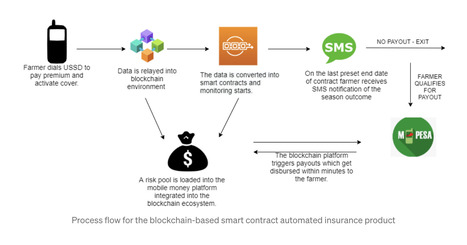








![The next wave of the ‘Wall Streetification’ of education and public services in America [Perspective] // Washington Post | Social Impact Bonds, "Pay For Success," Results-Based Contracting, and Blockchain Digital Identity Systems | Scoop.it](https://img.scoop.it/CCyeXG7GI09QPkqIsUzzTDl72eJkfbmt4t8yenImKBVvK0kTmF0xjctABnaLJIm9)