Restructuring healthcare delivery into an mHealth ecosystem
November 05, 2012 | Rick Krohn, MA, MAS - President of HealthSense
The Centers for Disease Control and National Institutes for Health report that more than 50 percent of the factors related to personal health can be traced to lifestyle choices, while only 10 percent are related to the medical care system. This finding illustrates a stark truth: The U.S. healthcare system in its current incarnation, a system of facility-based, episodic care, is insufficient to the task of improving population health. It's a growing crisis; an aging population, clinical staff shortages, cost inflation and uneven quality are heading us toward a potential healthcare tsunami.
[See also: mHealth has 'implied, but vital' function in Stage 2 final rule]
What is needed is a delivery system with a greater array of provider-patient touch points, with better care coordination and clinical collaboration, with diagnostic tools for self care, with aligned incentives and with the capability of achieving behavioral change across the spectrum of healthcare stakeholders. What is needed is a patient-centric healthcare ecosystem.
72 percent of European online consumers (ages 18 and older) are social health users*. According to the new Cybercitizen Health® Europe 2012 study from healthcare market research and advisory firm Manhattan Research, 44 percent of European online consumers used social networking websites for health, 33 percent read or posted patient testimonials and 34 percent used health ratings or reviews. The study surveyed 3,020 consumers (ages 18 and older) in France, Germany, Italy, Spain, and the United Kingdom online in October 2012, on their use of digital media and technology for health and its influence on treatment and product decisions.
Additionally, the study found that adoption of social media for health varies by country. For example, compared with the other surveyed countries online consumers in Spain and Italy are most likely to use Facebook for health, while health ratings and reviews see strongest adoption in Germany.
Social health users by country (percent is among those who are online in each country):
“A large share of EU consumers is accessing health information from social feeds,” said Principal Analyst Christina Anthogalidis. “Although dedicated health communities have been struggling for consumer participation for years, health threads on general platforms are finally driving the adoption of social health feeds. We believe this finding is pointing at a significant shift in the EU online health content market.”
*Social health users have conducted any of the following activities online for health within the past 12 months: used a community, group or social networking website, or conducted any social-related activity online such as reading or posting on health blogs, message boards or health ratings websites.
This landscape study conducted with Digital Health Coalition members was completed in October 2012 and includes response from 61 organizations including pharmaceutical, device, technology, agencies, publishers, and industry thought leaders. The summary slide deck and reference slide deck are accessible through the links .
Summary Findings:
* The median budget allocation to digital (out of total marketing budget) in 2012 is 15%; with 20% (median) expected in 2013.
* The biggest budget increase is expected for content for tablets, content for smartphones, and social media initiatives for consumers.
* Search has the highest level of perceived ROI, including paid search, search marketing, and search engine optimization.
* Eighty-one percent of executives surveyed stated they are very far behind and 19% stated they are slightly behind in social media when compared to other industries.
* The vast majority of executives agree social media provides better insight into customers – the primary motivation to engage in social today.
* The majority of respondents agree pharma/device has an ethical responsibility to correct misinformation online in social media.
* However, almost 1/2 of respondents state the risks of social (legal and regulatory) outweigh the benefits of participation today.
* Fully 85% agree that regulated healthcare companies should not be held responsible for comments made by online users (with no relationship or connection to the company) on third-party social media sites such as Facebook, Twitter or YouTube.
* Specific to platforms, companies report the highest level of sophistication with Facebook and YouTube – the least with Pinterest.
* The primary hurdle to adoption of social media is “measuring ROI” followed by regulatory then legal.
* Nearly all pharmaceutical and medical device companies agree that participating in social media benefits public health.
* Over 80% agree the lack of guidance from the FDA has limited their ability to put forth innovative programs in social media.
* The industry is more optimistic about mobile than social media: only 69% feel the industry is behind (25% very far behind and 44% slightly behind).
* Fifty-five percent agree that mobile is the future of pharmaceutical and medical device advertising.
Health is about more than having access to doctors, drugs and hospitals. Our health is shaped by a complex set of interconnected and dynamic social factors: ...
See what the Social Health Institute found in a look at Facebook activity.
Health care social media advocate Reed Smith of the Social Health Institute just released an infographic with results of the institute’s first project.
Here are some of the things he learned about Facebook activity at the 13 hospitals he studied:
While those responsible for social media at three organizations spend more than eight hours a week on Facebook, four spend less than an hour on the platform.The most popular day to post is Monday. The least popular is Saturday.On average, the hospitals make 1.3 posts per day.Photos draw the most engagement of any posts (almost 65 percent).By topic, personal stories create the most engagement.
Freitag, den 02. November 2012 Digitale Innovationen mit echtem Mehrwert für die Patienten sind europaweit auf dem Vormarsch. In Deutschland gibt es jedoch viele Vorbehalte gegenüber neuen Technologien. Alexander Schachinger, Gründer und Geschäftsführer von healthcare42.com und Moderator auf der Konferenz Health 2.0 Europe, über die Chancen digitaler Gesundheitsdienste in Deutschland.
it’s a real challenge to predict the next technologies and solutions in healthcare. One thing is clear though: the real medical instrument will be the same, proper communication.
Robots replacing doctors?
Who will initiate the change?
Should we worry about it?
Next steps..?
If technologically and medically well-trained doctors and empowered patients together with innovative technologies and evidence based big data systems league against diseases, we have a very good chance for winning this battle that has been going on for thousands of years.
Can Online Spcial Networks helop you get healthier?
GE Healthcare invites you to join the conversation at its Virtual Roundtable on Social Media and Health.
As GE Healthcare’s #GetFit social media campaign aimed at promoting health and fitness goals and raising awareness of the impact of healthy lifestyles and fitness on cancer prevention, enters its final phase, the company is asking: “Can online social network campaigns help encourage improved health behaviours, and if so, how can they be made as effective as possible?”.
Dr Bernie Hogan, Research Fellow, Oxford Internet Institute Dr Tom Valente, Professor, University of Southern California Dr Nathan Cobb, Assistant Professor, Georgetown University School of Medicine; Science Advisor, MeYou Health Kristen Hallam, Health Editor, Bloomberg News Moderator: Conor McKechnie, Public Affairs, GE Healthcare
As much as some cardiologists might dislike the idea (and even resist it), two new studies indicate that digital data--and the patient's access to it--are contributing to a new era in healthcare in which transparency contributes to better outcomes.
Health 2.0 Co-Chairman Indu Subaiya spoke with Google's Head of Industry (Healthcare Services) Brian Cusack about his company's new research around clickstream data analysis. He also explained the proven validity of the clickstream analysis results, as shown by the similarity of the results to concurrent survey data.Google’s new service may be the solution for many health tech quandaries, including the question of how to direct patients’ online search into clinical care. Brian will share more at the Sixth Annual Fall Conference on the Big Data Meets Real [time] People panel, Monday, October 8th.
European Directory of Health Apps 2012-2013: reviews by patient groups and empowered consumers
From the Foreword: I welcome this first edition of the European Directory of Health Apps (2012-2013) that focuses on a range of health applications recommended by patient groups or empow- ered cons...
PDF from the International Journal of Integrated Care:
Care patways: concepts and theories: an introduction - by Guus Schrijvers, Arjan van Hoorn and Nicolette Huiskes
Abstract
This article addresses first the definition of a (care) pathway, and then follows a description of theories since the 1950s. It ends with a discussion of theoretical advantages and disadvantages of care pathways for patients and professionals. The objective of this paper is to provide a theoretical base for empirical studies on care pathways.
The knowledge for this chapter is based on several books on pathways, which we found by searching in the digital encyclopedia Wikipe- dia. Although this is not usual in scientific publications, this method was used because books are not searchable by databases as Pubmed. From 2005, we performed a literature search on Pubmed and other literature databases, and with the keywords integrated care pathway, clinical pathway, critical pathway, theory, research, and evaluation. One of the inspirational sources was the website of the European Path- way Association (EPA) and its journal International Journal of Care Pathways. The authors visited several sites for this paper. These are mentioned as illustration of a concept or theory. Most of them have English websites with more information. The URLs of these websites are not mentioned in this paper as a reference, because the content of them changes fast, sometimes every day.
The latest developments in cardiology and cardiovascular research, including heartwire news and commentary by some of the world's top cardiologists.
Important outcomes with implantable cardioverter defibrillators (ICDs) will improve if clinicians become more skilled at providing psychosocial support for ICD patients and their families, according to a new statement from the American Heart Association.
Sandra Dunbar, told heartwire:"We have an opportunity to improve patient outcomes by improving how we educate and support patients and their families.".. "it was really important that we articulate a holistic and comprehensive approach to care and that we highlight some of the research that generates guidance for educational intervention and psychological-support interventions,"..
Patients have the need for different types of information throughout the course of their care with the ICD," and healthcare providers must think "about the patient's needs at different points. For example, patients making decisions with their family about whether to have the ICD implanted have needs for a different type of information than they do on the day they're going home from the hospital and preparing for recovery."
Dunbar stressed that clinicians' interactions with ICD patients must include an ongoing assessment of their concerns, information needs, and psychological status.
The publication by The Institute of Medicine of "To Err Is Human" may have launched the modern era of patient safety, but patients could reasonably be said to have attended to these issues long before the IOM.
Unfortunately patient-initiated projects to improve the quality and safety of care have often happened with no engagement or recognition by mainstream professionals. Those academic and other professionals engaged in the patient safety movement frequently see safety as a system issue, where the system includes physicians, other providers, and institutions. It is something done “to” or “for” patients, not by them. This may be because of the history of adversarial patient-provider interactions over medical errors. Fortunately, new technologies and cultural shifts have set the stage for increased patient-provider collaboration on patient safety.
Europe developing roadmap for mHealth use and acceptance - EU's MovingLife project is currently consulting on mHealth needs and requirements | PMLiVE...
Europe authorities are developing a roadmap for mHealth solutions to ensure the technology gains widespread use and acceptance.
The EU-funded MovingLife Project is currently running a public consultation on the plans, focuses on the most important needs and requirements authorities will have to satisfy “in order to facilitate the deployment of mHealth solutions”.
It will address a broad range of issues, including technology options for mHealth applications and services; options for new and improved medical guidelines; user empowerment, acceptance, ethics and privacy; socio-economic environments and policy and regulatory frameworks.
The consultation will be used to revise and fine-tune a set of preliminary roadmaps into a consolidated roadmap for mHealth in Europe.
Much has been made of pharma’s use of mobile technologies, especially since the launch of the Apple iPad in 2010. Mobile technologies are of course not just popular with industry, but also with consumers, and this includes both patients and physicians.
FirstWord recently conducted a survey of 1,040 physicians from the US, China, France, Germany, Spain, Italy and the UK about their usage of mobile technologies and apps to determine which are being used and what they are being used for.
Clearly doctors are using smartphones in large number for reference use. Pharma neet recognize they can increasing reach doctor by use of targeted information.
Hospitals are increasingly challenged to engage patients in healthcare management and aid them in making informed decisions to improve their overall health and wellness. Federal regulations and meaningful use requirements urge hospitals to use health information technology and other initiatives to increase patient engagement, understanding and compliance. Hospitals that engage patients often see better outcomes, reduced readmissions and enhanced patient and staff satisfaction.
Some hospitals are implementing creative techniques to meet current expectations for patient-centric healthcare, such as on-demand digitized video education technology and interactive patient education systems. These interactive services allow hospitals to customize patient education and information sharing for a variety of medical needs.
Twitter’s simplicity of functional design, speed of delivery and ability to connect two or more people around the world provides a powerful means of communication, idea-sharing and collaboration.
Here's a list of suggestion still worthwhile from Phil Baumann -
When you're new to social media and health it will help you - if you're an expert already it sets you to reflect: where have we gone actually since Jan 2009?
There is a wealth of knowledge being presented by doctors on Twitter. Here are twelve doctors I recommend you follow. If you want to start using Twitter as a health resource, this list will get you started and get you thinking. It is in no way comprehensive and is presented in no particular order. Follow these doctors and get healthy! ...
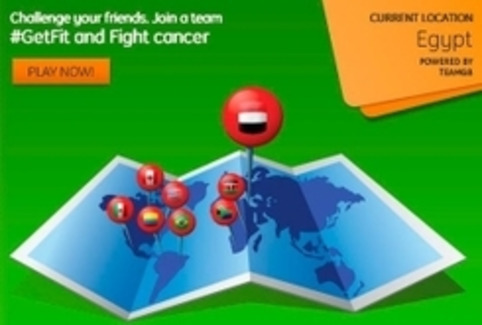
GE Healthcare has launched a new global awareness campaign that uses ‘gamification’ and social media to promote cancer prevention through healthier lifestyles.
At the heart of the Get Fit campaign is a six-week competition that will see users of Twitter, Facebook and Chinese micro-blogging site Sina Weibo collect points by tracking their progress against specific health challenges or by posting comments about healthier lifestyles.
Analyst firm Gartner said that although numerous organisations have achieved social media success, failure rates are "very high" because leaders and managers expect the functionality of social technologies alone to deliver resutls.
"But no social technology is great enough to save efforts that ignore or omit the fundamental principles of mass collaboration.
When these efforts are omitted, people don't view the social media environment as a place for them to meaningfully collaborate, and so adoption never really takes hold"
To get content containing either thought or leadership enter:
To get content containing both thought and leadership enter:
To get content containing the expression thought leadership enter:
You can enter several keywords and you can refine them whenever you want. Our suggestion engine uses more signals but entering a few keywords here will rapidly give you great content to curate.


 Your new post is loading...