 Your new post is loading...

|
Rescooped by
rob halkes
from Cancer Survivorship
October 2, 2013 8:17 AM
|
Satisfying patients is increasingly important, but figuring out how to do so is a challenge. Many hospitals, including the Cleveland Clinic, are implementing a variety of strategies to improve the patient experience —an issue that’s rapidly becoming a top priority in health care. The Accountable Care Act now links performance related to patient-experience metrics to reimbursement. For the first time, the pay of hospitals and eventually individual providers will be partly based on how they are rated by patients. Few disagree on the importance and the need to be more patient centric, but what exactly is the “patient experience”?
Via Marie Ennis-O'Connor
|
|
Scooped by
rob halkes
July 19, 2013 5:25 AM
|
How are some businesses reaping value from social business, and what is holding others back? Learn what executive respondents think in the results from the 2013 MIT Sloan Management Review and Deloitte Social Business Study. Seventy percent of respondents to the 2012 global executive social business survey conducted by MIT Sloan Management Review and Deloitte1 believe social business is an opportunity to fundamentally change the way their organization works. Yet many companies face meaningful barriers to progress. In our 2013 report, we delve into why some businesses are reaping value from social business, and what is holding others back. The following are our key findings: - Social Business Is an Immediate Opportunity... - However, Progress Is Slow.... - Shifting Out of First Gear... .... See website to find infograph and pdf donwload of the repport!
|
|
Scooped by
rob halkes
May 28, 2013 11:11 AM
|
When it comes to health care, patients with the motivation, knowledge, skills and confidence to manage their own health have better health outcomes and incur fewer health care costs. Those are the findings of a study led by Judith Hibbard, a professor emerita in the Department of Planning, Public Policy and Management at the University of Oregon. Hibbard and co-authors found that patients with the lowest level of “activation”— that is, those most lacking in the skills and confidence to be actively engaged in their health care—had average costs that were from 8 percent to 21 percent higher compared to patients with the highest level of activation. The study was the basis for two papers appearing in the February issue of Health Affairs. ...
|
|
Scooped by
rob halkes
May 1, 2013 4:06 PM
|
By Joseph Kvedar In a world where most folks change jobs every couple of years, people are often amazed to hear that I started work in connected health 19 years ago. Implicit in their amazement is a question, “Why did you stick with it so long?” The quickest response is that the work we started back then is not yet finished. .. One of the insights from this early work was the power of feedback loops. .. We began to design programs around the idea that objective, numeric feedback is an important part of connected health program success. The development of wireless sensors, mobile apps and shared APIs created a technical infrastructure that allows us to easily gather numeric data from our patients and feed it back to them as well as to a clinician. We showed great success with this method in hypertension and diabetes.... We continue to observe, to learn and to adapt our thinking, as most recently as this past week. I was chatting with a friend the other day and she confided in me that she is underwhelmed by the use of tracking as a method for healthcare improvement. At this moment another insight crystalized for me. Some people just don’t respond to quantitative information.. Our understanding of the value of feedback loops is that they provide measurable, objective data (there is lots of good evidence that we are generally terrible at estimating quantitative information); they allow for goal setting and measurement of achievement; they generally increase awareness of the variable being followed (e.g., weight, steps, blood pressure, etc.) and they allow for some reality-check or accountability (it turns out self-deceit is quite popular when it comes to health)...
|
|
Scooped by
rob halkes
April 23, 2013 4:30 AM
|
From Marie Ennis-O'Connor:
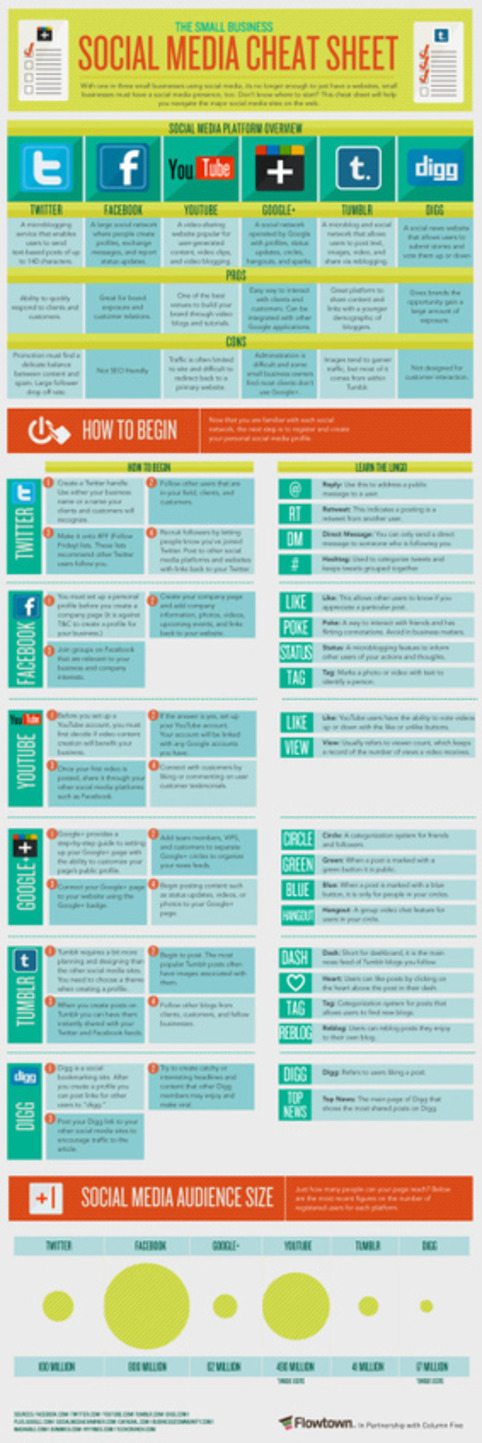
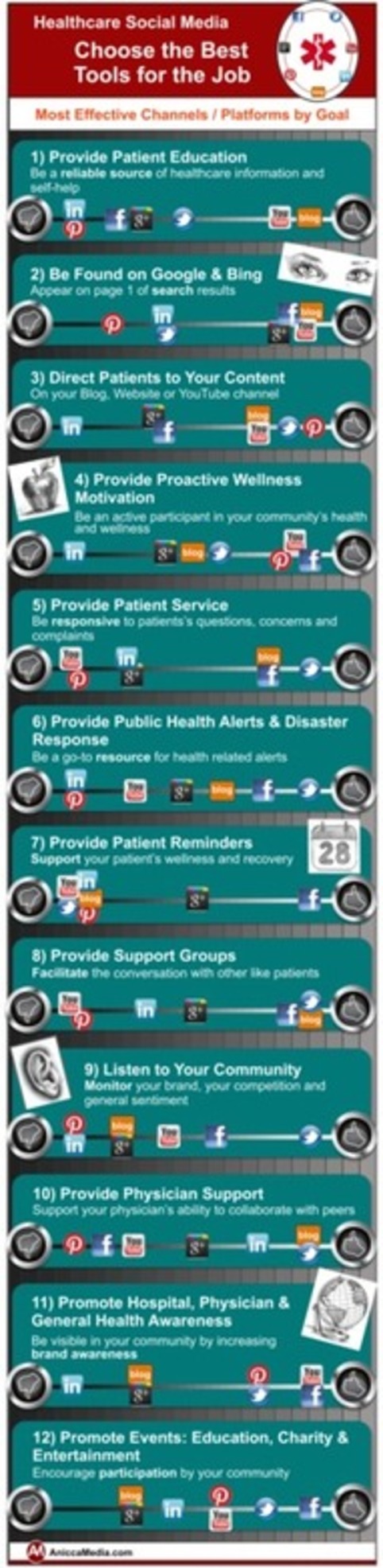
Although this infographic is aimed at small business enterprises, it will work perfectly for your healthcare social media marketing needs.
|
|
Scooped by
rob halkes
April 15, 2013 5:43 AM
|
Cómo se usan las redes sociales en los hospitales Europeos. An overview of scial media use by hospitals - Infographic
|
|
Scooped by
rob halkes
April 11, 2013 6:37 AM
|
Ed Bennett's presentation at the Zurich Healthcare Symposium
|
|
Scooped by
rob halkes
March 25, 2013 2:48 AM
|
It's time the medical establishment heeded the longstanding
advice of informatics pioneer Larry Weed and used "participatory" diagnostic methods, says editorial. Neil Versel | March 22, 2013
Ideas long espoused by medical informatics pioneer Dr. Lawrence L. Weed but shunned or ignored by the medical establishment might find a perfect fit in a world of "participatory medicine,"suggests a well-known proponent of patients taking an active role in their own care in concert with healthcare professionals. As he explained this month at the Healthcare Information and Management Systems Society (HIMSS) conference in New Orleans and in a 2011 book he co-authored with son Lincoln, Weed believes in "coupling" medical knowledge to specific patient problems with the aid of computers. Any attempt to practice medicine based on a physician's knowledge alone invites diagnosis error, according to Weed. That opinion struck a chord with Terry Graedon, co-editor-in-chief of the Journal of Participatory Medicine. "Recent research reports have shown that misdiagnosis is an Achilles heel for the current practice of medicine," Graedon wrote in a commentary published this week. [ A study suggests patients don't like it when doctors use computers to diagnose them. Read Clinical Decision Support A Turnoff For Patients, Says Study. ] Indeed, the Journal of the American Medical Association's JAMA Internal Medicine just last month published a study showing that physicians missed a surprisingly high number of common diseases in ambulatory care. Although Graedon's article does not mention this study, it does raise similar themes. Proper diagnosis, Graedon argued -- as Weed, creator of the problem-oriented medical record, has been doing for decades -- starts with a complete problem list. Then, a computer system couples problems to specific medical knowledge. "If diagnosis begins with standardized data collection, doctors bring clinical judgment to bear at the final stage of diagnosis. Treatment should then be evidence-guided but individualized for the particular patient," Graedon wrote. "We trust that at this point the patient would make his or her preferences known and share in the decision," she added, bringing in the element of patient empowerment, because the Journal of Participatory Medicine is a publication of the Society of Participatory Medicine. ...
|
|
Scooped by
rob halkes
March 16, 2013 6:31 AM
|
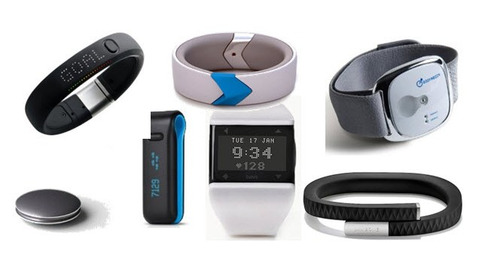
Observers of the digital health ecosystem seem addicted to the idea that it is accretive when in truth it is commutative. News of the demise of sleep tracker Zeo, the closure of Google Reader through which many of us have reviewed health news, and the imminent withdrawalof the best (IMO) version of the best Twitter client through which many health tweet chats have been conducted should hopefully serve to remind us of the transitory nature of digital environments. Personal health data is certainly going to continue to be collected. It will be at the centre of our genome-informed, personalised medical future. However, we aren’t going to be collecting it via a panoply of trackers, gadgets, wristbands and glasses. We no more want external health peripherals than we do a keyboard for a tablet computer. They are extraneous, inconvenient, and will only be used by health hobbyists. ...
|
|
Scooped by
rob halkes
March 4, 2013 10:39 AM
|
Many lower-income patients say they would like to communicate electronically with their health care providers but are unable to do so because of insufficient technology at the clinics where they receive care, according to a new study published in the Journal of General Internal Medicine, Medical News Today reports. Study Details For the study, researchers from the University of California-San Francisco surveyed 416 patients at six San Francisco Department of Public Health community clinics that primarily serve uninsured or publically insured individuals. The study participants: Were ethnically and racially diverse;Spoke 24 different primary languages; andWere representative of the overall clinic population (Medical News Today, 2/27). Study Findings The study found that: 78% of the study participants expressed interest in electronic communication with their health care providers (Martinez, "On Central," KPCC, 2/27);60% said they use email;54% said they obtain information from the Internet; and17% said they already use email to communicate informally with their health care providers. According to the researchers, many safety-net clinics do not offer the patient portals or secure messaging systems necessary to support electronic communication with doctors.
Read more: http://www.ihealthbeat.org/articles/2013/2/27/lowincome-patients-interested-in-digital-health-communication.aspx#ixzz2MZg2DE1x
|
|
Scooped by
rob halkes
March 2, 2013 4:19 AM
|
|
|
Scooped by
rob halkes
February 25, 2013 3:32 AM
|
It was her own experience with debilitating side effects after cancer treatment that led Dr. Julie Silver to realize there is a huge gap in care that keeps cancer patients from getting rehabilitation services.Silver was 38 in 2003 when she was diagnosed with breast cancer. Even though she is a physician, she was shocked at the toll chemotherapy and radiation took on her body. Silver was dealing with extreme fatigue, weakness and pain. “I was really, really sick, sicker than I ever imagined,” says Silver, who is an assistant professor at Harvard Medical School. “I did some exercise testing and I tested out as a woman in my 60s. So I had aged three decades in a matter of months through cancer treatment.” Silver went to her oncology team for help. They told her to go home and heal. “The conversation should have been, ‘We’re going send you to cancer rehab to help you get stronger,’” she says. But that’s not what happened, and after Silver came to realize that her experience was typical, she set out to change the system for other patients. In 2009 she started a program designed to offer cancer survivors rehabilitation therapy after treatment. It’s called STAR and is now offered in almost all 50 states. The program is growing, as is research showing that many of the quality-of-life problems cancer survivors have are physical and can be helped with rehab. But even with the awareness of its benefits growing, there is still a disconnect for patients.
Read more:...
|
|
Rescooped by
rob halkes
from Patient Self Management
February 21, 2013 1:07 PM
|
In a recent study, 77 percent of physicians believed patients understood their diagnosis, but only 57 percent of patients could correctly state their diagnosis. Limited or poor communication channe... Go direct to summary of the refered research: http://www.ncbi.nlm.nih.gov/pubmed/20696951
|
|
Scooped by
rob halkes
February 21, 2013 11:31 AM
|
The percentage of patients using technology to track their health hasn't budged in three years despite the explosion of apps that let them do so. Only 7% of patients use mobile technology to monitor their health.. The Pew Internet & American Life Project published a report Jan. 28 that found 69% of U.S. adults track at least one health indicator such as diet, exercise or weight. The survey of 3,014 adults conducted between Aug. 7 and Sept. 6, 2012, found that 49% monitor their progress in their heads, 34% track the information on paper, and 21% utilize some form of technology, including mobile apps, which 7% use. The results mirror findings from a Pew survey in 2010. But many remain optimistic that mobile health monitoring will be an important aspect of health care. “I don’t see this as a plateau, but the very beginning,” said Michael Esquivel, a health information technology attorney and partner at Fenwick & West in Mountain View, Calif. Many early adopters of mobile health technology were patients with a chronic disease and patients who were attracted to the novelty of it, Esquivel said. Change in mindset As physicians figure out how the move from the fee-for-service payment model to one based on outcomes will change how they do their jobs, patients will have to re-examine their responsibilities. “If we ask people to do something that’s hard, there’s no way they are going to do it, so we have to make it easy, No. 1,” Dr. Harlan said. “Then, we humans are funny creatures, so we have to think of incentives — silly things — that will pull people in.”
|
|
Scooped by
rob halkes
February 21, 2013 10:46 AM
|
An assessment of how consumerism and innovation in healthcare are redefining how consumers engage with the healthcare system.
|
|
Scooped by
rob halkes
February 17, 2013 4:01 PM
|
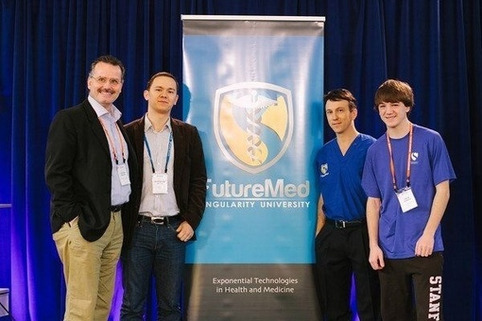
Exploring and driving the future of medicine through exponential, game changing technologies.How will rapidly developing technologies such as low cost genomic sequencing, artificial intelligence,
|
|
Rescooped by
rob halkes
from New pharma
February 14, 2013 8:10 AM
|
Savvy, influential patients have pharmas attention and are growing relationships with industry. How firms have just begun to tap the potential of this emerging segment [Excerpt] While many pharma and device firms remain on the sidelines, understandably so, the lure of gaining a rapport with patients on social networks is reason enough for some to venture forth, despite the unknowns.
Over the past year or so, the role of patients as an influence and information channel for pharma has blossomed. Experts on the trend say it's comparable to the rise of key opinion leaders (KOLs) in the physician world—doctors, typically from academic medicine, who reach out to other physicians likely to prescribe a product.
Two main groups of patient advocates have experience with products. The first receives training from boutique agencies like HealthTalker and Snow Companies, which specialize in word-of-mouth communications and use the real-life stories of patients to deliver marketing messages.
The second and perhaps most visible segment of patient advocates are those, like Hernandez and Sparling in the diabetes realm or Dave deBronkart (aka e-Patient Dave) in cancer, who are especially adept at creating content.
The foremost bloggers have become, effectively, small communications firms unto themselves, says Jack Barrette, founder and CEO of Wego Health, an online patient network that also acts as a liaison between its “health activists” and pharma to create educational programs.
“[The high-profile advocates and bloggers] want to communicate very valuable content and have created an agency structure—they're professionals, in a good way, and have managed to carve out areas where they can be seen as agency-like,” Barrette says.
Beyond that top layer is a group who also blog but don't necessarily support themselves through their advocacy. It's that group, which Barrette calls the health activist middle class, that companies are now learning from: “They're so powerful because their numbers are so vast, and they're trusted because they're not semi-professionals.”
There's a third tier online, “who don't even consider themselves patients,” observes Wendy Blackburn, EVP, Intouch Solutions. Around a third of US adults use social media as a health resource, according to a 2012 survey of 1,060 US adults by PricewaterhouseCoopers, and most probably fall into this third group.
“It's someone who maybe just got diagnosed and doesn't even realize there's this discussion we're having about pharma and social media,” says Blackburn. “They just go online for information.”
Participation is not without its pitfalls. For instance, sources say patient-generated content is vulnerable to the same creative restrictions as most healthcare marketing.
Marketers playing in social media also need to stay vigilant and ride the waves of the shifting digital landscape, such as when Facebook abruptly changed course in 2011 and forced pharma pages to open their walls to user comments, prompting several drugmakers to shutter theirs rather than commit to 24/7 monitoring of posts.
“If pharma can drive patients to accurate information, it furthers the goal of optimizing treatment experience and promoting adherence,” says Tara Rice, manager of health education for the agency HealthEd. Rice points to a 2012 Wolters Kluwer survey that found 65% of people who turn to the internet with medical questions say they trust the information they find, “which is scary, because there's a lot of inaccurate information online.”
Nevertheless, patient advocates and some pharma and device companies seem to be finding ways to work together.
|
|
Rescooped by
rob halkes
from Digital Health
February 12, 2013 6:50 AM
|
The Digital Health ecosystem is growing exponentially. Almost every day a new device, app or site is introduced to the world with the intention of improving people’s lives, and while some may not make it others will go on to succeed. Below I’ve put together a list of digital health products and categorized them by function. It’s by no means a complete list but will hopefully help others looking for digital health products in a specific area
Via Alex Butler
|
|
Scooped by
rob halkes
February 8, 2013 1:44 AM
|
Twitter customer service is very important. Check out this study on some big brands and their Twitter customer service hits & misses, and what you can learn
|
|
Scooped by
rob halkes
February 5, 2013 7:01 AM
|
games and health (How games improve health infographic http://t.co/hUpwwOoa via @pinterest #mhealth #digitalhealth #healthit #ehealth)
|
|
Scooped by
rob halkes
February 5, 2013 6:44 AM
|
The future of Healthcare (The future of Healthcare http://t.co/cMR2Xwxh via @pinterest #ehealth #digitalhealth #healthit)
|
|
Scooped by
rob halkes
February 1, 2013 3:04 AM
|
Amendments to Proposed EU Data Protection Regulation Raise Concerns in Global Life Sciences IndustryJanuary 29, 2013 The European Parliament’s Civil Liberties Committee has published its draft report on the proposed EU Data Protection Regulation which will have a significant impact on the life sciences industry. e.g.: Rights of Individuals – data subjects (such as patients or healthcare professionals) must be provided with data protection notices using multi-layered formats and icons with full information available on request. Data subjects will also have: (i) the Right to be Forgotten (i.e., to have personal data erased), although the amendments provide that data controllers will no longer have to take reasonable steps to contact third parties to request them to erase copies of the data if the personal data has been transferred or made public based on legal grounds; and (ii) the Right to Data Portability (i.e., to obtain a copy of the data being processed and to move the data to another platform). Profiling will only be permitted with the data subject’s consent or based on an express statutory provision. All of these rights, such as having to delete data from a research study and restrictions on profiling, could significantly impact life sciences activities. See doc here! http://www.europarl.europa.eu/meetdocs/2009_2014/documents/libe/pr/922/922387/922387en.pdf.
|
|
Scooped by
rob halkes
January 24, 2013 10:10 AM
|
The trends & insights about people looking for healthcare information online are interesting and useful in providing important clues for your marketing strategy Internet and mobile use to diagnose, inform, question etc regarding one's health...
|
|
Scooped by
rob halkes
January 22, 2013 12:57 AM
|
In partnership with Health 2.0 we’ve launched the Patient Portal for New Yorkers Design Challenge, which invites designers and developers to submit prototypes for a secure portal that will present patients with their individual PHR while educating...
|
|
Scooped by
rob halkes
January 18, 2013 1:33 AM
|
How do I deliver healthcare information to my patients effectively?
You’ve developed s...
|




























Read the blog: it is insightful and instructive!
- Patient experience is not what "we" think "they" need!
- The grade of how much care has rendered a patient desired outcome may influence its evaluation (actual results - felt results - feelings about one has been engaged)
- Is the patient a "personalization" of "an" (patient's) category
- Does the patient get, have, been given, ways to communicate, interact and review
etc...