Therefore, both physicians and patients need to learn new habits and establish slightly different norms for the doctor visit.
Get Started for FREE
Sign up with Facebook Sign up with X
I don't have a Facebook or a X account


 Your new post is loading... Your new post is loading...
 Scoop.it!
Therefore, both physicians and patients need to learn new habits and establish slightly different norms for the doctor visit. 
No comment yet.
Sign up to comment
Scoop.it!

Despite the legal landscape, it is possible for a health care provider to develop a robust social media program.
Scoop.it!

I have been asked recently to write up some of the core takeaways from the health care social media presentations I have been giving recently, so I am sharing a version of this narrative on HealthBlawg, in two parts.
Scoop.it!

Promoted as technology that can change behavior in both patients and physicians, mobile technology dominated the annual Healthcare Information and Management Systems Society meeting.
Scoop.it!
Ask most patients, and they say their doctor has a good reason for ordering tests and prescribing treatments.
Scoop.it!

Health Care Social Media Welcome to the First Ever!
Scoop.it!

From
www

Sort of attempt to Crowdsource feedback by the government of the UK to design services. Which government is to follow up on this ?? Also for care, I like to refer to: http://wp-pharma.waardeinnovatie.nl/?p=183
Scoop.it!

Webs of care...
Scoop.it!

It's only been a little more than a month ago since we witnessed a healthcare social media milestone with the #himss12 conference.
Scoop.it!
From
ht
13 predictions for health care in 2012 From ‘telehealth’ to digital storytelling, here’s what you can expect to see next year.
Scoop.it!

There is little doubt among healthcare observers, governments and system managers that eHealth has the potential to redefine the healthcare industry.
Scoop.it!
Through our research and extensive experience, we have developed three concepts that, when used as lenses through which to view planning, may well help achieve sustainability.
Scoop.it!

Everyday I get to learn about new articles and websites that are claiming to have reputable health information.
Scoop.it!

We saw earlier this month some of the clearest signs yet that marketers have shed their reservations for investing in social media, committing to upping the spend in the coming year.
Scoop.it!

TEDxMaastricht is the European stage for bright ideas, bold thinkers and innovators in medicine and healthcare.
Scoop.it!

Mobile Health Around the Globe: Dr Alexander Borve and iDoc24: Sweden...
Scoop.it!

GLOBAL TELEMEDICINE MARKET TO REACH $27.3 BILLION IN 2016
Scoop.it!

Just as smartphones and iPads have ushered in a paradigm shift in personal technology, so are electronic medical records (EMRs) quickly replacing paper in the doctor’s office.
Scoop.it!

Social Media in Healthcare Social media is becoming increasingly more prevalent within the healthcare industry. With more hospitals and doctors joining social-media platforms on a consistent basis, it begs the question of “helpful or harmful”?
Scoop.it!
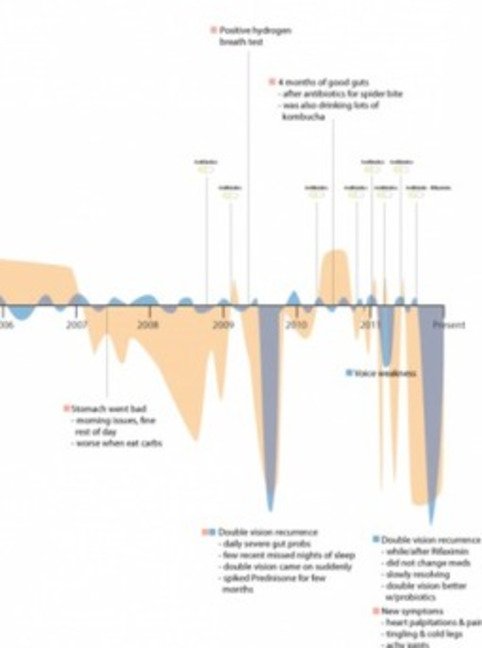
Katie McCurdy is an information-specialist so it wasn’t that surprising when she decided to design infographics showing and describing her medical history with plenty of details about her chr...
Scoop.it!
Physician Violations of Online Professionalism and Disciplinary Actions: A National Survey of State Medical Boards | JAMA
Scoop.it!
This report shows how far we have come in demonstrating that technology, when implemented correctly, can be a game-changing tool that can empower businesses to stop rising healthcare costs in their tracks,
Scoop.it!
Working Together: Communities of Practice in Family Medicine - Jan 2005 - Family Practice Management
The article describes the "collaborative" model of learning, which goes beyond traditional didactic learning sessions and encourages participants to learn by doing and to share best practices with one another.
"Some examples of communities of practice in family medicine include clubs, committees, associations, academies, study groups, coalitions, e-mail discussion lists, medical staffs of local hospitals and community-oriented primary care groups. Communities of practice can exist in many different forms and professions, but all communities of practice share three key dimensions – a domain of knowledge, a community and a shared practice:
Domain of knowledge. In a community of practice specific to family medicine, the common domain of knowledge among all of its members may be the specialty of family medicine, a focus on specific populations, performance of specific procedures or a particular need or interest, such as becoming more competitive with other specialties or physicians.
Community. People in a community of practice share a voluntary commitment to relationship building.
Via Camilo Erazo
Scoop.it!

"This business model is right for a company selling Purina Dog Chow, circa 1970." "There's no way we could ever be this collaborative." Both are comments I got about my book, back in 2009, about setting direction, collaboratively.
|