

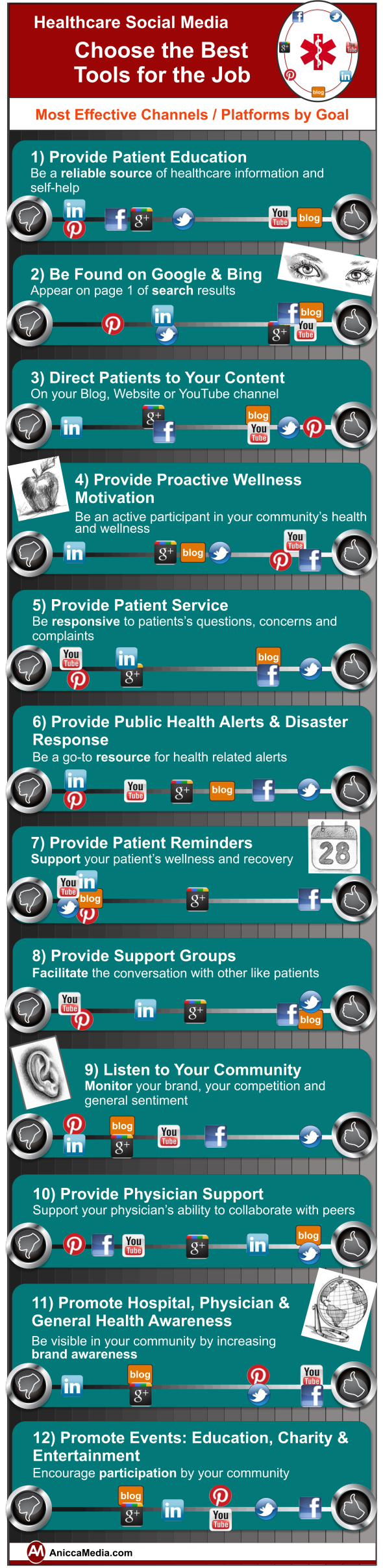

From AniccaMaedi.com
Get Started for FREE
Sign up with Facebook Sign up with X
I don't have a Facebook or a X account


 Your new post is loading... Your new post is loading...
 Scoop.it!

Rating your doctor or hospital online is not just the preserve of the 'chattering classes', new research may suggest. While the research has not yet hit the headlines, it has been circulated on social media and is available to access for free... Websites that help people leave feedback on their GP practice and other health services, such as NHS Choices, have been available online for several years. These websites aim to help inform people about NHS services so that they have a better choice of doctors and treatments. A new study has looked at who uses these websites, and why. The researchers suggest that people may be using doctor-rating websites not only as an alternative source of information, but also as a 'complementary' form of information alongside a traditional GP appointment. It found that doctor-rating sites were more likely to be used by people who had a friendly relationship with an attentive GP and by people who thought that their GP did not explain things clearly. ... Read more!
rob halkes's insight:
Patients' rating of their health services as experienced, is a main factor in conveying information about quality if health services perceived. In the Netherlands there is for example the "KiesBeter" site, initiated by the health authorities, it is a formal informing site. Of cours with lots adue about it. Of course, med professionals don't see their (scientifc) formal quality refelcted.. Yet it is a first step in getting to grips on how health care quality is to be conveyed. And sure there is a lot of pros and cons, as there are questions about how to format such evaluations to be of meaningful information to both patients and med professionals.. One sure point in conveying the perceived experience is by story telling - informing people to the original story about what one has experienced. Before we go on formating this authentic information into parameters and indices, maybe we should left it as a patient's blog about the proper experience. At least it conveys what has happened in the ey of the beholder..;-) 
Scoop.it!
Take a look at this infographic to find out more. The graphic concludes: "Hospitals who aren't yet in social and mobile should be...
rob halkes's insight:
Although it is an infographic behind commercial intentions there's evidence that choice of hospitals might be influenced through its public communications. However regarding patient choices: we found evidence that depended on the perception of the patient about the severity of the condition, they are likely to choose the specialist physician and not so much the hospital. A matter of concern to the hospitals' public relations!
Scoop.it!

Year end recap of the 20 most Insightful healthcare technology Infographics of 2012 highlighting the growing utilizations of infographics in healthcare (RT @rtdhealth: The 20 Most Insightful Healthcare Technology Infographics of 2012
rob halkes's insight:
Need I say more? Health care unveiled in all its magnificence...
Scoop.it!

Social media is a hungry beast. The social networks need to be fed. They need to be thrown a diet of content that keeps readers and viewers that keeps them coming back for more. The Content FoundationThere are four main types of content that you should be considering creating: Educational contentInformative contentEntertaining contentInspiring contentDo all four well and you are on your way to producing advocates and ambassadors on Facebook, Twitter , Google+ and other platforms that will spread and share your content for free. Content is Multi-MediaContent on a social web also needs to be multi-media rich these include media such as: PhotosVideosImagesInfographicsPodcastsScreencastsRead more at http://www.jeffbullas.com/2013/01/10/20-ideas-for-content-that-people-love-to-share-on-social-media/#f6b9fUsvvJXmjmXl.99
rob halkes's insight:
Indeed, good tips with a reference to his books. If you wnat to prepare yourself to blog or do anything of content providing on the web, here's a good start! ;-)
Scoop.it!

By Michelle McNickle New mobile apps from the Department of Health and Human Services, for consumers and doctors alike, let you search medical literature, locate health centers, fight drug abuse and much more. Health Apps Set to Explode in 2013 Will 2013 be the year of the mobile app? Pundits seem to think so, and the prediction holds true for healthcare professionals and consumers alike. Although developers have come up with several apps to help clinicians diagnose and manage disease, the use of medical apps among consumers is set to take center stage, especially in light of new patient engagement requirements that are part of the government's Meaningful Use Stage 2 program.
rob halkes's insight:
Imho health apps have already exploded in front of us. I guess it will be difficult for patients with specific conditions to find the right support to their choice. You might want to try for instance loooking for an app support in coping with your snoring condition. What you get as a "lay" patient looks like chaos and I could imagine you would turn right away when confronted. .. It means that health care is a co-creating ambition: integrated and coordinated support is needed. The formal systems need to go a long road still to create this condition for patients to find their way easily to reliable, informed and cooperative health care support. But it is needed and there is no other way than to try and build it. Apps might help us to move into that direction quicker!
Scoop.it!
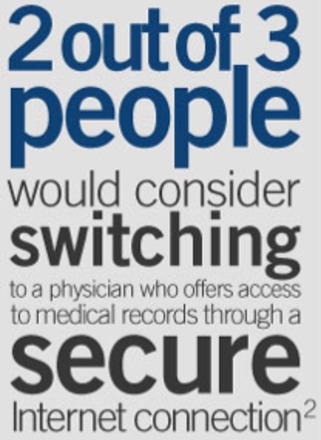
How do electronic health records connect you and your doctor? Look at our Electronic Health Records Infographic to see where we began and where we're headed
rob halkes's insight:
Need I say more? Brilliant overview of what electronic health records can MEAN to innovation/improvement of care! Uh... it is just this: all people involved need to get accustomed to it: so implementation is more than just throwing in the technology. Be aware! Alas, or should I state, happily enough, I have the experience of how to.. ;-)
Scoop.it!

This is an interview with Richard Smith, former Editor of the BMJ on open access in medical journals.
Richard Smith worked at the BMJ for 25 years, during which time he served as editor-in chief for 13 years. Throughout his career, he has observed a lot of changes and trends in journal publishing, which he shares with us in this interview. He speaks with us about the importance of open access in medical publishing and on why he expects scientific publishing to look very different in twenty years’ time.
rob halkes's insight:
Knowlegde in medicine is key to begin with, to good health care. Not speaking about the information and education issues that follow up on sound knowledge as a basic condition to reliable information, it will not do if access to information is limited. So open access is a great good. But from a business, or cost perpective: who is going to pay. .. Interesting to hear what Richard Smith tells us about this!
Scoop.it!
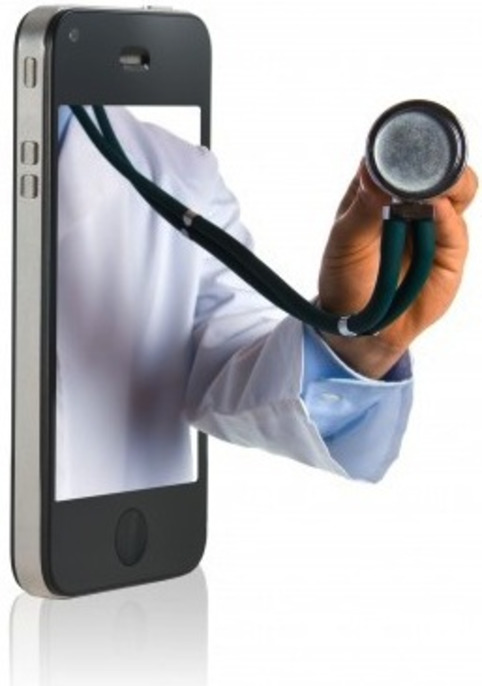
The mobile health (mHealth) space, especially as it relates to health behavior change and chronic and infectious disease management, has been a long running theme of mine for increasing reach, effectiveness, efficiency and equity of interventions. Via bacigalupe
rob halkes's insight:
Gr8 review!
Scoop.it!
Irene Froehlich outlines 10 reasons why medical practitioners should start e-prescribing now that will help physicians increase overall efficiency
rob halkes's insight:
Like Webicina, I am convinced that patietns like their doctors to refer them to all kind of support on line to them. Doctors, pharamcists and all other caregivers cannot be digitally illiterate anymore.
Scoop.it!

Odds are you've liked a page on Facebook only to regret it a few hours or a few days later. Maybe it keeps posting about itself, or there's no relevant material out there. Don't be that page. Kevin Mullett, a social media and search-engine-optimization expert and the director of product development for Cirrus ABS, talked with AllFacebook about the biggest mistakes he’s seen companies make on their Facebook pages. Don’t worry, there’s still time to change for the better. .. 1. No plan in pace, 2. Assuming Facebook markering is free 3. Not giving users a reason to connect on Facebook 4. Measuring the wrong things - or nothing at all 5. Being too loud or boring
.. are th five that Kevin describes..
rob halkes's insight:
All about social media: just orient yourself, and then see why you want to be on it.. Be specific to yourself, there are too many distractions, before you know you end up chasing them all.. ;-)
Scoop.it!

1С-Битрикс: Управление сайтом December 20, 2012 - By Pascal Lardier. The Wikipedia article about health care in Russia starts like this: “Russia has more physicians, hospitals, and health care workers than almost any other country in the world on a per capita basis. However, since the collapse of the Soviet Union, the health of the Russian population has declined considerably as a result of social, economic, and lifestyle changes.” The Russian health care system has been going through major changes to improve access and quality of delivery. Currently, health care expenditures account for roughly 4% of the GDP (vs. 15.2% in the US) and this number is projected to grow to 10-14% over the next few years. The reform that started in 2009 will continue through 2015. It is expected that about 40% of resources allocated to health care restructuring will be spend on improving infrastructures, including information technology. What about Russia? They have the critical need and a system that is probably too fragmented to respond to these challenges on its own. Although mainly a centralized single payer system, it counts no less than 56000 health care operators and MEDSI, the leading private chain of clinics only represents 1.3% of the market. Their financing mechanisms could use a little oil (no pun intended), but they have resources. The demand for private health services is supported by the growth of the middle class and government investments that will increase in the years to come. The Internet penetration is expected to grow from 33% in 2009 (compared to 70% in the US) to 55% in 2015 and mobile penetration is already very high. The entrepreneurial spirit is happening in the technology sector while health care entrepreneurs are still catching up and would benefit from more exposure to the developments of the rest of the global Health 2.0 community.
rob halkes's insight:
The CEE (central and eastern european) countries are posing a wide variety of developmental status in health care. Might they be able to leap forward with a new paradigm in health care, thus learning from the western countris of what not to do and instead select the right angels to new perspectives in care? It will be a inspiring journey for all to learn. Let's join them!
Scoop.it!

Report says mobile apps only scratch the surface of possibilities offered by mHealth. Improvement opportunities exist along the value chain, from engaging
rob halkes's insight:
This is Deloitte's report on the eveolvement of how mobile technologu is transforming health, indeed. Download included.
Scoop.it!
How do electronic health records connect you and your doctor? Look at our Electronic Health Records Infographic to see where we began and where we're headed
rob halkes's insight:
Pick it up I would say! ;-)
Scoop.it!
Guess what? Health content on Facebook and Twitter can be credible.
rob halkes's insight:
Indeed! 4 myths that put certain beliefs in the right place! ;-)
Scoop.it!

Welcome to the 1st Annual "Top Ten Internet-Smart Doctors in the World". Because the internet, as Mr. Gates says, has made the world a global village. On the internet, one can find out many wonderful things, and, for this page, you have access to things that are happening in faraway lands, as if they were next door. Doctors are increasingly using the internet, to communicate, to educate, and to use sometimes as medical devices. And now docs are tackling social media, which a few to the Top Ten do. The Top Ten come from all over, from Australia to the Bay area. There is one from the Netherlands, one from Hungary, one from India, and one from Australia. The other six are Yanks. And they are all MDs. Characteristics that the top ten share are traits of enthusiasm for their craft, intelligence, diligence, intimate knowledge of how the net can be leveraged to benefit healthcare, and love of teaching.
rob halkes's insight:
Congratulations to Eric Topol, Mike Cadogan, Berci Mesko, Pieter Kubben, Peter Diamantis, Cameron Powell, Iltifat Husain, Summer Sehti, Daniel Kraft and Kevin Pho!

rob halkes's curator insight,
December 20, 2012 3:16 AM
Congratulations to Eric Topol, Mike Cadogan, Berci Mesko, Pieter Kubben, Peter Diamantis, Cameron Powell, Iltifat Husain, Summer Sehti, Daniel Kraft and Kevin Pho!
Scoop.it!

Pharmacists would like pharma companies to provide them with online access to resources to help them support their patients
rob halkes's insight:
Last week I spent days in Moscow delivering a workshop in edetailing for a pharmaceutical company in Russia. We became to talk how pharmacists do not always have specific drug intheir assortment. They just are not capable of selecting all items. There are several reasons to that, I came to know. One of them being the fact that a large part of patients need and/or can pay the prescribed drug themselves. I guessed that if this is the case lots of added value to the patients can be realised through cooperation between physician and pharmacists. In my discussions I suggested that both could benefit and profit from the collaboration with patients. They can thus select a small range of drugs with which bot want to work. Pharma compnay's can help them with adding value to their proper drugs. And of course, the patients would be the champion of this closer cooperation. They do so in many cases in the Netherlands. I guess that health care payer, insurance companies and state reimbursement institutions might want to experiment with personal medication budgets to patients, giving them the strength to buy and thus influencing an innovation in closer cooperation between physicians and pharamacists. And, guess what: Today i was catching up with my twitter feeds and came across this blog from World of DTC Marketing ;-)
Scoop.it!

Learn which pharmaceutical companies have taken the leap and are using Pinterest for corporate reputation, recruitment and disease awareness.
Since I first wrote about Pinterest the site has continued to garner headlines for its growth and new offerings. If you aren’t familiar with the social network Pinterest, it’s a “virtual pinboard.” It allows users to organize and share Internet content (typically images) by pinning it to virtual boards. Accounts can be linked to Facebook and Twitter to share Pinterest activity via these social networks.The demographics have stayed consistent–it skews heavily to females age 25-34 in the Midwest. About 2/3 of users are women, and half have children. It’s the sixth most popular social network, with 27M unique visitors per Nielsen. - Pharma on Pinterest: - Astra Zeneca Jobs is “intended to highlight - AZ’s culture, people & opportunities.” They have 120 followers. - Bayer has 226 followers, with boards on topics ranging from innovation to Bayer advertising to gardening. - Johnson & Johnson have posted their logo and reserved the URL. Despite the lack of content, they have 113 followers. - Boehringer Ingelheim sets expectations nicely by including terms of use explaining that they have the right to remove any postings, as “we can’t risk unmonitored or unverified medical advice being published.” The 101 followers can view pins on company history, lung cancer, COPD and stroke. - Novo Nordisk, with 163 followers, has boards on World Haemophilia Day and World Diabetes Day along with some patient stories. Pharma on Pinterest
Scoop.it!
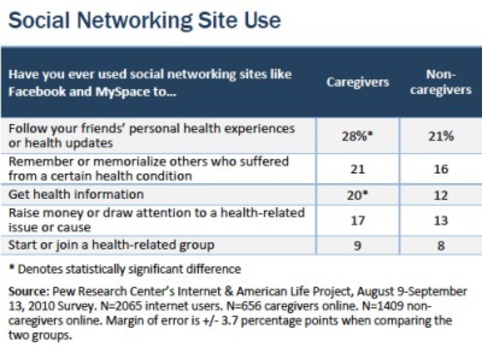
by Jane Sarasohn-Kahn, MA (Econ.), MHSA, Member, HIMSS eConnecting with Consumers – Social Media Task Force
Chronic disease accounts for $3 in every $4 of health spending in the U.S. Four lifestyles – smoking, physical inactivity, harmful use of alcohol, and poor diet – contribute to the non-communicable disease burden which kills 2 in 3 people. At the same time, the U.S. spends more on health care than any other nation in the world. Although the U.S. adopts the most innovative new-new medical technology (from aortic valves to CT scanners), Americans’ health outcomes are generally sub-par. In the U.S., we’re getting a lousy ROI on health spending. Jane Sarasohn-Kahn, MA (Econ.), MHSA A powerful force can be deployed to move the needle on health outcomes: patient involvement in their healthcare. One way to health-engage people in everyday life is via social media. Social networking holds significant promise for engaging people in health and changing health behaviors. Two thirds-of people try to change their health behavior each year; 50% do not sustain those behavior changes, learned by the 2011 Edelman Health Barometer survey. When people connect to a social network of peers, though, commitment to behavior change is bolstered and supported, as the research of Christakis and his colleagues has found. Via Dan Baxter
Scoop.it!

Powerful social media stats ready for you to Tweet to your social community. The best inbound marketers realize their social media strategy can't be stagnant. What earned shares and likes on Facebook a year ago won't fly anymore since the adoption of Facebook time line. While it might have been wisest to focus your efforts towards Twitter and Facebook a few months ago, the rising prevalence of Pinterest is a leading source of referral traffic for many B2C businesses. From a purely selfish standpoint, if you're hoping to gain exposure and followers on Twitter, Tweeting stats can be a wise maneuver. HubSpot's social media scientist Dan Zarella has found that the less you talk about yourself, the more like you are to gain followers and engagement. Whether you're in it to gain a few dozen social media followers or adjust your inbound marketing strategy, we've compiled the most shocking and recent research from sources we trust. Read it and Tweet:..
Scoop.it!

Much has been written in the past couple of years about how doctors should conduct themselves online, as more of their communication with patients, colleagues, and the public migrates there.
Scoop.it!

Six serious misunderstandings about social CRM
Brands are listening to customers more; businesses are embracing social media as a communication channel; and vendors are developing a strong portfolio of social CRM technology. All laudable achievements.
Six Misconceptions of Social CRM Misunderstanding 1: Businesses are dealing with a ‘new’ customer Misunderstanding 2: Marketing on social media equals marketing 2.0 Misunderstanding 3: Social media has allowed brands to understand customers Misunderstanding 4: Customer interaction equals customer engagement Misunderstanding 5: Social CRM technology makes you more customer-centric Misunderstanding 6: Big brands are all rolling out large social CRM initiatives
"Big banks, big insurance companies, big telcos… they are all involved in it, but it is an experiment.".. and Big hospitals, big pharma and medical devices companies as well!
Scoop.it!

Being able to email the physician may not cut down on trips to the doctor's office.
Scoop.it!

Future Practice: November 2012...
"Mobile devices are becoming more important for medical students than the stethoscope". This statement by Dr. Simon Moore, a resident at the University of Britih Columbia and president of the Canadian Association of Internes and Residents, is more than just a hyperbole. It demonstrates that, contrary to what smart epidemiologists might telll you, the statistics don't lie: use of mobile devices, such as smartphones and tablets by Canadian physicians is increasing rapidly and transfrming how care is delivered.
Scoop.it!

Insights from academia, business and media show social media can help improve health but caution that accuracy of information should be top concern...
Press Release GE HealthCare
Twenty six percent of U.S. online adults have discussed health information online in the past 12 months[1] and 30 percent of those have changed a health behavior as a result. Leading experts agree that social media can help improve health and while non-users[2] are citing privacy as their top barrier to engaging further, experts caution that those who discuss health information online should be more conscious of the accuracy of information received.
“We are just starting to tap into the power of social media and its ability to change health behaviors,” said Jeff DeMarrais, chief communications officer at GE Healthcare. “It will require a mix of smart tools, savvy consumers, pioneering health experts and education to continue changing conversations and behaviors. GE Healthcare has introduced several first-of-their-kind programs that do just this and there’s much opportunity ahead.”
Read the insights from Consumers!
|






It's nice, but to it is for the time being a subjective representation of what the people from AnicaaMedia perceive to be.
I traced it back to http://ticsyformacion.com/2012/11/30/las-mejores-herramientas-social-media-para-salud-infografia-infographic-socialmedia-health/ ; and http://www.engenerico.com/infografia-las-mejores-herramientas-de-social-media-para-la-salud/
I cannot fnd the origin of it, s as to chck whether is more to it than just opinion?
Anyone?