




Researchers say self-compassion can be taught using avatars in an immersive virtual reality, with their trials showing reduced self-criticism and increased self-compassion in participants.

 Your new post is loading...
 Your new post is loading...
Your new post is loading...
 Scoop.it!
Researchers say self-compassion can be taught using avatars in an immersive virtual reality, with their trials showing reduced self-criticism and increased self-compassion in participants. 
No comment yet.
Sign up to comment
Scoop.it!

During the course, students will learn:
Scoop.it!

A self-compassionate attitude has many psychological and health benefits. Self-compassion allows one to act autonomously and in accordance with one’s authentic self, rather than comparing oneself to external standards. Self-compassion fosters higher self-worth, less social comparison, less self-consciousness, less anger, and less self-rumination and self-criticism. It also allows one greater ability to self-reflect in order to better understand oneself and others. It is a healthier way of relating to oneself. Reduced stress by Aaron Means
Scoop.it!

It's time for us to put down the idea that we have to think well of ourselves at all times to be mature, successful, functional, mentally healthy individuals. Indeed, this toxic idea can foster a kind of narcissistic ego-based self-story that is bound to blow up on us. Instead of increasing self-esteem content what we need to do is increase self-compassion as the context of all we do. That deflates ego-based self-stories, as we humbly accept our place as one amongst our fellow human beings, mindfully acknowledging that we all have self-doubt, we all suffer, we all fail from time to time, but none of that means we can't live a life of meaning, purpose, and compassion for ourselves and others.
Scoop.it!
Mindful Self-Compassion (MSC) is designed to cultivate the skill of self-compassion. Based on the groundbreaking research of Kristin Neff (Phd) and the clinical expertise of Christopher Germer (PhD), MSC teaches core principles and practices that enable participants to respond to difficult moments in their lives with kindness, care and understanding. Self-compassion provides emotional strength and resilience, allowing us to admit our shortcomings, motivate ourselves with kindness, forgive ourselves when needed, relate wholeheartedly to others, and be more authentically ourselves. Program activities include meditation, short talks, experiential exercises, group discussion, and home practices. The goal is for participants to directly experience self-compassion and learn practices that evoke self-compassion in daily life.
Scoop.it!

Self-compassion has three components: 1. The kindness we would show a friend is directed toward ourselves. 2. A recognition that pain and suffering is part of life — it’s something every human being goes through. 3. Mindfulness. Here are the benefits I have gained from self-compassion:
Scoop.it!
The research results suggest that eating disorder prevention and health promotion that focus on increasing young women's self-compassion may be an important way to foster healthier weight management across the BMI spectrum. This study gathered data from 153 female undergraduate students and used BMI calculations based on each participant's self-reported height and weight. The research team administered a series of questionnaires assessing levels of self-compassion, self-esteem, body image, and eating behaviours.
Scoop.it!

Self-Compassion as a Recovery Tool When used as an addiction recovery tool, self-compassion has shown to help people overcome cravings, deal with the stresses of early recovery, and better manage their emotions. It involves being mindful, but the practice also boosts self-esteem, reduces self-criticism, and allows the person to feel more comfortable in his or her own skin – qualities that are essential for lasting sobriety. According to a study published in the International Journal of Mental Health and Addiction, “compassionate mind states may be learned, and may alleviate shame, as well as other distressing outcomes, such as depression, anxiety, self-attacks, feelings of inferiority, and submissive behavior.” by Nikki Seay
Scoop.it!

A new study suggests that self-compassion improves mood, largely by helping us avoid negative rumination. What is the solution? We focused on nurturing self-compassion, which means becoming mindfully aware of the pain one feels when experiencing moments of failure, recognizing that such shortcomings are common to all human beings, and then evoking a sense of kindness and care toward one’s self in those moments. By Linda Graham
Scoop.it!
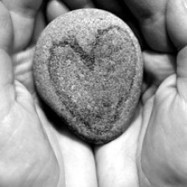
By compassionately recognizing that you have personal limits, you can respect the legitimacy of the emotions you feel when you have been pushed beyond them. Most people would agree that having a compassionate stance towards oneself is desirable. But how do you cultivate self-compassion? Let’s quickly define the term. In this article, “compassion” means tenderhearted recognition of pain or distress, coupled with a desire to alleviate it. Each component of this definition—recognition, tenderheartedness, and a desire to alleviate distress—offers opportunities for cultivating compassion. This article will look at how the skill of “recognition” can help you grow self-compassion.
Scoop.it!

BY NANCI BESSER The Challenge: Everyone wants to find their soulmate, but how can we be that for someone else?
Everyone wants a soulmate. Yet what does it take to be a perfect partner to that soulmate? Practicing self-compassion might be a strong indicator of the presence or absence of empathy in an individual.
Scoop.it!

This day-long seminar led by self-compassion pioneer Kristin Neff,will offer strategies for cultivating self-compassion, boosting happiness, and reducing stress in yourself and others. Self-compassion is a skill that can be learned by anyone. It involves generating feelings of kindness and care toward ourselves as imperfect human beings, and learning to be present with greater ease during life's inevitable struggles. It is an antidote to harsh self-criticism, making us feel connected to others when we suffer, rather than feeling isolated and alienated. Unlike self-esteem, the good feelings of self-compassion do not depend on being special and better than other people; instead, they come from caring about ourselves and embracing our commonalities.
Scoop.it!

Join CNVC Certified Trainer Mary Mackenzie to learn a few of her tried-and-true simple Self Empathy techniques, especially focused on the challenges of the holiday season.
|
Scoop.it!
Researchers say self-compassion can be taught using avatars in an immersive virtual reality, with their trials showing reduced self-criticism and increased self-compassion in participants. The scientists behind the study are now investigating the longevity of the therapy and say it could be applied to treat a range of clinical conditions. Matthew Stock reports.
Scoop.it!

You have probably heard a lot about mindfulness over the years. Self-compassion is a natural byproduct of mindfulness, as a self-compassionate attitude asks us to be mindful of how we are relating to ourselves.
Scoop.it!

Mindful Self-Compassion is an 8 week course (including a half day retreat) that is designed to give participants concrete and practical ways to treat themselves with more kindness. Self-Compassion can be learned by anyone, even those of us who are very hard on ourselves. The course includes guided meditations, exercises, and direct learning. No meditation experience is required - beginners welcome! For more information please visit my website, http://cittapsychotherapy.com/mindful-self-compassion.html.
Scoop.it!

Mindful Self-Compassion Trainings I have completed the Mindful Self-Compassion Teacher Training through the University of California San Diego Center for Mindfulness.
What is Mindful Self-Compassion?
Scoop.it!

“Beauty is perfect in its imperfections, so you just have to go with the imperfections.” — Diane Von Furstenberg
Scoop.it!

As I wrote in this piece on journaling prompts for self-reflection and self-discovery, part of building a healthy relationship with ourselves is keeping an open and honest dialogue. It’s continually asking ourselves questions and welcoming the answers. It’s getting to know ourselves, at our core. Here’s a list of 25 questions to help you take small steps in being kinder to yourself.
Scoop.it!

I’m savoring Olivia Fox Cabane’s book, The Charisma Myth. It’s like preaching to the converted. We totally see eye-to-eye on so many practices. My favorite: being present is a key to executive presence. Non-verbal communication is SO important… right down to wearing clothing to a business meal that’s comfortable— lest you send off the wrong vibe (think hot room, itchy suit).
Scoop.it!

Being kind to yourself isn’t just about patching yourself up so you can head back out onto the battlefield to fight for social justice. It’s a personal and political act which shows that you are worthy of being valued, cared for and loved, writes Julie Catt.... Ways to develop self-compassion
Scoop.it!

Join us for this two-day workshop to learn the core skills of the 8-week Mindful Self-Compassion (MSC) training, an empirically-supported program designed to cultivate self-compassion using meditation, daily life practices, lecture, group exercises and discussion. Self-compassion is an emotional skill that can be learned by anyone. Recent research has shown that self-compassion greatly enhances emotional wellbeing, reduces anxiety and depression, enhances coping, promotes health behaviors, and increases motivation. This workshop is open to anyone wanting to learn essential tools for treating yourself in a respectful, compassionate way whenever you suffer, fail, or feel inadequate. This is a great way to overcome pleasing others and practicing more self-care.
Scoop.it!

I’ve been thinking about self-esteem lately, and how you can never have too much of it (or so I thought) I wanted to find out more about how self-esteem works and how to give it a boost when it’s running low. I was surprised to find that self-esteem isn’t as straight-forward as I’d thought — what matters more is self-compassion.
Scoop.it!

Putting something off can trigger a downward negative spiral. But a recent study suggests that being kind to yourself can help you achieve your goals. Low self-compassion, high stress Fuschia M. Sirois of Bishop’s University in Canada examined whether self-compassion—kindness and understanding toward one’s self in response to pain or failure By Linda Graham
Scoop.it!
This study examined different emotions induced by social comparisons between the two groups divided by the level of self- compassion. A total of 108 Korean undergraduates (62% women; mean age of 21 years) first responded to the self-compassion scale to divide them into either high or low self-compassion group. They were also presented with two scenarios (upward and downward comparisons). After reading each scenario, respectively, they completed a survey to assess their emotions. ANOVA results showed no significant difference between high and low self-compassion groups in experience of positive emotion, whereas the high self-compassion group reported less negative feelings than their counterpart after both scenarios. This suggests that self-compassion is a potentially influential factor buffering the negative consequences of social comparisons. img http://j.mp/1nuKHMw
|




