A common but not frequently recognized side effect of traumatic life experiences is an excessive harshness towards self, which often times co-exists with a healthy degree of care and concern for others.
While this harshness towards self can be expressed in a multitude of ways, a commonality is the existence of different standards – be it the standard regarding fairness, worth, acceptability, love, etc…– for yourself and others; with the standards for self being more stringent, unrealistic and possibly even unattainable.
Phrased another way, you judge yourself with more rigorous criteria than you use for anyone else.
If you don't know of Kristin Neff, you should. And if you do, you'll no doubt want to know more. Why? Because Neff, the world's leading self-compassion researcher, has developed a mind-altering prescription that just might change your life.
Why we should stop chasing self-esteem and start developing self-compassion.
The great angst of modern life is this: no matter how hard we try, no matter how successful we are, no matter how good a parent, worker, or spouse we are - it's never enough. There is always someone richer, thinner, smarter, or more powerful, someone that makes us feel small in comparison. Failure of any kind, large or small, is unacceptable. The result: therapist's offices, pharmaceutical companies, and the self-help aisles of bookstores are besieged by people who feel they're not okay as they are. What to do?
One response has come in the form of the self-esteem movement. Over the years there have been literally thousands of books and magazine articles promoting self-esteem - how to get it, raise it and keep it. The pursuit of high self-esteem has become a virtual religion, but research indicates this has serious downsides.
Kristin Neff at Books inc in Berkeley, CA (June 2, 2011) talking about her book, Self-Compassion: Stop Beating Yourself Up and Leave Insecurity Behind. Kristin teaches readers how to silence self-criticism and replace it with self-compassion in order to fulfill their highest potential and live happier, more fulfilled lives. For more and transcripts http://bit.ly/m2rCN2 Video by Edwin Rutsch
May 30th from 9-10 am PST, Kristin will be here on this page for a personal live chat with you, to talk bout her new book, Self-Compassion: Stop Beating Yourself Up and Leave Insecurity Behind.
Post your questions below now. Kristin will post her replies and be here on May 30th to talk with you in real time.
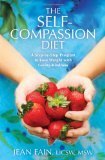
See for yourself how self-compassion can help you lose weight and keep it off. Watch this book trailer for "The Self-Compassion Diet: A Step-by-Step Program ...
A charming animated baby, Kristin Neff's son Rowan retreated into himself as a toddler, losing his few words and becoming prone to inexplicable screaming fits.
There are numerous ways Neff could have reacted to Rowan's 2004 diagnosis of autism. She could have buried her emotions, become despondent or immediately found something to blame.
But Neff, an associate professor at the University of Texas at Austin, was in the midst of pioneering psychological research on self-compassion. And her findings suddenly proved invaluable to her personal life. Being sympathetic and kind to herself let her cope constructively and offered insight into how to parent her struggling son.
The number one reason people give for why they aren’t more self-compassionate is the fear that they will be too easy on themselves. Without constant self-criticism to spur myself on, they worry, won’t I just skip work, eat three tubs of ice cream, and watch Oprah reruns all day? In others words, isn’t self-compassion really the same thing as self-indulgence?
Before answering that question, it’s first worth considering whether self-criticism is really the great motivator it’s cracked up to be
Think of all the generous, kind people you know who constantly give compassion and care to others, yet continually beat themselves up. Most of us are quite practiced at being supportive and giving to others, especially those of us who find ourselves in caregiver roles. Whether we have a special needs child, a parent with Alzheimer's, an ill partner, or are in a caregiving profession such as being a nurse, therapist, or teacher, we know to give support, comfort and compassion to the people who need us. But how many of us offer that same level of compassion and care to ourselves?
For some reason our culture tells us that this is the way we should be - women especially.
[Another new article by Kristen Neff about self-compassion for care givers. Photo is of Kristen and her son Rowan, who is autistic. There was a movie made of her journey with autism in the book and film, The Horse Boy. http://horseboymovie.com ]
How do you care for yourself when life gets hard? You've probably realized by now that life can feel really hard: You don't always get what you want, and you often get what you don't want. Have you ever stopped to notice how you relate to yourself when difficulties arise?
When you think of empathy, you probably think of putting yourself in someone else's shoes, imagining what their life is like.
Empathy is about connecting with what it's like to be someone else. In order to empathize with someone, you need to pay attention to them and really listen to them. Self-empathy is similar, but it's about really listening to yourself. It's about connecting with what's alive in you, turning your attention inward to see what is going on for you.
Self-empathy is particularly helpful when you're experiencing some sort of emotional discomfort. It is a way to stay connected with yourself when your tendency is to avoid or distract.
Mindful self-compassion can be learned by anyone. It’s the practice of repeatedly evoking good will toward ourselves especially when we’re suffering—cultivating the same desire that all living beings have to live happily and free from suffering. And as the Dalai Lama says, self-compassion is the first step toward compassion for others.
Christopher Germer, PhD is a clinical psychologist in private practice in Arlington, Massachusetts, specializing in mindfulness and acceptance-based psychotherapy
Bullying yourself slim may make for good TV drama (think fitness trainer Jackie Warner tormenting her overweight trainees), but if you're serious about slimming down, the bully shape-up strategy is nothing but bad news. If I hadn't yo-yo dieted through my teens, dedicated my career to helping clients with eating issues and researched winning weight-loss approaches, I might never have gained this uncommon wisdom:
Loving kindness, not punishing self-discipline, is the key to losing weight and keeping it off. It's the only way to create a harmonious relationship with food. Self-discipline, it turns out, is a much better strategy for gaining than losing weight. img http://bit.ly/iup4sL
Compassion is a huge value of mine. Now I like to use the term open-heartedness, because compassion tends to be specific to the context of suffering. Of course we want to have open hearts in face of suffering, but also want to have open hearts in the face of joy and when we are at our bests and have great successes and achievements.
Just keep our hearts open no mater what happens, positive, negative or even neutral. Open mind and open heart, just trying to stay open...
For me open-heartedness is the core state and it manifests differently. So open-heartedness toward your suffering is compassion, open-heartedness for my suffering is self-compassion, open-heartedness for your joy and accomplishments, there's a term in Buddhism is called Mudita, also called sympathetic joy, so I can feel with you, in your happiness, as well as feel with you in your sorrow.
Kristin studied communications as an undergraduate at the University of California at Los Angeles (B.A., 1988). She did her graduate work at University of California at Berkeley (Ph.D., 1997), studying moral development with Dr. Elliot Turiel.
When something has gone wrong, when there’s been a mistake made, no matter how small, many people are all too quick to point the finger — at themselves...
But there’s something you can build that’s more substantial than self-esteem. Something that doesn’t waver and can actually boost your well-being — and your performance isn’t a factor. According to psychologist Kristin Neff, Ph.D, in her book Self-Compassion: Stop Beating Yourself Up and Leave Insecurity Behind, that something is self-compassion.
When you are anxious, sad, angry, or lonely, do you hear this self-critical voice? What would happen if, instead of fighting difficult emotions, we accepted them?
This workshop provides simple tools for responding in a kind, compassionate way whenever you suffer, fail, or feel inadequate. These tools are essential steps toward living a happier, more fulfilling life. You’ll be taught how to:
• Stop being so hard on yourself • Handle difficult emotions with greater ease • Motivate yourself with kindness rather than criticism • Transform your relationships, both old and new • Practice mindfulness and self-compassion exercises for everyday life • Be your own best teacher
Two psychologists lead this condensed version of their eight-week Mindful Self-Compassion training program. It’s a weeklong dive into mindfulness and self-kindness supported by the beautiful Esalen campus. All are welcome.
Mindsight is a method of self-understanding through which people can gain insight and empathy by exploring the workings of their own mind.
As Robert Firestone wrote, "Perhaps the single most important life affirming human quality is the ability to feel love -- to feel compassion and empathy for and express kindness, generosity and tenderness toward other people. Learning to love others requires first valuing oneself." This is the foundation upon which all human relationships are built. Lisa Firestone
The number-one reason people give for why they aren't more self-compassionate is the fear that they will be too easy on themselves. Without constant self-criticism to spur myself on, people worry, won't I just skip work, eat three tubs of ice cream and watch Oprah reruns all day? In others words, isn't self-compassion really the same thing as self-indulgence?
Before answering that question, it's first worth considering whether self-criticism is really the great motivator it's cracked up to be.
I recently finished reading Kristin Neff's new book, Self-Compassion: Stop Beating Yourself Up and Leave Insecurity Behind. As I've mentioned before in Scientific Mindfulness, I've been following Dr. Neff's work on self-compassion for several years now...
Dr. Neff's book is an enjoyable mixture of theory, research, and personal anecdotes. It has elements of self-help but is not primarily a self-help book. Each chapter has exercises the reader may use to help develop self-compassion. I bookmarked several of them to use with clients.
Self-compassion sounds a little cheesy, but it’s pretty simple. It has to do with acknowledging your own feelings and helps you relate to the feelings of others. There are three parts: mindfulness, or the actual acknowledgement of your feelings- realizing they’re there, common humanity, realizing that, others, too, go through difficult emotions and finding support and strength in numbers, and being kind to yourself and others in an effort to reduce further hardships.
Researcher Kristin Neff reveals the benefits of going easy on yourself: less anxiety, less conflict, and more peace of mind.
What is self-compassion? What does it mean exactly?
As I’ve defined it, self-compassion entails three core components.
First, it requires self-kindness, that we be gentle and understanding with ourselves rather than harshly critical and judgmental.
Second, it requires recognition of our common humanity, feeling connected with others in the experience of life rather than feeling isolated and alienated by our suffering.
Third, it requires mindfulness—that we hold our experience in balanced awareness, rather than ignoring our pain or exaggerating it. We must achieve and combine these three essential elements in order to be truly self-compassionate.
Is it selfish to have compassion for yourself? On an airplane, you are asked to put the oxygen mask on yourself first, so that you can help other people. Self-compassion is like that too. If you don't take care of yourself first, you won't be fully equipped to help others.
It's time to take a fresh look at the Golden Rule. How about treat yourself as you would have others treat you? The end result will not only give you the oxygen you need, it will also equip you to be of help to the people around you. Self-compassion is not selfish at all; in fact, it's just the opposite.
We all have flashes of inspiration. Sometimes they appear as quiet whispers in the night, as fleeting thoughts in the morning shower or as huge "a-ha!" moments. The question is: Are you giving enough attention to the clues that your inner voice is sending?
How can you get more attuned to the inner directives? Here are three ways to get started.
To get content containing either thought or leadership enter:
To get content containing both thought and leadership enter:
To get content containing the expression thought leadership enter:
You can enter several keywords and you can refine them whenever you want. Our suggestion engine uses more signals but entering a few keywords here will rapidly give you great content to curate.


 Your new post is loading...