 Your new post is loading...

|
Scooped by
Gust MEES
February 22, 2016 8:40 AM
|
If you downloaded a new build from the website over the weekend, you'll probably need to start over.
Hackers took control of the official website for the Linux Mint distro over the weekend, resulting in some users downloading a build of the OS that had been modified to include a backdoor that would give attackers full access to a user’s system. Announced in a blog post, the organization said it quickly spotted and rectified the issue, but that anyone who downloaded Linux Mint (Cinnamon Edition) on February 20 should probably start over. At the very least, you’ll want to check the MD5 signature of your download to ensure it’s legit.
Learn more / En savoir plus / Mehr erfahren:
http://www.scoop.it/t/securite-pc-et-internet/?tag=Linux
http://www.scoop.it/t/securite-pc-et-internet/?tag=Linux+Mint
|
|
Scooped by
Gust MEES
February 21, 2016 8:13 AM
|
|
|
Scooped by
Gust MEES
February 19, 2016 11:34 AM
|
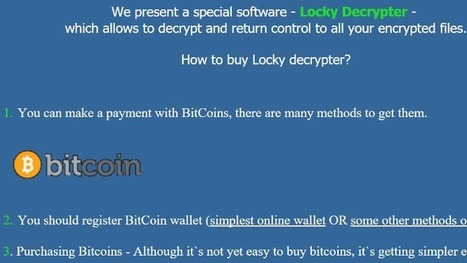
Gegen den Verschlüsselungs-Trojaner Locky ist noch kein Kraut gewachsen. Umso wichtiger ist eine hinreichende Vorsorge, damit bei einer Infektion keine Dateien unrettbar verloren gehen. Deswegen sollten Computernutzer einiges beachten.
Vorsorge gegen Krypto-Trojaner Locky - Legen Sie regelmäßig Backups Ihrer wichtigen Dateien an. Der Backup-Datenträger darf nicht dauerhaft mit dem Rechner verbunden sein, da er sonst ebenfalls verschlüsselt wird.
- Halten Sie Ihre System (insbesondere Betriebssystem, Office, Browser und Plug-ins) auf dem aktuellen und somit sichersten Stand.
- Stellen Sie sicher, dass Ihr System von einem Virenscanner geschützt wird, der auf aktuelle Signaturen zurückgreift. Ab Windows 8 ist das Schutzprogramm Defender vorinstalliert.
- Konfigurieren Sie Microsoft Office so, dass Makro-Code gar nicht oder erst nach einer Rückfrage ausgeführt wird (siehe Bilderstrecke).
- Lassen Sie Makro-Code nur bei Dokumenten aus vertrauenswürdigen Quellen zu – und auch nur dann, wenn es unbedingt notwendig ist.
- Öffnen Sie keine Dateianhänge von Mails, an deren Vertrauenswürdigkeit auch nur der geringste Zweifel besteht. Nehmen Sie sich insbesondere vor Rechnungs-Mails in Acht, die Sie nicht zuordnen können.
- Starten Sie keine ausführbaren Dateien, an deren Vertrauenswürdigkeit Sie zweifeln.
Learn more / En savoir plus / Mehr erfahren:
http://www.scoop.it/t/securite-pc-et-internet/?tag=LOCKY
http://www.scoop.it/t/securite-pc-et-internet/?tag=RANSOMWARE
|
|
Scooped by
Gust MEES
February 19, 2016 9:59 AM
|
|
|
Scooped by
Gust MEES
February 19, 2016 9:25 AM
|
Twitter has notified 10,000 users that their email address and phone number might have been exposed due to a bug in the website's password recovery feature.
|
|
Scooped by
Gust MEES
February 19, 2016 9:00 AM
|
|
|
Scooped by
Gust MEES
February 18, 2016 5:03 PM
|
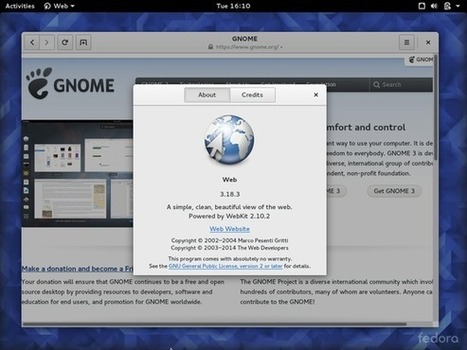
The WebKit rendering engine used in many Linux applications is a complete security mess. That’s the takeaway from a blog post by Michael Catanzaro, who works on GNOME’s WebKitGTK+ project. He’s sounding the alarm about a problem the open-source community needs to fix.
The problem with WebKit
Most web browsers issue regular security updates to their users. But, if you’re using a WebKit-based browser, or email client, or any other application that uses that rendering engine, on Linux, you almost certainly aren’t getting security updates.
WebKit is a large open-source project. Apple uses WebKit for Safari on Mac and iOS, and those versions of WebKit receive regular security updates. But the WebKit port used for Linux does not.
The common port used by Linux distros is WebKitGTK+, which is associated with GNOME software and other applications that use the GTK+ toolkit. This includes Epiphany, GNOME’s flagship web browser, often called simply “Web” or “GNOME Web.” It also includes a variety of other applications, such as the Evolution email client, Midori web browser, GIMP image-editing program, Banshee and Rhythmbox media players, and many other programs.
Learn more / En savoir plus / Mehr erfahren:
http://www.scoop.it/t/securite-pc-et-internet/?tag=Linux
|
|
Scooped by
Gust MEES
February 17, 2016 12:58 PM
|
|
|
Scooped by
Gust MEES
February 16, 2016 10:44 AM
|
Ce bulletin a été rédigé par Vigil@nce : https://vigilance.fr/offre SYNTHÈSE DE LA VULNÉRABILITÉ Un attaquant peut employer plusieurs vulnérabilités de Moodle. Produits concernés : Fedora. Gravité : 2/4.
|
|
Scooped by
Gust MEES
February 15, 2016 6:15 PM
|
|
|
Scooped by
Gust MEES
February 15, 2016 9:27 AM
|
CIRCL offers courses to its members and organizations based in Luxembourg. In their mission to improve information security, CIRCL is sharing its field experience through a set of training or technical courses. Due to diversity of competences within the team, CIRCL is able to provide a large diversity of information security trainings. Courses target technical experts but also non-technical staff in the topics of incident handling, malware analysis, operational security and system forensics. CIRCL sees the trainings and technical course as a great opportunity to learn from their partners, too, and to improve the security handling procedures. By attending the courses, partners are not only helping their own organization but also the overall security in Luxembourg (i.e. it is beneficial for both the organization and CIRCL if the technical staff is prepared for Incident Response). Courses can be held at CIRCL’s training room or the premises of the organization unless specific requirements are noted. Courses however have specific requirements in terms of technical equipment. These requirements are specified in the course description or will be specified before the course starts. CIRCL provides these courses under tailored terms and conditions in order to fit your organizational structure. Don’t hesitate to Contact us for more information.
|
|
Scooped by
Gust MEES
February 11, 2016 2:11 PM
|
|
|
Scooped by
Gust MEES
February 11, 2016 7:12 AM
|
|
|
|
Scooped by
Gust MEES
February 21, 2016 12:49 PM
|
|
|
Scooped by
Gust MEES
February 19, 2016 2:49 PM
|
|
|
Scooped by
Gust MEES
February 19, 2016 10:37 AM
|
|
|
Scooped by
Gust MEES
February 19, 2016 9:39 AM
|
|
|
Scooped by
Gust MEES
February 19, 2016 9:10 AM
|
|
|
Scooped by
Gust MEES
February 19, 2016 8:40 AM
|
|
|
Scooped by
Gust MEES
February 17, 2016 3:53 PM
|
|
|
Scooped by
Gust MEES
February 16, 2016 2:57 PM
|
Sicherheitslücke gefährdet fast alle Linux-Systeme
Eine schwerwiegende Sicherheitslücke klafft in der Glibc-Bibliothek, die in fast allen Linux-Systemen genutzt wird: Eine DNS-Funktion erlaubt die Ausführung von bösartigem Code. Nutzer sollten schnellstmöglich Updates installieren.
Diese Sicherheitslücke hat es in sich: Mittels gezielter DNS-Antworten lässt sich unter Umständen die Namensauflösungsfunktion der Glibc-Bibliothek dazu bringen, fremden Code auszuführen. Die Glibc ist die Standard-C-Bibliothek, die üblicherweise auf Linux-Systemen zum Einsatz kommt.
Learn more / En savoir plus / Mehr erfahren:
http://www.scoop.it/t/securite-pc-et-internet/?tag=Linux
|
|
Scooped by
Gust MEES
February 16, 2016 10:30 AM
|
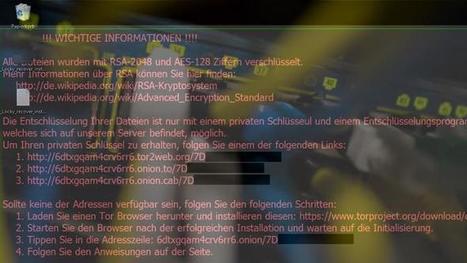
Locky lauerte vermutlich bereits eine Weile auf den infizierten Systemen, ehe es am vergangenen Montag zeitgleich bei mehreren Opfern mit der Verschlüsselung persönlicher Dateien begonnen hat.
Aktuell grassiert ein neuer Verschlüsselungs-Trojaner namens Locky, der über 300 Euro von seinen Opfern erpresst. heise Security liegen mehrere Berichte von Lesern vor, bei denen die Ransomware mitunter zehntausende Dateien verschlüsselt hat. Anscheinend schlummerte Locky bereits seit einiger Zeit auf den Rechnern der Opfer, um dann am vergangenen Montag erstmals koordiniert zuzuschlagen.
Die Liste der Dateiformate, auf die es Locky abgesehen hat, ist lang. Darunter befindet sich Office-Dateien, diverse Medienformate, Archive, Quellcode, Datenbanken, Zertifikate und Krypto-Schlüssel – kurzum alles, was dem Nutzer potenziell lieb und teuer ist. Insgesamt grast die Ransomware die Platte nach Dateien mit über 150 Endungen ab.
Learn more / En savoir plus / Mehr erfahren:
http://www.scoop.it/t/securite-pc-et-internet/?tag=LOCKY
http://www.scoop.it/t/securite-pc-et-internet/?tag=RANSOMWARE
|
|
Scooped by
Gust MEES
February 15, 2016 10:24 AM
|
|
|
Rescooped by
Gust MEES
from Vie numérique à l'école
February 12, 2016 3:07 AM
|
Versailles 3D est un outil formidable pour parler de Versailles à une classe. Que ce soit pour illustrer un cours d’histoire ou préparer une visite, le site fourmille de ressources utile à l’enseignant. En fléchant la partie du site consacré au jeu « Pagaille à Versailles », Versailles 3D peut aussi servir pour inviter les élèves à apprendre en s’amusant grâce à une technologie et un propos historique irréprochables. Ce projet auquel a collaboré Google est gratuit, ill mérite une place dans vos favoris.
Vous pouvez visiter Versailles 3D ici sur le Web.
Via Michèle Drechsler
|
|
Scooped by
Gust MEES
February 11, 2016 7:29 AM
|
|


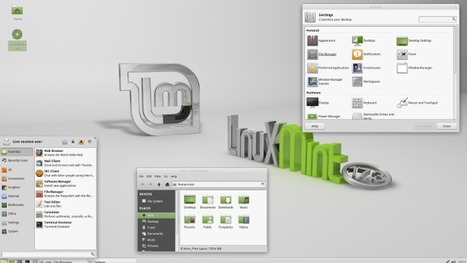





















Hackers took control of the official website for the Linux Mint distro over the weekend, resulting in some users downloading a build of the OS that had been modified to include a backdoor that would give attackers full access to a user’s system.
Announced in a blog post, the organization said it quickly spotted and rectified the issue, but that anyone who downloaded Linux Mint (Cinnamon Edition) on February 20 should probably start over. At the very least, you’ll want to check the MD5 signature of your download to ensure it’s legit.
Learn more / En savoir plus / Mehr erfahren:
http://www.scoop.it/t/securite-pc-et-internet/?tag=Linux
http://www.scoop.it/t/securite-pc-et-internet/?tag=Linux+Mint