 Your new post is loading...

|
Scooped by
Gust MEES
February 11, 2016 4:50 AM
|
|
|
Scooped by
Gust MEES
February 10, 2016 7:09 AM
|
|
|
Scooped by
Gust MEES
February 8, 2016 11:32 AM
|
|
|
Scooped by
Gust MEES
February 5, 2016 10:25 AM
|
In seiner Standard-Konfiguration liefert der beliebte Web-Server-Dienst Informationen, die die Anonymitäts-Versprechen eines Tor Hidden Services gefährden. Diese anonymen Tor-Dienste sind der Kern des oft zitierten "Dark Net".
Learn more:
http://www.scoop.it/t/securite-pc-et-internet/?tag=TOR
|
|
Scooped by
Gust MEES
February 2, 2016 12:39 PM
|
|
|
Scooped by
Gust MEES
January 23, 2016 12:35 PM
|
|
|
Scooped by
Gust MEES
January 20, 2016 10:04 AM
|
|
|
Scooped by
Gust MEES
January 20, 2016 6:31 AM
|
|
|
Scooped by
Gust MEES
January 19, 2016 12:32 PM
|
|
|
Scooped by
Gust MEES
January 8, 2016 3:57 PM
|
|
|
Scooped by
Gust MEES
January 7, 2016 9:29 AM
|
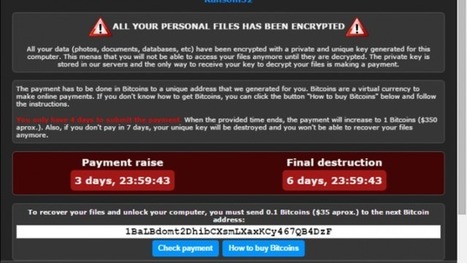
Software as a service (or SaaS) is a relatively new model of how a lot of software companies are conducting their business today – often to great success. So it comes as no surprise that malware writers and cyber crooks are attempting to adopt this model for their own nefarious purposes. In the past year a whole bunch of these “Ransomware as a Service” campaigns appeared, like for example Tox, Fakben or Radamant. Today we want to spotlight the newest of these campaigns. Meet Ransom32 At first glance Ransom32 looks like a dime a dozen among many similar malware campaigns. Signups are handled via a hidden server in the Tor network. A simple Bitcoin address where you want the funds generated by your ransomware to be sent to is enough to signup.
Learn more / En savoir plus / Mehr erfahren:
http://www.scoop.it/t/securite-pc-et-internet/?tag=RANSOMWARE
|
|
Scooped by
Gust MEES
January 6, 2016 9:57 AM
|
Google vient de corriger un nouvel ensemble de vulnérabilités découvertes au sein de son système mobile Android
En début de semaine, Google a publié plusieurs correctifs pour les terminaux de la gamme Nexus et publiera ces derniers au sein du code source de l'AOSP. Notons que les constructeurs partenaires ont reçu cette mise à jour le 7 décembre dernier et la déploieront en fonction de leurs calendriers respectifs.
Au total une douzaine de failles sont comblées dont cinq jugées critiques, deux en haute priorité et cinq modérées. Il est intéressant de noter que parmi les failles les plus dangereuses, l'une d'entre elles permettait d'exécuter du code à distance en exploitant une vulnérabilité de Media Server.
|
|
Scooped by
Gust MEES
January 4, 2016 11:23 AM
|
Un chercheur a découvert un type de ransomware écrit en Javascript. Ransom32 a été codé à partir de la plateforme NW.js avec un chiffrement résistant.
La mutation est à l’œuvre sur le marché des rançongiciels, ces logiciels qui cadenassent les fichiers ou les PC et réclament de l’argent pour les débloquer. Traditionnellement écrit en C++, un chercheur de la firme Emsisoft a mis la main sur un ransomware écrit en JavaScript. Ce dernier baptisé Ransom32 est codé depuis le framework NW.js. Ce dernier était connu auparavant sous le nom Node-Webkit.
Cette plateforme facilite la création par les développeurs d’applications en JavaScript pour Windows, Linux et Mac OS X. Elle s’appuie sur les projets Node.js et Chromium. Pour autant, si le malware est disponible sur plusieurs OS, le blog d’Emsisoft constate que le ransomware ne fonctionne que sous Windows. Concrètement, NW.js utilise une version allégée de WebKit, le moteur de rendu utilisé dans Chrome, Safari et Opera, mais sans fixer de limitation. Les développeurs peuvent ainsi interagir directement avec le système d’exploitation.
Learn more / En savoir plus / Mehr erfahren:
http://www.scoop.it/t/securite-pc-et-internet/?tag=RANSOMWARE
|
|
|
Scooped by
Gust MEES
February 10, 2016 10:57 AM
|
The European Union and NATO have today signed a Technical Arrangement between the NATO Computer Incident Response Capability (NCIRC) and the Computer Emergency Response Team – European Union (CERT-EU). The agreement facilitates technical information sharing between NCIRC and CERT-EU to improve cyber incident prevention, detection and response in both organisations, in line with their decision making autonomy and procedures. The signing of this agreement is an important milestone to implement the objectives of the EU Cyber Defence Policy Framework, which has set cooperation with NATO as one of its five priorities. Advanced incident response coordination allows for further development of practical cooperation and the sharing of best practice in cyber defence between the EU and NATO.
|
|
Scooped by
Gust MEES
February 9, 2016 5:59 PM
|
|
|
Scooped by
Gust MEES
February 8, 2016 10:47 AM
|
Any time you interact with an organisation that has “security” in their name, it’s understandable that you would expect them to be good at security. Right? You would hope them to be shining examples for everyone else about how to do things right, how to batten down the hatches and protect sensitive information from falling into the hands of the bad guys. But, as the US Department of Homeland Security (DHS) has just found out – things aren’t always that simple. As CSO Online reports, this weekend a hacker dumped a staff directory including the names, job titles, email addresses and phone numbers of over 9,000 DHS workers on the net.
Learn more / En savoir plus / Mehr erfahren:
http://www.scoop.it/t/securite-pc-et-internet/?tag=DATA-BREACHES
http://www.scoop.it/t/securite-pc-et-internet
|
|
Scooped by
Gust MEES
February 4, 2016 8:38 AM
|
There's likely no Internet user that hasn't, at some point, been tricked into clicking on a deceptive
|
|
Scooped by
Gust MEES
January 26, 2016 8:26 AM
|
|
|
Scooped by
Gust MEES
January 20, 2016 12:58 PM
|
Intel has fixed a major security vulnerability in a driver utility tool that could allow an attacker to remotely install malware.
The company has advised those who use the Intel Driver Update Utility to download an updated version of the software, which mitigates a vulnerability in how the software requests new drivers from Intel's servers.
In a security advisory, the chipmaker confirmed that versions 2.0 to 2.3 put PCs at risk because they check Intel's servers over an unencrypted connection. An attacker could conduct a man-in-the-middle on the affected software. which could trick the software into downloading malware or other malicious files.
|
|
Scooped by
Gust MEES
January 20, 2016 6:39 AM
|
The company releases iOS 9.2.1 and OS X 10.11.3 with mostly security fixes.
Nine fixes were posted for the Mac platform, including a fix for a flaw that could've allowed an attacker to execute code with kernel privileges. The patch also comes with fix for an issue that prevents some Macs from waking from sleep when connected to some 4K-resolution displays. Another batch of nine fixes were also posted for the iOS platform, including a WebSheet flaw that could've allowed a malicious captive portal from accessing user cookies.
Learn more / En savoir plus / Mehr erfahren:
http://www.scoop.it/t/apple-mac-ios4-ipad-iphone-and-in-security
|
|
Scooped by
Gust MEES
January 19, 2016 12:46 PM
|
Malware for Linux becomes more and more diverse. Among them are spyware programs, ransomware, and Trojans designed to carry out DDoS attacks. Doctor Web security researchers examined yet another cybercriminals’ creation dubbed Linux.Ekoms.1. This Trojan can periodically take screenshots and download different files to a compromised machine.
Learn more / En savoir plus / Mehr erfahren:
http://www.scoop.it/t/securite-pc-et-internet/?tag=Linux
|
|
Scooped by
Gust MEES
January 8, 2016 4:17 PM
|
|
|
Scooped by
Gust MEES
January 7, 2016 12:09 PM
|
|
|
Scooped by
Gust MEES
January 7, 2016 7:48 AM
|
Ein neuer Erpressungstrojaner namens Ransom32 verschlüsselt persönliche Dateien auf angegriffenen Rechnern. Es handelt sich um den ersten Trojaner auf JavaScript-Basis - dem bislang kaum ein Virenscanner gewachsen ist.
Learn more / En savoir plus / Mehr erfahren:
http://www.scoop.it/t/securite-pc-et-internet/?tag=RANSOMWARE
|
|
Scooped by
Gust MEES
January 4, 2016 6:59 PM
|
Highly destructive malware that infected at least three regional power authorities in Ukraine led to a power failure that left hundreds of thousands of homes without electricity last week, researchers said.
The outage left about half of the homes in the Ivano-Frankivsk region of Ukraine without electricity, Ukrainian news service TSN reported in an article posted a day after the December 23 failure. The report went on to say that the outage was the result of malware that disconnected electrical substations. On Monday, researchers from security firm iSIGHT Partners said they had obtained samples of the malicious code that infected at least three regional operators. They said the malware led to "destructive events" that in turn caused the blackout. If confirmed it would be the first known instance of someone using malware to generate a power outage.
Learn more / En savoir plus / Mehr erfahren:
http://www.scoop.it/t/securite-pc-et-internet
|


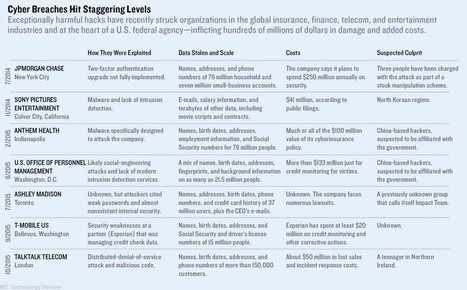

























Learn more / En savoir plus / Mehr erfahren:
http://www.scoop.it/t/securite-pc-et-internet/?tag=DATA-BREACHES
http://www.scoop.it/t/securite-pc-et-internet