ICT Security-Sécurité PC et Internet
114.2K views | +0 today
ICT Security-Sécurité PC et Internet
ICT Security + Privacy + Piracy + Data Protection - Censorship - Des cours et infos gratuites sur la"Sécurité PC et Internet" pour usage non-commercial... (FR, EN+DE)...
Curated by Gust MEES
Your new post is loading...
Scooped by Gust MEES
February 8, 2018 9:40 AM
Scoop.it!

Swisscom data breach exposes 800,000 customers | #CyberSecurity #DataBreaches #Awareness

Swisscom data breach exposes 800,000 customers | #CyberSecurity #DataBreaches #Awareness | ICT Security-Sécurité PC et Internet | Scoop.it
Swiss telecoms giant Swisscom has admitted that it suffered a serious security breach in the autumn of 2017 that saw the theft of contact details of approximately 800,000 customers – most of whom were mobile subscribers.

Data exposed during the breach included:

Customers’ first and last names
Customers’ home addresses
Customers’ dates of birth
Customers’ telephone numbers


Interestingly, in a press release, Swisscom pointed a finger of blame at an unnamed third-party sales partner who had been granted “limited access” to the data in order that they could identify and advise customers approaching contract renewal.

That sales partner, Swisscom says, suffered its own security breach – somehow allowing its access keys to Swisscom to fall into criminal hands.

A routine check of Swisscom’s operational activities uncovered the unauthorised data access, and the offending partner’s access rights revoked.


Learn more / En savoir plus / Mehr erfahren:


https://www.scoop.it/t/securite-pc-et-internet/?&tag=DATA-BREACHES


Gust MEES's insight:
Swiss telecoms giant Swisscom has admitted that it suffered a serious security breach in the autumn of 2017 that saw the theft of contact details of approximately 800,000 customers – most of whom were mobile subscribers.

Data exposed during the breach included:

Customers’ first and last names
Customers’ home addresses
Customers’ dates of birth
Customers’ telephone numbers


Interestingly, in a press release, Swisscom pointed a finger of blame at an unnamed third-party sales partner who had been granted “limited access” to the data in order that they could identify and advise customers approaching contract renewal.

That sales partner, Swisscom says, suffered its own security breach – somehow allowing its access keys to Swisscom to fall into criminal hands.

A routine check of Swisscom’s operational activities uncovered the unauthorised data access, and the offending partner’s access rights revoked.


Learn more / En savoir plus / Mehr erfahren:


https://www.scoop.it/t/securite-pc-et-internet/?&tag=DATA-BREACHES


No comment yet.
Scooped by Gust MEES
February 6, 2018 5:31 PM
Scoop.it!

A flaw in Hotspot Shield can expose VPN users, locations | #CyberSecurity #Anonymity #Privacy #Awareness 

A flaw in Hotspot Shield can expose VPN users, locations | #CyberSecurity #Anonymity #Privacy #Awareness  | ICT Security-Sécurité PC et Internet | Scoop.it

A flaw in Hotspot Shield can expose VPN users, locations
The virtual private network says it provides a way to browse the web "anonymously and privately," but a security researcher has released code that could identify users' names and locations.

A security researcher has found a way to identify users of Hotspot Shield, a popular free virtual private network service that promises its users anonymity and privacy.

Hotspot Shield, developed by AnchorFree, has an estimated 500 million users around the world relying on its privacy service. By bouncing a user's internet and browsing traffic through its own encrypted pipes, the service makes it harder for others to identify individual users and eavesdrop on their browsing habits.

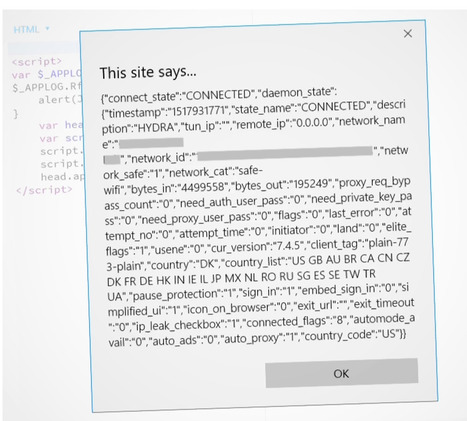
But an information disclosure bug in the privacy service results in a leak of user data, such as which country the user is located, and the user's Wi-Fi network name, if connected.

That information leak can be used to narrow down users and their location by correlating Wi-Fi network name with public and readily available data.

"By disclosing information such as Wi-Fi name, an attacker can easily narrow down or pinpoint where the victim is located," said Paulos Yibelo, who found the bug. Combined with knowing the user's country, "you can narrow down a list of places where your victim is located," he said.

ZDNet was able to independently verify Yibelo's findings by using his proof-of-concept code to reveal a user's Wi-Fi network. We tested on several machines and different networks, all with the same result.

VPNs are popular for activists or dissidents in parts of the world where internet access is restricted because of censorship, or heavily monitored by the state, as these services mask a user's IP addresses that can be used to pinpoint a person's real-world location.

Being able to identify a Hotspot Shield user in an authoritarian state could put them at risk!!!


Learn more / En savoir plus / Mehr erfahren:


https://www.scoop.it/t/securite-pc-et-internet/?&tag=VPN


Gust MEES's insight:

A flaw in Hotspot Shield can expose VPN users, locations
The virtual private network says it provides a way to browse the web "anonymously and privately," but a security researcher has released code that could identify users' names and locations.

A security researcher has found a way to identify users of Hotspot Shield, a popular free virtual private network service that promises its users anonymity and privacy.

Hotspot Shield, developed by AnchorFree, has an estimated 500 million users around the world relying on its privacy service. By bouncing a user's internet and browsing traffic through its own encrypted pipes, the service makes it harder for others to identify individual users and eavesdrop on their browsing habits.

But an information disclosure bug in the privacy service results in a leak of user data, such as which country the user is located, and the user's Wi-Fi network name, if connected.

That information leak can be used to narrow down users and their location by correlating Wi-Fi network name with public and readily available data.

"By disclosing information such as Wi-Fi name, an attacker can easily narrow down or pinpoint where the victim is located," said Paulos Yibelo, who found the bug. Combined with knowing the user's country, "you can narrow down a list of places where your victim is located," he said.

ZDNet was able to independently verify Yibelo's findings by using his proof-of-concept code to reveal a user's Wi-Fi network. We tested on several machines and different networks, all with the same result.

VPNs are popular for activists or dissidents in parts of the world where internet access is restricted because of censorship, or heavily monitored by the state, as these services mask a user's IP addresses that can be used to pinpoint a person's real-world location.

Being able to identify a Hotspot Shield user in an authoritarian state could put them at risk!!!


Learn more / En savoir plus / Mehr erfahren:


https://www.scoop.it/t/securite-pc-et-internet/?&tag=VPN


No comment yet.
Scooped by Gust MEES
February 6, 2018 11:31 AM
Scoop.it!

Grammarly's flawed Chrome extension exposed users' private documents | #CyberSecurity #Privacy #DataBreaches #DataBreaches #Awareness

Grammarly's flawed Chrome extension exposed users' private documents | #CyberSecurity #Privacy #DataBreaches #DataBreaches #Awareness | ICT Security-Sécurité PC et Internet | Scoop.it


Grammarly has fixed a security bug in its Chrome extension that inadvertently allowed access to a user's account -- including their private documents and data.

Tavis Ormandy, a security researcher at Google's Project Zero who found the "high severity" vulnerability, said the browser extension exposed authentication tokens to all websites.

That means any website can access a user's documents, history, logs, and other data, the bug report said.

"I'm calling this a high severity bug, because it seems like a pretty severe violation of user expectations," said Ormandy, because "users would not expect that visiting a website gives it permission to access documents or data they've typed into other websites."

In proof-of-concept code, he explained how to trigger the bug in four lines of code.

More than 22 million users have installed the grammar-checking extension.

Ormandy filed his bug report Friday, subject to a 90-day disclosure deadline -- as is the industry standard. Grammarly issued an automatic update Monday to fix the issue.

Ormandy has in recent months examined several vulnerable web browser extensions. Earlier this year, he found a remote code execution flaw in the Cisco WebEx Chrome extension, and a data-stealing bug in the popular LastPass password manager.

A spokesperson for Grammarly did not immediately return a request for comment.


Learn more / En savoir plus / Mehr erfahren:


https://www.scoop.it/t/securite-pc-et-internet/?&tag=DATA-BREACHES


Gust MEES's insight:

Grammarly has fixed a security bug in its Chrome extension that inadvertently allowed access to a user's account -- including their private documents and data.

Tavis Ormandy, a security researcher at Google's Project Zero who found the "high severity" vulnerability, said the browser extension exposed authentication tokens to all websites.

That means any website can access a user's documents, history, logs, and other data, the bug report said.

"I'm calling this a high severity bug, because it seems like a pretty severe violation of user expectations," said Ormandy, because "users would not expect that visiting a website gives it permission to access documents or data they've typed into other websites."

In proof-of-concept code, he explained how to trigger the bug in four lines of code.

More than 22 million users have installed the grammar-checking extension.

Ormandy filed his bug report Friday, subject to a 90-day disclosure deadline -- as is the industry standard. Grammarly issued an automatic update Monday to fix the issue.

Ormandy has in recent months examined several vulnerable web browser extensions. Earlier this year, he found a remote code execution flaw in the Cisco WebEx Chrome extension, and a data-stealing bug in the popular LastPass password manager.

A spokesperson for Grammarly did not immediately return a request for comment.


Learn more / En savoir plus / Mehr erfahren:


https://www.scoop.it/t/securite-pc-et-internet/?&tag=DATA-BREACHES


No comment yet.
Scooped by Gust MEES
February 4, 2018 10:48 AM
Scoop.it!

Krypto-Mining-Malware bremst Windows-Server | #CyberSecurity #CryptoCurrency #CryptoMining #Monero #Awareness

Krypto-Mining-Malware bremst Windows-Server | #CyberSecurity #CryptoCurrency #CryptoMining #Monero #Awareness | ICT Security-Sécurité PC et Internet | Scoop.it
Sicherheitsexperten von Proofpoint untersuchten das Mining-Botnet Smominru, das auf mehr als 500.000 Windows-Maschinen die Kryptowährung Minero schürft.

Nach Erkenntnissen von Sicherheitsexperten der Firma Proofpoint missbrauchen Kriminelle die Rechenleistung von mehr als einer halben Million Windows-Systemen, um die Kryptowährung Minero zu "schürfen". Laut Proofpoint handelt es sich bei den befallenen Maschinen vor allem um Windows-Server, von denen viele in Russland, Indien, Taiwan und der Ukraine laufen. Im Beobachtungszeitraum von Mai 2017 bis Januar 2018 hätten die Angreifer Mineros im Wert von rund 3,6 Millionen US-Dollar ergattert.

Server unbrauchbar
Auf den Stromkosten bleiben die Geschädigten sitzen, außerdem vermuten die Sicherheitsforscher, dass viele der befallenen Server wegen der zusätzlichen Rechenlast nur noch eingeschränkt funktionieren.


Learn more / En savoir plus / Mehr erfahren:


https://www.scoop.it/t/securite-pc-et-internet/?&tag=crypto-currency


https://www.scoop.it/t/securite-pc-et-internet/?&tag=cryptojacking


Gust MEES's insight:
Sicherheitsexperten von Proofpoint untersuchten das Mining-Botnet Smominru, das auf mehr als 500.000 Windows-Maschinen die Kryptowährung Minero schürft.

Nach Erkenntnissen von Sicherheitsexperten der Firma Proofpoint missbrauchen Kriminelle die Rechenleistung von mehr als einer halben Million Windows-Systemen, um die Kryptowährung Minero zu "schürfen". Laut Proofpoint handelt es sich bei den befallenen Maschinen vor allem um Windows-Server, von denen viele in Russland, Indien, Taiwan und der Ukraine laufen. Im Beobachtungszeitraum von Mai 2017 bis Januar 2018 hätten die Angreifer Mineros im Wert von rund 3,6 Millionen US-Dollar ergattert.

Server unbrauchbar
Auf den Stromkosten bleiben die Geschädigten sitzen, außerdem vermuten die Sicherheitsforscher, dass viele der befallenen Server wegen der zusätzlichen Rechenlast nur noch eingeschränkt funktionieren.


Learn more / En savoir plus / Mehr erfahren:


https://www.scoop.it/t/securite-pc-et-internet/?&tag=crypto-currency


https://www.scoop.it/t/securite-pc-et-internet/?&tag=cryptojacking


No comment yet.
Scooped by Gust MEES
February 1, 2018 12:52 PM
Scoop.it!

GandCrab Ransomware Distributed by Exploit Kits, Appends GDCB Extension | #CyberSecurity #CyberCrime #Awareness 

GandCrab Ransomware Distributed by Exploit Kits, Appends GDCB Extension | #CyberSecurity #CyberCrime #Awareness  | ICT Security-Sécurité PC et Internet | Scoop.it
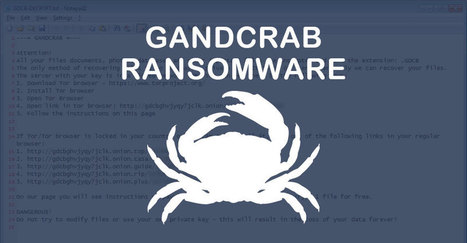
A new ransomware called GandCrab was released towards the end of last week that is currently being distributed via exploit kits. GandCrab has some interesting features not seen before in a ransomware, such as being the first to accept the DASH currency and the first to utilize the Namecoin powered .BIT tld. 

First discovered by security researcher David Montenegro, researchers quickly jumped in to analyze the ransomware and post their results on Twitter. This article will dive into what has been discovered by myself and other researchers.

Unfortunately, at this time there is no way to decrypt files encrypted by GandCrab for free. This ransomware is being researched, though, and if any new information is released we will be sure to update this article.


Learn more / En savoir plus / Mehr erfahren:


https://www.scoop.it/t/securite-pc-et-internet/?&tag=RANSOMWARE


https://www.scoop.it/t/securite-pc-et-internet/?&tag=Costs-of-Cybercirme


https://www.scoop.it/topic/securite-pc-et-internet/?&tag=Exploit-Kits


Gust MEES's insight:
A new ransomware called GandCrab was released towards the end of last week that is currently being distributed via exploit kits. GandCrab has some interesting features not seen before in a ransomware, such as being the first to accept the DASH currency and the first to utilize the Namecoin powered .BIT tld. 

First discovered by security researcher David Montenegro, researchers quickly jumped in to analyze the ransomware and post their results on Twitter. This article will dive into what has been discovered by myself and other researchers.

Unfortunately, at this time there is no way to decrypt files encrypted by GandCrab for free. This ransomware is being researched, though, and if any new information is released we will be sure to update this article.


Learn more / En savoir plus / Mehr erfahren:


https://www.scoop.it/t/securite-pc-et-internet/?&tag=RANSOMWARE


https://www.scoop.it/t/securite-pc-et-internet/?&tag=Costs-of-Cybercirme


https://www.scoop.it/topic/securite-pc-et-internet/?&tag=Exploit-Kits


No comment yet.
Scooped by Gust MEES
February 1, 2018 11:52 AM
Scoop.it!

Facebook Is Banning Bitcoin And Cryptocurrencies Ads | #SocialMedia 

No advertising will be possible on Facebook – Instagram or Audience Network – anymore to promote cryptocurrencies, directly or indirectly. The social network created a new policy that prohibits ads that promote financial products and services that are “frequently associated with misleading or deceptive promotional practices, such as binary options, initial coin offerings and cryptocurrency.” A new hard blow for the ‘crypto bubble’ which has been widely talked about the past few months.


Learn more / En savoir plus / Mehr erfahren:


https://www.scoop.it/t/securite-pc-et-internet/?&tag=Coinhive


https://www.scoop.it/t/securite-pc-et-internet/?&tag=crypto-currency


https://www.scoop.it/t/securite-pc-et-internet/?&tag=cryptojacking


Gust MEES's insight:
No advertising will be possible on Facebook – Instagram or Audience Network – anymore to promote cryptocurrencies, directly or indirectly. The social network created a new policy that prohibits ads that promote financial products and services that are “frequently associated with misleading or deceptive promotional practices, such as binary options, initial coin offerings and cryptocurrency.” A new hard blow for the ‘crypto bubble’ which has been widely talked about the past few months.


Learn more / En savoir plus / Mehr erfahren:


https://www.scoop.it/t/securite-pc-et-internet/?&tag=Coinhive


https://www.scoop.it/t/securite-pc-et-internet/?&tag=crypto-currency


https://www.scoop.it/t/securite-pc-et-internet/?&tag=cryptojacking


No comment yet.
Scooped by Gust MEES
February 1, 2018 11:22 AM
Scoop.it!

Smominru! Half a million PCs hit by cryptomining botnet | #CyberSecurity #CryptoJacking #Malware #Updates #Awareness

Smominru! Half a million PCs hit by cryptomining botnet | #CyberSecurity #CryptoJacking #Malware #Updates #Awareness | ICT Security-Sécurité PC et Internet | Scoop.it
Why go to all the bother of writing ransomware that demands victims pay a Bitcoin ransom? If all you want is cryptocurrency, why not use the infected computers to mine the crypto coins themselves?

That way you don’t have to rely on a human victim buying some Bitcoin, and nervously making their way onto the dark web to make their ransom payment.

According to security researchers at Proofpoint, that’s exactly the reasoning shown by online criminals who are moving from regular ransomware to cryptomining.

A Monero-mining botnet called Smominru is said to have infected 526,000 Windows PCs since May 2017 – mostly in Russia, India, and Taiwan – and is earning millions of dollars for its operators.


In fact, the biggest clue that most users will have that their computers may be affected by a cryptominer is if they found the PC is slowing down, its battery running out at a quicker rate, or the fan blowing at full blast.


Don’t make the mistake of thinking that this is a victimless crime. If your computers get recruited into a cryptomining botnet like Smominru, it’s your electricity and computer power that is being stolen.


Keep your computers up-to-date with security patches, defended with layered security solutions, and your wits about you.


Learn more / En savoir plus / mehr erfahren:


https://www.scoop.it/t/securite-pc-et-internet/?&tag=Coinhive


https://www.scoop.it/t/securite-pc-et-internet/?&tag=crypto-currency


https://www.scoop.it/t/securite-pc-et-internet/?&tag=cryptojacking


Gust MEES's insight:
Why go to all the bother of writing ransomware that demands victims pay a Bitcoin ransom? If all you want is cryptocurrency, why not use the infected computers to mine the crypto coins themselves?

That way you don’t have to rely on a human victim buying some Bitcoin, and nervously making their way onto the dark web to make their ransom payment.

According to security researchers at Proofpoint, that’s exactly the reasoning shown by online criminals who are moving from regular ransomware to cryptomining.

A Monero-mining botnet called Smominru is said to have infected 526,000 Windows PCs since May 2017 – mostly in Russia, India, and Taiwan – and is earning millions of dollars for its operators.


In fact, the biggest clue that most users will have that their computers may be affected by a cryptominer is if they found the PC is slowing down, its battery running out at a quicker rate, or the fan blowing at full blast.


Don’t make the mistake of thinking that this is a victimless crime. If your computers get recruited into a cryptomining botnet like Smominru, it’s your electricity and computer power that is being stolen.


Keep your computers up-to-date with security patches, defended with layered security solutions, and your wits about you.


Learn more / En savoir plus / mehr erfahren:


https://www.scoop.it/t/securite-pc-et-internet/?&tag=Coinhive


https://www.scoop.it/t/securite-pc-et-internet/?&tag=crypto-currency


https://www.scoop.it/t/securite-pc-et-internet/?&tag=cryptojacking


No comment yet.
Scooped by Gust MEES
January 31, 2018 11:03 AM
Scoop.it!

Google smashed over 700,000 bad Android apps last year | #CyberSecurity #MobileSecurity #Awareness

Google smashed over 700,000 bad Android apps last year | #CyberSecurity #MobileSecurity #Awareness | ICT Security-Sécurité PC et Internet | Scoop.it
Google says that it is getting better than ever at protecting Android users against bad apps and malicious developers.

In fact, in a recent post on the Android Developers blog, the company boasts that it removed a record number of malicious apps from the official Google Play store during 2017.

How many apps did Google remove from its app marketplace after finding they violated Google Play store policies? More than 700,000. That’s an impressive 2000 or so every day, and 70% more than the number of apps removed in 2016.

Furthermore, Google says it is getting better at proactively protecting Android users from the growing menace of mobile malware:

“Not only did we remove more bad apps, we were able to identify and action against them earlier. In fact, 99% of apps with abusive contents were identified and rejected before anyone could install them. This was possible through significant improvements in our ability to detect abuse – such as impersonation, inappropriate content, or malware – through new machine learning models and techniques.”

Furthermore, Google claims it banned more than 100,000 developer accounts controlled by “bad actors” who had attempted to create new accounts and publish yet more malicious apps.


Learn more / En savoir plus / Mehr erfahren:


https://gustmees.wordpress.com/2014/03/05/often-asked-questions-are-there-cyber-security-dangers-with-apps-and-whats-about-privacy/


https://www.scoop.it/t/securite-pc-et-internet/?&tag=Android


Gust MEES's insight:
Google says that it is getting better than ever at protecting Android users against bad apps and malicious developers.

In fact, in a recent post on the Android Developers blog, the company boasts that it removed a record number of malicious apps from the official Google Play store during 2017.

How many apps did Google remove from its app marketplace after finding they violated Google Play store policies? More than 700,000. That’s an impressive 2000 or so every day, and 70% more than the number of apps removed in 2016.

Furthermore, Google says it is getting better at proactively protecting Android users from the growing menace of mobile malware:

“Not only did we remove more bad apps, we were able to identify and action against them earlier. In fact, 99% of apps with abusive contents were identified and rejected before anyone could install them. This was possible through significant improvements in our ability to detect abuse – such as impersonation, inappropriate content, or malware – through new machine learning models and techniques.”

Furthermore, Google claims it banned more than 100,000 developer accounts controlled by “bad actors” who had attempted to create new accounts and publish yet more malicious apps.


Learn more / En savoir plus / Mehr erfahren:


https://gustmees.wordpress.com/2014/03/05/often-asked-questions-are-there-cyber-security-dangers-with-apps-and-whats-about-privacy/


https://www.scoop.it/t/securite-pc-et-internet/?&tag=Android


No comment yet.
Scooped by Gust MEES
January 30, 2018 12:43 PM
Scoop.it!

Faut-il créer un label « Internet bio » permettant aux services respectueux de faire la différence ? | #Privacy #GDPR #EU #Europe #Adds #Advertising #Press #Business #BioInternet?

Faut-il créer un label « Internet bio » permettant aux services respectueux de faire la différence ? | #Privacy #GDPR #EU #Europe #Adds #Advertising #Press #Business #BioInternet? | ICT Security-Sécurité PC et Internet | Scoop.it

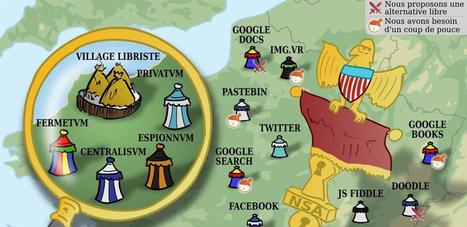
Dès mai prochain, les données personnelles seront mieux protégées en Europe. L'occasion pour de nombreux services de commencer à se poser des questions sur leurs pratiques. Mais comment informer l'internaute sur la réalité des choses ? Nous avons décidé de lancer la réflexion.

Il y a un peu plus de deux ans, nous nous posions une question : et si on dépolluait Internet ? Nous notions en effet depuis plusieurs années que les sites devenaient de plus en plus impraticables du fait d'abus publicitaires et de méthodes douteuses comme la lecture automatique des vidéos ou l'auto-refresh.

Mais cette gêne visuelle en cachait une autre : la collecte massive de données, mise en place à travers les services des géants du Net (Analytics, boutons J'aime, etc.) et d'espaces publicitaires toujours plus automatisés.

Quel avenir voulons-nous pour Internet ?
On le voit aujourd'hui, chaque site peut déposer des dizaines de cookies sans le moindre consentement de l'utilisateur, le tout à travers une centaine de domaines tiers. Pour le vérifier, il n'y a qu'à utiliser des outils comme Kimetrak et regarder les données du navigateur (voir notre dossier).

Ainsi, comme on pouvait le craindre, l'Internet que l'on connaissait il y a 20 ans s'est profondément modifié sur trois points principaux : les plateformes y ont progressivement pris le pouvoir, il y est plus souvent question de commerce que de partage libre des informations et des idées, le tout alimenté par une immense collecte de données personnelles.

Comme c'est le cas dans certaines industries, il existe néanmoins des zones de « résistance ». L'information s'y veut en libre accès, elle doit permettre au plus grand nombre de réfléchir au monde d'aujourd'hui plutôt que suivre les derniers buzz, l'entraide et le travail collaboratif y sont des valeurs centrales et le financement se fait à travers des dons ou des abonnements, l'accès aux données n'étant pas considéré comme un « pétrole à exploiter ». 

Malheureusement il n'existe pas vraiment d'élément distinctif fort pour ces sites et services, qui constituent une alternative au tout commercial qui nous entoure désormais dans le World Wide Web.

Un label pour l'Internet propre ?
Faudrait-il créer une sorte d'annuaire ? De label « bio » des services et autres sites en ligne ? Sans doute.


Tout du moins faciliter l'accès et la reconnaissance de ces initiatives en fonction d'éléments qui peuvent être facilement vérifiés : structure économique, modèle de financement, trackers, dispositions légales à travers des outils tels que ToS;DR, etc. 


Learn more / En savoir plus / Mehr erfahren:


https://www.scoop.it/t/luxembourg-europe/?&tag=GDPR


Gust MEES's insight:

Dès mai prochain, les données personnelles seront mieux protégées en Europe. L'occasion pour de nombreux services de commencer à se poser des questions sur leurs pratiques. Mais comment informer l'internaute sur la réalité des choses ? Nous avons décidé de lancer la réflexion.

Il y a un peu plus de deux ans, nous nous posions une question : et si on dépolluait Internet ? Nous notions en effet depuis plusieurs années que les sites devenaient de plus en plus impraticables du fait d'abus publicitaires et de méthodes douteuses comme la lecture automatique des vidéos ou l'auto-refresh.

Mais cette gêne visuelle en cachait une autre : la collecte massive de données, mise en place à travers les services des géants du Net (Analytics, boutons J'aime, etc.) et d'espaces publicitaires toujours plus automatisés.

Quel avenir voulons-nous pour Internet ?
On le voit aujourd'hui, chaque site peut déposer des dizaines de cookies sans le moindre consentement de l'utilisateur, le tout à travers une centaine de domaines tiers. Pour le vérifier, il n'y a qu'à utiliser des outils comme Kimetrak et regarder les données du navigateur (voir notre dossier).

Ainsi, comme on pouvait le craindre, l'Internet que l'on connaissait il y a 20 ans s'est profondément modifié sur trois points principaux : les plateformes y ont progressivement pris le pouvoir, il y est plus souvent question de commerce que de partage libre des informations et des idées, le tout alimenté par une immense collecte de données personnelles.

Comme c'est le cas dans certaines industries, il existe néanmoins des zones de « résistance ». L'information s'y veut en libre accès, elle doit permettre au plus grand nombre de réfléchir au monde d'aujourd'hui plutôt que suivre les derniers buzz, l'entraide et le travail collaboratif y sont des valeurs centrales et le financement se fait à travers des dons ou des abonnements, l'accès aux données n'étant pas considéré comme un « pétrole à exploiter ». 

Malheureusement il n'existe pas vraiment d'élément distinctif fort pour ces sites et services, qui constituent une alternative au tout commercial qui nous entoure désormais dans le World Wide Web.

Un label pour l'Internet propre ?
Faudrait-il créer une sorte d'annuaire ? De label « bio » des services et autres sites en ligne ? Sans doute.


Tout du moins faciliter l'accès et la reconnaissance de ces initiatives en fonction d'éléments qui peuvent être facilement vérifiés : structure économique, modèle de financement, trackers, dispositions légales à travers des outils tels que ToS;DR, etc. 


Learn more / En savoir plus / Mehr erfahren:


https://www.scoop.it/t/luxembourg-europe/?&tag=GDPR


No comment yet.
Scooped by Gust MEES
January 29, 2018 12:46 PM
Scoop.it!

Malware installiert Krypto-Mining-Tool XMRig auf Millionen PCs | #CyberSecurity #Awareness #CryptoMining #CryptoCurrency 

Malware installiert Krypto-Mining-Tool XMRig auf Millionen PCs | #CyberSecurity #Awareness #CryptoMining #CryptoCurrency  | ICT Security-Sécurité PC et Internet | Scoop.it
Zum heimlichen Krypto-Mining im Browser hat sich jüngst eine neue Masche gesellt: Kriminelle schleusen Open-Source-Mining-Tools auf fremde PCs, um dauerhaft von deren Rechenleistung zu profitieren. Millionen von Nutzern sollen betroffen sein.

Eine aktuelle Malware-Kampagne missbraucht das quelloffene Krypto-Mining-Tool XMRig, um auf fremden Rechnern die Kryptowährung Monero zu scheffeln. Sicherheitsforscher von Palo Alto Networks beobachten die auf Windows-Systeme abzielende Schadcode-Verbreitung bereits seit über vier Monaten. Ihren Auswertungen zufolge sollen weltweit mindestens 15 Millionen Rechner mit der Mining-Malware infiziert sein – über 6.5 Millionen davon stehen in Thailand, Vietnam und Ägypten.

Anders als frühere Kryptomining-Kampagnen, die auf JavaScript-Code im Browser setzen, nistet sich der Schadcode im aktuellen Fall dauerhaft auf den Rechnern ein – der Mining-Prozess ist damit zeitlich nicht mehr auf das Surfen im Internet beschränkt. Die Malware nutzt zwei Visual-Basic-Skripte (VBS), die zunächst ermitteln, ob es sich beim Betriebssystem des Zielrechners um eine 32- oder 64-Bit-Windows-Version handelt. Anschließend laden sie aus dem Internet die geeignete XMRig-Version nach, starten diese und beginnen mit dem heimlichen Mining. Die Erträge fließen in die digitalen Geldbeutel der Malware-Macher.


Learn more / En savoir plus / Mehr erfahren:


https://www.scoop.it/t/securite-pc-et-internet/?&tag=Crypto+Mining


https://www.scoop.it/t/securite-pc-et-internet/?&tag=crypto-currency


Gust MEES's insight:
Zum heimlichen Krypto-Mining im Browser hat sich jüngst eine neue Masche gesellt: Kriminelle schleusen Open-Source-Mining-Tools auf fremde PCs, um dauerhaft von deren Rechenleistung zu profitieren. Millionen von Nutzern sollen betroffen sein.

Eine aktuelle Malware-Kampagne missbraucht das quelloffene Krypto-Mining-Tool XMRig, um auf fremden Rechnern die Kryptowährung Monero zu scheffeln. Sicherheitsforscher von Palo Alto Networks beobachten die auf Windows-Systeme abzielende Schadcode-Verbreitung bereits seit über vier Monaten. Ihren Auswertungen zufolge sollen weltweit mindestens 15 Millionen Rechner mit der Mining-Malware infiziert sein – über 6.5 Millionen davon stehen in Thailand, Vietnam und Ägypten.

Anders als frühere Kryptomining-Kampagnen, die auf JavaScript-Code im Browser setzen, nistet sich der Schadcode im aktuellen Fall dauerhaft auf den Rechnern ein – der Mining-Prozess ist damit zeitlich nicht mehr auf das Surfen im Internet beschränkt. Die Malware nutzt zwei Visual-Basic-Skripte (VBS), die zunächst ermitteln, ob es sich beim Betriebssystem des Zielrechners um eine 32- oder 64-Bit-Windows-Version handelt. Anschließend laden sie aus dem Internet die geeignete XMRig-Version nach, starten diese und beginnen mit dem heimlichen Mining. Die Erträge fließen in die digitalen Geldbeutel der Malware-Macher.


Learn more / En savoir plus / Mehr erfahren:


https://www.scoop.it/t/securite-pc-et-internet/?&tag=Crypto+Mining


https://www.scoop.it/t/securite-pc-et-internet/?&tag=crypto-currency


No comment yet.
Scooped by Gust MEES
January 29, 2018 9:42 AM
Scoop.it!

Onlinetraining: Fitnesstracker Strava verrät Lage von Militärstützpunkten | #Awareness #Wearables #NAIVETY #Privacy

Onlinetraining: Fitnesstracker Strava verrät Lage von Militärstützpunkten | #Awareness #Wearables #NAIVETY #Privacy | ICT Security-Sécurité PC et Internet | Scoop.it
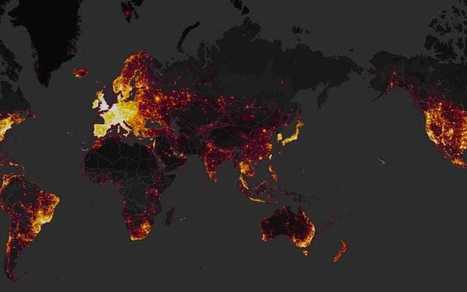
Fitnesstracker Strava verrät Lage von Militärstützpunkten
Strava ist der Hersteller einer Fitnesstracking-App, die via GPS von Smartphones verfolgt, wann und wo ein Benutzer trainiert. Ziel ist eine Art soziales Netzwerk für Sportler. Damit können jedoch auch militärische Geheimnisse verraten werden.

Die Website Strava hat im November 2017 eine sogenannte Heat Map veröffentlicht, welche die Aktivitäten ihrer Nutzer aus der ganzen Welt zeigt. Dabei wurden über eine Milliarde Aktivitäten erfasst. Die Karte zeigt, wie häufig Menschen an bestimmten Punkten der Erde trainieren und ihre Daten mit Strava teilen. Ein Analytiker weist nun darauf hin, dass die Karte es ermöglichen könnte, Standorte von Militärstützpunkten und die Routinen des Personals zu identifizieren.


Learn more / En savoir plus / Mehr erfahren:


https://www.scoop.it/t/securite-pc-et-internet/?&tag=wearables


Gust MEES's insight:
Fitnesstracker Strava verrät Lage von Militärstützpunkten
Strava ist der Hersteller einer Fitnesstracking-App, die via GPS von Smartphones verfolgt, wann und wo ein Benutzer trainiert. Ziel ist eine Art soziales Netzwerk für Sportler. Damit können jedoch auch militärische Geheimnisse verraten werden.

Die Website Strava hat im November 2017 eine sogenannte Heat Map veröffentlicht, welche die Aktivitäten ihrer Nutzer aus der ganzen Welt zeigt. Dabei wurden über eine Milliarde Aktivitäten erfasst. Die Karte zeigt, wie häufig Menschen an bestimmten Punkten der Erde trainieren und ihre Daten mit Strava teilen. Ein Analytiker weist nun darauf hin, dass die Karte es ermöglichen könnte, Standorte von Militärstützpunkten und die Routinen des Personals zu identifizieren.


Learn more / En savoir plus / Mehr erfahren:


https://www.scoop.it/t/securite-pc-et-internet/?&tag=wearables


No comment yet.
Scooped by Gust MEES
January 26, 2018 8:00 PM
Scoop.it!

Tokyo-based cryptocurrency exchange hacked, losing $530 million: #CoinCheck | #CyberSecurity #CyberCrime #Awareness

Tokyo-based cryptocurrency exchange hacked, losing $530 million: #CoinCheck | #CyberSecurity #CyberCrime #Awareness | ICT Security-Sécurité PC et Internet | Scoop.it
TOKYO (Reuters) - Coincheck, a major cryptocurrency trading exchange in Tokyo, has been hacked into and has lost about 58 billion yen ($534 million) worth of virtual money, national broadcaster NHK reported on Friday.


Coincheck posted on its website on Friday afternoon that it had suspended withdrawals of almost all cryptocurrencies.

The exchange has already reported the incident to the police and to Japan’s Financial Services Agency, NHK said.


In 2014, Tokyo-based Mt. Gox, which once handled 80 percent of the world’s bitcoin trades, filed for bankruptcy after losing some 850,000 bitcoins - then worth around half a billion U.S. dollars - and $28 million in cash from its bank accounts.


Learn more / En savoir plus / Mehr erfahren:


https://www.scoop.it/t/securite-pc-et-internet/?&tag=crypto-currency


Gust MEES's insight:
TOKYO (Reuters) - Coincheck, a major cryptocurrency trading exchange in Tokyo, has been hacked into and has lost about 58 billion yen ($534 million) worth of virtual money, national broadcaster NHK reported on Friday.


Coincheck posted on its website on Friday afternoon that it had suspended withdrawals of almost all cryptocurrencies.

The exchange has already reported the incident to the police and to Japan’s Financial Services Agency, NHK said.


In 2014, Tokyo-based Mt. Gox, which once handled 80 percent of the world’s bitcoin trades, filed for bankruptcy after losing some 850,000 bitcoins - then worth around half a billion U.S. dollars - and $28 million in cash from its bank accounts.


Learn more / En savoir plus / Mehr erfahren:


https://www.scoop.it/t/securite-pc-et-internet/?&tag=crypto-currency


No comment yet.
Scooped by Gust MEES
January 26, 2018 7:25 PM
Scoop.it!

Coinhive Cryptojacker Deployed on YouTube via Google Ads | #CyberSecurity #CryptoCurrency #CryptoJacking #Awareness 

Coinhive Cryptojacker Deployed on YouTube via Google Ads | #CyberSecurity #CryptoCurrency #CryptoJacking #Awareness  | ICT Security-Sécurité PC et Internet | Scoop.it

Some smart crooks found a way to insert and deliver the Coinhive in-browser miner inside ads delivered via the Google DoubleClick ad delivery platform.

Ads delivered this way made their way on countless sites, and even on Google's own property —YouTube.

A Trend Micro report released today claims the crooks behind this campaign started abusing Google's DoubleClick platform to deliver the Coinhive in-browser miner around January 18 and significantly ramped up operations on January 23.


Learn more / En savoir plus / Mehr erfahren:


https://www.scoop.it/t/securite-pc-et-internet/?&tag=Coinhive


https://www.scoop.it/t/securite-pc-et-internet/?&tag=crypto-currency


https://www.scoop.it/t/securite-pc-et-internet/?&tag=cryptojacking


Gust MEES's insight:

Some smart crooks found a way to insert and deliver the Coinhive in-browser miner inside ads delivered via the Google DoubleClick ad delivery platform.

Ads delivered this way made their way on countless sites, and even on Google's own property —YouTube.

A Trend Micro report released today claims the crooks behind this campaign started abusing Google's DoubleClick platform to deliver the Coinhive in-browser miner around January 18 and significantly ramped up operations on January 23.


Learn more / En savoir plus / Mehr erfahren:


https://www.scoop.it/t/securite-pc-et-internet/?&tag=Coinhive


https://www.scoop.it/t/securite-pc-et-internet/?&tag=crypto-currency


https://www.scoop.it/t/securite-pc-et-internet/?&tag=cryptojacking


No comment yet.
Scooped by Gust MEES
February 7, 2018 6:54 PM
Scoop.it!

HTTPS: Viele Webseiten nutzen alte Symantec-Zertifikate | #CyberSecurity

HTTPS: Viele Webseiten nutzen alte Symantec-Zertifikate | #CyberSecurity | ICT Security-Sécurité PC et Internet | Scoop.it

In Kürze wird Chrome vielen alten Symantec-Zertifikaten nicht mehr trauen, eine Testversion zeigt schon jetzt Warnmeldungen. Doch viele Seiten haben noch nicht umgestellt...


Learn more / En savoir plus / Mehr erfahren:


https://www.scoop.it/t/securite-pc-et-internet/?&tag=HTTPS


Gust MEES's insight:

In Kürze wird Chrome vielen alten Symantec-Zertifikaten nicht mehr trauen, eine Testversion zeigt schon jetzt Warnmeldungen. Doch viele Seiten haben noch nicht umgestellt...


Learn more / En savoir plus / Mehr erfahren:


https://www.scoop.it/t/securite-pc-et-internet/?&tag=HTTPS


No comment yet.
Scooped by Gust MEES
February 6, 2018 11:54 AM
Scoop.it!

Grammarly user? Patch now to stop crooks stealing all your data… | #CyberSecurity #DataBreaches #Awareness #Privacy #Updates

Grammarly user? Patch now to stop crooks stealing all your data… | #CyberSecurity #DataBreaches #Awareness #Privacy #Updates | ICT Security-Sécurité PC et Internet | Scoop.it
Have you watched a YouTube video lately in a country where English is widely used?

If so, we’re willing to bet that you’ve seen an advert for Grammarly, an online spelling and grammar checker.

In fact, we’ll suggest you’ve seen the Grammarly ad many times, perhaps even very many times – we certainly have.

The ads seem to be working, with the product currently closing in on 1,000,000 installs in Firefox, and already claiming more than 10,000,000 in Chrome.

As the product pitch in the Firefox add-on store explains:

Once you register your new account, you will start to receive weekly emails with personalized insights and performance stats (one of our most popular new features). Working on a large project, an essay, or a blog post? No sweat. You can create and store all of your documents in your new online editor.

In other words, your Grammarly account ends up knowing a lot about you, and holding copies of a lot of what you’ve written.

A security hole in Grammarly could therefore tell crooks much more about you than you’d like them to know.


Learn more / En savoir plus / Mehr erfahren.


https://www.scoop.it/t/securite-pc-et-internet/?&tag=Grammarly


Gust MEES's insight:
Have you watched a YouTube video lately in a country where English is widely used?

If so, we’re willing to bet that you’ve seen an advert for Grammarly, an online spelling and grammar checker.

In fact, we’ll suggest you’ve seen the Grammarly ad many times, perhaps even very many times – we certainly have.

The ads seem to be working, with the product currently closing in on 1,000,000 installs in Firefox, and already claiming more than 10,000,000 in Chrome.

As the product pitch in the Firefox add-on store explains:

Once you register your new account, you will start to receive weekly emails with personalized insights and performance stats (one of our most popular new features). Working on a large project, an essay, or a blog post? No sweat. You can create and store all of your documents in your new online editor.

In other words, your Grammarly account ends up knowing a lot about you, and holding copies of a lot of what you’ve written.

A security hole in Grammarly could therefore tell crooks much more about you than you’d like them to know.


Learn more / En savoir plus / Mehr erfahren.


https://www.scoop.it/t/securite-pc-et-internet/?&tag=Grammarly


No comment yet.
Scooped by Gust MEES
February 4, 2018 11:47 AM
Scoop.it!

A giant botnet is forcing Windows servers to mine cryptocurrency | #CyberSecurity #CryptoMining #Monero #Awareness

A giant botnet is forcing Windows servers to mine cryptocurrency | #CyberSecurity #CryptoMining #Monero #Awareness | ICT Security-Sécurité PC et Internet | Scoop.it
The Smominru miner has infected at least half a million machines -- mostly consisting of Windows servers -- and spreads using the EternalBlue exploit.


Learn more / En savoir plus / Mehr erfahren:


https://www.scoop.it/t/securite-pc-et-internet/?&tag=crypto-currency


https://www.scoop.it/t/securite-pc-et-internet/?&tag=cryptojacking


Gust MEES's insight:
The Smominru miner has infected at least half a million machines -- mostly consisting of Windows servers -- and spreads using the EternalBlue exploit.


Learn more / En savoir plus / Mehr erfahren:


https://www.scoop.it/t/securite-pc-et-internet/?&tag=crypto-currency


https://www.scoop.it/t/securite-pc-et-internet/?&tag=cryptojacking


No comment yet.
Scooped by Gust MEES
February 2, 2018 4:30 AM
Scoop.it!

"Zero-Day" Sicherheitslücke in Adobe Flash Player - aktiv ausgenützt - Patches noch nicht verfügbar - CERT.at | #CyberSecurity #Awareness

Zero-Day Sicherheitslücke in Adobe Flash Player - aktiv ausgenützt - Patches noch nicht verfügbar


1. Februar 2018


Beschreibung
Adobe hat bekanntgegeben, dass es aktuell eine kritische Sicherheitslücke in Adobe Flash Player gibt, die auch bereits aktiv ausgenützt wird.
CVE-Nummer: CVE-2018-4878

Es ist noch keine entsprechend gefixte Version verfügbar - Adobe hat eine solche für nächste Woche (beginnend mit 5. Februar 2018) in Aussicht gestellt.

Auswirkungen
Durch Ausnützen dieser Lücke kann ein Angreifer laut Adobe volle Kontrolle über betroffene Systeme übernehmen.
Damit sind alle Daten auf diesen Systemen, sowie alle durch diese erreichbaren (etwa durch Login, VPN etc.) Daten und Systeme gefährdet.


Learn more / En savoir plus / Mehr erfahren:


https://www.scoop.it/t/securite-pc-et-internet/?&tag=Flash-Player-Vulnerabilities


Gust MEES's insight:

Zero-Day Sicherheitslücke in Adobe Flash Player - aktiv ausgenützt - Patches noch nicht verfügbar


1. Februar 2018


Beschreibung
Adobe hat bekanntgegeben, dass es aktuell eine kritische Sicherheitslücke in Adobe Flash Player gibt, die auch bereits aktiv ausgenützt wird.
CVE-Nummer: CVE-2018-4878

Es ist noch keine entsprechend gefixte Version verfügbar - Adobe hat eine solche für nächste Woche (beginnend mit 5. Februar 2018) in Aussicht gestellt.

Auswirkungen
Durch Ausnützen dieser Lücke kann ein Angreifer laut Adobe volle Kontrolle über betroffene Systeme übernehmen.
Damit sind alle Daten auf diesen Systemen, sowie alle durch diese erreichbaren (etwa durch Login, VPN etc.) Daten und Systeme gefährdet.


Learn more / En savoir plus / Mehr erfahren:


https://www.scoop.it/t/securite-pc-et-internet/?&tag=Flash-Player-Vulnerabilities


No comment yet.
Scooped by Gust MEES
February 1, 2018 12:15 PM
Scoop.it!

Bitcoin hijack steals from both ransomware authors AND their victims | #CyberCrime #CyberSecurity #CryptoCurrency #CryptoJacking 

Bitcoin hijack steals from both ransomware authors AND their victims | #CyberCrime #CyberSecurity #CryptoCurrency #CryptoJacking  | ICT Security-Sécurité PC et Internet | Scoop.it

Talk about having a bad day…

First you get hit with ransomware, demanding you send a Bitcoin payment to anonymous hackers

Then you realise that you don’t have a secure backup of your files, so you’ll have to pay up to have any hope of getting your files back.

And finally, after you have worked out how to buy yourself some Bitcoins online, and as you are attempting to pay the hackers their ransom… the payment gets diverted to someone else entirely.

In short, your files are still encrypted, and you’ve lost all your money.

That’s the ultimate bad-day scenario being described by security researchers who claim to have identified a scam that both steals from ransomware authors and their victims.


Learn more / En savoir plus / mehr erfahren:


https://www.scoop.it/t/securite-pc-et-internet/?&tag=Coinhive


https://www.scoop.it/t/securite-pc-et-internet/?&tag=crypto-currency


https://www.scoop.it/t/securite-pc-et-internet/?&tag=cryptojacking


Gust MEES's insight:

Talk about having a bad day…

First you get hit with ransomware, demanding you send a Bitcoin payment to anonymous hackers

Then you realise that you don’t have a secure backup of your files, so you’ll have to pay up to have any hope of getting your files back.

And finally, after you have worked out how to buy yourself some Bitcoins online, and as you are attempting to pay the hackers their ransom… the payment gets diverted to someone else entirely.

In short, your files are still encrypted, and you’ve lost all your money.

That’s the ultimate bad-day scenario being described by security researchers who claim to have identified a scam that both steals from ransomware authors and their victims.


Learn more / En savoir plus / mehr erfahren:


https://www.scoop.it/t/securite-pc-et-internet/?&tag=Coinhive


https://www.scoop.it/t/securite-pc-et-internet/?&tag=crypto-currency


https://www.scoop.it/t/securite-pc-et-internet/?&tag=cryptojacking


No comment yet.
Scooped by Gust MEES
February 1, 2018 11:46 AM
Scoop.it!

ENISA looks into the Crystal Ball: a report on emerging technologies and security challenges | #Cybersecurity #EU #Europe 

ENISA looks into the Crystal Ball: a report on emerging technologies and security challenges | #Cybersecurity #EU #Europe  | ICT Security-Sécurité PC et Internet | Scoop.it

ENISA looks into the Crystal Ball: a report on emerging technologies and security challenges


ENISA has produced the first version of a report that provides an overview of key emerging technologies and their associated security challenges, and aims to identify future security issues associated with these technologies.


Published on January 31, 2018


It lays the groundwork for developing proposals, channelling knowledge development and proposing work priorities to ENISA stakeholders.

The goal of the document is not to provide an exhaustive overview of emerging technologies, but to highlight those trends that are seen to be important by the stakeholders from industry and academia that were consulted as part of the study.

The main emerging technology areas identified at this point in time are:

  • The Internet of Things
  • Autonomous systems
  • Next generation virtualised infrastructures (including SDN and 5G)
  • Upcoming societal challenges
  • Virtual and augmented reality
  • The Internet of Bio-Nano things
  • Artificial Intelligence and Robotics


Learn more / En savoir plus / Mehr erfahren:


https://www.scoop.it/t/securite-pc-et-internet/?&tag=ENISA


Gust MEES's insight:

ENISA looks into the Crystal Ball: a report on emerging technologies and security challenges


ENISA has produced the first version of a report that provides an overview of key emerging technologies and their associated security challenges, and aims to identify future security issues associated with these technologies.


Published on January 31, 2018 


It lays the groundwork for developing proposals, channelling knowledge development and proposing work priorities to ENISA stakeholders.

The goal of the document is not to provide an exhaustive overview of emerging technologies, but to highlight those trends that are seen to be important by the stakeholders from industry and academia that were consulted as part of the study.

The main emerging technology areas identified at this point in time are:

  • The Internet of Things
  • Autonomous systems
  • Next generation virtualised infrastructures (including SDN and 5G)
  • Upcoming societal challenges
  • Virtual and augmented reality
  • The Internet of Bio-Nano things
  • Artificial Intelligence and Robotics


Learn more / En savoir plus / Mehr erfahren:


https://www.scoop.it/t/securite-pc-et-internet/?&tag=ENISA


No comment yet.
Scooped by Gust MEES
January 31, 2018 2:20 PM
Scoop.it!

Cryptocurrency miners: A replacement for ransomware | #Malware #CryptoMining #Awareness

Cryptocurrency miners: A replacement for ransomware | #Malware #CryptoMining #Awareness | ICT Security-Sécurité PC et Internet | Scoop.it

Ransomware has caused little more than heartache and disruption for the enterprise and consumers alike, but it may soon lose its lucrative appeal in favor of cryptocurrency miners.

Over the last few years, ransomware, which targets systems, encrypts files, and demands a blackmail payment in return for a potential decryption key, has hit the spotlight time and time again.

The UK's National Health Service (NHS), major shipping companies, utilities, private businesses, and consumers at large have all fallen prey to variants including Petya, WannaCry, GoldenEye, and CryptoLocker.

This type of malware capitalizes on unpatched PCs, legacy operating systems, and vulnerabilities both old and new.

However, according to Cisco Talos researchers, cryptocurrency miners may soon take the top spot as a way for fraudsters to generate income.


Learn more / En savoir plus / Mehr erfahren:


https://www.scoop.it/t/securite-pc-et-internet/?&tag=Coinhive


https://www.scoop.it/t/securite-pc-et-internet/?&tag=crypto-currency


https://www.scoop.it/t/securite-pc-et-internet/?&tag=cryptojacking


Gust MEES's insight:


https://www.scoop.it/t/securite-pc-et-internet/?&tag=Coinhive


https://www.scoop.it/t/securite-pc-et-internet/?&tag=crypto-currency


https://www.scoop.it/t/securite-pc-et-internet/?&tag=cryptojacking


No comment yet.
Scooped by Gust MEES
January 31, 2018 9:36 AM
Scoop.it!

Stop dilly-dallying. Block all ads on YouTube | #CryptoMining #CryptoCurrency 

Stop dilly-dallying. Block all ads on YouTube | #CryptoMining #CryptoCurrency  | ICT Security-Sécurité PC et Internet | Scoop.it

As Ars Technica reports, YouTube has been spotted pushing ads onto users.

That, in itself, isn't newsworthy of course. But these ads are surreptitiously stealing resources from visiting computers to mine for cryptocurrencies:

On Friday, researchers with antivirus provider Trend Micro said the ads helped drive a more than three-fold spike in Web miner detections. They said the attackers behind the ads were abusing Google's DoubleClick ad platform to display them to YouTube visitors in select countries, including Japan, France, Taiwan, Italy, and Spain.

The ads contain JavaScript that mines the digital coin known as Monero. In nine out of 10 cases, the ads will use publicly available JavaScript provided by Coinhive, a cryptocurrency-mining service that's controversial because it allows subscribers to profit by surreptitiously using other people's computers. The remaining 10 percent of the time, the YouTube ads use private mining JavaScript that saves the attackers the 30 percent cut Coinhive takes. Both scripts are programmed to consume 80 percent of a visitor's CPU, leaving just barely enough resources for it to function.

You should run an ad blocker when you surf the web.

==================================================


Not just because ads are invariably ugly and ruin the user experience. Not just because you don't want ads tracking your online behaviour. Not just because ads slow down your online experience and gobble up your bandwidth. Not just because ads can infect your computer with malware, or be secretly sapping your computer resources by mining for cryptocurrencies in the background.


==================================================

But because even Google, one of the world's largest advertising companies (with its own considerable security prowess), seems to be incapable of guaranteeing a stream of safe ads. What hope for the other advertising networks if Google can't get it right?


Learn more / En savoir plus / Mehr erfahren:


https://www.scoop.it/t/securite-pc-et-internet/?&tag=Coinhive


https://www.scoop.it/t/securite-pc-et-internet/?&tag=crypto-currency


https://www.scoop.it/t/securite-pc-et-internet/?&tag=cryptojacking


Gust MEES's insight:

As Ars Technica reports, YouTube has been spotted pushing ads onto users.

That, in itself, isn't newsworthy of course. But these ads are surreptitiously stealing resources from visiting computers to mine for cryptocurrencies:

On Friday, researchers with antivirus provider Trend Micro said the ads helped drive a more than three-fold spike in Web miner detections. They said the attackers behind the ads were abusing Google's DoubleClick ad platform to display them to YouTube visitors in select countries, including Japan, France, Taiwan, Italy, and Spain.

The ads contain JavaScript that mines the digital coin known as Monero. In nine out of 10 cases, the ads will use publicly available JavaScript provided by Coinhive, a cryptocurrency-mining service that's controversial because it allows subscribers to profit by surreptitiously using other people's computers. The remaining 10 percent of the time, the YouTube ads use private mining JavaScript that saves the attackers the 30 percent cut Coinhive takes. Both scripts are programmed to consume 80 percent of a visitor's CPU, leaving just barely enough resources for it to function.

You should run an ad blocker when you surf the web.

==================================================


Not just because ads are invariably ugly and ruin the user experience. Not just because you don't want ads tracking your online behaviour. Not just because ads slow down your online experience and gobble up your bandwidth. Not just because ads can infect your computer with malware, or be secretly sapping your computer resources by mining for cryptocurrencies in the background.


==================================================

But because even Google, one of the world's largest advertising companies (with its own considerable security prowess), seems to be incapable of guaranteeing a stream of safe ads. What hope for the other advertising networks if Google can't get it right?


Learn more / En savoir plus / Mehr erfahren:


https://www.scoop.it/t/securite-pc-et-internet/?&tag=Coinhive


https://www.scoop.it/t/securite-pc-et-internet/?&tag=crypto-currency


https://www.scoop.it/t/securite-pc-et-internet/?&tag=cryptojacking


No comment yet.
Scooped by Gust MEES
January 29, 2018 2:39 PM
Scoop.it!

Strava fitness app divulges heatmap of secretive British SAS base | #CyberSecurity #Privacy #Awareness #Wearables #NAIVETY 

Strava fitness app divulges heatmap of secretive British SAS base | #CyberSecurity #Privacy #Awareness #Wearables #NAIVETY  | ICT Security-Sécurité PC et Internet | Scoop.it

A secretive special air service base has been inadvertently revealed by a fitness app that has created a heatmap of running routes around the country.

A SAS base in Hereford, along with a nuclear deterrent naval base and the government's spy agency GCHQ has been placed on a heatmap of Strava's customers, including the profiles of several people who regularly run to-and-from the highly sensitive buildings. 

The buildings appear on a global, interactive map created by Strava, which is an app that allows users to track cycling or running speeds and distances and share them with friends. But unbeknown to many of its users, Strava has used their location data to in a worldwide heatmap including three trillion coordinates, titled "Where We Play".

"When sensitive sites, such as the GCHQ, are quite literally highlighted by GPS activity, it raises concern not only for the individual connected to the device, but the institution as a whole. The UK’s security services must be hyper-aware of what they’re sharing – regardless of what may be labelled as ‘excluded’ within the device. If a device or application has the capability to share location in any respect, it signifies a breach in security protocols."


Learn more / En savoir plus / Mehr erfahren:


https://gustmees.wordpress.com/2012/11/05/naivety-in-the-digital-age/


https://www.scoop.it/t/securite-pc-et-internet/?&tag=wearables


Gust MEES's insight:

A secretive special air service base has been inadvertently revealed by a fitness app that has created a heatmap of running routes around the country.

A SAS base in Hereford, along with a nuclear deterrent naval base and the government's spy agency GCHQ has been placed on a heatmap of Strava's customers, including the profiles of several people who regularly run to-and-from the highly sensitive buildings. 

The buildings appear on a global, interactive map created by Strava, which is an app that allows users to track cycling or running speeds and distances and share them with friends. But unbeknown to many of its users, Strava has used their location data to in a worldwide heatmap including three trillion coordinates, titled "Where We Play".

"When sensitive sites, such as the GCHQ, are quite literally highlighted by GPS activity, it raises concern not only for the individual connected to the device, but the institution as a whole. The UK’s security services must be hyper-aware of what they’re sharing – regardless of what may be labelled as ‘excluded’ within the device. If a device or application has the capability to share location in any respect, it signifies a breach in security protocols."


Learn more / En savoir plus / Mehr erfahren:


https://gustmees.wordpress.com/2012/11/05/naivety-in-the-digital-age/


https://www.scoop.it/t/securite-pc-et-internet/?&tag=wearables


No comment yet.
Scooped by Gust MEES
January 29, 2018 10:59 AM
Scoop.it!

Ransomware-Attacke: 4000 Server und 45.000 PCs neu installiert | #CyberSecurity #CyberCrime #Awareness #Costs $$$

Ransomware-Attacke: 4000 Server und 45.000 PCs neu installiert | #CyberSecurity #CyberCrime #Awareness #Costs $$$ | ICT Security-Sécurité PC et Internet | Scoop.it

Ransomware-Attacke: 4000 Server und 45.000 PCs neu installiert
In zehn Tagen erneuerte Møller-Maersk seine gesamte IT-Infrastruktur. Die Folgekosten von Petya/NotPetya beziffert der Reederei-Konzern mit 250 bis 300 Millionen Dollar. Er strebt jetzt mehr Cybersicherheit als Wettbewerbsvorteil an.

Der Reederei-Konzern Møller-Maersk hat durch die Ransomware Petya/NotPetya einen Schaden zwischen 250 und 300 Millionen Dollar erlitten. Es gelang ihm jedoch, innerhalb von zehn Tagen 4000 Server, 45.000 PCs und 2500 Anwendungen neu zu installieren. Das berichtete auf dem Weltwirtschaftsgipfel in Davos Jim Hagemann Snabe, Chairman von Møller-Maersk.

„Stellen Sie sich ein Unternehmen vor, bei dem alle 15 Minuten ein Schiff mit 10.000 bis 20.000 Containern in einen Hafen einläuft, und Sie haben zehn Tage lang keine IT“, sagte Hagemann. „Man kann sich das fast gar nicht vorstellen.“ Der Maersk-Chef attestierte den Mitarbeitern und Partnern eine „heroische Leistung“ für die schnelle Erneuerung der IT-Infrastruktur. Der dänische Konzern hat Niederlassungen in 130 Ländern und fast 90.000 Mitarbeiter.


Learn more / En savoir plus / Mehr erfahren:


https://www.scoop.it/t/securite-pc-et-internet/?&tag=RANSOMWARE


https://www.scoop.it/t/securite-pc-et-internet/?&tag=Costs-of-Cybercirme


Gust MEES's insight:

Ransomware-Attacke: 4000 Server und 45.000 PCs neu installiert
In zehn Tagen erneuerte Møller-Maersk seine gesamte IT-Infrastruktur. Die Folgekosten von Petya/NotPetya beziffert der Reederei-Konzern mit 250 bis 300 Millionen Dollar. Er strebt jetzt mehr Cybersicherheit als Wettbewerbsvorteil an.

Der Reederei-Konzern Møller-Maersk hat durch die Ransomware Petya/NotPetya einen Schaden zwischen 250 und 300 Millionen Dollar erlitten. Es gelang ihm jedoch, innerhalb von zehn Tagen 4000 Server, 45.000 PCs und 2500 Anwendungen neu zu installieren. Das berichtete
auf dem Weltwirtschaftsgipfel in Davos Jim Hagemann Snabe, Chairman von Møller-Maersk.

„Stellen Sie sich ein Unternehmen vor, bei dem alle 15 Minuten ein Schiff mit 10.000 bis 20.000 Containern in einen Hafen einläuft, und Sie haben zehn Tage lang keine IT“, sagte Hagemann. „Man kann sich das fast gar nicht vorstellen.“ Der Maersk-Chef attestierte den Mitarbeitern und Partnern eine „heroische Leistung“ für die schnelle Erneuerung der IT-Infrastruktur. Der dänische Konzern hat Niederlassungen in 130 Ländern und fast 90.000 Mitarbeiter.


Learn more / En savoir plus / Mehr erfahren:


https://www.scoop.it/t/securite-pc-et-internet/?&tag=RANSOMWARE


https://www.scoop.it/t/securite-pc-et-internet/?&tag=Costs-of-Cybercirme


No comment yet.
Scooped by Gust MEES
January 27, 2018 6:59 PM
Scoop.it!

Trojaner-Apps mit 4,5 Millionen Downloads in Google Play entdeckt | #CyberSecurity #MobileSecurity #Awareness 

Trojaner-Apps mit 4,5 Millionen Downloads in Google Play entdeckt | #CyberSecurity #MobileSecurity #Awareness  | ICT Security-Sécurité PC et Internet | Scoop.it

Sicherheitsforscher warnen vor mehreren mit Schadcode verseuchten Spiele-Apps im offiziellen App Store von Google.

Offensichtlich haben die Sicherheitsmechanismen von Google Play versagt und 27 mit Schadcode verseuchte Spiele-Apps durchgelassen. Sicherheitsforschern von Dr. Web zufolge weisen die Apps insgesamt 4,5 Millionen Downloads auf.

In ihrer Warnung listen sie die Namen der Apps auf. Stichproben zeigen, dass ein Großteil bereits nicht mehr verfügbar ist. Wer davon Apps installiert hat, sollte diese schleunigst löschen.

SDK Wurzel des Bösen
Alle Apps wurden mit dem Ya Ya Yun SDK erstellt, das neben legitimen Funktionen eben auch Trojaner-Module mitbringt. Diese sollen nach dem ersten Start einer App vom Opfer unbemerkt Code herunterladen, der im Hintergrund heimlich Webseiten öffnet und auf Werbebanner klickt. Neben dem Klickbetrug könnten die Entwickler des SDKs wahrscheinlich noch weitere Angriffsmodule bereitstellen, vermuten die Sicherheitsforscher.

Unklar ist derzeit, ob die App-Entwickler die Trojaner-Module bewusst eingebaut haben oder ob letztlich die Macher des Ya Ya Yun SDK abkassieren.


Learn more / En savoir plus / Mehr erfahren:


https://www.scoop.it/t/securite-pc-et-internet/?&tag=Google-Play


Gust MEES's insight:

Sicherheitsforscher warnen vor mehreren mit Schadcode verseuchten Spiele-Apps im offiziellen App Store von Google.

Offensichtlich haben die Sicherheitsmechanismen von Google Play versagt und 27 mit Schadcode verseuchte Spiele-Apps durchgelassen. Sicherheitsforschern von Dr. Web zufolge weisen die Apps insgesamt 4,5 Millionen Downloads auf.

In ihrer Warnung listen sie die Namen der Apps auf. Stichproben zeigen, dass ein Großteil bereits nicht mehr verfügbar ist. Wer davon Apps installiert hat, sollte diese schleunigst löschen.

SDK Wurzel des Bösen
Alle Apps wurden mit dem Ya Ya Yun SDK erstellt, das neben legitimen Funktionen eben auch Trojaner-Module mitbringt. Diese sollen nach dem ersten Start einer App vom Opfer unbemerkt Code herunterladen, der im Hintergrund heimlich Webseiten öffnet und auf Werbebanner klickt. Neben dem Klickbetrug könnten die Entwickler des SDKs wahrscheinlich noch weitere Angriffsmodule bereitstellen, vermuten die Sicherheitsforscher.

Unklar ist derzeit, ob die App-Entwickler die Trojaner-Module bewusst eingebaut haben oder ob letztlich die Macher des Ya Ya Yun SDK abkassieren.


Learn more / En savoir plus / Mehr erfahren:


https://www.scoop.it/t/securite-pc-et-internet/?&tag=Google-Play


No comment yet.
Scooped by Gust MEES
January 26, 2018 7:42 PM
Scoop.it!

Thunderbird unbedingt updaten: Neue Version stopft kritische Sicherheitslücke | #CyberSecurity #Vulnerabilities #Updates #Awareness #CyberHygiene

Thunderbird unbedingt updaten: Neue Version stopft kritische Sicherheitslücke | #CyberSecurity #Vulnerabilities #Updates #Awareness #CyberHygiene | ICT Security-Sécurité PC et Internet | Scoop.it
Mit dem Patch auf Version 52.6 behebt Mozilla einige schwerwiegende Fehler in seinem beliebten E-Mail-Client Thunderbird. Darunter befinden sich auch kritische Sicherheitslücken befinden, die gestopft wurden. Nutzer sollten schnell aktualisieren. CHIP hat die neueste Version der kostenlosen Software für Windows, macOS und Linux zum Download. Im Video zeigen wir Ihnen, wie Sie Thunderbird aktualisieren.


Learn more / En savoir plus / Mehr erfahren:


https://www.scoop.it/t/securite-pc-et-internet/?&tag=Thunderbird-Update


Gust MEES's insight:
Mit dem Patch auf Version 52.6 behebt Mozilla einige schwerwiegende Fehler in seinem beliebten E-Mail-Client Thunderbird. Darunter befinden sich auch kritische Sicherheitslücken befinden, die gestopft wurden. Nutzer sollten schnell aktualisieren. CHIP hat die neueste Version der kostenlosen Software für Windows, macOS und Linux zum Download. Im Video zeigen wir Ihnen, wie Sie Thunderbird aktualisieren.


Learn more / En savoir plus / Mehr erfahren:


https://www.scoop.it/t/securite-pc-et-internet/?&tag=Thunderbird-Update


No comment yet.